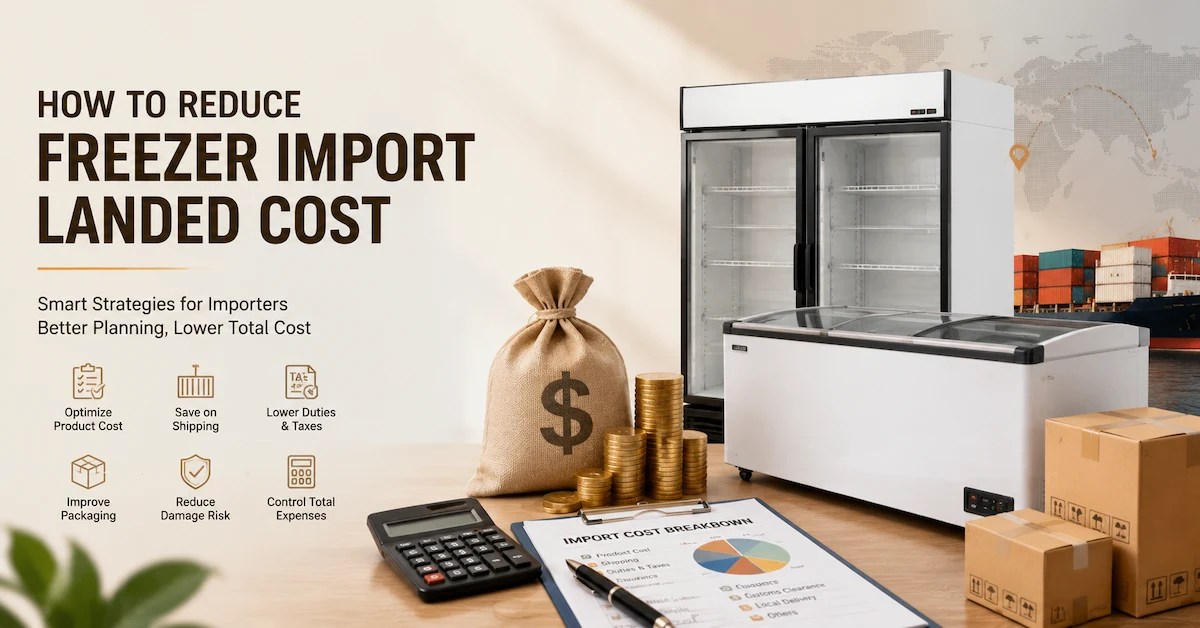
For international refrigeration buyers, transporting commercial freezers from manufacturers to overseas markets requires careful logistics planning.
Unlike small products, commercial freezers are large-volume equipment with special transportation requirements. Their dimensions, weight, glass components, packaging structure, and loading methods directly affect shipping efficiency and total import costs.
A professional commercial freezer sea freight planning strategy helps importers:
- Reduce transportation costs
- Optimize container space
- Prevent shipping damage
- Improve delivery reliability
- Control landed costs
For distributors, supermarket equipment suppliers, and commercial refrigeration buyers, efficient sea freight planning is an essential part of successful freezer sourcing.
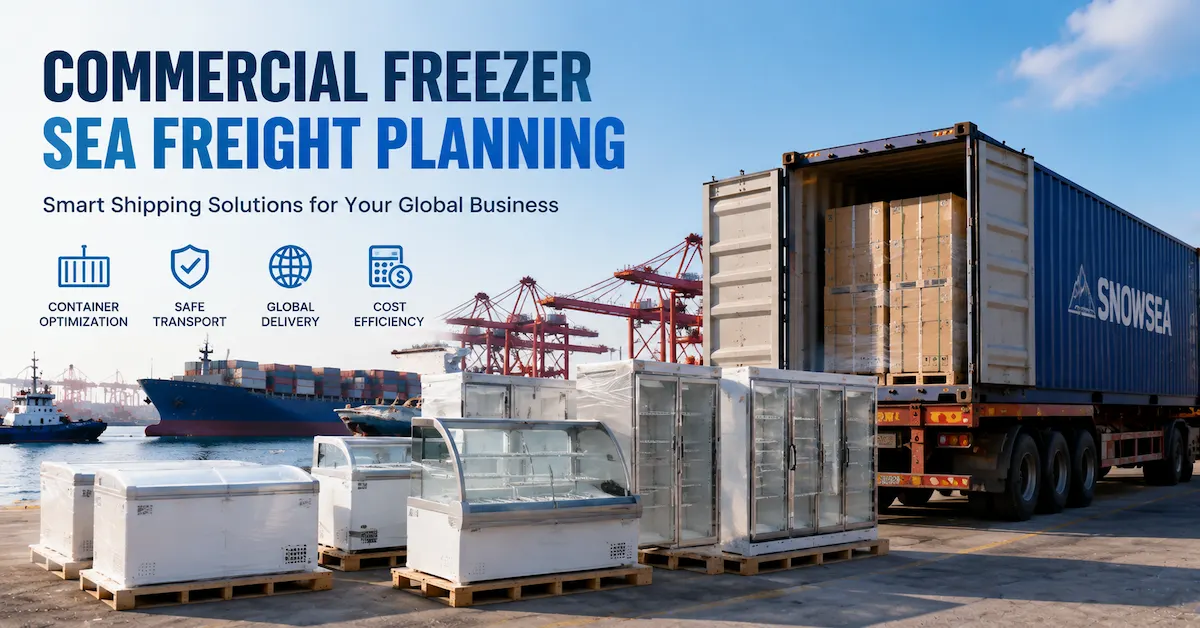
Why Sea Freight Is Important for Commercial Freezer Imports
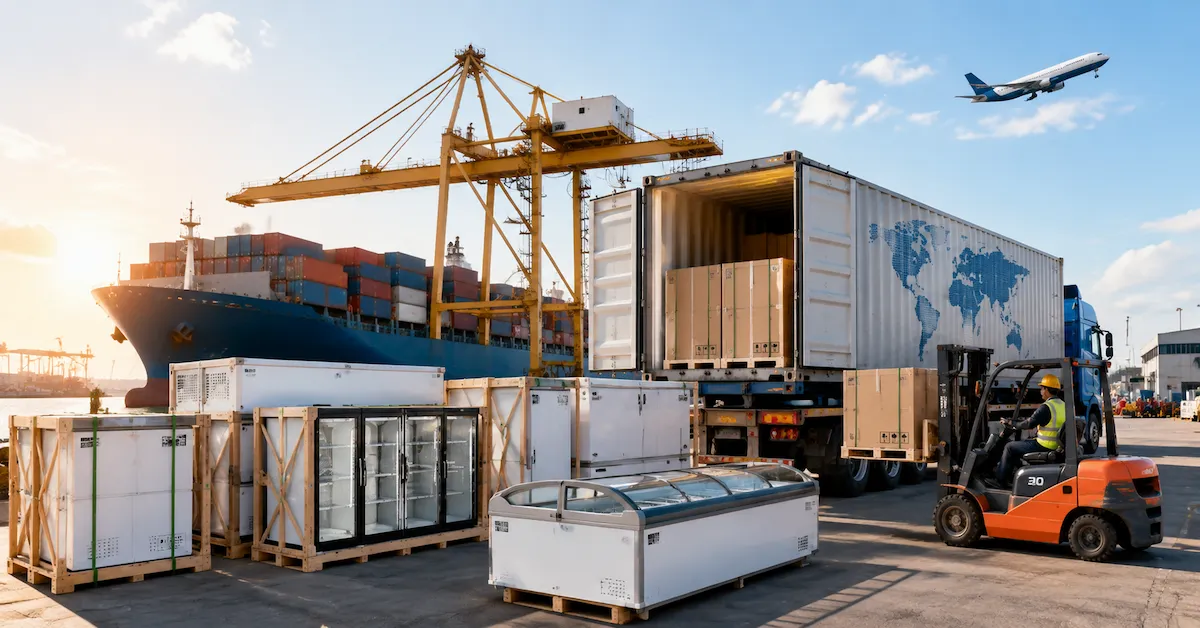
Commercial freezers are usually transported by sea because they require significant shipping space.
Compared with air transportation, sea freight provides:
- Lower transportation costs
- Higher loading capacity
- Better suitability for large equipment
- More stable international supply options
However, ocean transportation also creates challenges, including:
- Long transit times
- Multiple handling stages
- Container space limitations
- Humidity exposure
- Loading risks
A complete commercial freezer sea freight planning process helps buyers prepare for these challenges before shipment.
Understanding Commercial Freezer Sea Freight Planning
Commercial freezer sea freight planning refers to the process of organizing freezer transportation from factory preparation to final destination delivery.
It includes:
- Product dimension evaluation
- Packaging design
- Container selection
- Loading arrangement
- Freight calculation
- Shipping documentation
- Risk control
The goal is to achieve:
- Maximum container utilization
- Safe product transportation
- Predictable delivery schedules
- Lower logistics expenses
Step 1: Confirm Freezer Specifications Before Shipping
Before arranging sea freight, importers should confirm all product details.
Important information includes:
- Freezer model
- Product dimensions
- Packaging dimensions
- Gross weight
- Quantity
- Voltage requirements
- Accessories
- Special protection requirements
Incorrect information may cause:
- Loading problems
- Increased freight costs
- Delayed shipment
- Additional handling fees
Accurate specifications are the foundation of effective commercial freezer sea freight planning.
Step 2: Choose the Right Container Type
Container selection directly affects shipping efficiency.
Common options include:
20GP Container
Suitable for:
- Smaller orders
- Limited product quantities
- Trial shipments
Advantages:
- Lower initial shipping commitment
- Suitable for market testing
40HQ Container
Suitable for:
- Large-volume orders
- Distributor purchases
- Regular imports
Advantages:
- Higher loading capacity
- Lower freight cost per unit
Importers should compare:
- Product dimensions
- Packaging size
- Container volume
- Shipping cost
The right container choice improves overall logistics efficiency.
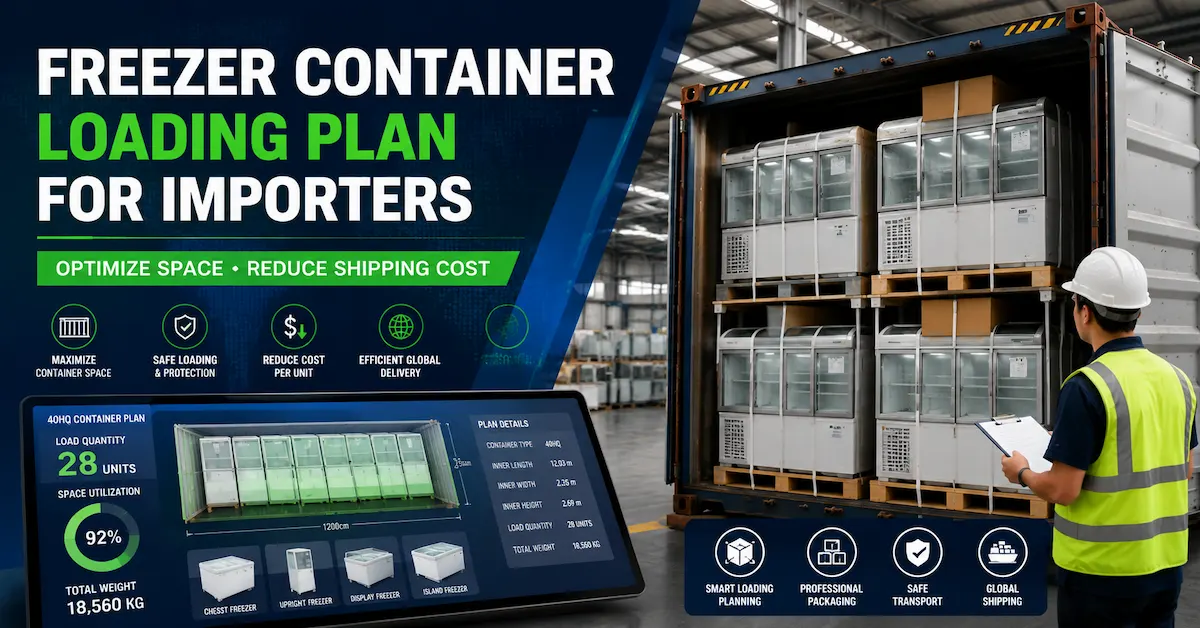
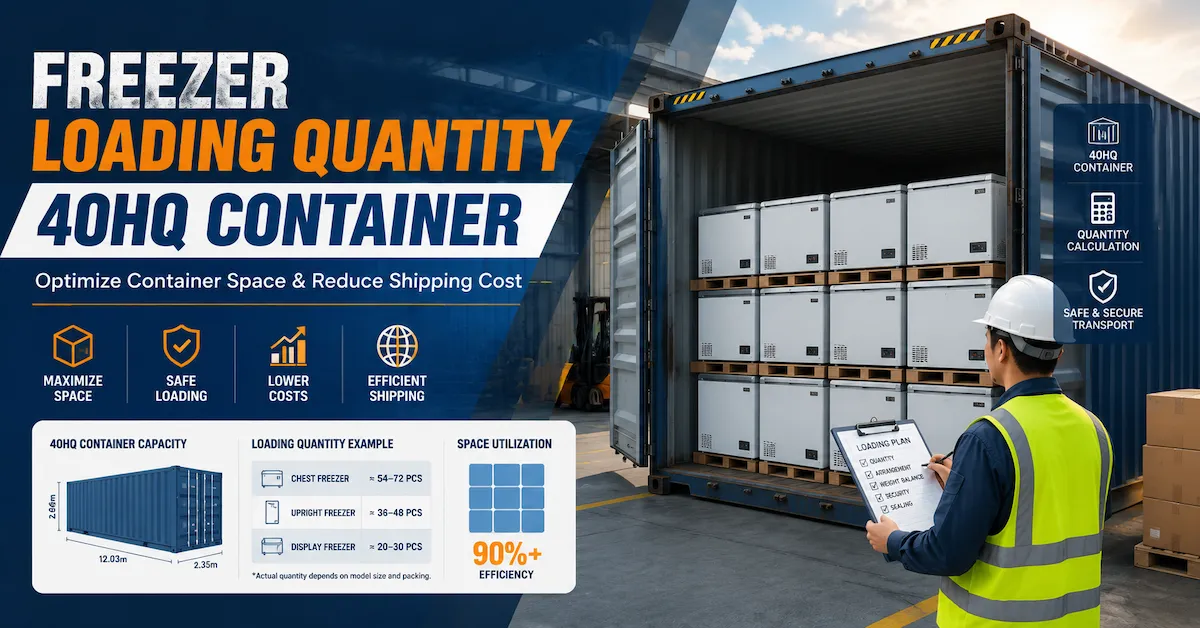
Step 3: Optimize Container Loading
Container loading is one of the most important parts of freezer transportation.
Poor loading planning can result in:
- Wasted container space
- Higher freight cost per unit
- Product movement during shipping
- Increased damage risk
A professional loading plan considers:
- Freezer orientation
- Packaging protection
- Weight distribution
- Product sequence
- Unloading convenience
Suppliers should provide:
- Loading quantity estimates
- Container layout
- Loading photos
- Shipping records
Efficient loading is a key factor in successful commercial freezer sea freight planning.
Step 4: Prepare Export Packaging for Sea Transportation
Commercial freezers must be protected against long-distance shipping conditions.
Export packaging usually includes:
Protective Film
Protects:
- Stainless surfaces
- Painted panels
- External finishes
Foam Protection
Protects:
- Corners
- Doors
- Glass components
Wooden Support
Provides:
- Additional stability
- Impact protection
- Safer handling
Moisture Protection
Helps prevent:
- Humidity damage
- Packaging deterioration
- Surface corrosion
Proper packaging reduces risks during:
- Factory handling
- Port operations
- Ocean transportation
- Final delivery
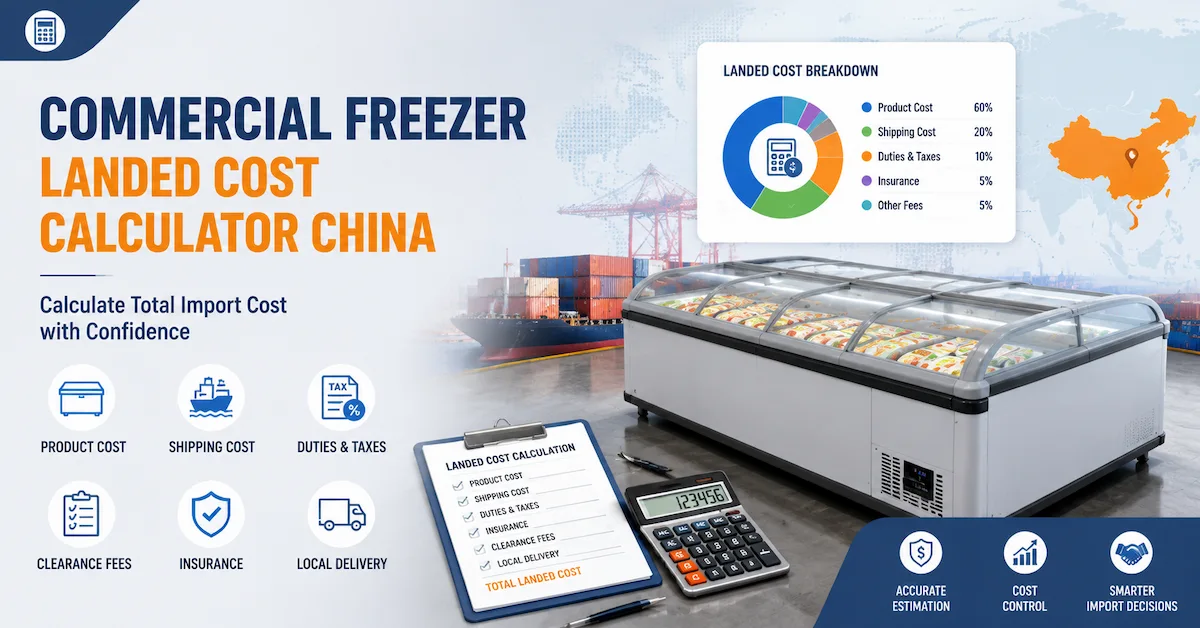
Step 5: Calculate Sea Freight Costs
Shipping cost is an important part of freezer import planning.
Total sea freight expenses may include:
| Cost Item | Description |
|---|---|
| Ocean freight | Main transportation cost |
| Port charges | Loading and handling fees |
| Documentation fees | Shipping paperwork |
| Insurance | Cargo protection |
| Customs clearance | Import processing |
| Local delivery | Destination transportation |
Importers should calculate the complete landed cost rather than only comparing factory prices.
A detailed commercial freezer sea freight planning process helps buyers identify hidden logistics expenses.
Step 6: Prepare Shipping Documents
International freezer shipments require accurate documentation.
Common documents include:
- Commercial invoice
- Packing list
- Bill of lading
- Certificate of origin
- Inspection report
- Product certificates
Incorrect documents may lead to:
- Customs delays
- Additional charges
- Shipment interruptions
Importers should confirm document requirements before shipment.
Step 7: Prevent Freezer Shipping Damage
Commercial freezers contain sensitive components.
Common transportation risks include:
Glass Damage
Solutions:
- Reinforced corner protection
- Foam padding
- Fixed door protection
Cabinet Damage
Solutions:
- Strong packaging
- Wooden frames
- Proper handling instructions
Component Damage
Solutions:
- Internal fixing
- Protective materials
- Careful loading
A reliable supplier should combine quality control with logistics preparation.
Step 8: Work With Experienced Suppliers
Supplier experience plays an important role in international shipping success.
A professional manufacturer should support:
- Packaging design
- Container planning
- Export documents
- Loading coordination
- Shipment tracking
Snowsea provides commercial refrigeration solutions with export support, including product preparation and shipping coordination.
Explore Snowsea’s commercial refrigeration products.
Step 9: Reduce Sea Freight Costs
Importers can reduce shipping costs through:
Better Container Utilization
Maximize available space without damaging products.
Accurate Order Planning
Avoid:
- Emergency shipments
- Small inefficient orders
- Excess inventory
Product Standardization
Standardized models can improve:
- Loading efficiency
- Packaging consistency
- Production planning
Supplier Cooperation
Experienced suppliers can recommend:
- Suitable container sizes
- Better packaging methods
- Efficient loading plans
Step 10: Plan Delivery Timelines
Sea freight planning should consider the complete timeline.
Typical stages include:
- Production preparation
- Factory inspection
- Packaging
- Container loading
- Vessel departure
- Ocean transportation
- Customs clearance
- Local delivery
Factors affecting delivery time include:
- Production schedule
- Shipping route
- Port conditions
- Customs processing
Importers should include additional buffer time for unexpected delays.
Common Mistakes in Freezer Sea Freight Planning
Ignoring Packaging Requirements
Weak packaging increases damage risks.
Selecting the Wrong Container
Incorrect container planning increases costs.
Underestimating Shipping Time
Ocean transportation requires careful scheduling.
Missing Documentation Requirements
Incomplete paperwork delays customs clearance.
Not Checking Loading Plans
Poor loading may reduce profitability.
How OEM Projects Affect Sea Freight Planning
Customized freezers require additional logistics preparation.
OEM projects may involve:
- Special packaging
- Custom dimensions
- Branding materials
- Additional accessories
- Different loading requirements
Importers should discuss transportation requirements during the customization stage.
Snowsea supports customized refrigeration projects through OEM and ODM solutions.
Commercial Freezer Sea Freight Planning Checklist
| Planning Area | Questions |
|---|---|
| Product | Are specifications confirmed? |
| Packaging | Is export protection sufficient? |
| Container | Is the size suitable? |
| Loading | Is space optimized? |
| Documents | Are all files prepared? |
| Shipping | Is the route reliable? |
| Cost | Is landed cost calculated? |
| Delivery | Is the timeline realistic? |
How Snowsea Supports Global Freezer Shipping
Snowsea works with:
- Freezer importers
- Regional distributors
- Supermarket equipment suppliers
- Food-service companies
Support includes:
- Product preparation
- Quality inspection
- Export packaging
- Container loading
- Shipping coordination
- Technical documentation
Learn more about Snowsea’s manufacturing capabilities through the company profile.
FAQ
What is commercial freezer sea freight planning?
Commercial freezer sea freight planning is the process of organizing freezer transportation, including packaging, container selection, loading, shipping, and delivery preparation.
Why are commercial freezers usually shipped by sea?
Sea freight provides lower transportation costs and is suitable for large refrigeration equipment with high volume and weight.
How can importers reduce freezer shipping costs?
Importers can reduce costs through efficient container loading, accurate order planning, proper packaging, and experienced supplier cooperation.
What container is suitable for commercial freezer shipping?
The suitable container depends on freezer dimensions, quantity, packaging size, and shipment requirements.
How can freezer damage during shipping be prevented?
Damage can be reduced through strong export packaging, proper loading methods, inspection, and reliable transportation planning.
Why is supplier experience important for sea freight?
Experienced suppliers understand packaging standards, container loading, export documents, and international shipping requirements.
Conclusion
Effective commercial freezer sea freight planning helps importers control costs, reduce transportation risks, and improve delivery reliability.
Successful freezer shipping requires coordination between:
- Product preparation
- Packaging protection
- Container optimization
- Documentation
- Freight management
- Supplier cooperation
By working with an experienced commercial refrigeration manufacturer, importers can build a more reliable supply chain and improve international purchasing efficiency.
Snowsea supports global buyers with commercial freezer manufacturing, OEM solutions, quality control, and professional export logistics support.