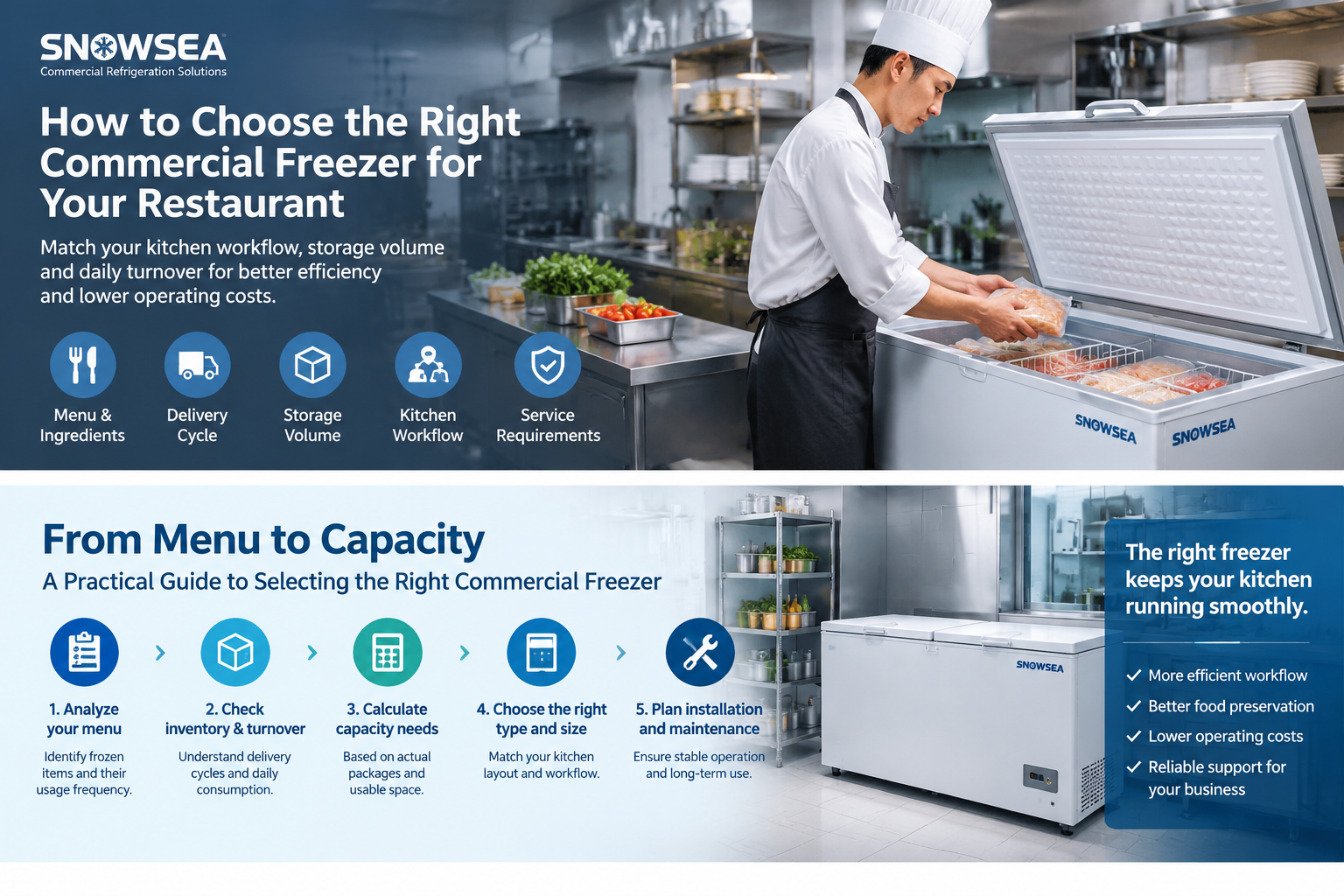
 Choosing a commercial freezer for restaurant operations starts with understanding how the kitchen works. Capacity, cabinet size and purchase cost are important, but they are not the only factors that determine whether a freezer can support daily food preparation.
A suitable freezer should match the restaurant’s frozen food categories, delivery schedule, storage habits and staff workflow. A large freezer may provide enough space on paper, but poor organization, difficult access or unsuitable installation conditions can reduce operational efficiency.
Before selecting equipment, restaurant buyers should consider three key questions: What frozen products need to be stored? How much inventory is required between deliveries? How frequently will staff access the freezer during daily operations?
Different restaurant types have different storage requirements. A restaurant preparing large quantities of meat and seafood may need bulk frozen storage, while a café, dessert shop or smaller foodservice operation may require easier access to frequently used ingredients. The goal is to select equipment that supports the kitchen instead of forcing the kitchen to adapt to unsuitable equipment.
Understanding Kitchen Areas Before Selecting a Freezer
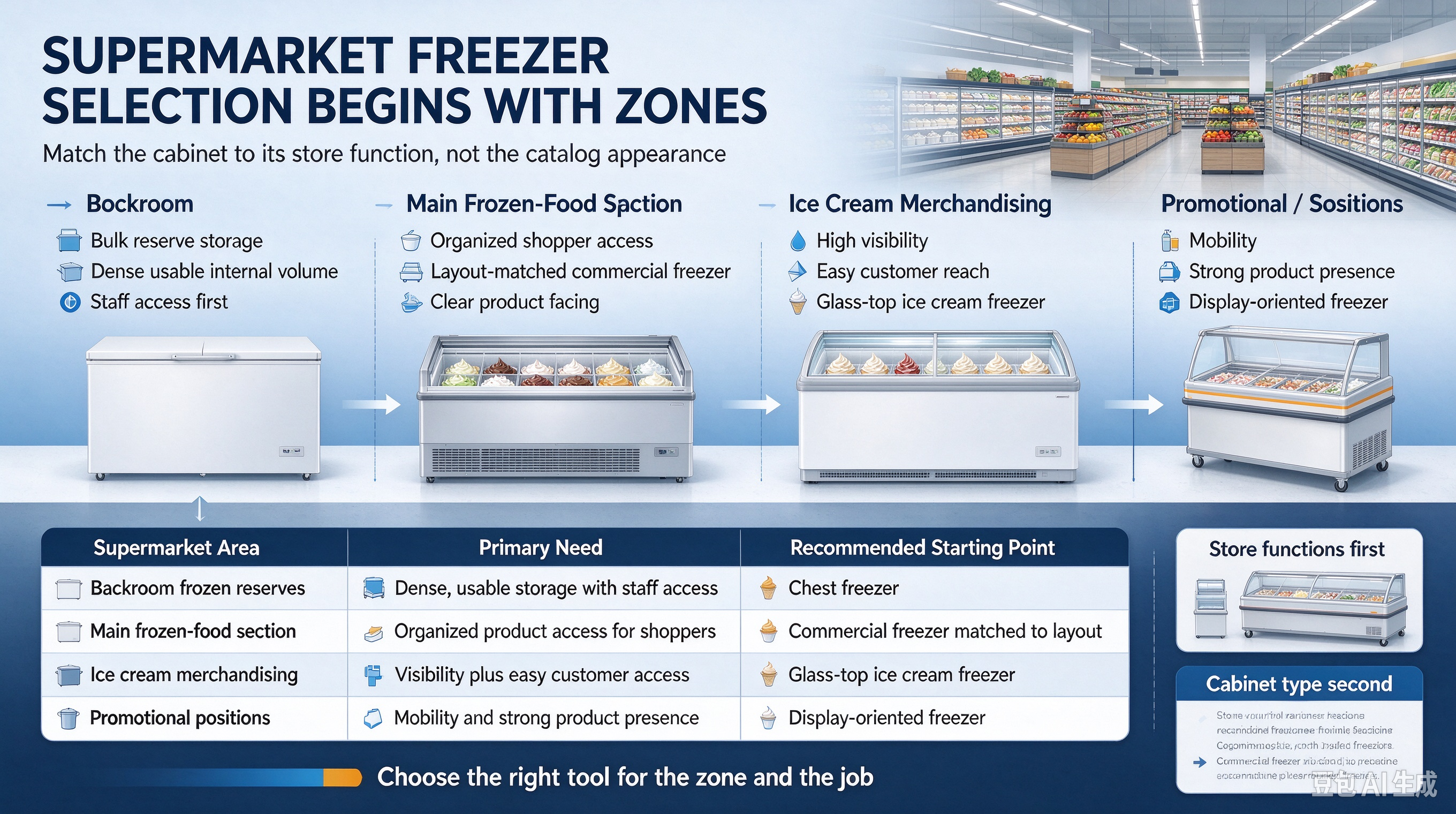
A restaurant may use frozen storage in several areas, including back-of-house storage rooms, preparation areas, dessert stations, seafood and meat preparation zones, or central kitchens.
Bulk storage areas usually prioritize capacity, while preparation areas often require faster access and better organization. For restaurant groups, branch kitchens and central kitchens may also require different freezer configurations.
A chest freezer can be a practical choice for reserve inventory and large frozen packages. However, frequently used products should be organized carefully to avoid repeated searching during busy service periods.
Start With Frozen Inventory Requirements
The correct freezer selection should begin with the menu rather than a product catalog.
Restaurants should identify frozen ingredients such as meat, seafood, vegetables, frozen products and desserts according to their own operation. Package size, daily consumption and delivery frequency all influence the actual storage requirement.
A useful planning method is:
Average frozen food usage × delivery interval + operational reserve = required frozen stock
After estimating inventory demand, buyers should check whether actual cartons and packages can be stored efficiently inside the freezer. A freezer with high listed capacity may still be unsuitable if products cannot be organized or accessed easily.
Capacity and Usable Space Are Different
Published freezer capacity is useful for comparison, but real restaurant storage depends on internal layout, baskets, product sizes and loading methods.
For example, Snowsea commercial chest freezer models are designed for frozen food storage applications with features such as storage baskets, drainage options, locks and temperature adjustment functions depending on the model configuration. Buyers should still evaluate the freezer using their own products and loading requirements.
The right question is not only how many liters a freezer has, but how much usable frozen inventory can be stored and accessed efficiently.
Chest Freezer or Upright Freezer?
There is no universal answer. The better choice depends on the restaurant workflow.
Chest freezers are often suitable for bulk frozen storage and larger packages. Upright formats may provide easier access for kitchens that handle many different product categories. Restaurant buyers should compare floor space, storage habits, access frequency and installation conditions before making a decision.
For high-volume operations, combining reserve storage with daily working storage may improve efficiency. However, adding more equipment also increases cleaning, maintenance and service requirements.
Consider Access Frequency and Kitchen Environment
A freezer opened occasionally for reserve inventory operates differently from one opened repeatedly during lunch and dinner preparation.
Frequent access, warm kitchen conditions and limited ventilation can affect refrigeration performance. Restaurant buyers should provide realistic installation information when communicating with suppliers.
The installation space should include not only cabinet dimensions, but also opening space, ventilation space and service access requirements.
Defrost and Maintenance Requirements
Restaurant equipment requires regular cleaning and maintenance. Buyers should understand the defrost method and daily maintenance needs before purchasing.
Different freezer designs may have different maintenance requirements. The most suitable choice depends on restaurant operation, labor availability and storage priorities.
Organize Storage Around Daily Workflow
A commercial freezer should help staff find ingredients quickly.
Restaurants can improve efficiency by organizing products according to category and turnover. Frequently used ingredients should be easier to reach, while reserve inventory can be stored separately.
A practical storage system may divide products by category, such as proteins, seafood, vegetables, prepared products and desserts. The specific arrangement should follow the restaurant’s menu and workflow.
Restaurant Chain Standardization and OEM Requirements
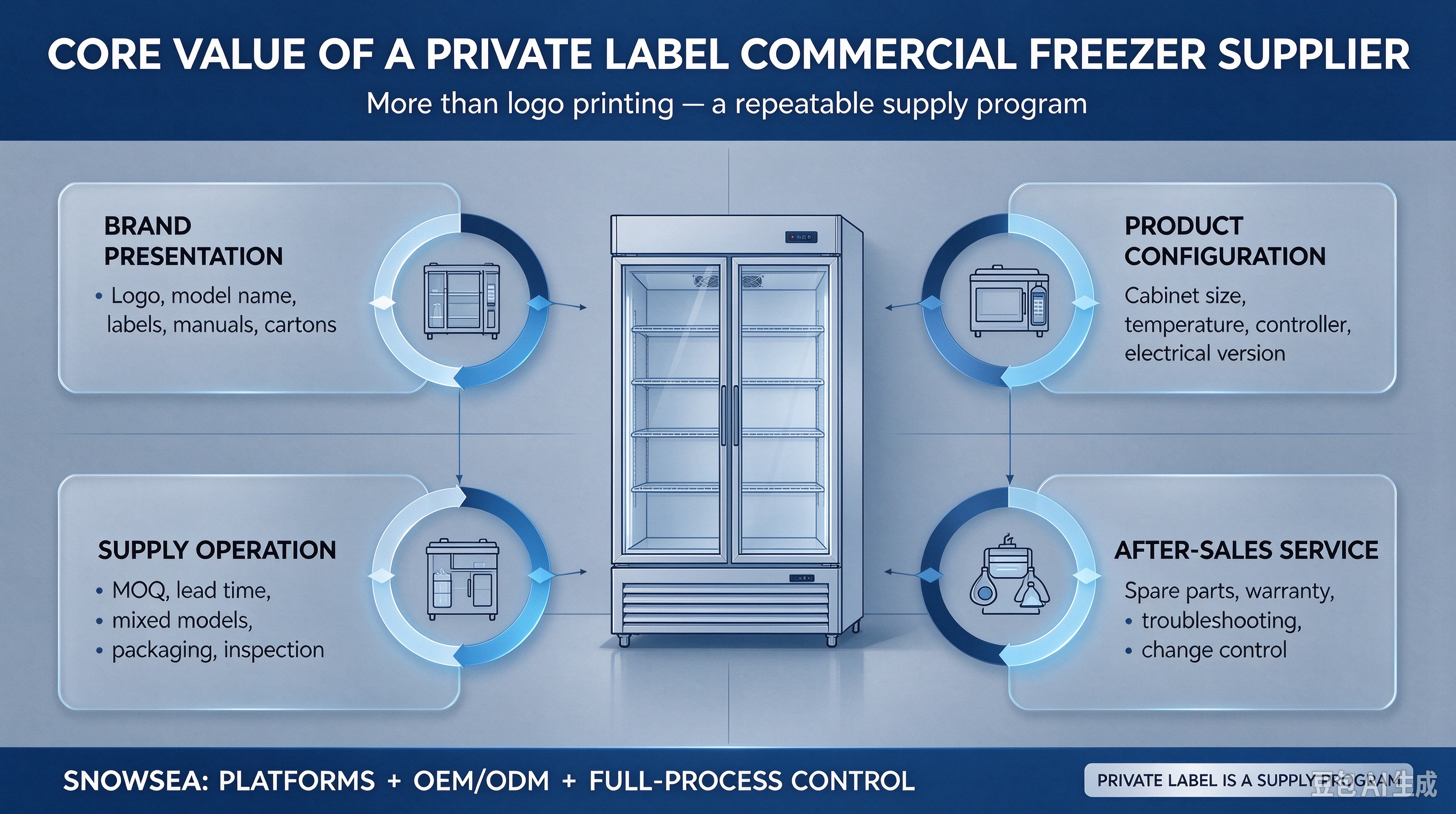
For restaurant groups and foodservice distributors, repeatable equipment standards can simplify purchasing, training, replacement and service management.
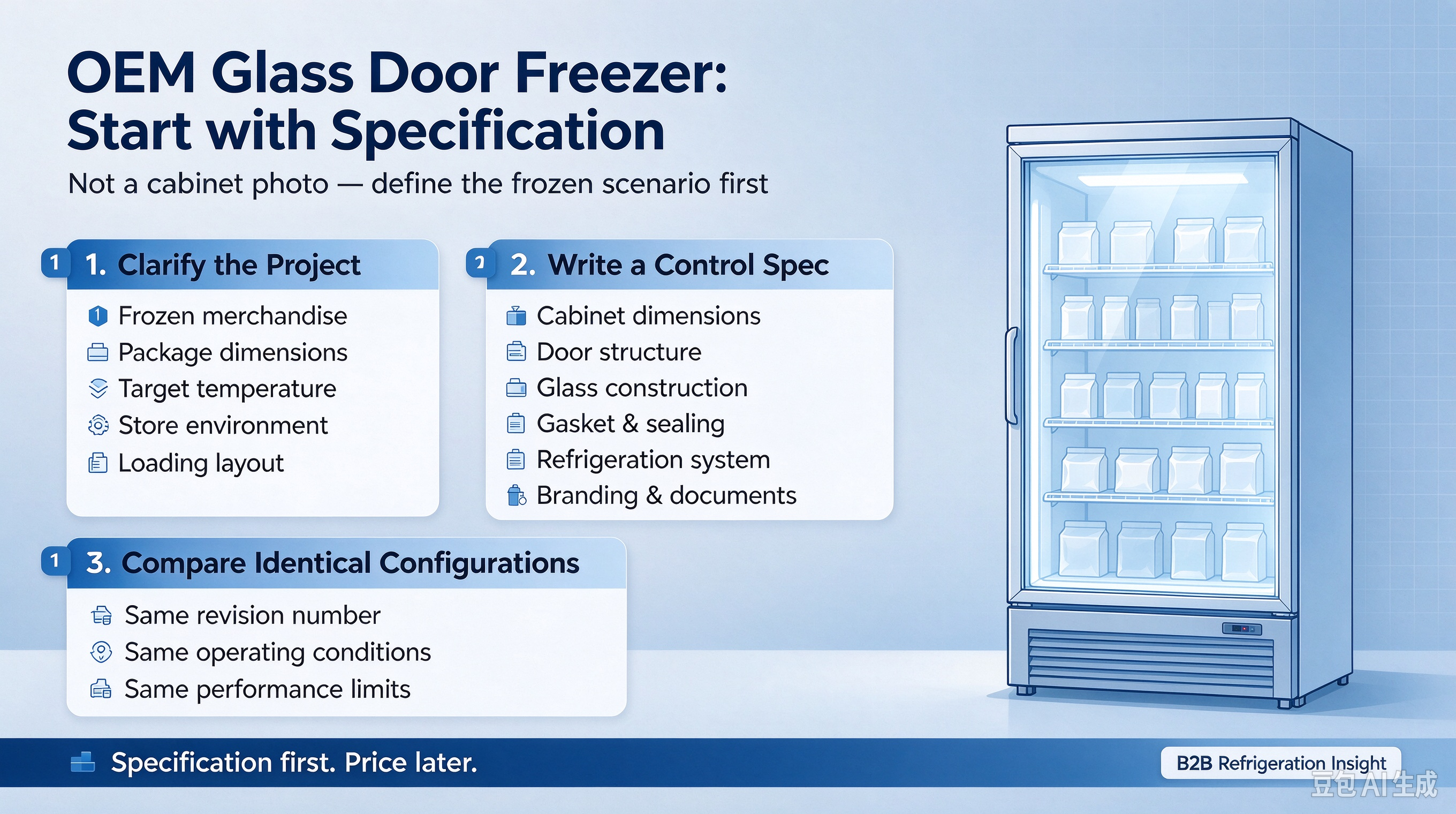
A standardized freezer specification should include model, capacity, dimensions, electrical requirements, accessories, testing requirements and packaging details.
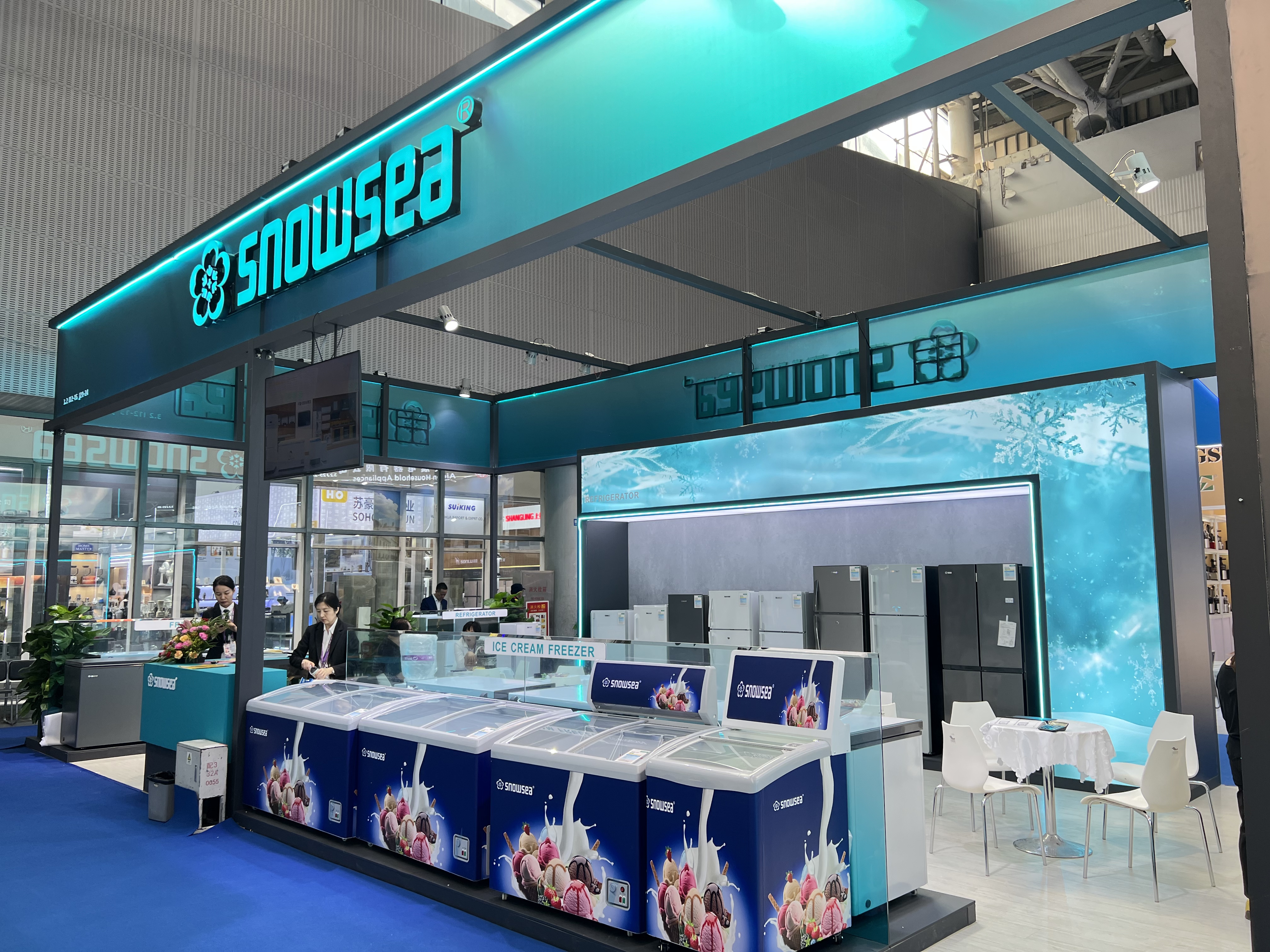
Snowsea provides commercial refrigeration products and OEM/ODM services for customers requiring customized project solutions. Customization should focus on solving clear operational requirements rather than unnecessary changes.
Final Selection Checklist
Before ordering a commercial freezer, restaurant buyers should evaluate:
- Frozen food categories and package sizes
- Required inventory between deliveries
- Daily access frequency
- Kitchen installation space
- Ambient operating conditions
- Storage organization requirements
- Defrost and cleaning expectations
- Energy performance under similar conditions
- Service and spare-part considerations
A successful freezer purchase is not simply about selecting the largest cabinet or lowest price. The best commercial freezer is the one that fits the restaurant’s workflow, storage needs and long-term operating goals.
By evaluating the complete application before purchasing, restaurants, foodservice distributors and project buyers can select more practical and reliable commercial refrigeration solutions from suppliers such as Snowsea.
To explore available models, visit the Snowseax Products Page. For freezer design and custom manufacturing projects, visit the Snowseax OEM/ODM Page and contact the Snowseax team for a tailored solution.