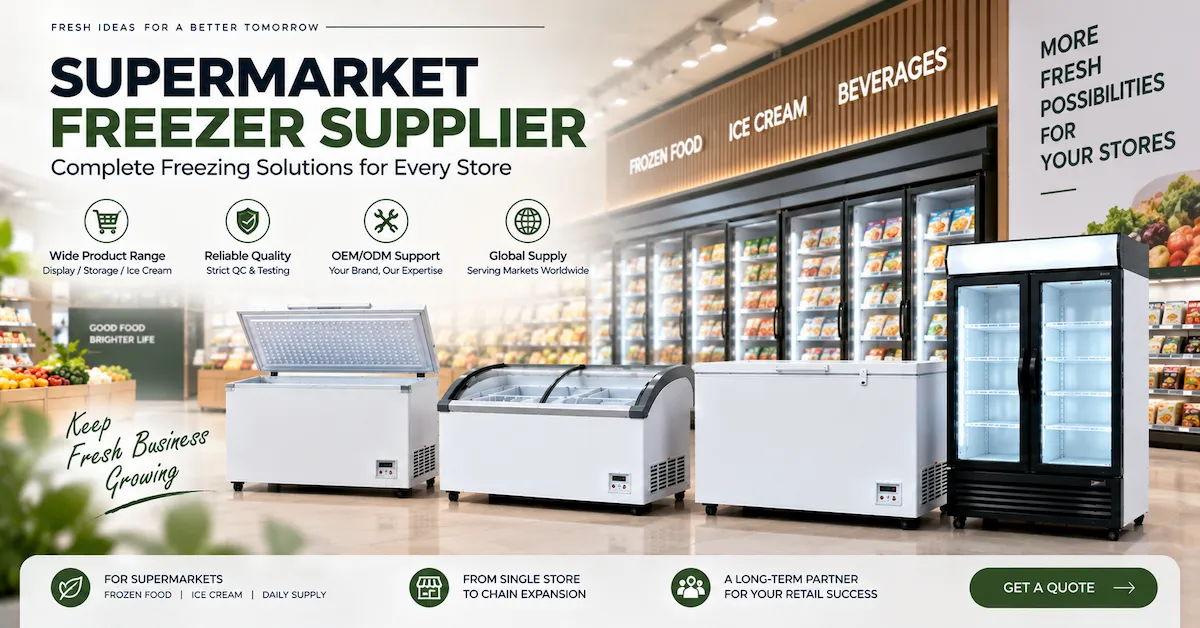
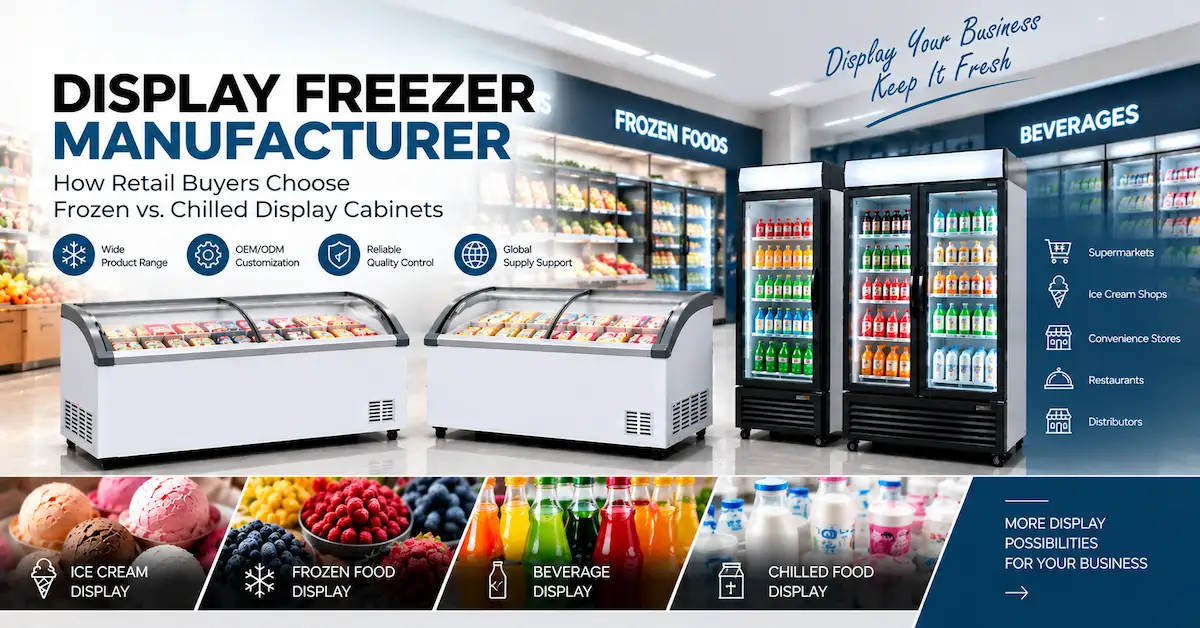
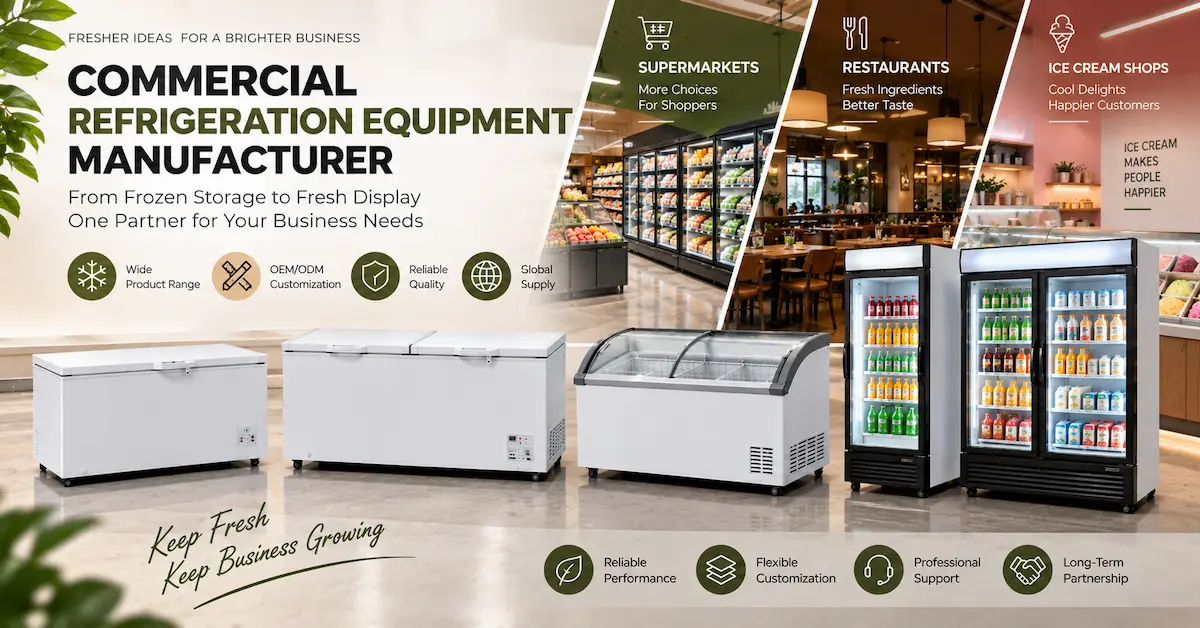
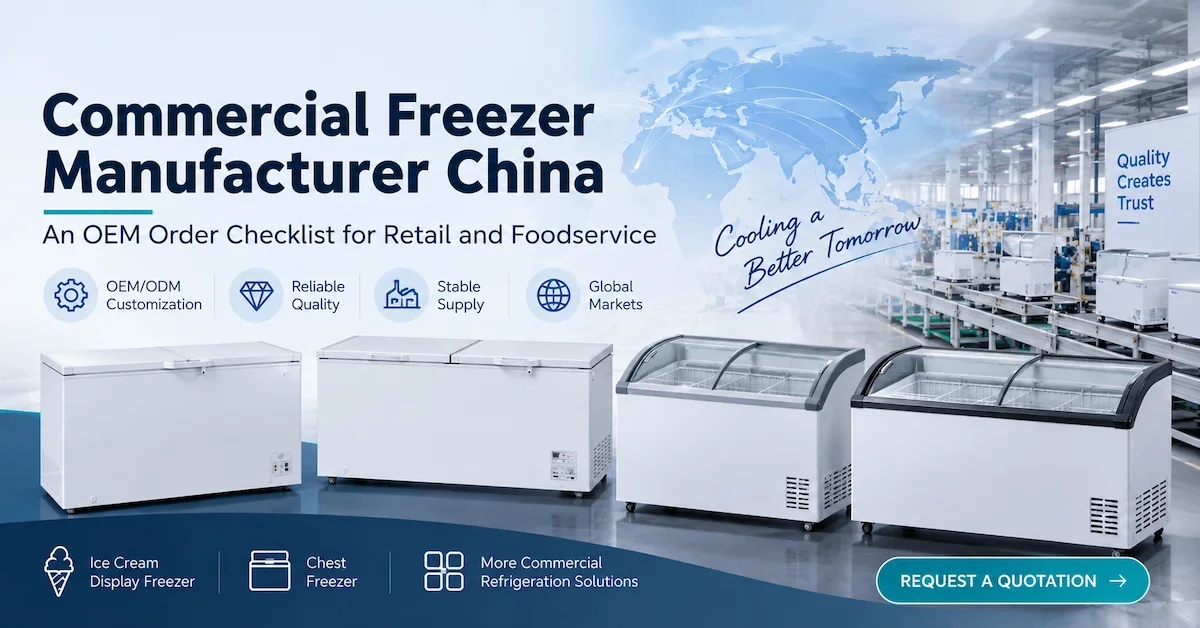
A commercial refrigeration supplier should give you more than a model number and a unit price. Before approving an order, establish what will arrive, what must happen before each location can use it, and who will resolve a problem afterward. For distributors and retail chains, the purchasing decision should connect product suitability with delivery, documentation and service. SNOWSEA supplies commercial refrigeration for food retail, beverage display and storage, with OEM/ODM support for overseas distributors, brands and project buyers. Its commercial refrigeration product range provides a starting point; the order-specific quotation should define the actual commitment.
What Should Your Commercial Refrigeration Supplier Be Responsible For?
Start by separating equipment supply from local installation and service. For a recurring import program or private-label range, consider factory-based supply when your business can manage the destination-side work. For an urgent replacement requiring installation and local repairs, compare a stocked local option. Do not assume that either route includes every service. SNOWSEA’s factory-versus-reseller guide discusses differences in quantity, availability, customization and local support. Ask who will handle transport, unloading, placement, electrical connection, commissioning and later repairs, then record what is included, separately chargeable or outside the supplier’s scope. This guide concerns cabinet-based food storage and display; specialist medical storage, walk-in systems and blast freezing need a separate technical assessment.
Match Every Quoted Model to a Defined Application
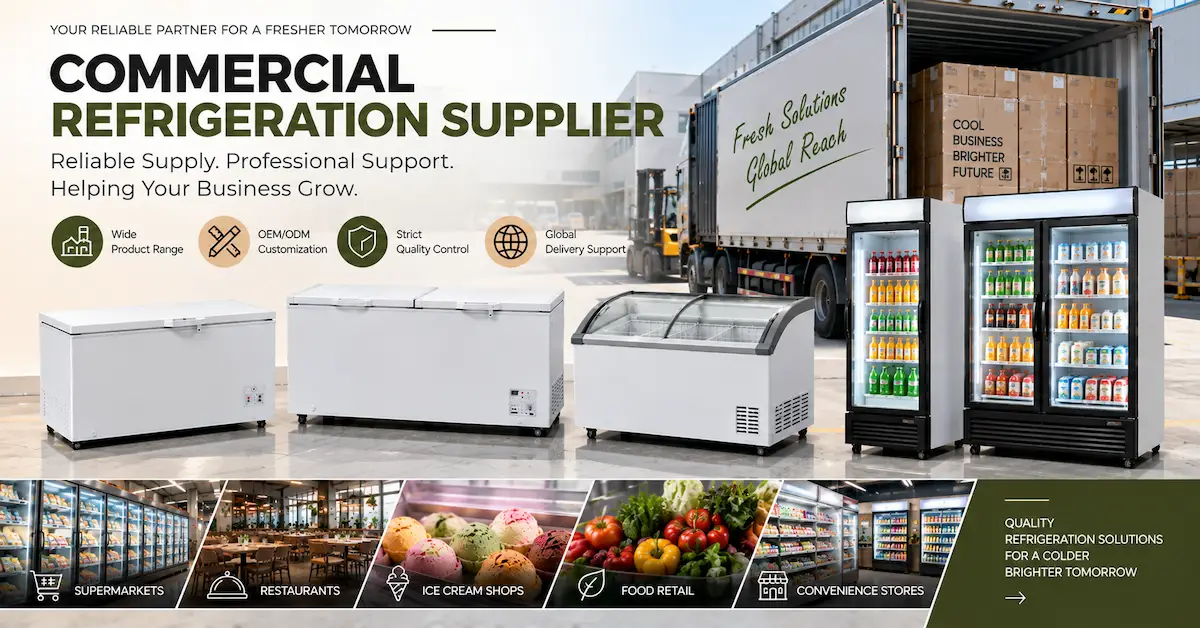
Give each line of the order a job: frozen reserve stock, packaged ice cream display or chilled drinks. A restaurant buying backup storage needs a different brief from an ice cream brand placing cabinets in shops. For a beverage retailer, check the bottle assortment and shelf arrangement rather than choosing by liters alone. The SNOWSEA models below are selection starting points. Capacities are published catalog figures, and application notes are purchasing suggestions—not validation of your particular installation.
| Model | Published configuration | Potential purchasing role | Detail to settle in the quote |
|---|---|---|---|
| BD-500 chest freezer | 500L, double-lid cabinet, removable basket and defrost drain. | Larger frozen-stock requirement | Basket quantity, usable loading arrangement and required holding conditions |
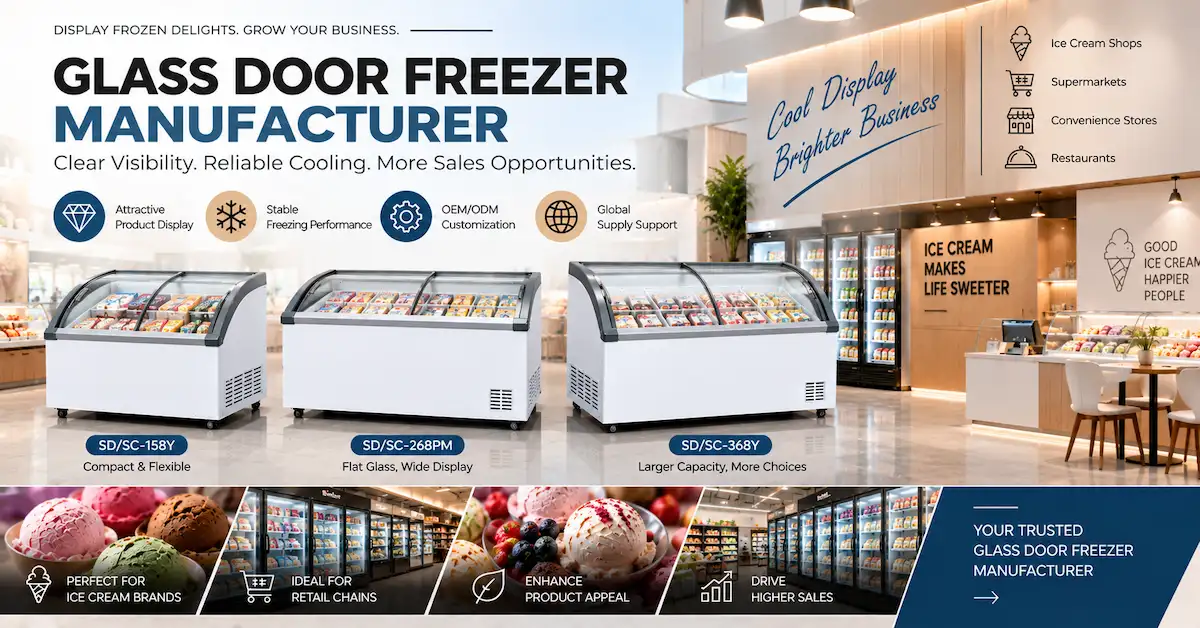
| SD/SC-368Y ice cream freezer | 368L, curved tempered glass, removable baskets and divider. | Packaged ice cream display | Basket allocation, package fit and glass protection during transport |
| LC-208 display refrigerator | 208L, single door, listed temperature range of 0–10°C. | Smaller chilled beverage display | Shelf spacing, controller version and installation clearance |
| LC-650 display chiller | 650L, double glass doors, listed range of 0–10°C; fan cooling is optional. | A larger chilled beverage assortment | Whether fan cooling is included and which accessories are supplied |
Keep the chilled-display models separate from the freezer requirement. Do not interpret a larger capacity or a different door arrangement as confirmation of an additional temperature zone. Obtain the final specification and usable loading layout before treating two cabinets as interchangeable.
Put the Technical Specification Beside the Price
Send the same requirements to every commercial refrigeration supplier being considered. Otherwise, the comparison may reward a cheaper configuration rather than a better offer. Use a specification sheet with an issue date or revision number, and ask suppliers to list exceptions instead of quietly substituting their standard configuration. The following is a buyer-side template, not a set of performance claims shared by all SNOWSEA models.
| Specification | Information to define | Confirmation to obtain |
|---|---|---|
| Application and loading | Product types, package dimensions, stock quantity and replenishment routine | Proposed model, usable layout and loading restrictions |
| Temperature performance | Required holding conditions and incoming product condition | Test method, measurement positions and acceptance limits |
| Installation environment | Ambient temperature, humidity, available space and opening frequency | Supported conditions, clearances and opening requirements |
| Electrical version | Destination voltage, frequency and plug | Matching specification, nameplate and technical documents |
| Refrigeration and controls | Cooling method, defrost arrangement and monitoring needs | Refrigerant, controller and agreed component configuration |
| Materials and accessories | Liner, glass, gaskets, baskets, shelves, lighting and locks | Included items, optional items and approved alternatives |
| Product identification | Brand, model reference, serial identification and document language | Approved artwork and model-specific document versions |
| Packing and delivery | Handling route, destination and required delivery sequence | Packed dimensions, protection specification and agreed delivery scope |
Compare Complete Quotations, Not Starting Prices
Ask for a clear split between recurring unit costs and one-time expenses. Include the selected cabinet, accessories, packaging and any agreed inspection or spare-parts provision. Separate samples, development and tooling where applicable. Confirm the currency, quote validity, delivery scope and excluded charges before presenting a cost comparison internally. SNOWSEA’s factory-direct pricing guide explains why a factory price and the complete sourcing cost are different: inspection, transport, importing, warehousing and local support can remain with the buyer. Do not automatically add an expense already included in the offer. For each line, mark it included, separately quoted, buyer-arranged or not yet confirmed. An unpriced requirement is an unresolved item—not a zero-cost item.
A Configuration Difference Is Not a Discount
The LC-650 listing identifies fan cooling as optional. If one proposal includes that option and another does not, first ask whether both meet the operating brief. Apply the same check to shelves, baskets, lighting, packaging and the parts package. Avoid an unexplained “premium” or “economy” label; request the actual difference. When the specifications and responsibilities match, compare price. Where they do not, record what the buyer gives up or takes on in exchange for the lower initial amount.
Turn Lead Time into a Store-by-Store Delivery Plan
Have the commercial refrigeration supplier distinguish specification approval, material preparation, production completion, inspection, shipment readiness and expected destination arrival. Ask what starts the quoted lead time and which buyer decisions could change it. For a mixed-model program, confirm MOQ by model and configuration, available production capacity for the proposed order, and whether items can be packed and shipped together. Request an actual loading plan rather than applying a single-model container figure to the entire order. If store openings are staggered, show the required quantities and dates by location. Discuss split shipments, storage and additional handling as options requiring agreement—not services assumed to be included.
Worked Example: Twenty-Two Units Can Still Leave Two Store Packages Incomplete
Consider a hypothetical rollout to 12 stores, each requiring one freezer and one beverage cooler. Delivery of 12 freezers and 10 coolers totals 22 cabinets, but produces only 10 complete two-unit sets. The remaining two locations still lack their specified cooler. This is a planning illustration, not a SNOWSEA customer case. Track complete equipment sets against each location’s requirement, not only the total number dispatched. Agree how shortages will be reported and whether the buyer prefers waiting, splitting delivery or evaluating an alternative. Never replace the missing cooler with an available freezer merely to complete the unit count.
Check Build Quality and Performance Before Shipment
SNOWSEA’s OEM/ODM manufacturing process outlines material processing, structural assembly, insulation foaming, refrigeration installation, main assembly, performance testing, final inspection and packing. Connect those stages to the cabinets on your order. On the sample, inspect panel and lid alignment, gasket contact, shelf or basket fit, finishes and access for cleaning. For performance approval, agree the ambient conditions, load, measurement locations, duration and any relevant opening or replenishment exercise. Identify the exact configuration in the report. Keep sample validation separate from production inspection, and ask which checks apply to every unit and which use an agreed sample. A factory process description is useful context, but the shipment still needs the evidence specified for your order.
Keep Compliance and OEM Approval Model-Specific
For the destination market, request the applicable document list and confirm the model, electrical configuration and brand identification each document covers. Have its scope reviewed before approving labels or printing certification marks. Do not infer universal coverage from a general company certificate. For private-label supply, keep artwork changes separate from engineering changes. SNOWSEA’s product FAQs identify cabinet dimensions, insulation, refrigeration configuration, compressor options and controls as areas for project evaluation. Obtain feasibility, cost and sample requirements for the selected model. Record who approves changes, which alternatives are permitted and what rights apply to custom drawings or tooling. An accepted logo proof should not be treated as approval of an unresolved technical modification.
Agree on the Receiving Process Before the Truck Arrives
Define how the destination team will compare cartons, models, quantities and identifiers with the packing list. Request instructions for checking and reporting visible damage, missing accessories or specification discrepancies, together with the relevant reporting windows. Keep a shipment-damage report separate from a later operating complaint so each follows the agreed process. Ask how packaging and photographs should be retained where needed for a claim. Before equipment is loaded with stock, follow the manufacturer’s installation and startup instructions and arrange any required professional checks. The commercial refrigeration supplier should identify its contact and responsibilities; the buyer should identify who receives, documents and escalates issues locally.
Make Spare Parts and Local Service Part of the Agreement
“Warranty included” is not a complete service description. Ask what is covered, what is excluded, when coverage begins, what evidence a claim needs, and who pays for parts freight and local labor. Clarify support for an arrival fault separately from routine maintenance. SNOWSEA’s company and support information lists standard spare-parts stocking, technical documentation and remote assistance. Confirm the arrangement for the selected models and destination rather than assuming local onsite service everywhere. Request an illustrated parts list and model or production-version references. For unique OEM components, agree the supply arrangement separately. Do not choose a generic spare-parts percentage without considering the products and the service plan.
Plan Repeat Orders Without Multiplying Product Versions
Keep approved drawings, components, artwork and packing details under one revision reference. Use that reference on repeat orders and require proposed substitutions to be disclosed before production. Review the actual sales mix, remaining stock, service requests and delivery performance before expanding the range. SNOWSEA’s distributor pricing guide treats inventory, support costs and repeat-order consistency as part of the purchasing decision, not just the factory discount. Share a realistic forecast with your commercial refrigeration supplier, but distinguish it from a firm order or material commitment. Add another model or electrical version when it serves an identified customer requirement—not simply because a catalog option exists.
Request a Supply Proposal from SNOWSEA
SNOWSEA’s contact page invites standard-model and customized-project discussions covering specifications, production planning and delivery feasibility. Send the destination country, customer or store types, required models or applications, quantities, electrical requirements and delivery sequence. Add package dimensions, installation constraints, branding needs and mandatory documents. Mark preferences separately from non-negotiable requirements. Request a model-by-model supply proposal showing the confirmed configuration, included accessories, sample arrangements, MOQ, delivery milestones, packing and after-sales scope. A useful inquiry can begin with an unfinished brief, provided provisional details are labeled. Request an explanation of open items rather than an apparently final price built on assumptions.
Frequently Asked Questions
What should I look for in a commercial refrigeration supplier?
Evaluate product suitability, quotation clarity, approval evidence, delivery planning and service responsibilities together. Ask for model-specific documents and a named route for resolving questions. Use the supplier’s response to your actual specification as part of the assessment, not a generic capability presentation alone.
Should I buy directly from a factory or use a local distributor?
Compare both routes against quantity, urgency, customization and the local work your team can manage. For a single urgent unit needing installation, assess a locally stocked proposal. For a repeat import program, evaluate factory-based supply with a defined destination-side service plan.
Can one commercial refrigeration supplier provide freezers and chilled-display cabinets?
SNOWSEA’s range includes frozen-storage, ice cream-display and beverage-display equipment. Request separate specifications for each application, even when the models share a purchase order or brand identity. One successful freezer sample is not approval of the chilled-display model.
What is the MOQ for a mixed-model order?
Obtain it for the proposed quantities and configurations. Ask whether minimums apply separately to each model, electrical version, branding option or custom component. Do not assume that reaching a total shipment quantity removes the minimum for every line.
Does quoted lead time mean arrival at my warehouse?
Ask the supplier to define its start and endpoint. Record production, inspection, shipment readiness and destination arrival separately. Confirm which transport and receiving activities are included, and revise the schedule when specifications or delivery requirements change.
How should I compare prices from a commercial refrigeration supplier?
Compare equivalent configurations and delivery scopes, then account for buyer-arranged costs without double counting included services. Separate development costs from repeat unit costs. Obtain comparable energy-test information where operating expense affects the choice; do not treat an unverified efficiency claim as a saving.
Can SNOWSEA support private-label refrigeration orders?
SNOWSEA offers OEM/ODM cooperation for distributors, brand owners and project buyers. Submit the branding and technical brief for evaluation. Confirm model-specific feasibility, sample approval, documentation and commercial terms before committing to the branded production version.
What should happen when delivered equipment is damaged or incorrect?
Use the reporting, evidence and resolution process agreed before shipment. Record the affected model and identification details, document the discrepancy and contact the designated parties. Keep decisions about repair, replacement or acceptance in writing rather than making an unapproved change locally.
Are replacement parts and local labor both covered by warranty?
Do not assume both are included. Compare component coverage, exclusions, labor responsibility, freight responsibility and claim procedures separately. Ask how the correct replacement part is identified for the production version and how urgent cases are handled.
What is enough information to request a first quotation?
Provide the destination, storage or display task, approximate quantity, electrical requirements, installation constraints and target timing. Add branding needs and any mandatory documents. Request recommended models, a clearly defined quotation scope and a list of details needed for final approval.
Conclusion
Choose a commercial refrigeration supplier by what your business can approve, receive and support—not the opening price alone. Match each cabinet to its application, compare complete configurations, plan delivery around complete store requirements and agree on documentation and service before ordering. For a SNOWSEA project, request a model-specific refrigeration supply proposal with your destination market, product requirements, quantities and delivery sequence. Ask for the confirmed equipment specification, included options, approval milestones and after-sales responsibilities so the proposal can become an executable order rather than another price list.