Temperature management is one of the most important factors in commercial refrigeration. Supermarkets, restaurants, convenience stores, and cold chain warehouses all require specific refrigeration conditions to maintain food safety and product quality. The correct commercial refrigerator temperature range helps businesses improve refrigeration efficiency, reduce spoilage risk, and maintain stable food storage conditions.
Different products require different refrigeration temperatures. Frozen foods, beverages, dairy products, vegetables, seafood, and prepared meals all have unique cooling requirements. Understanding the proper commercial refrigerator temperature range helps businesses optimize refrigeration performance and protect inventory quality.
Why Commercial Refrigerator Temperature Range Matters
Incorrect refrigeration temperatures can negatively affect both food quality and refrigeration efficiency.
Common refrigeration problems include:
- Product spoilage
- Ice crystal formation
- Uneven food preservation
- Excessive energy consumption
- Compressor overload
Maintaining the proper commercial refrigerator temperature range helps businesses minimize these problems while improving refrigeration stability and operational reliability.
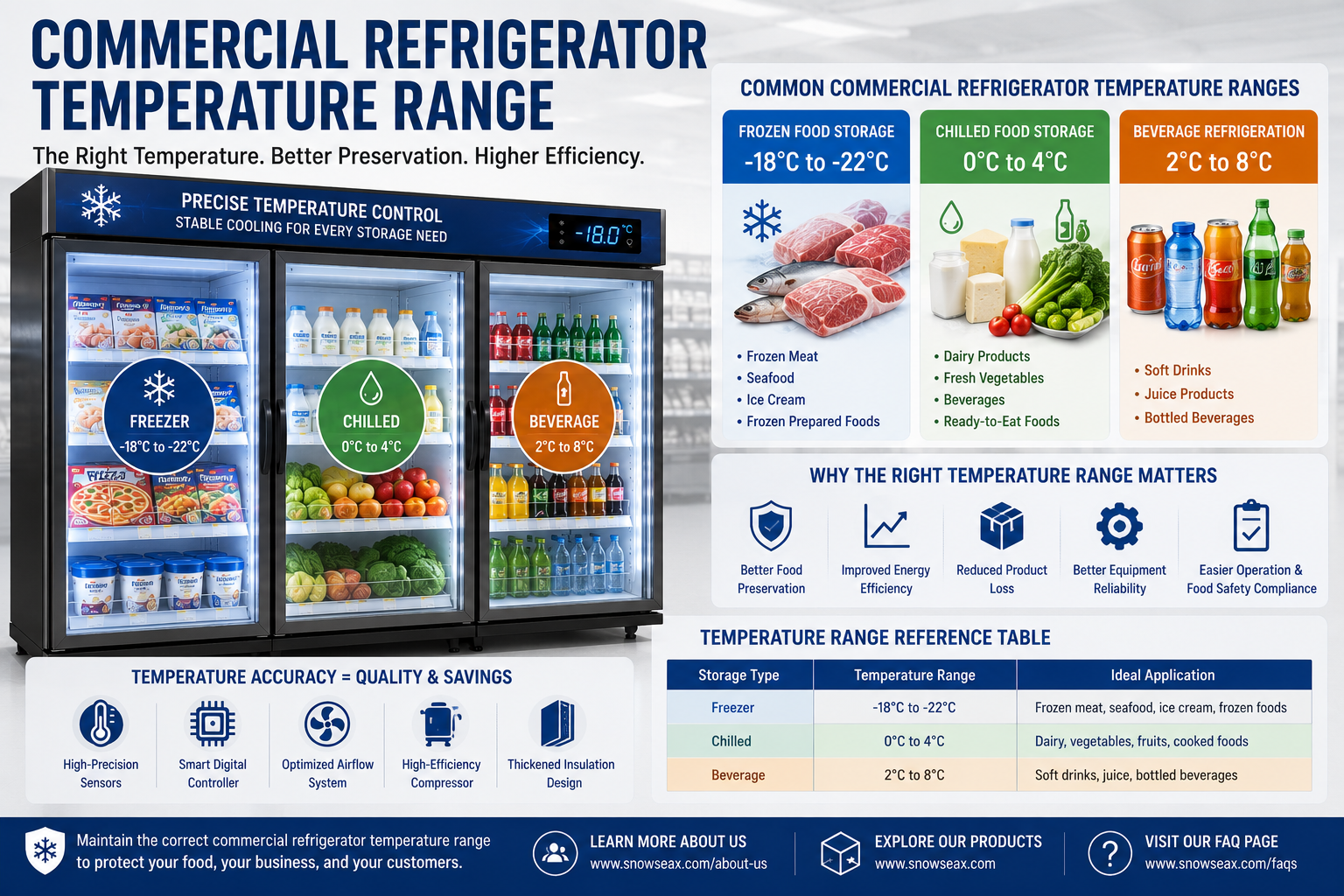
Common Commercial Refrigerator Temperature Ranges
Different refrigeration applications require different temperature settings.
Frozen Food Storage
Typical freezer temperature range:
-18°C to -22°C
Suitable for:
- Frozen meat
- Seafood
- Ice cream
- Frozen prepared foods
Chilled Food Storage
Typical refrigeration temperature range:
0°C to 4°C
Suitable for:
- Dairy products
- Fresh vegetables
- Beverages
- Ready-to-eat foods
Beverage Refrigeration
Typical beverage cooling range:
2°C to 8°C
Suitable for:
- Soft drinks
- Juice products
- Bottled beverages
Using the correct commercial refrigerator temperature range helps maintain product freshness while improving refrigeration efficiency.
How Commercial Refrigeration Systems Maintain Stable Temperatures
Modern refrigeration systems use intelligent temperature control technology to maintain stable cooling conditions.
Core Refrigeration Components
- Digital temperature sensors
- Smart controllers
- Optimized airflow systems
- High-efficiency compressors
- Refrigeration insulation systems
Because of these technologies, a commercial refrigerator temperature range can remain stable even during frequent door openings and high-traffic operation.
Key Benefits of Proper Refrigeration Temperature Control
Better Food Preservation
Maintaining the correct commercial refrigerator temperature range helps preserve food texture, freshness, and storage quality.
Improved Energy Efficiency
Stable refrigeration reduces unnecessary compressor cycling and energy waste.
Reduced Product Loss
Consistent cooling conditions minimize spoilage and refrigeration instability.
Better Refrigeration Reliability
Optimized temperature management improves refrigeration system lifespan.
Easier Commercial Operation
Digital temperature monitoring simplifies refrigeration management and food safety compliance.
Performance Comparison
| Feature | Incorrect Temperature Control | Proper Commercial Refrigerator Temperature Range |
|---|---|---|
| Food Preservation | Unstable | Improved |
| Energy Efficiency | Lower | Higher |
| Cooling Stability | Moderate | Stable |
| Product Loss Risk | Higher | Reduced |
| Refrigeration Reliability | Standard | Improved |
Commercial Applications
The proper commercial refrigerator temperature range is essential for:
- Supermarkets and retail refrigeration
- Restaurants and commercial kitchens
- Beverage refrigeration systems
- Frozen food warehouses
- Cold chain logistics facilities
Common Usage Scenarios:
- Freezer Temperature Accuracy Control
- Uniform Cooling Refrigeration System
- Fast Cooling Commercial Freezer
Engineering Considerations for Commercial Refrigeration Temperature Control
Businesses selecting refrigeration equipment should evaluate:
- Sensor accuracy
- Airflow circulation design
- Compressor performance
- Refrigeration insulation quality
- Digital control systems
- Long-term maintenance requirements
Proper refrigeration system configuration helps maintain a stable commercial refrigerator temperature range and improve operational efficiency.
FAQ
Q1: What is the ideal commercial freezer temperature range?
A1: Most commercial freezers operate between -18°C and -22°C for frozen food storage.
Q2: Why is refrigeration temperature accuracy important?
A2: Stable temperatures help maintain food quality, reduce spoilage risk, and improve refrigeration efficiency.
Q3: Can digital refrigeration systems improve temperature stability?
A3: Yes. Modern refrigeration systems use intelligent controls to maintain more precise cooling performance.
Building a More Reliable Commercial Refrigeration System
Understanding the proper commercial refrigerator temperature range helps businesses improve refrigeration efficiency, maintain food safety, and reduce long-term operating costs.
Learn more about our company: https://www.snowseax.com/about-us
Explore our refrigeration products: https://www.snowseax.com/
Visit our FAQ page: https://www.snowseax.com/faqs
Contact our refrigeration specialists: https://www.snowseax.com/contact-us