For supermarkets, convenience stores, grocery retailers, beverage shops, and food-service businesses, choosing the right refrigeration equipment directly affects product quality, customer experience, energy costs, and sales performance.
Many buyers compare a display freezer vs beverage cooler because both products use glass displays and are designed for customer-facing retail environments.
However, they serve completely different purposes.
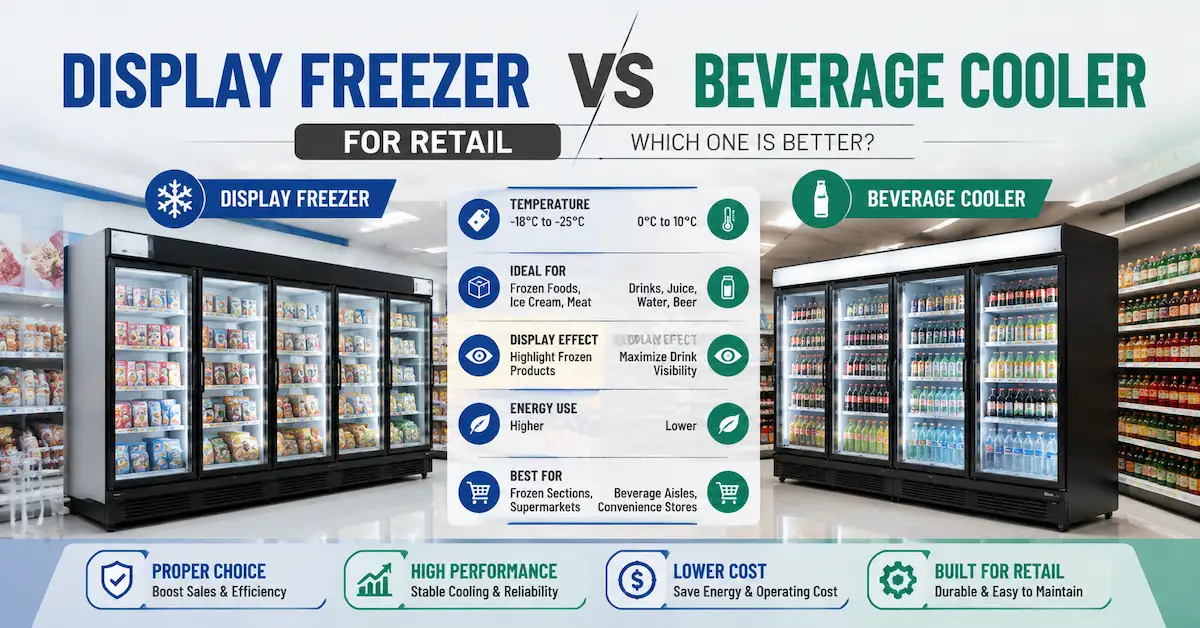
A display freezer is designed for frozen products that require temperatures below freezing, while a beverage cooler is designed for chilled drinks that require above-freezing temperatures.
Choosing the wrong equipment can lead to:
- Incorrect product storage conditions
- Higher energy consumption
- Poor product presentation
- Reduced sales performance
- Increased maintenance costs
Retailers should evaluate:
- Product category
- Required temperature range
- Customer shopping behavior
- Store layout
- Display requirements
- Long-term operating costs
What Is a Display Freezer?
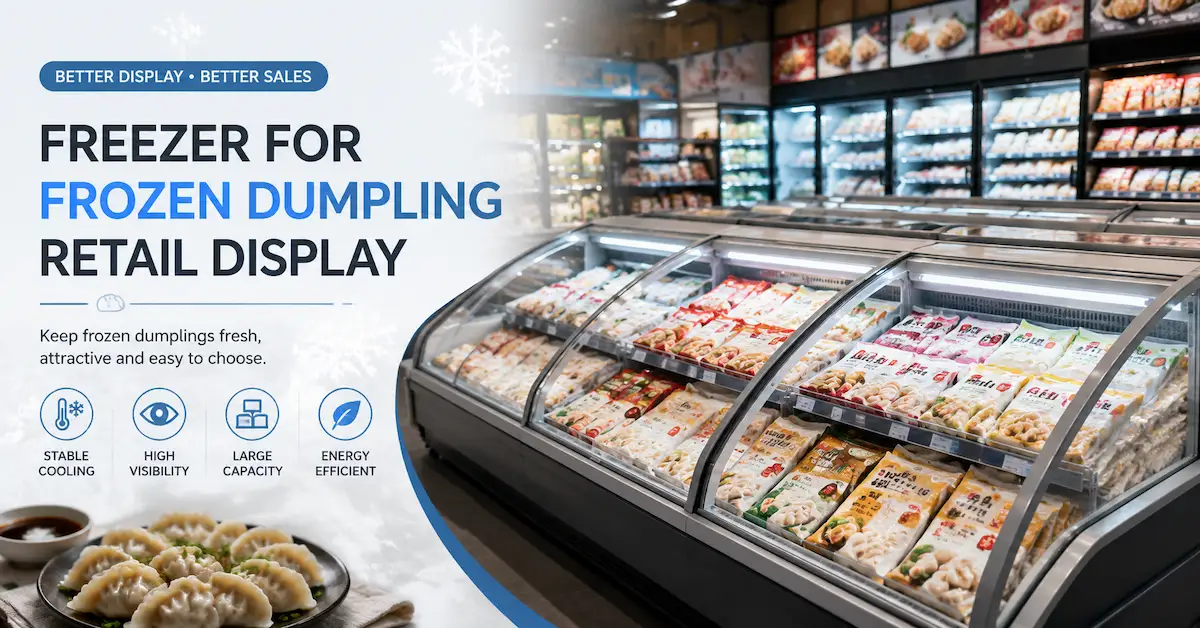
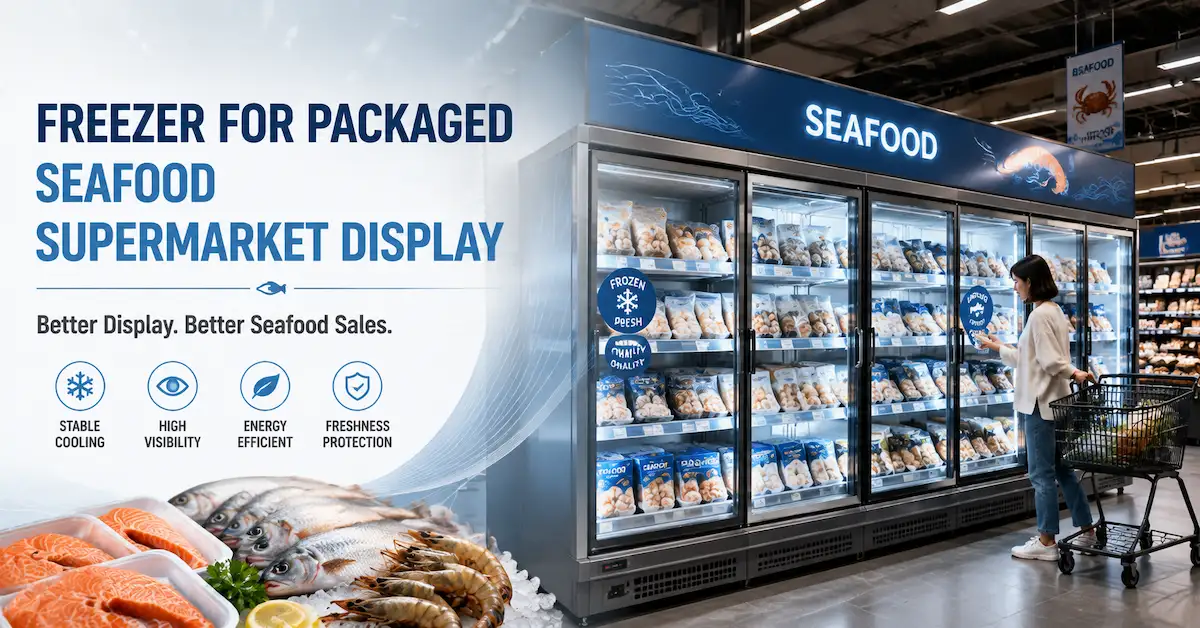
A display freezer is commercial refrigeration equipment designed to store and showcase frozen products.
Common types include:
- Glass-door upright freezers
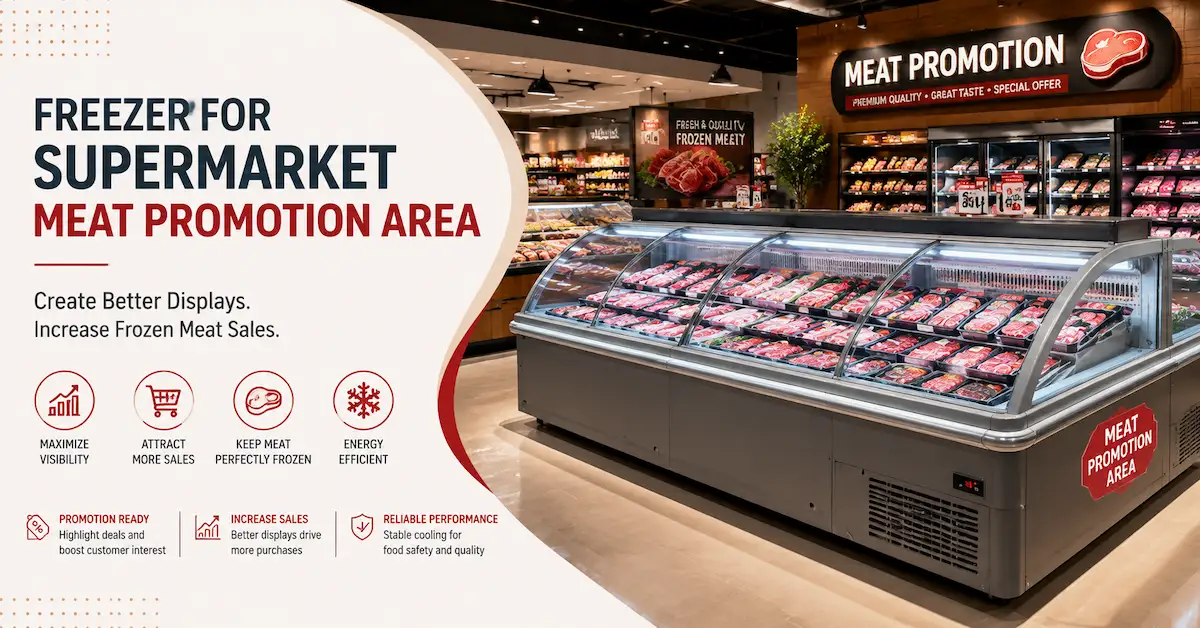
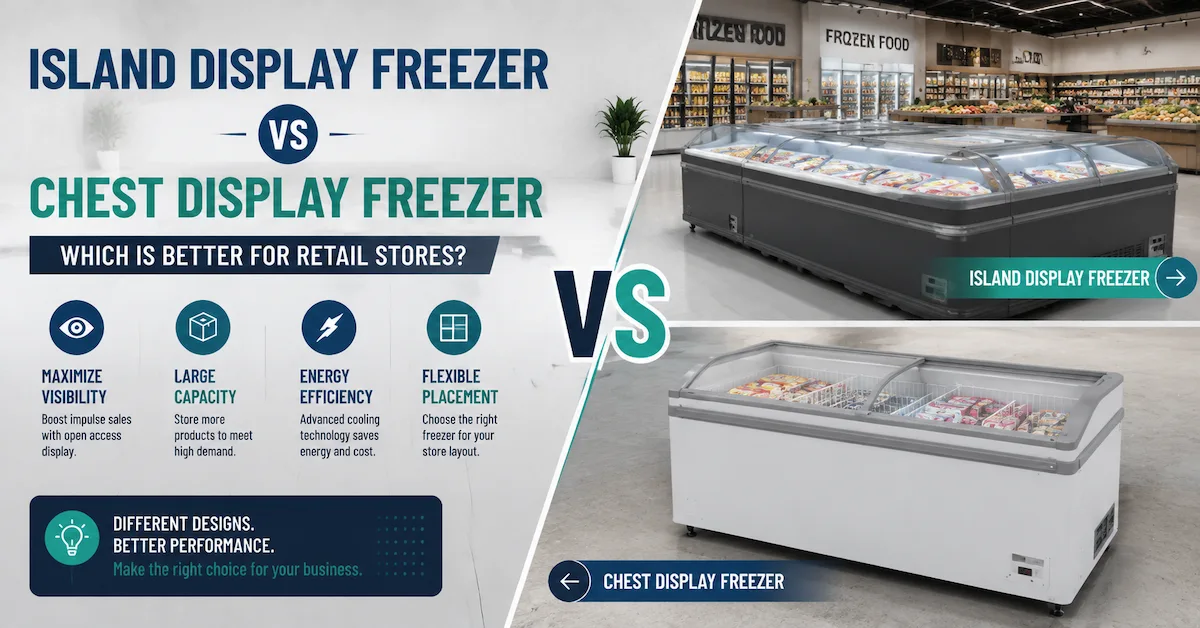
- Island display freezers
- Chest display freezers
- Open display freezers
- Ice cream display freezers
Typical applications include:
- Frozen food supermarkets
- Convenience stores
- Ice cream shops
- Frozen meat retailers
- Food distributors
Display freezers are designed to maintain low temperatures while allowing customers to easily view products.
Common products displayed include:
- Ice cream
- Frozen meals
- Frozen vegetables
- Frozen meat
- Seafood
- Frozen desserts
- Pizza
What Is a Beverage Cooler?
A beverage cooler is designed for chilled drinks rather than frozen products.
Common types include:
- Glass-door beverage refrigerators
- Upright drink coolers
- Back-bar coolers
- Multidoor beverage cabinets
Typical applications include:
- Convenience stores
- Restaurants
- Cafes
- Supermarkets
- Hotels
- Bars
Beverage coolers are designed to keep drinks cold while maximizing product visibility.
Common products include:
- Soft drinks
- Water bottles
- Juice
- Milk drinks
- Energy drinks
- Beer
- Dairy beverages
Display Freezer vs Beverage Cooler: Quick Comparison
| Feature | Display Freezer | Beverage Cooler |
|---|---|---|
| Main purpose | Frozen product storage | Chilled drink storage |
| Temperature range | Below freezing | Above freezing |
| Product type | Frozen food | Beverages |
| Glass display | Yes | Yes |
| Product access | Doors, lids, or open display | Glass doors |
| Energy demand | Higher refrigeration load | Moderate cooling load |
| Best application | Frozen-food retail | Beverage retail |
| Storage design | Baskets, shelves, compartments | Vertical shelves |
| Merchandising goal | Frozen product sales | Drink visibility |
Temperature Requirements Comparison
The biggest difference between these two refrigeration systems is temperature.
Display Freezer Temperature
Display freezers are designed for frozen products.
They typically require:
- Stable freezing temperatures
- Strong insulation
- High refrigeration capacity
- Fast temperature recovery
Frozen products must remain frozen during:
- Door opening
- Customer browsing
- Product loading
- Peak shopping hours
Poor temperature control can cause:
- Frost problems
- Product quality issues
- Increased energy consumption
- Compressor overload
Beverage Cooler Temperature
Beverage coolers operate at higher temperatures.
They focus on:
- Keeping drinks cold
- Fast cooling recovery
- Product visibility
- Easy customer access
Because beverages do not require freezing temperatures, the refrigeration system is generally designed differently.
Using a beverage cooler for frozen products can damage products and reduce equipment lifespan.
Product Category and Application Comparison
Choosing between a display freezer and beverage cooler starts with identifying the product category.
Best Products for Display Freezers
Display freezers are suitable for:
- Ice cream
- Frozen desserts
- Frozen seafood
- Frozen meat
- Frozen vegetables
- Frozen ready meals
- Frozen snacks
These products require:
- Low temperatures
- Strong insulation
- Reliable freezing performance
Best Products for Beverage Coolers
Beverage coolers are suitable for:
- Bottled drinks
- Cans
- Juice
- Water
- Dairy beverages
- Alcoholic beverages
These products require:
- Quick customer access
- Clear visibility
- Organized shelf display
Product Visibility and Merchandising
Both equipment types are designed for retail display, but the merchandising strategy is different.
Display Freezer Merchandising
Display freezers help retailers showcase frozen products through:
- Glass doors
- Transparent lids
- Internal lighting
- Organized baskets
- Product categories
They are especially effective for:
- Premium frozen foods
- Branded frozen products
- Promotional frozen items
Beverage Cooler Merchandising
Beverage coolers focus heavily on impulse purchases.
Advantages include:
- Eye-level product placement
- Multiple shelf levels
- Brand separation
- Quick customer selection
Customers can easily compare:
- Brands
- Flavors
- Sizes
- Promotions
This makes beverage coolers highly effective near:
- Checkout areas
- Store entrances
- High-traffic zones
Customer Access Comparison
Customer behavior differs between frozen products and beverages.
Display Freezer Access
Customers usually:
- Open a door
- Lift a lid
- Select products
- Close the cabinet
The buying process is often planned.
Customers may compare:
- Product size
- Brand
- Price
- Flavor
Beverage Cooler Access
Customers usually make faster decisions.
They:
- Walk by
- View products
- Open the door
- Select a drink
Beverage coolers support:
- Quick purchases
- Impulse buying
- High customer turnover
This is why beverage coolers are often placed in high-traffic locations.
Energy Consumption Comparison
Energy efficiency is an important factor for retailers operating multiple refrigeration units.
Display Freezer Energy Factors
Display freezers generally require more energy because they maintain freezing temperatures.
Energy performance depends on:
- Compressor efficiency
- Insulation thickness
- Door design
- Glass quality
- Defrost system
- Ambient temperature
Beverage Cooler Energy Factors
Beverage coolers usually operate at warmer temperatures.
Energy consumption depends on:
- Door opening frequency
- Lighting
- Fan operation
- Glass insulation
- Shelf loading
A beverage cooler may consume less energy, but the actual performance depends on product design and usage conditions.
Retailers should compare:
- Annual energy consumption
- Cooling performance
- Maintenance requirements
- Expected product turnover
Store Layout Considerations
The correct choice depends on where the equipment will be installed.
Display Freezer Placement
Common locations include:
- Frozen-food sections
- Supermarket aisles
- Promotional areas
- Food distribution areas
Important considerations:
- Customer aisle space
- Product loading access
- Ventilation clearance
- Freezer dimensions
Beverage Cooler Placement
Common locations include:
- Store entrances
- Checkout areas
- Restaurant counters
- Convenience-store walls
Important considerations:
- Customer traffic
- Product visibility
- Easy access
- Branding opportunities
Door Design Comparison
Door design affects both customer experience and energy efficiency.
Display Freezer Doors
Common options include:
- Hinged glass doors
- Sliding glass lids
- Open display designs
Benefits:
- Better temperature control
- Product protection
- Reduced cold-air loss
Beverage Cooler Doors
Common options include:
- Single glass doors
- Double glass doors
- Multi-door designs
Benefits:
- Easy product viewing
- Organized shelves
- Quick selection
For high-frequency customer access, door reliability and sealing performance are important.
Storage Capacity Comparison
Storage requirements vary depending on product type.
Display Freezer Capacity
Designed for:
- Frozen packages
- Baskets
- Bulk products
- Heavy frozen items
Internal design may include:
- Wire baskets
- Shelves
- Dividers
Beverage Cooler Capacity
Designed for:
- Bottles
- Cans
- Packaged drinks
Storage focuses on:
- Shelf arrangement
- Product facing
- Brand presentation
A beverage cooler may have more visible product space, while a freezer may prioritize cold-storage capacity.
Maintenance Requirements
Maintenance affects long-term operating costs.
Display Freezer Maintenance
Important checks include:
- Temperature control
- Door seals
- Frost management
- Compressor operation
- Condenser cleaning
Beverage Cooler Maintenance
Important checks include:
- Glass cleaning
- Shelf adjustment
- Fan operation
- Door alignment
- Lighting system
Both require regular cleaning and preventive maintenance.
Which One Is Better for Supermarkets?
Many supermarkets need both systems.
Choose Display Freezer When:
You sell:
- Frozen food
- Ice cream
- Frozen meat
- Frozen desserts
You need:
- Freezing performance
- Long-term frozen storage
- Frozen product merchandising
Choose Beverage Cooler When:
You sell:
- Drinks
- Bottled products
- Ready-to-drink beverages
You need:
- Fast customer access
- High visibility
- Impulse sales
A supermarket may use:
- Display freezers in frozen-food aisles
- Beverage coolers near entrances and checkout areas
Which One Is Better for Convenience Stores?
Convenience stores often prioritize speed and customer access.
Beverage coolers are usually essential because drinks are high-frequency purchases.
However, display freezers are valuable for:
- Ice cream
- Frozen snacks
- Frozen meals
- Quick food products
A combination of both can increase product variety and sales opportunities.
How to Choose the Right Equipment
Before purchasing, retailers should evaluate:
Product Type
Ask:
- Are products frozen or chilled?
- What temperature is required?
- How often are products purchased?
Sales Strategy
Consider:
- Planned purchases
- Impulse purchases
- Promotional displays
- Customer traffic
Store Space
Measure:
- Installation area
- Aisle width
- Customer movement
- Ventilation requirements
Operating Cost
Compare:
- Energy consumption
- Maintenance
- Product lifespan
- Service requirements
Retail Refrigeration Selection Checklist
| Selection Area | Questions |
|---|---|
| Product category | Frozen food or beverages? |
| Temperature | Freezing or chilled requirement? |
| Display | Glass doors or open access? |
| Store location | Entrance, aisle, or frozen section? |
| Capacity | How much product is displayed? |
| Energy | What is acceptable operating cost? |
| Maintenance | Is service convenient? |
| Customization | Logo, color, layout needed? |
Common Mistakes When Choosing Refrigeration Equipment
Using a Beverage Cooler for Frozen Products
Beverage coolers cannot maintain freezing temperatures.
Choosing Only Based on Appearance
The equipment must match product requirements.
Ignoring Energy Costs
Long-term electricity costs affect profitability.
Selecting Incorrect Capacity
Too small limits sales opportunities, while too large wastes space.
Ignoring Store Traffic
Equipment placement affects customer purchasing behavior.
How Snowsea Supports Retail Refrigeration Projects
Snowsea provides commercial refrigeration solutions for:
- Supermarkets
- Convenience stores
- Beverage retailers
- Frozen-food businesses
- Distributors
- Food-service companies
Solutions include:
- Display freezers
- Beverage coolers
- Glass-door freezers
- Island freezers
- Chest freezers
- Customized refrigeration equipment
Snowsea supports:
- Product selection
- OEM customization
- Quality inspection
- Export packaging
- International shipping
Explore Snowsea’s commercial refrigeration products.
FAQ
What is the difference between a display freezer and a beverage cooler?
A display freezer stores frozen products at low temperatures, while a beverage cooler stores chilled drinks at higher temperatures.
Can a beverage cooler be used for frozen food?
No. Beverage coolers are not designed to maintain freezing temperatures.
Which uses more energy, a freezer or beverage cooler?
Generally, display freezers require more energy because they maintain much lower temperatures.
Which is better for supermarkets?
Supermarkets usually need both. Display freezers are better for frozen foods, while beverage coolers are better for drinks.
Which equipment improves impulse sales?
Beverage coolers often generate more impulse purchases because customers can quickly see and access drinks.
Can commercial refrigeration equipment be customized?
Yes. Manufacturers may provide customized sizes, colors, logos, shelves, doors, and electrical configurations.
Conclusion
When comparing display freezer vs beverage cooler, retailers should first consider the products they sell and the customer experience they want to create.
Display freezers are designed for frozen foods and provide reliable freezing performance, while beverage coolers are designed for chilled drinks and fast customer access.
The best choice depends on:
- Product category
- Temperature requirements
- Store layout
- Customer traffic
- Energy goals
- Sales strategy
Snowsea provides commercial refrigeration solutions for retailers, distributors, and food businesses worldwide with OEM customization, quality control, and export support.