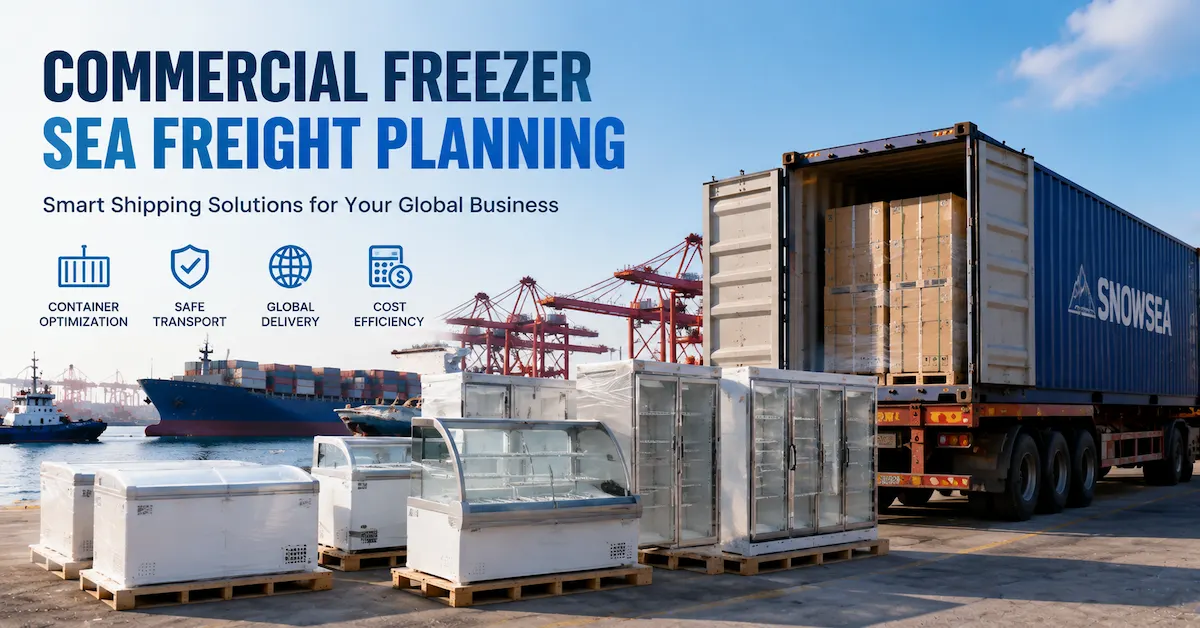
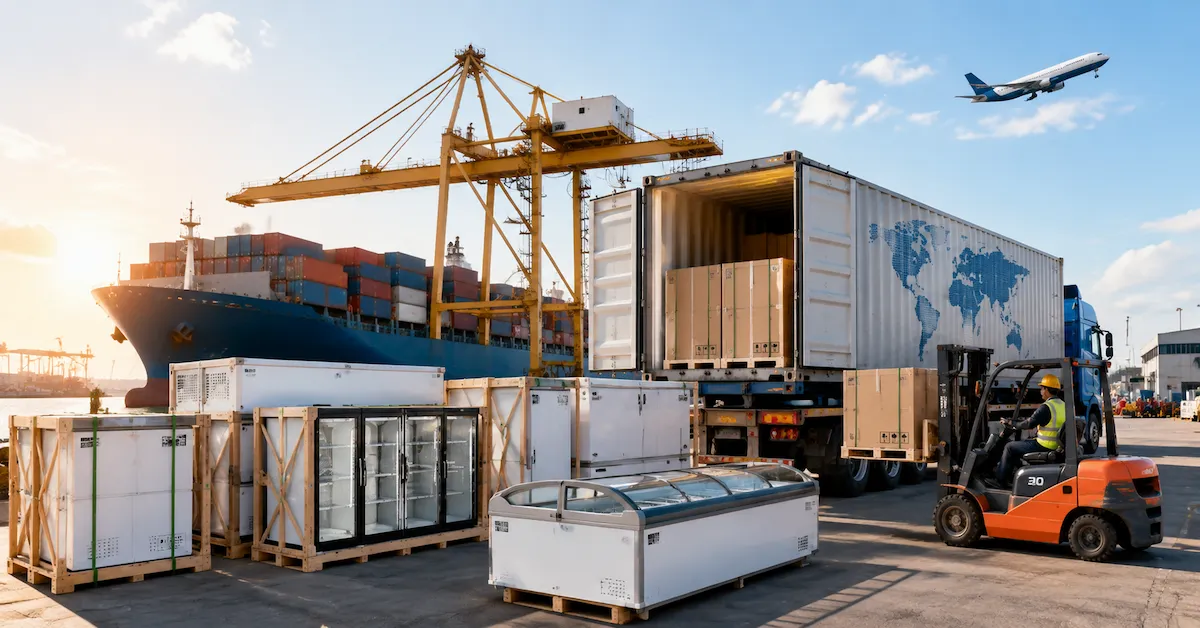
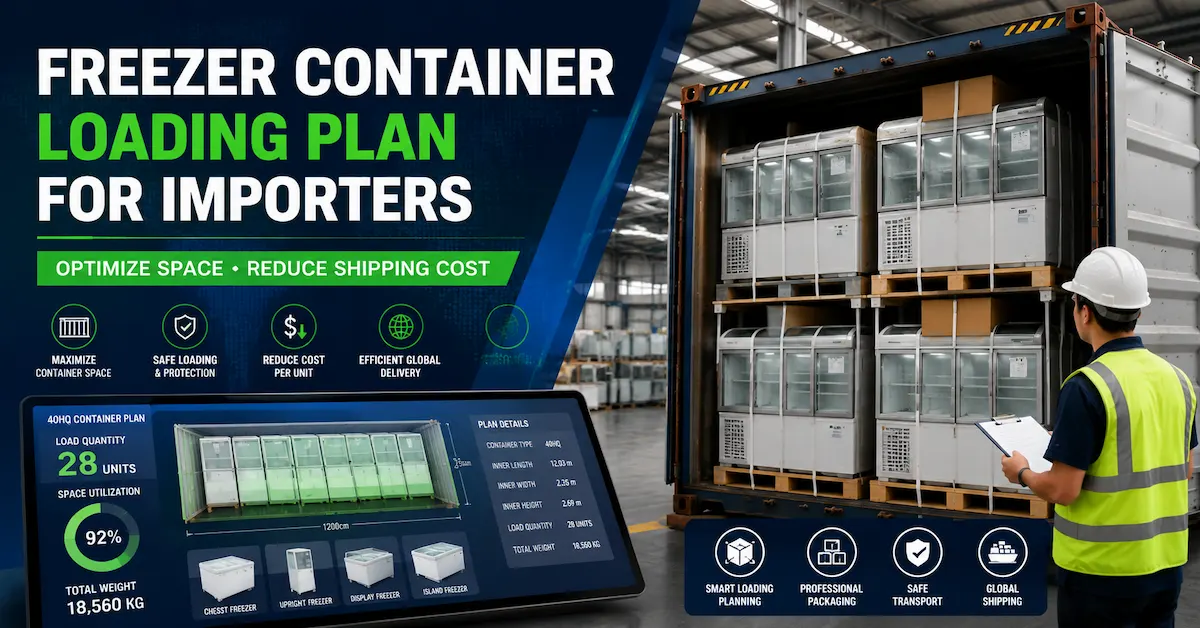
For commercial freezer importers, efficient container loading is a key factor affecting transportation costs, delivery safety, and overall purchasing profitability.
Unlike small products, commercial freezers require careful planning because of their:
- Large dimensions
- Heavy weight
- Glass components
- Special packaging
- Limited container space
A professional freezer container loading plan for importers helps buyers maximize container utilization, reduce shipping expenses, and minimize transportation risks.
For refrigeration distributors, supermarket equipment suppliers, and global buyers, proper loading planning should be considered before production and shipment.
Why Importers Need a Freezer Container Loading Plan
A container is a limited resource. Poor loading decisions can increase costs and create unnecessary risks.
Without proper planning, importers may experience:
- Low container utilization
- Higher freight cost per unit
- Product movement during shipping
- Packaging damage
- Difficult unloading processes
A detailed freezer container loading plan for importers provides a clear strategy for arranging products safely and efficiently.
The main goals are:
- Maximize available space
- Protect products during transportation
- Maintain proper weight distribution
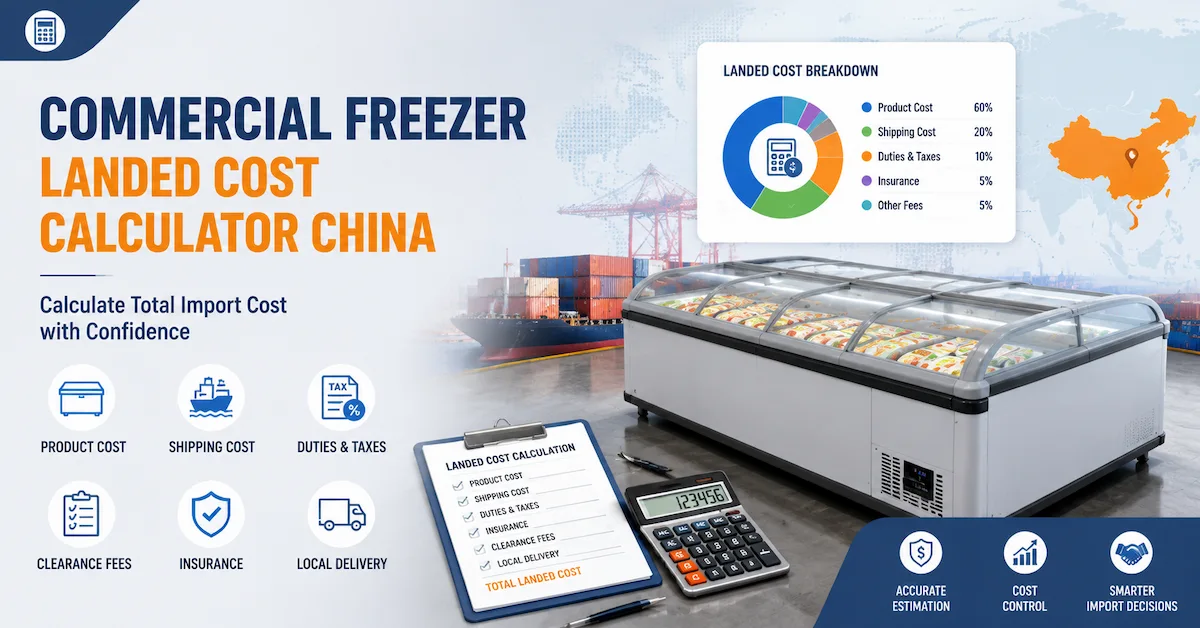
- Reduce logistics expenses
Understanding Commercial Freezer Container Loading
Container loading is the process of arranging packaged freezers inside shipping containers according to:
- Product dimensions
- Packaging size
- Container capacity
- Weight limitations
- Handling requirements
A successful loading plan considers the entire shipping process:
- Factory preparation
- Packaging completion
- Container inspection
- Loading arrangement
- Cargo securing
- International transportation
- Destination unloading
Factors Affecting Freezer Container Loading Quantity
The number of freezers loaded into one container depends on several factors.
1. Freezer Dimensions
Product size is the most important factor.
Different freezer categories require different loading methods.
Chest Freezers
Factors include:
- Length
- Width
- Height
- Lid design
- Packaging thickness
Upright Freezers
Factors include:
- Cabinet height
- Door structure
- Shelf configuration
Display Freezers
Factors include:
- Glass size
- Display structure
- Cabinet width
A smaller packaged freezer usually allows higher container utilization.
2. Packaging Design
Packaging directly affects loading efficiency.
Export packaging may include:
- Foam protection
- Protective film
- Cartons
- Wooden frames
- Pallets
Strong packaging protects products but also occupies additional space.
Professional suppliers balance:
- Safety protection
- Packaging volume
- Shipping efficiency
3. Container Type Selection
Choosing the correct container is essential.
Common options include:
20GP Container
Suitable for:
- Trial orders
- Smaller shipments
- Market testing
40HQ Container
Suitable for:
- Large-volume orders
- Distributor purchases
- Regular imports
A proper freezer container loading plan for importers should match the container type with the order size.
How to Create an Effective Freezer Container Loading Plan
Step 1: Confirm Product Specifications
Before loading planning, importers should collect:
- Product dimensions
- Package dimensions
- Gross weight
- Quantity
- Model information
Accurate data prevents loading mistakes.
Step 2: Calculate Available Container Space
The supplier should evaluate:
- Container internal dimensions
- Door opening size
- Product arrangement
- Loading sequence
The goal is to use available space efficiently without compromising safety.
Step 3: Design Product Arrangement
Different loading methods can be considered.
Single Model Loading
Advantages:
- Simple management
- Faster loading
- Easier inventory control
Suitable for:
- Large quantity orders
- Regular products
Mixed Model Loading
Advantages:
- More product variety
- Lower inventory risk
- Better market testing
Suitable for:
- Distributor orders
- New market development
Step 4: Plan Weight Distribution
Weight balance is important for safe transportation.
A good loading plan should consider:
- Heavy products at suitable positions
- Balanced container weight
- Secure placement
- Safe unloading sequence
Incorrect weight distribution may cause:
- Handling difficulties
- Transportation risks
- Product instability
Step 5: Secure Products Inside the Container
During ocean transportation, containers experience:
- Vibration
- Movement
- Impact
Products should be secured through:
- Proper placement
- Protective materials
- Space management
- Supporting structures
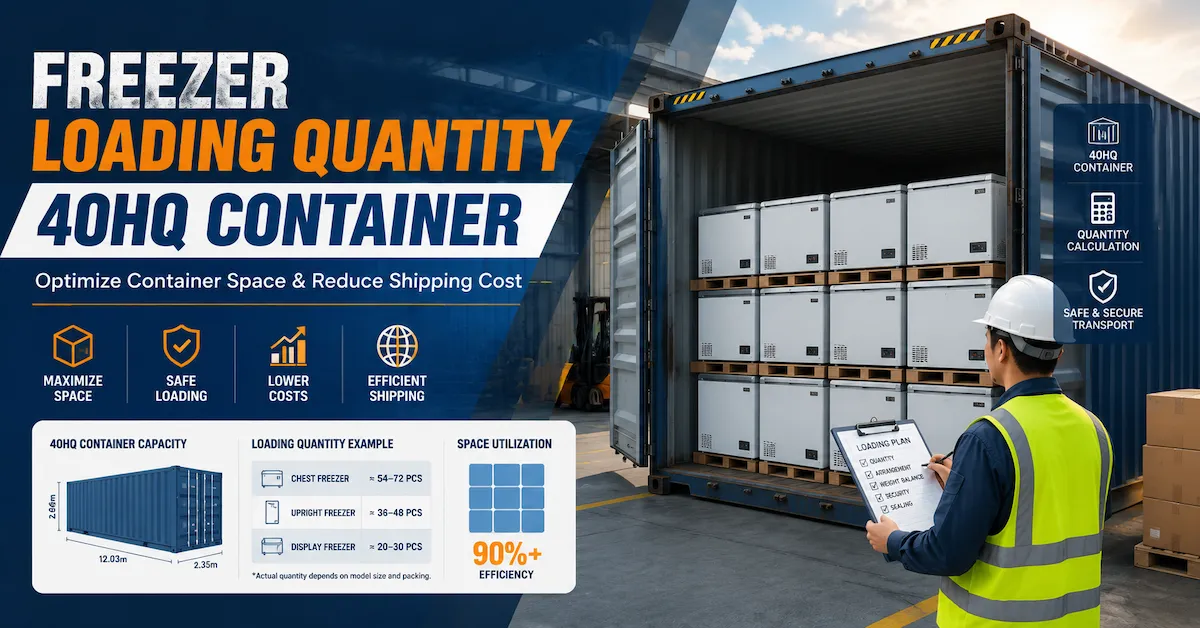
40HQ Container Loading Strategy for Freezers
A 40HQ container is commonly used for commercial freezer exports.
A good loading strategy includes:
Optimize Product Orientation
Correct positioning can improve:
- Space utilization
- Loading efficiency
- Product protection
Reduce Empty Spaces
Unused gaps increase:
- Movement risk
- Transportation waste
Consider Unloading Sequence
Products needed first should be positioned for easier access.
How Loading Plans Reduce Shipping Costs
Shipping costs are strongly affected by container efficiency.
Better loading helps reduce:
- Freight cost per unit
- Number of required containers
- Transportation waste
For example:
Poor loading:
- More containers required
- Higher total freight cost
Optimized loading:
- More units per container
- Lower logistics expenses
A professional freezer container loading plan for importers directly improves purchasing efficiency.
Packaging and Loading Inspection Before Shipment
Before container loading, buyers should confirm:
- Packaging condition
- Product quantity
- Model accuracy
- Loading arrangement
- Container cleanliness
Inspection helps prevent:
- Incorrect shipments
- Missing products
- Packaging failures
A reliable supplier should provide:
- Loading photos
- Container arrangement details
- Shipment records
Common Mistakes in Freezer Container Loading
Ignoring Packaging Size
Some buyers calculate using product dimensions only.
Actual loading depends on:
- Product size
- Packaging size
- Protection requirements
Ordering Too Many Different Models
Too many models may create:
- Difficult loading
- Lower efficiency
- Inventory complexity
Not Confirming Loading Plans
Without planning, available space may be wasted.
Poor Weight Distribution
Incorrect arrangement may increase transportation risks.
Choosing Containers Without Calculation
The wrong container size can increase costs.
Supplier Support for Container Loading Plans
Experienced freezer manufacturers can provide:
- Container recommendations
- Loading calculations
- Product arrangement plans
- Packaging suggestions
- Shipment coordination
A professional supplier understands that logistics performance affects customer profitability.
Snowsea supports global buyers with commercial refrigeration solutions, export preparation, and container loading coordination.
Explore Snowsea’s commercial refrigeration products.
OEM Projects and Container Loading Planning
Customized freezer projects require additional planning.
OEM factors include:
- Custom dimensions
- Special packaging
- Branding materials
- Additional accessories
Before production, buyers should confirm:
- Product structure
- Packaging requirements
- Container arrangement
Snowsea provides OEM and ODM refrigeration solutions for distributors and international buyers.
Freezer Container Loading Checklist
| Item | Confirmation |
|---|---|
| Product dimensions | Verified |
| Packaging size | Confirmed |
| Container type | Selected |
| Quantity calculation | Completed |
| Loading sequence | Planned |
| Weight balance | Checked |
| Protection method | Approved |
| Loading photos | Provided |
How Snowsea Supports Importers
Snowsea works with:
- Commercial freezer importers
- Refrigeration distributors
- Supermarket suppliers
- Food-service equipment companies
Support includes:
- Product selection
- Export packaging
- Container loading planning
- Quality inspection
- Shipping coordination
Learn more about Snowsea’s manufacturing experience through the company profile.
FAQ
What is a freezer container loading plan for importers?
A freezer container loading plan for importers is a shipment arrangement strategy that determines how commercial freezers should be packed inside containers to maximize space and ensure safe transportation.
How many freezers can fit in one container?
The quantity depends on freezer type, dimensions, packaging size, and container capacity. Different models have different loading results.
Why is container loading important for freezer imports?
Proper loading reduces shipping costs, prevents damage, and improves transportation efficiency.
Which container is commonly used for commercial freezers?
40HQ containers are commonly used because they provide larger capacity and better freight efficiency for bulk freezer shipments.
Can suppliers provide container loading plans?
Yes. Experienced suppliers can provide loading recommendations, quantity calculations, and shipment preparation support.
How can importers reduce freezer shipping costs?
Importers can reduce costs through optimized loading, suitable container selection, efficient packaging, and accurate order planning.
Conclusion
A professional freezer container loading plan for importers helps buyers improve shipping efficiency, reduce logistics costs, and protect commercial refrigeration equipment during international transportation.
Successful freezer shipping requires careful coordination of:
- Product specifications
- Packaging design
- Container selection
- Loading arrangement
- Supplier cooperation
By working with an experienced commercial freezer manufacturer, importers can optimize container usage and build a more reliable global supply chain.
Snowsea supports international buyers with commercial freezer manufacturing, OEM solutions, export packaging, and professional logistics coordination.