Freezer Exporter: How to Avoid Shipping Damage and Certification Issues in International Orders
In international freezer procurement, problems rarely start in the factory—they start during transit and compliance.
Many buyers experience similar issues after shipment:
- Products arrive with visible or hidden damage
- Packaging fails under long-distance transport
- Certification documents do not match local requirements
- Customs clearance is delayed or rejected
These problems are costly, not just financially but also operationally. They disrupt inventory planning, delay distribution, and affect customer trust.
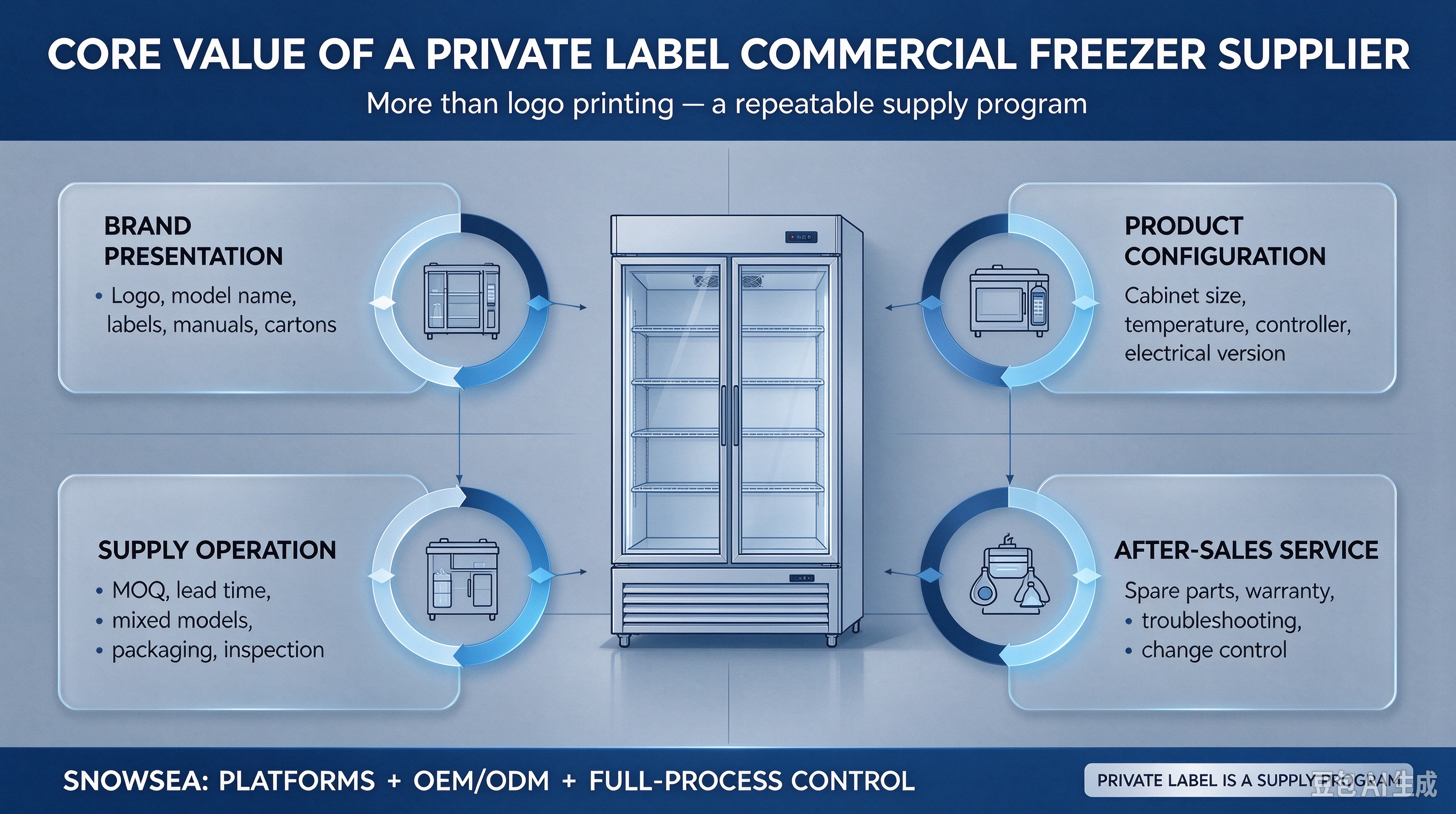
At Snowsea, we work with importers and distributors managing cross-border supply. By improving packaging engineering, aligning certification processes, and standardizing export workflows, we help ensure that shipments arrive intact and compliant.
Why Export Problems Occur in Freezer Shipments
Export issues are rarely random. They usually stem from weak coordination between manufacturing, packaging, and logistics.
According to World Customs Organization, incomplete documentation and non-compliant goods are among the leading causes of customs delays worldwide.
Common Failure Points
- Inadequate Packaging for Sea Freight
Standard packaging is often insufficient for long-distance vibration and stacking - Mismatch in Certification Requirements
Products may not align with destination market regulations - Incomplete or Incorrect Documentation
Leads to delays in customs clearance - Lack of Export Process Standardization
Each shipment handled differently, increasing risk
These factors highlight the importance of working with an experienced freezer exporter.
Export Engineering: Packaging, Protection, and Compliance
Export-ready products must be designed not only for use, but for transportation and regulatory compliance.
Key Export Engineering Factors
- Reinforced Packaging Structure
Includes shock absorption materials, corner protection, and palletization - Moisture and Corrosion Protection
Essential for sea freight and humid conditions - Load Distribution Design
Ensures stability when containers are stacked - Certification Alignment (CE, CB, etc.)
Must match the destination market requirements
We define this approach as “export-integrated product design”, ensuring products remain intact and compliant throughout the supply chain.
Why Choosing the Right Freezer Exporter Matters
Many suppliers can produce freezers, but not all can manage export complexity.
A qualified freezer exporter must:
- Understand international logistics and compliance requirements
- Provide consistent packaging and documentation
- Ensure products meet destination standards
At Snowsea, we focus on:
- Standardized export packaging systems
- Pre-shipment inspection and verification
- Certification alignment for different markets
This allows us to reduce export-related risks and ensure reliable delivery.
Impact of Export Quality on Business Operations
Export issues directly affect business performance.
Export Performance Comparison
| Factor | Basic Supplier | Snowsea |
|---|---|---|
| Shipping Damage Rate | Higher | Reduced significantly |
| Certification Accuracy | Variable | Aligned with market |
| Delivery Reliability | Inconsistent | Stable |
| Customs Clearance | Delayed | Smooth |
| Product Condition on Arrival | Uncertain | Controlled |
Reliable export processes reduce delays, losses, and customer complaints.
Real Export Scenarios and Risk Points
Different markets and logistics conditions create different challenges.
Long-Distance Sea Freight
Shipments are exposed to vibration, humidity, and stacking pressure.
Challenges:
- Structural damage
- Moisture exposure
Solution:
- Reinforced packaging
- Moisture-proof materials
High-Temperature Transit Routes
Products pass through hot regions during transport.
Challenges:
- Material stress
- Reduced packaging integrity
Solution:
- Heat-resistant packaging
- Structural reinforcement
Strict Regulatory Markets (Europe, North America)
Compliance requirements are strict.
Challenges:
- Certification mismatch
- Documentation errors
Solution:
- Pre-verified certification
- Accurate documentation
Emerging Markets
Infrastructure and logistics conditions vary.
Challenges:
- Handling damage
- Unpredictable delivery conditions
Solution:
- Robust packaging
- Flexible logistics planning
At Snowsea, we implement “export-risk-controlled delivery systems”, ensuring stable performance across different routes and markets.
Case Example: Reducing Export Damage for a Distributor
A distributor experienced frequent issues with imported products.
Initial Situation
- Damage rate above 8%
- Customs delays
- Customer complaints
Improvements Implemented
- Upgraded packaging structure
- Standardized documentation
- Improved inspection processes
Results
- Damage rate reduced significantly
- Faster customs clearance
- Improved customer satisfaction
This demonstrates how export-focused processes improve supply reliability.
What Buyers Should Evaluate When Choosing a Freezer Exporter
When selecting a freezer exporter, evaluation should focus on three key areas.
Export Packaging and Protection
- Is packaging designed for long-distance transport?
- Are materials suitable for sea freight?
Snowsea solution: Reinforced packaging systems with moisture protection.
Certification and Compliance
- Do products meet destination market requirements?
- Is documentation accurate and complete?
Snowsea advantage: Pre-aligned certification and standardized export documentation.
Logistics and Delivery Stability
- Is delivery consistent across shipments?
- Are export processes standardized?
Snowsea capability: Integrated export workflows ensuring reliable delivery.
Frequently Asked Questions
Q: Why do products get damaged during shipping?
A: Because packaging is not designed for long-distance transport conditions.
Q: How can I avoid customs delays?
A: Ensure certification and documentation match the destination market requirements.
Q: Is export experience important when choosing a supplier?
A: Yes. It directly affects delivery reliability and product condition.
Building a Reliable Export Supply System
Choosing the right freezer exporter is essential for ensuring smooth international delivery and reducing risk.
At Snowsea, we focus on:
- Export-integrated product design
- Standardized packaging and documentation
- Reliable global delivery systems
Explore Our Product Range
To find freezer products suitable for international markets, visit:
https://www.snowseax.com/products
Contact Us for Export Support
If you are sourcing freezers internationally and need reliable export solutions, contact our team:
https://www.snowseax.com/contact