Many refrigeration systems perform well under standard testing conditions but face significant challenges when installed in tropical regions. High ambient temperatures, intense solar exposure, and elevated humidity levels place additional stress on refrigeration equipment.
Without proper engineering, refrigeration systems may experience reduced cooling efficiency, increased energy consumption, excessive compressor workload, and shortened equipment lifespan.
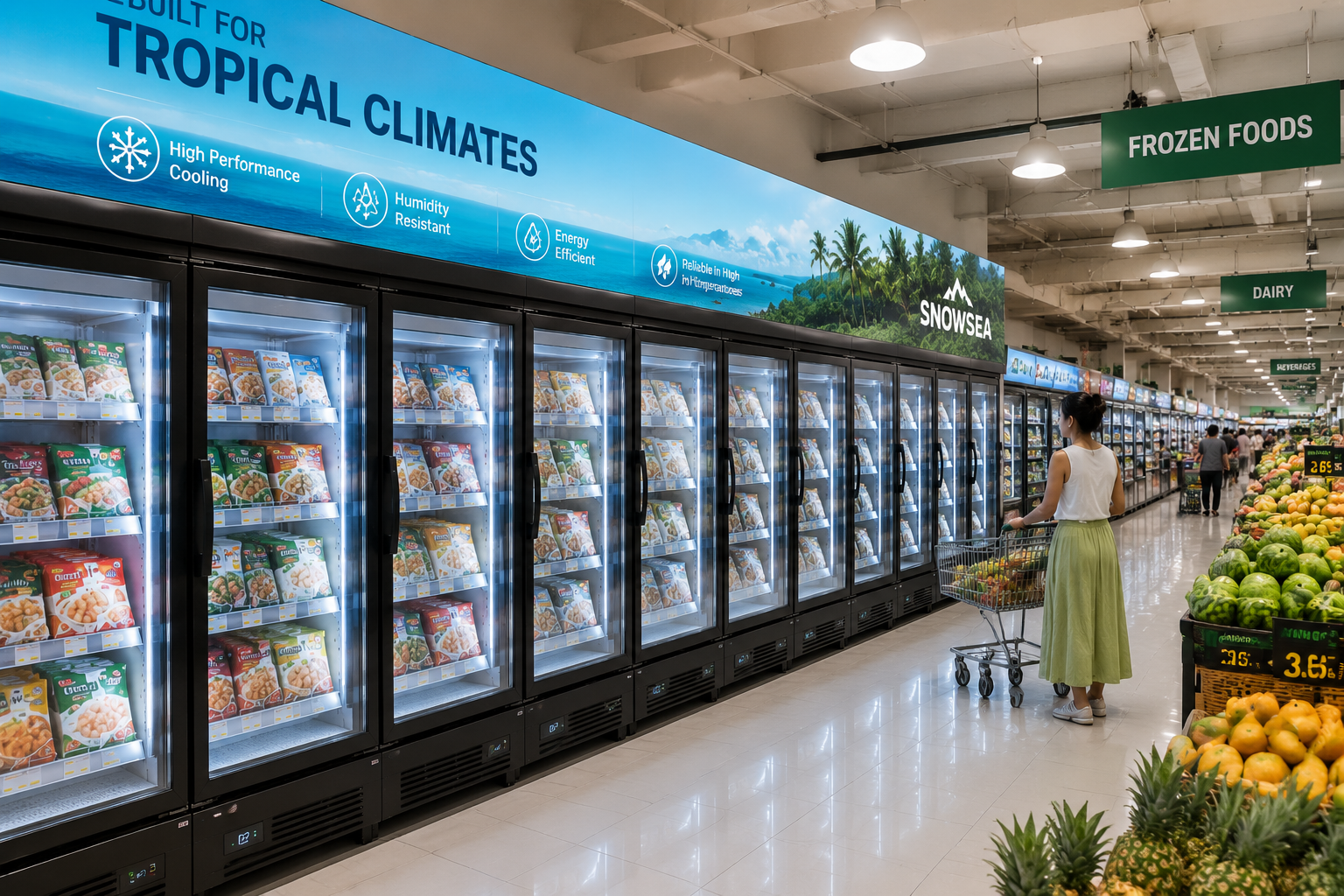
A well-designed tropical climate refrigeration system helps businesses maintain reliable cooling performance despite demanding environmental conditions.
For supermarkets, restaurants, hotels, convenience stores, food processing plants, and cold storage facilities located in warm climates, system design becomes a critical factor in long-term operational success.
Common Challenges in Tropical Environments
Commercial refrigeration equipment operating in tropical climates faces several unique obstacles.
Common challenges include:
- High ambient temperatures
- Elevated humidity levels
- Increased condensation risk
- Continuous compressor operation
- Reduced condenser efficiency
- Higher electricity consumption
These conditions can significantly impact refrigeration performance if not properly addressed.
A properly engineered tropical climate refrigeration system minimizes these risks through specialized cooling technologies and optimized component design.
How a Tropical Climate Refrigeration System Works
Modern refrigeration systems designed for tropical environments incorporate several performance-enhancing technologies.
Enhanced Heat Dissipation
Larger condenser systems improve heat rejection under high-temperature conditions.
High-Efficiency Airflow Management
Optimized airflow improves cooling consistency and heat transfer performance.
Advanced Insulation Systems
High-density insulation reduces thermal infiltration from surrounding environments.
Intelligent Temperature Control
Digital control systems adjust refrigeration cycles based on operating conditions.
Because these technologies work together, a properly designed tropical climate refrigeration system can maintain stable cooling performance even under extreme environmental conditions.
Standard Refrigeration System vs Tropical Climate System
| Feature | Standard Refrigeration System | Tropical Climate Refrigeration System |
|---|---|---|
| Ambient Temperature Resistance | Standard | Enhanced |
| Humidity Resistance | Moderate | Improved |
| Condensation Control | Basic | Advanced |
| Cooling Stability | Standard | Superior |
| Energy Efficiency | Moderate | Optimized |
| Equipment Reliability | Standard | Higher |
The performance difference becomes especially important in regions with year-round high temperatures.
Solving Real Refrigeration Challenges
Extreme Heat Exposure
Outdoor temperatures can significantly increase refrigeration workloads.
High Humidity Conditions
Moisture infiltration increases condensation and cooling demands.
Continuous Commercial Operation
Many businesses require refrigeration systems to operate 24 hours per day.
Product Protection Requirements
Stable temperatures are critical for food safety and inventory preservation.
A well-engineered tropical climate refrigeration system helps businesses overcome these challenges while maintaining reliable cooling performance.
Key Advantages of Tropical Climate Refrigeration Systems
Better Temperature Stability
Consistent cooling helps protect temperature-sensitive products.
Improved Energy Efficiency
Efficient heat transfer reduces electricity consumption.
Reduced Condensation Problems
Advanced design helps minimize moisture-related issues.
Longer Equipment Lifespan
Lower component stress improves durability.
Enhanced Operational Reliability
Stable refrigeration performance reduces business risks.
For many businesses operating in hot climates, a tropical climate refrigeration system provides significant long-term value.
Common Commercial Applications
Tropical climate refrigeration systems are widely used in:
- Supermarkets
- Convenience stores
- Restaurants
- Hotels
- Food processing facilities
- Cold storage warehouses
- Beverage distribution centers
- Coastal and tropical installations
Businesses evaluating refrigeration suppliers should also consider manufacturing experience and engineering capabilities. Learn more about our refrigeration expertise:
https://www.snowseax.com/about-us
What Buyers Should Evaluate Before Purchasing
Condenser Performance
Heat rejection capability is critical in hot climates.
Compressor Capacity
Heavy-duty compressors improve long-term reliability.
Insulation Quality
Effective insulation reduces refrigeration demand.
Humidity Management
Condensation control is important in tropical environments.
Energy Efficiency Ratings
Lower energy consumption reduces operating costs.
Explore our commercial refrigeration solutions:
Selecting equipment designed specifically for tropical climate refrigeration system applications helps maximize reliability and cooling performance.
FAQ
Additional technical information can be found in our FAQ center:
Q1: Why do tropical climates affect refrigeration performance?
High temperatures and humidity increase cooling demands and make heat dissipation more difficult.
Q2: Can refrigeration systems operate efficiently in tropical regions?
Yes. Systems specifically engineered for tropical conditions can maintain reliable cooling performance.
Q3: What component is most important in tropical refrigeration systems?
Condensers, compressors, insulation systems, and airflow management all play critical roles.
Q4: Which industries benefit most from tropical refrigeration systems?
Supermarkets, restaurants, hotels, food processors, cold storage facilities, and beverage distributors benefit significantly.
Supporting Reliable Cooling in Tropical Environments
A modern tropical climate refrigeration system combines advanced heat dissipation, optimized airflow, intelligent controls, and high-performance insulation to maintain reliable refrigeration performance in hot and humid conditions. By selecting equipment specifically engineered for tropical climates, businesses can improve cooling stability, reduce energy consumption, and protect valuable refrigerated products.
If you are planning a supermarket, restaurant, hotel, food processing, distribution, or cold storage project, our specialists can help identify the most suitable solution for your application: