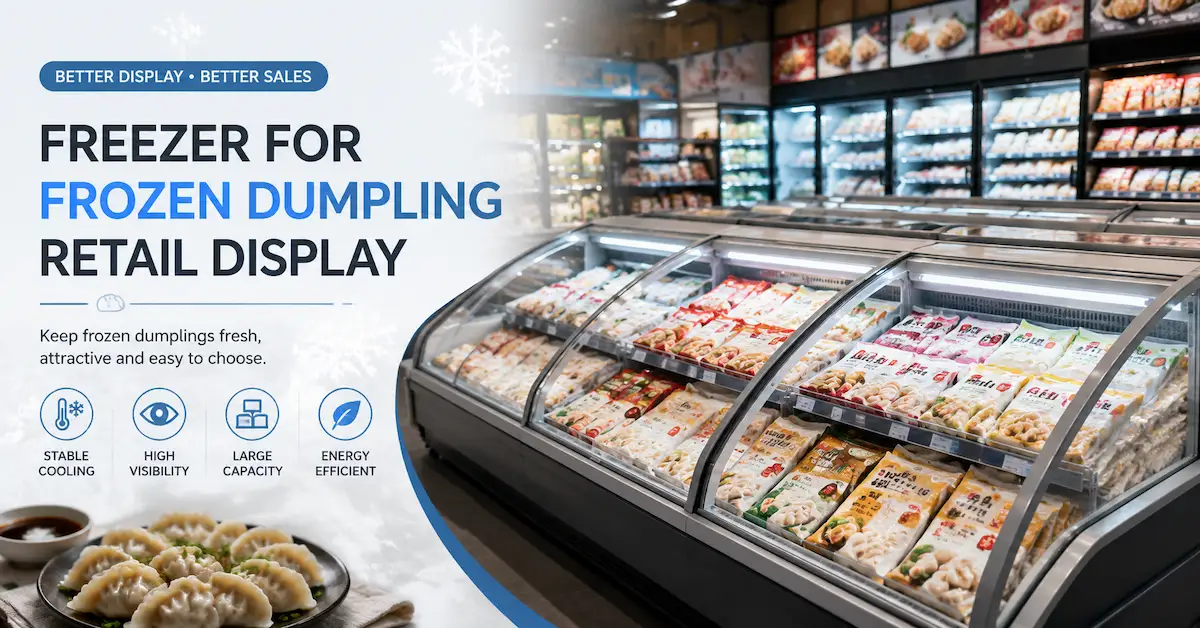
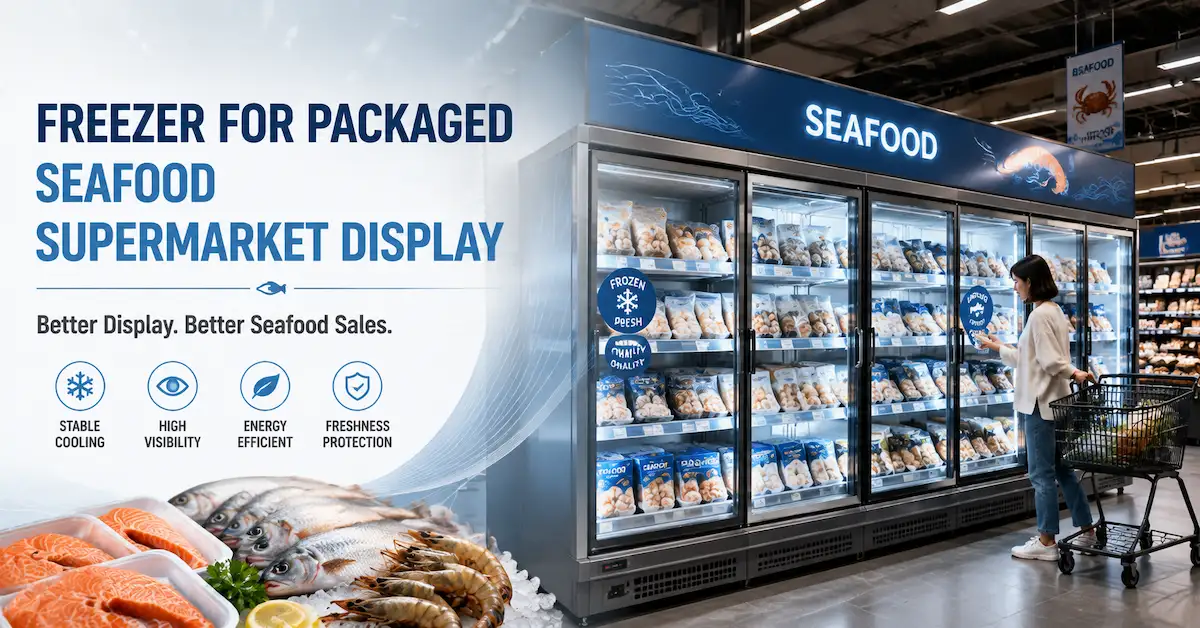
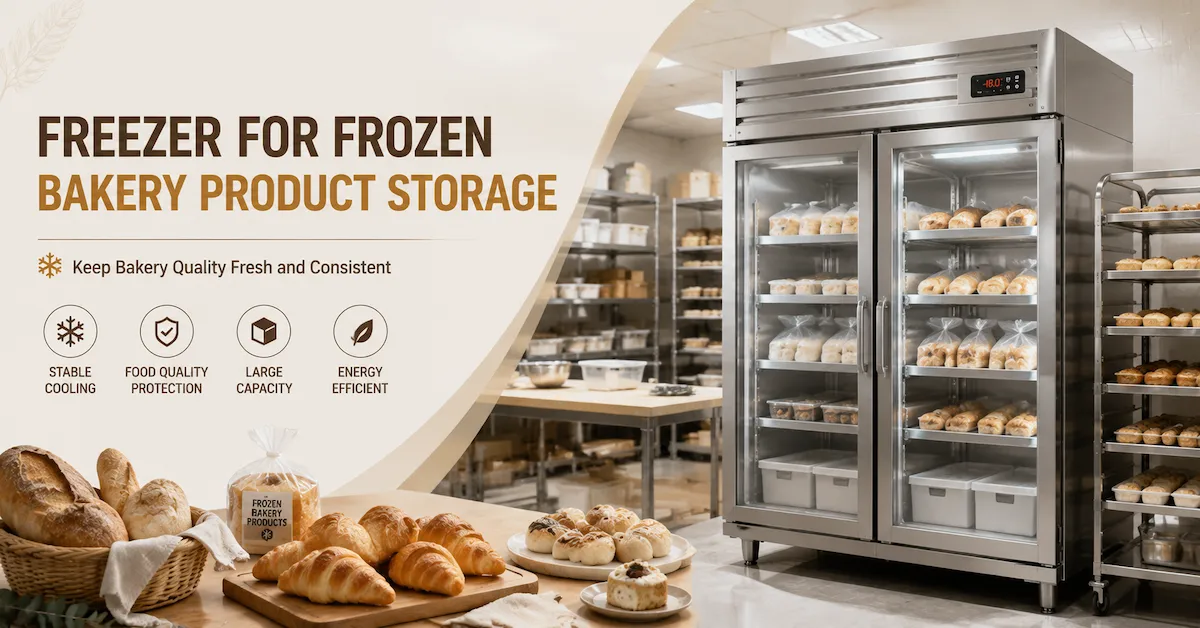
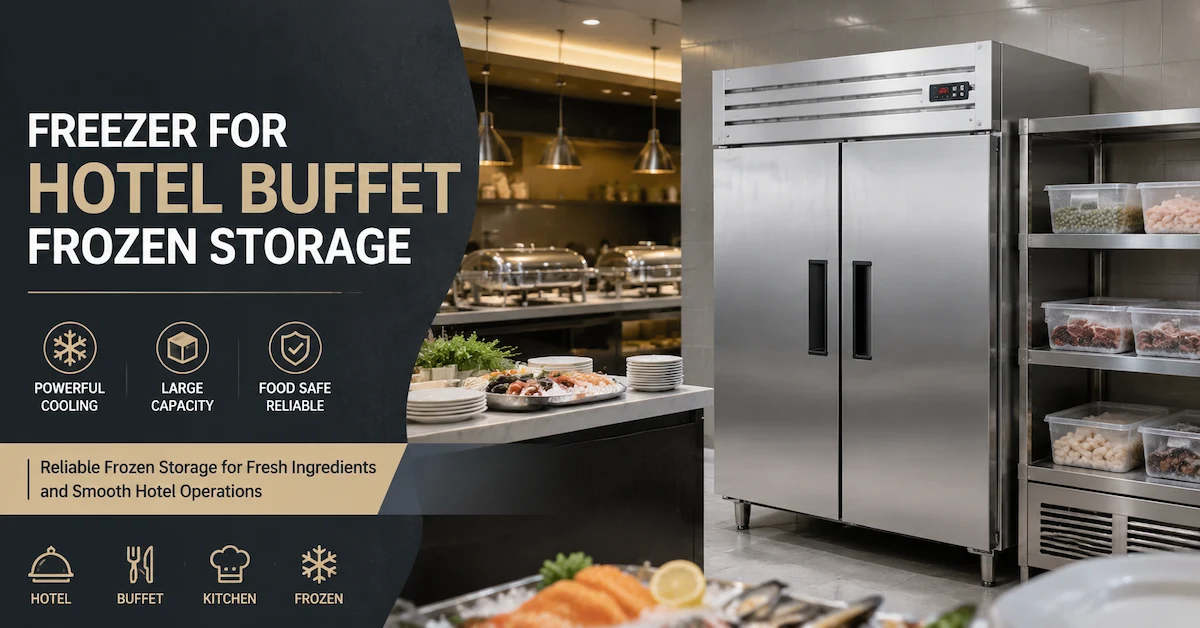
For frozen food retailers, refrigeration equipment serves two purposes: preserving products and selling products. While temperature control is essential, product visibility directly affects customer purchasing behavior.
When freezer doors become fogged, customers struggle to identify products quickly. This often leads to longer browsing times, more frequent door openings, and even missed purchases. In high-traffic retail environments, these small issues can accumulate into measurable losses.
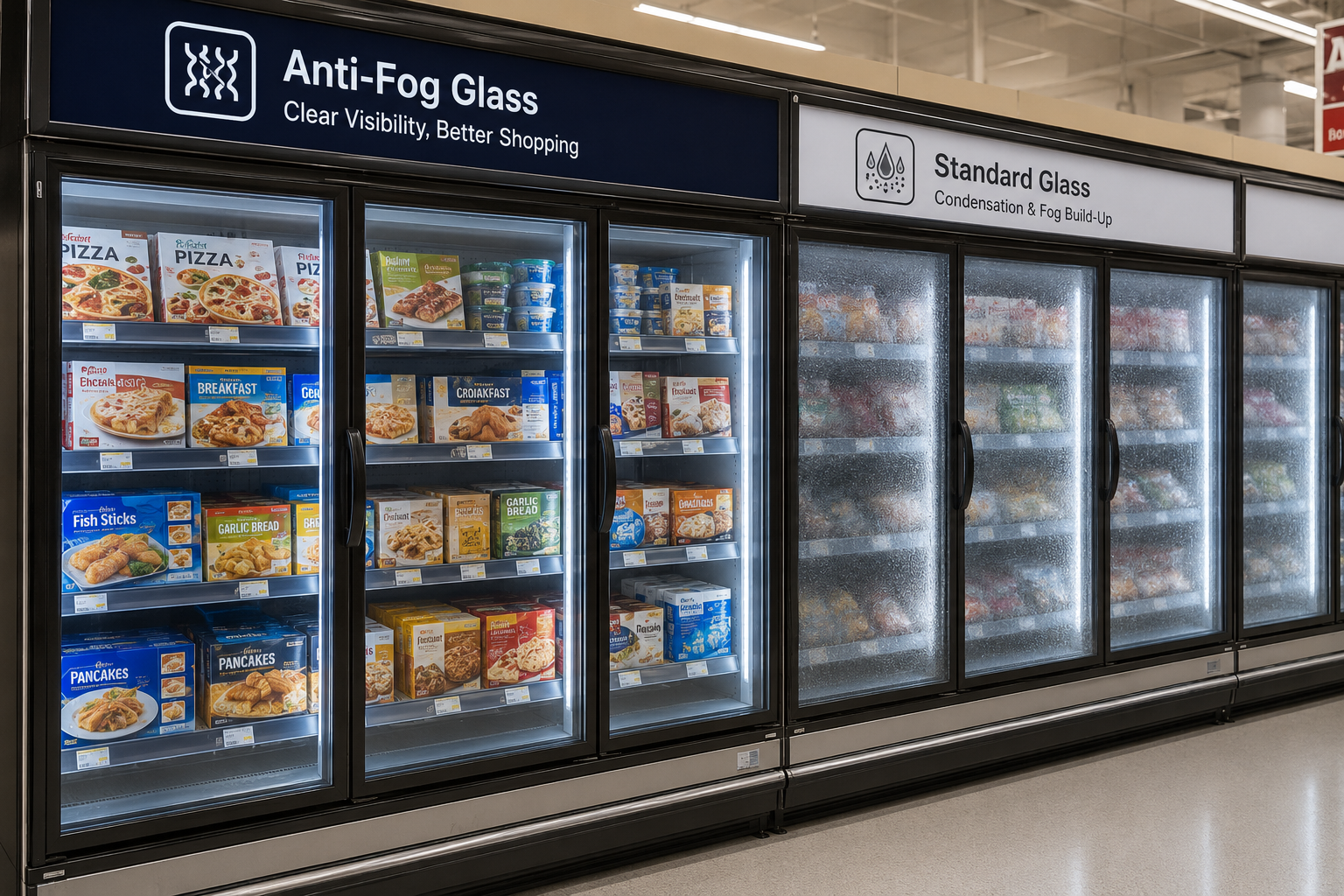
An anti fog glass display freezer addresses this challenge by keeping display glass clear even in humid environments, helping customers see products instantly while maintaining stable refrigeration performance.
The Science Behind Anti-Fog Glass Technology
Condensation occurs when warm, humid air contacts a cold glass surface. Water vapor turns into tiny droplets that scatter light and reduce visibility.
Modern anti fog glass display freezer systems typically use several technologies:
Heated Glass Systems
Low-power heating elements maintain the glass surface temperature above the condensation point.
Low-E Insulated Glass
Special coatings reduce heat transfer while improving thermal efficiency.
Multi-Layer Glass Structures
Insulated glass layers minimize external temperature influence and improve energy retention.
Intelligent Temperature Management
Digital controllers coordinate refrigeration and anti-condensation functions to balance visibility and energy consumption.
The result is a freezer display that remains clear throughout the day, even during peak customer traffic.
Comparing Standard Glass Doors and Anti-Fog Technology
| Feature | Standard Display Freezer | Anti Fog Glass Display Freezer |
|---|---|---|
| Product Visibility | Often affected by condensation | Clear and stable |
| Customer Experience | Reduced during peak humidity | Consistent |
| Door Opening Frequency | Higher | Lower |
| Energy Efficiency | Standard | Improved |
| Product Presentation | Moderate | Enhanced |
| Retail Appeal | Average | Stronger |
For retailers focused on frozen food merchandising, visibility can be almost as important as refrigeration performance itself.
Solving Common Retail Refrigeration Challenges
Many stores experience recurring problems during seasonal humidity changes or heavy customer traffic.
Fogged Glass During Peak Hours
Customers opening and closing freezer doors repeatedly can introduce moisture into the refrigeration environment.
Reduced Product Appeal
When packaging is difficult to see, customers may move on without making a purchase.
Higher Refrigeration Workload
Longer door-open times increase temperature fluctuations and compressor activity.
An anti fog glass display freezer helps solve all three problems simultaneously by improving visibility, reducing browsing time, and maintaining more stable cooling conditions.
Key Advantages for Commercial Refrigeration Operators
Better Product Merchandising
Frozen foods remain clearly visible throughout operating hours.
Improved Shopping Experience
Customers can quickly locate products without opening multiple doors.
More Stable Refrigeration Performance
Reduced door-open time helps maintain target temperatures.
Lower Condensation Maintenance
Store staff spend less time cleaning glass surfaces.
Stronger Energy Efficiency
Modern insulated anti-fog glass reduces unnecessary refrigeration losses.
An anti fog glass display freezer can therefore contribute to both operational efficiency and retail presentation.
Where Anti-Fog Display Freezers Deliver the Most Value
Common applications include:
- Supermarkets
- Convenience stores
- Frozen food retailers
- Ice cream shops
- Beverage retailers
- Specialty grocery stores
- Airport and transit retail locations
These environments depend heavily on product visibility and customer convenience.
How to Choose the Right Anti-Fog Glass Display Freezer
When evaluating equipment, consider:
Glass Structure
Double or triple insulated glass generally provides better thermal performance.
Anti-Condensation Technology
Look for proven heated-glass or Low-E coating systems.
Refrigeration System Design
Uniform airflow helps prevent localized temperature differences.
Energy Consumption
Compare operating costs rather than purchase price alone.
Product Display Requirements
Select cabinet sizes and shelving layouts based on product categories and merchandising goals.
For businesses upgrading older display equipment, an anti fog glass display freezer often delivers one of the most visible improvements in customer experience.
FAQ
Q1: Does anti-fog glass increase energy consumption?
Modern systems are designed to minimize power usage. Many insulated anti-fog solutions actually improve overall refrigeration efficiency.
Q2: Is anti-fog technology suitable for supermarkets?
Yes. Supermarkets are among the most common users because of frequent customer interaction and humidity exposure.
Q3: Does anti-fog glass improve frozen food sales?
Clear product visibility helps customers identify products faster and can improve merchandising effectiveness.
Q4: Can anti-fog glass be combined with energy-efficient refrigeration systems?
Yes. Most modern commercial freezers integrate anti-fog technology with energy-saving refrigeration components.
Building a Better Frozen Food Display Strategy
An anti fog glass display freezer is more than a refrigeration appliance. It is a merchandising tool that helps improve product visibility, customer experience, and operational efficiency simultaneously.
To learn more about our refrigeration expertise, visit our About Us page: https://www.snowseax.com/about-us
Explore our commercial freezer solutions: https://www.snowseax.com/
For additional refrigeration guidance and technical answers, visit our FAQ center: https://www.snowseax.com/faqs
If you are evaluating display freezer options for supermarkets, convenience stores, or frozen food retail environments, contact our team at: https://www.snowseax.com/contact-us