When businesses invest in refrigeration equipment, purchase price is often the first consideration. However, long-term operating costs, maintenance requirements, and equipment lifespan can have a much greater impact on overall profitability.
Many refrigeration failures occur because equipment is not designed to withstand continuous operation and demanding commercial environments. Frequent repairs, temperature instability, and unexpected downtime can disrupt business operations and increase expenses.
A properly engineered durable refrigeration equipment design focuses on reliability, structural strength, and long-term performance. For supermarkets, restaurants, convenience stores, hotels, and cold storage facilities, durability directly affects operational efficiency.
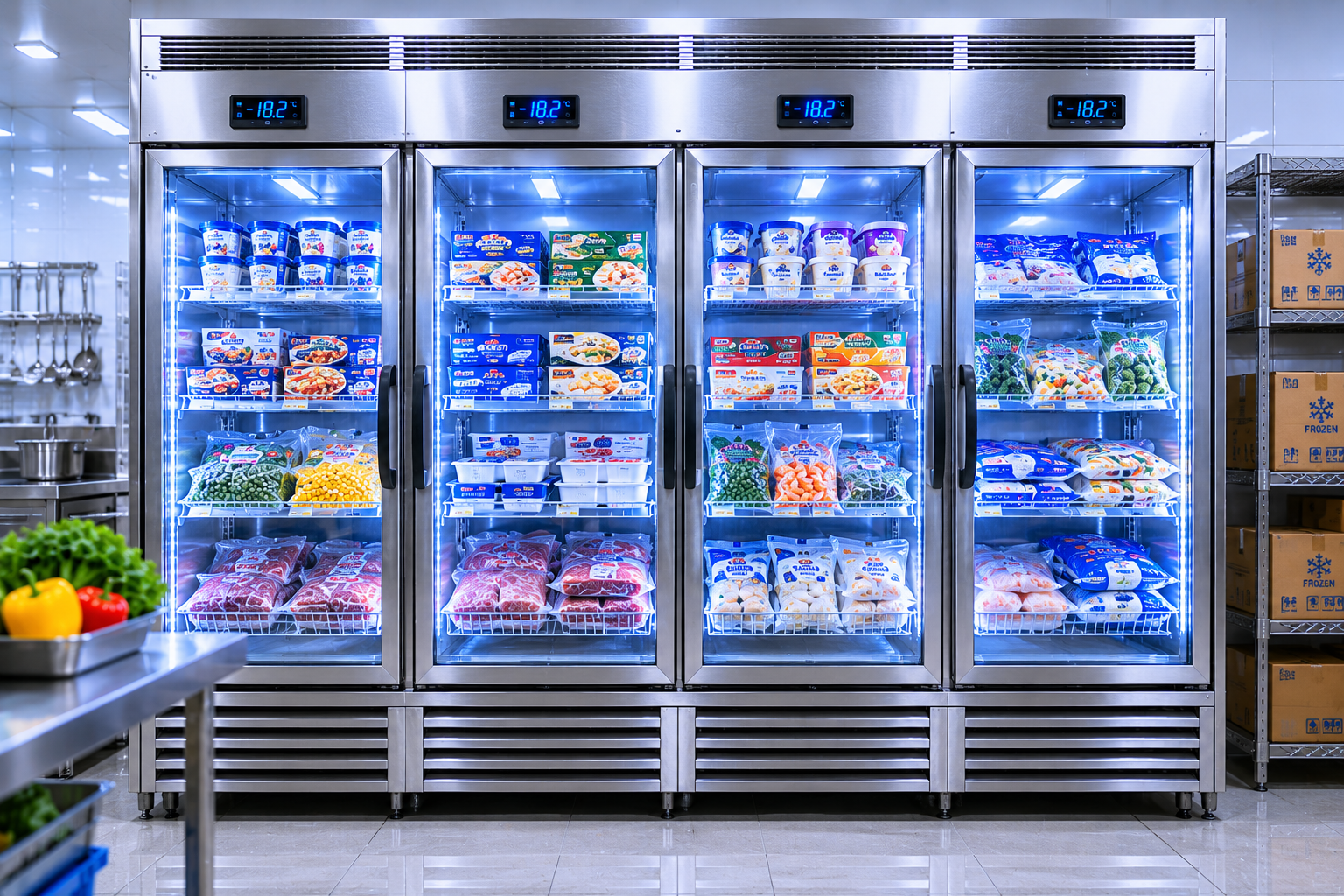
Common Problems Caused by Poor Equipment Durability
Commercial refrigeration systems operate under constant stress.
Common challenges include:
- Component wear and failure
- Door seal deterioration
- Compressor overload
- Cabinet corrosion
- Increased maintenance costs
- Unexpected equipment downtime
These problems often lead to higher operating expenses and reduced refrigeration reliability.
A modern durable refrigeration equipment design helps minimize these risks through stronger materials and advanced engineering.
What Makes Refrigeration Equipment Durable?
Manufacturers use several design strategies to improve long-term performance.
Heavy-Duty Cabinet Construction
Reinforced cabinet structures resist daily wear and physical impact.
High-Quality Refrigeration Components
Premium compressors, evaporators, and condensers improve operational reliability.
Corrosion-Resistant Materials
Stainless steel and protective coatings help extend equipment lifespan.
Enhanced Insulation Systems
High-density insulation reduces compressor workload and improves energy efficiency.
Because of these design features, a durable refrigeration equipment design can provide years of reliable operation under demanding commercial conditions.
Standard Refrigeration Equipment vs Durable Equipment Design
| Feature | Standard Refrigeration Equipment | Durable Refrigeration Equipment Design |
|---|---|---|
| Structural Strength | Standard | Enhanced |
| Corrosion Resistance | Moderate | Excellent |
| Component Lifespan | Average | Extended |
| Maintenance Frequency | Higher | Lower |
| Operating Reliability | Moderate | High |
| Long-Term Ownership Cost | Higher | Lower |
The difference becomes increasingly important in high-volume commercial applications.
Solving Real Commercial Refrigeration Challenges
Frequent Equipment Repairs
Poor-quality components often require repeated maintenance.
High Operating Costs
Inefficient systems consume more energy and increase service expenses.
Downtime Risks
Equipment failures can result in product loss and operational disruption.
Harsh Operating Environments
Moisture, temperature fluctuations, and heavy usage accelerate wear.
A properly engineered durable refrigeration equipment design helps address these challenges while supporting reliable cooling performance.
Key Advantages of Durable Refrigeration Equipment
Longer Service Life
Durable materials and components extend equipment lifespan.
Reduced Maintenance Costs
Fewer repairs help lower long-term ownership expenses.
Improved Refrigeration Stability
Reliable components support consistent temperature control.
Better Return on Investment
Long-lasting equipment provides greater value over time.
Enhanced Business Continuity
Reduced downtime helps maintain uninterrupted operations.
For many businesses, a durable refrigeration equipment design offers substantial long-term savings and operational benefits.
Applications That Benefit Most from Durable Equipment
Durable refrigeration equipment is commonly used in:
- Supermarkets
- Convenience stores
- Restaurants
- Hotels
- Food processing facilities
- Cold storage warehouses
- Frozen food distribution centers
Businesses evaluating refrigeration suppliers should also consider manufacturing experience, engineering capabilities, and quality standards. Learn more about our refrigeration expertise:
https://www.snowseax.com/about-us
How to Choose Durable Refrigeration Equipment
Evaluate Material Quality
Look for corrosion-resistant materials and reinforced construction.
Review Component Specifications
High-quality compressors and refrigeration systems improve reliability.
Consider Maintenance Requirements
Lower service requirements reduce operational costs.
Assess Energy Efficiency
Efficient systems provide long-term savings.
Match Equipment to Operational Demands
Choose equipment designed for your workload and environment.
Our commercial refrigeration product range includes solutions designed for demanding retail, food service, and cold storage applications:
Selecting the right durable refrigeration equipment design helps maximize performance while minimizing long-term ownership costs.
FAQ
Businesses comparing refrigeration equipment often have questions about durability, reliability, and maintenance. Additional technical information can be found in our FAQ center:
Q1: Why is durability important in refrigeration equipment?
Durability helps reduce maintenance costs, prevent downtime, and extend equipment lifespan.
Q2: What materials improve refrigeration durability?
Stainless steel, corrosion-resistant coatings, and reinforced cabinet structures are commonly used.
Q3: Does durable equipment cost more initially?
In some cases, yes. However, lower maintenance and longer lifespan often result in lower total ownership costs.
Q4: Which industries benefit most from durable refrigeration equipment?
Supermarkets, restaurants, hotels, food processors, and cold storage operators all benefit from durable refrigeration systems.
Building Long-Term Refrigeration Reliability
A modern durable refrigeration equipment design combines strong construction, reliable refrigeration performance, and long-term operational efficiency. Investing in durable equipment helps businesses reduce maintenance costs, improve reliability, and protect valuable refrigerated products.
If you are planning a supermarket, restaurant, hotel, convenience store, or cold storage project, our refrigeration specialists can help identify the most suitable solution for your application: