Ice cream storage requires highly stable refrigeration conditions to maintain texture, flavor, and product appearance. Even small temperature fluctuations can cause ice crystal formation, product softening, and reduced storage quality. Ice cream freezer temperature control helps supermarkets, ice cream shops, restaurants, and convenience stores maintain stable frozen dessert storage conditions through precise refrigeration management.
Compared with standard refrigeration systems, ice cream freezer temperature control improves cooling stability, reduces temperature fluctuation, and protects frozen dessert quality in demanding commercial environments.
Why Temperature Control Matters for Ice Cream Storage
Ice cream is highly sensitive to refrigeration fluctuation. Improper storage temperatures can quickly affect product consistency and customer experience.
Common refrigeration problems include:
- Ice crystal formation
- Product softening
- Uneven freezing
- Excessive frost buildup
- Increased compressor cycling
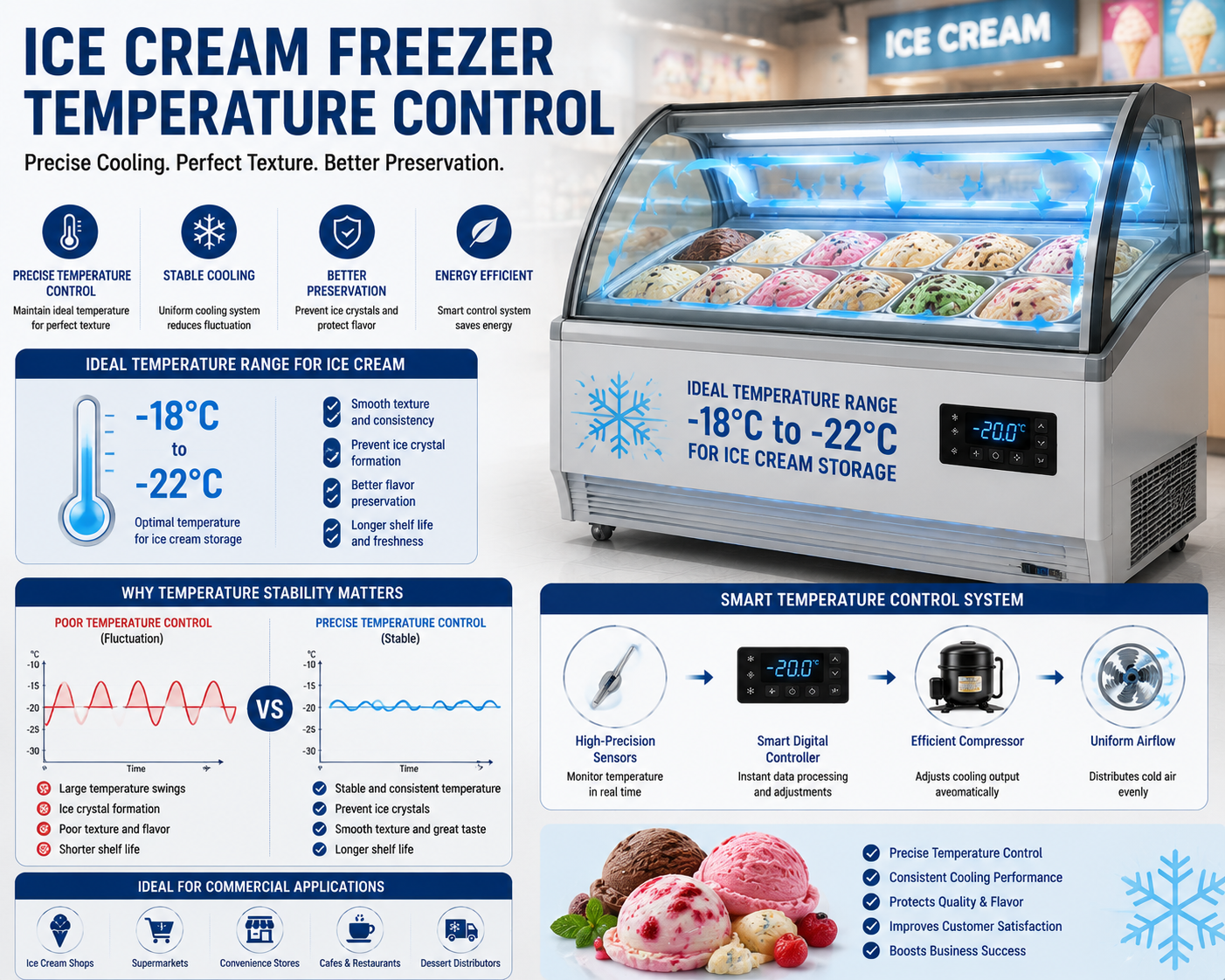
Proper ice cream freezer temperature control minimizes these problems by maintaining stable refrigeration temperatures throughout the storage cabinet.
This is especially important in commercial retail environments with frequent door openings and product restocking.
Recommended Ice Cream Freezer Temperature Range
Most commercial ice cream storage systems operate between:
-18°C to -22°C
This refrigeration range helps maintain:
- Smooth texture
- Stable product consistency
- Better flavor preservation
- Reduced melting risk
- Longer storage quality
Accurate ice cream freezer temperature control is essential for maintaining frozen dessert quality during long-term commercial storage.
How Ice Cream Freezer Temperature Control Systems Work
Modern refrigeration systems use intelligent cooling technology to maintain stable frozen dessert storage conditions.
Core Refrigeration Components
- High-precision digital sensors
- Smart temperature controllers
- Uniform airflow circulation systems
- High-efficiency compressors
- Thick insulation structures
Because of this design, ice cream freezer temperature control systems maintain more stable refrigeration performance even during busy commercial operation.
Key Benefits of Ice Cream Freezer Temperature Control
Better Product Preservation
Stable refrigeration temperatures help maintain smooth ice cream texture and appearance.
Reduced Ice Crystal Formation
Precise cooling minimizes temperature fluctuation inside the freezer cabinet.
Improved Energy Efficiency
Optimized refrigeration control reduces unnecessary compressor operation.
Faster Cooling Recovery
Commercial systems quickly restore target temperatures after door openings.
More Reliable Commercial Operation
Stable refrigeration improves freezer performance and long-term equipment reliability.
Performance Comparison
| Feature | Standard Commercial Freezer | Ice Cream Freezer Temperature Control |
|---|---|---|
| Temperature Precision | Moderate | High |
| Product Preservation | Standard | Improved |
| Cooling Stability | Moderate | Stable |
| Ice Crystal Prevention | Limited | Better |
| Energy Efficiency | Standard | Optimized |
Commercial Applications
Ice cream freezer temperature control is widely used in:
- Ice cream shops
- Supermarkets and retail refrigeration
- Convenience stores
- Frozen dessert distributors
- Restaurants and cafés
Common Usage Scenarios:
- Commercial Refrigerator Temperature Range
- Freezer Temperature Accuracy Control
- Uniform Cooling Refrigeration System
Engineering Considerations for Ice Cream Freezers
Businesses selecting refrigeration equipment should evaluate:
- Temperature sensor accuracy
- Airflow distribution design
- Compressor cooling performance
- Refrigeration insulation quality
- Frost prevention capability
- Long-term maintenance requirements
Proper refrigeration system design helps maximize ice cream freezer temperature control performance and storage reliability.
FAQ
Q1: What is the ideal ice cream freezer temperature?
A1: Most commercial ice cream freezers operate between -18°C and -22°C.
Q2: Why is precise temperature control important for ice cream?
A2: Stable refrigeration helps maintain texture, flavor, and frozen dessert quality.
Q3: Can temperature fluctuation damage ice cream products?
A3: Yes. Inconsistent refrigeration can cause melting, refreezing, and ice crystal formation.
Building a More Reliable Ice Cream Refrigeration System
Proper ice cream freezer temperature control helps businesses improve frozen dessert preservation, maintain stable refrigeration performance, and reduce long-term operating costs.
Learn more about our company: https://www.snowseax.com/about-us
Explore our refrigeration products: https://www.snowseax.com/
Visit our FAQ page: https://www.snowseax.com/faqs
Contact our refrigeration specialists: https://www.snowseax.com/contact-us