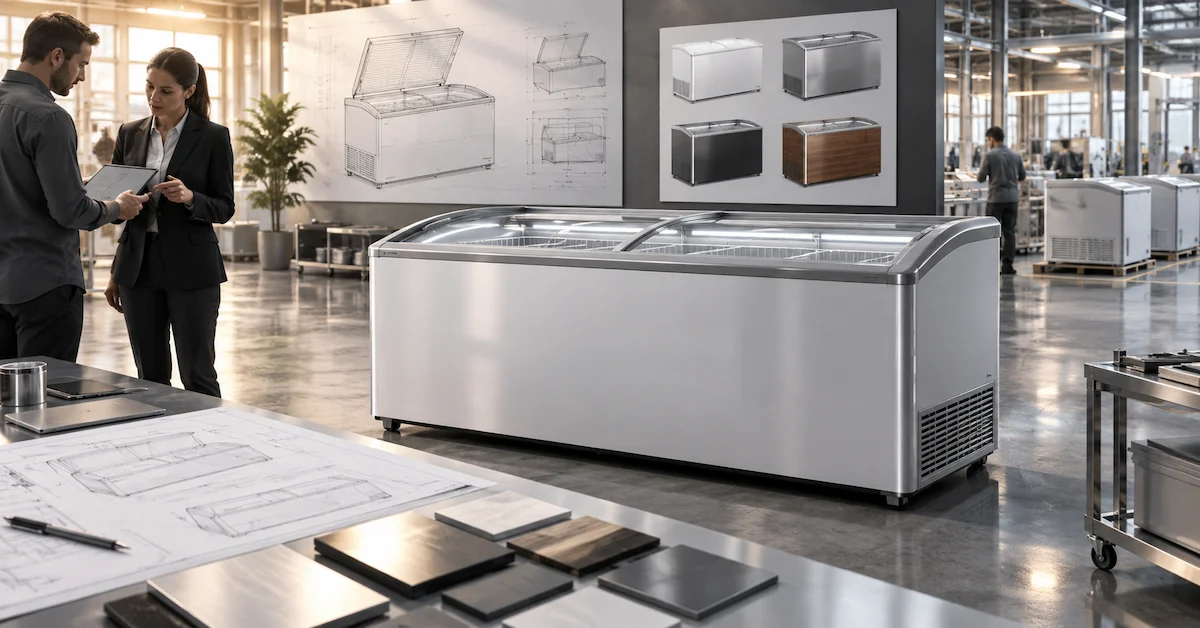
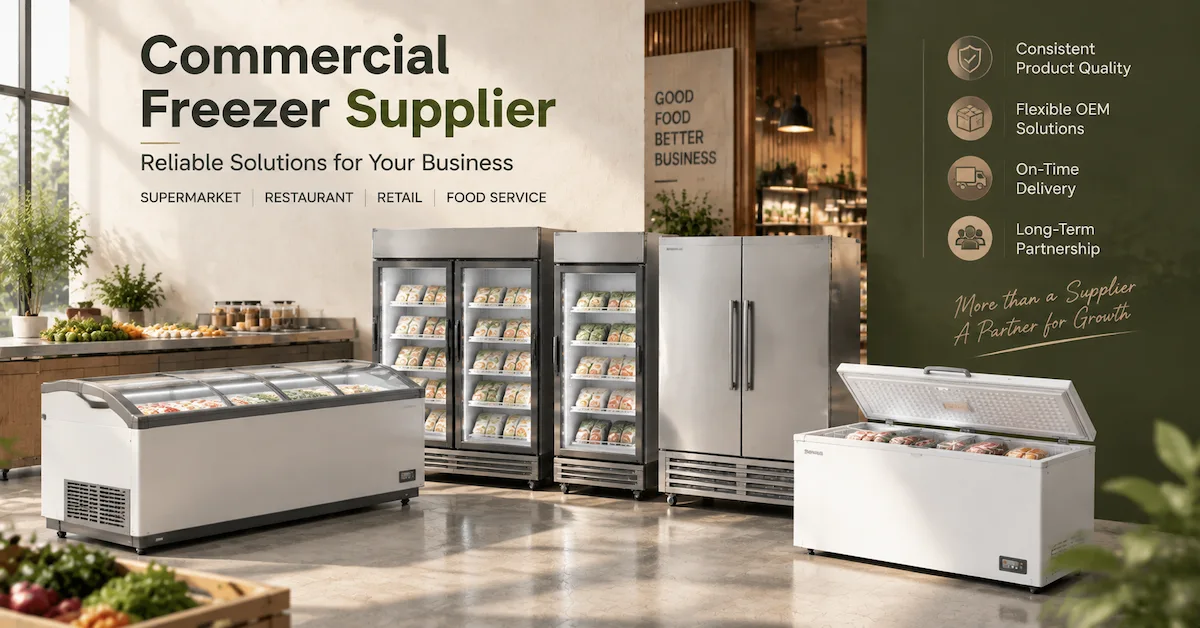
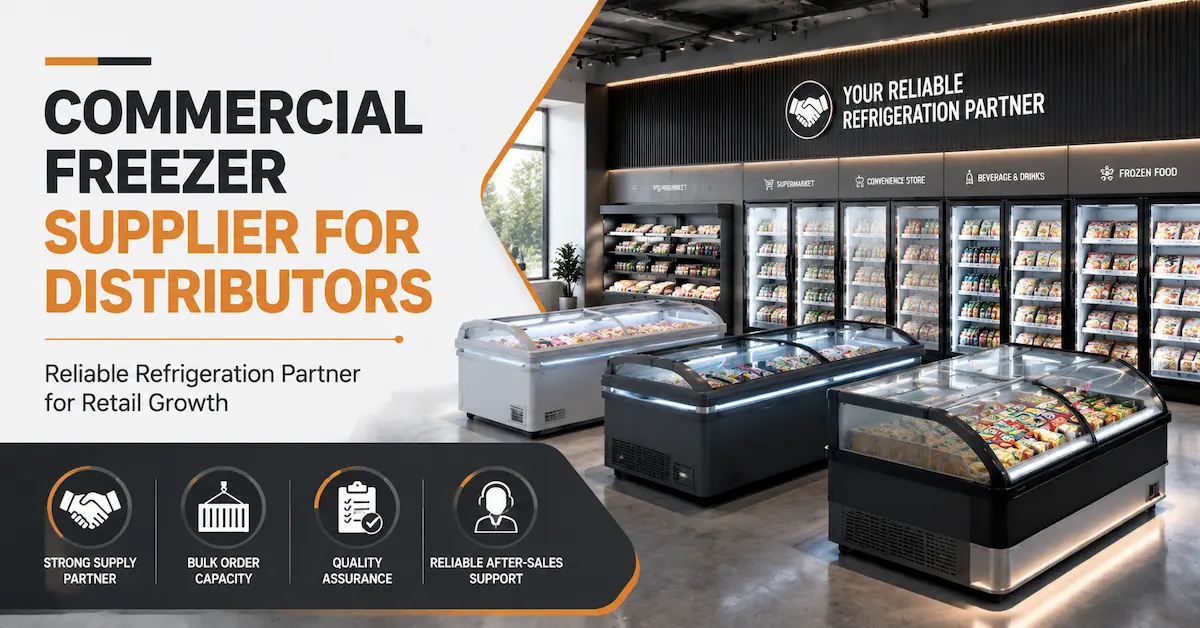
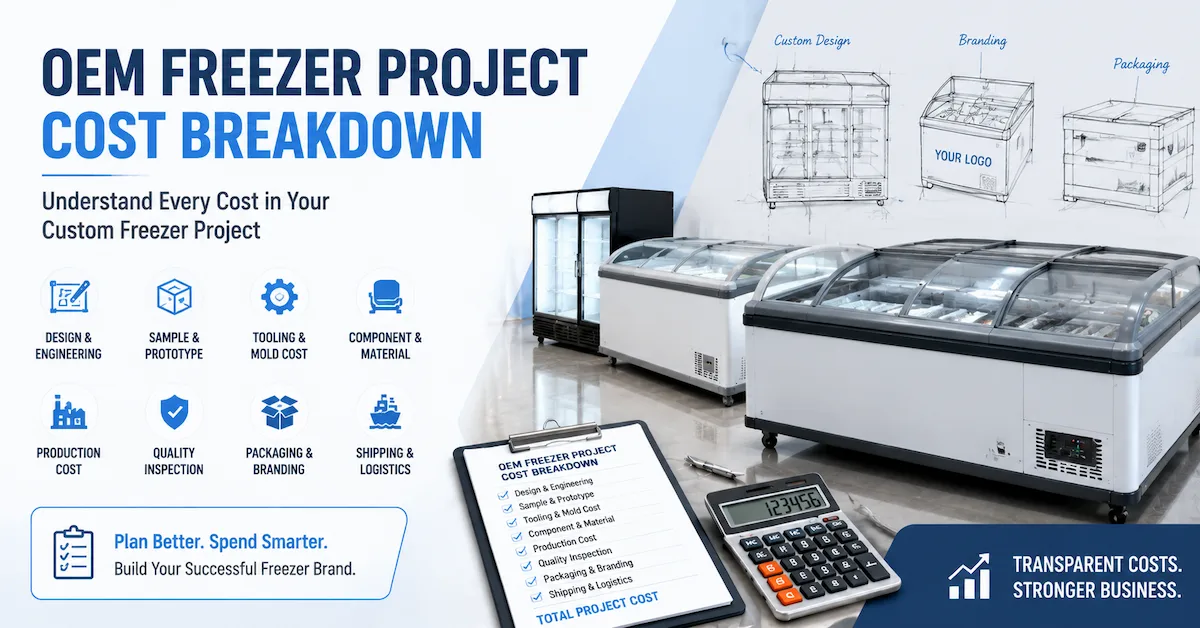
For importers, refrigeration distributors, supermarket suppliers, frozen food brands, and retail equipment companies, building a private label freezer product line is an effective way to create brand differentiation and develop long-term market value.
Instead of selling standard freezers from different manufacturers, private label buyers can create their own branded freezer series with customized appearance, packaging, product labels, specifications, and sales positioning. This allows distributors and brands to offer unique products to supermarkets, convenience stores, restaurants, frozen food retailers, and commercial customers.
However, building a successful private label freezer product line requires more than adding a logo. Buyers need to plan product categories, identify target customers, select suitable freezer models, confirm OEM capabilities, control quality, design packaging, and establish reliable supply partnerships.
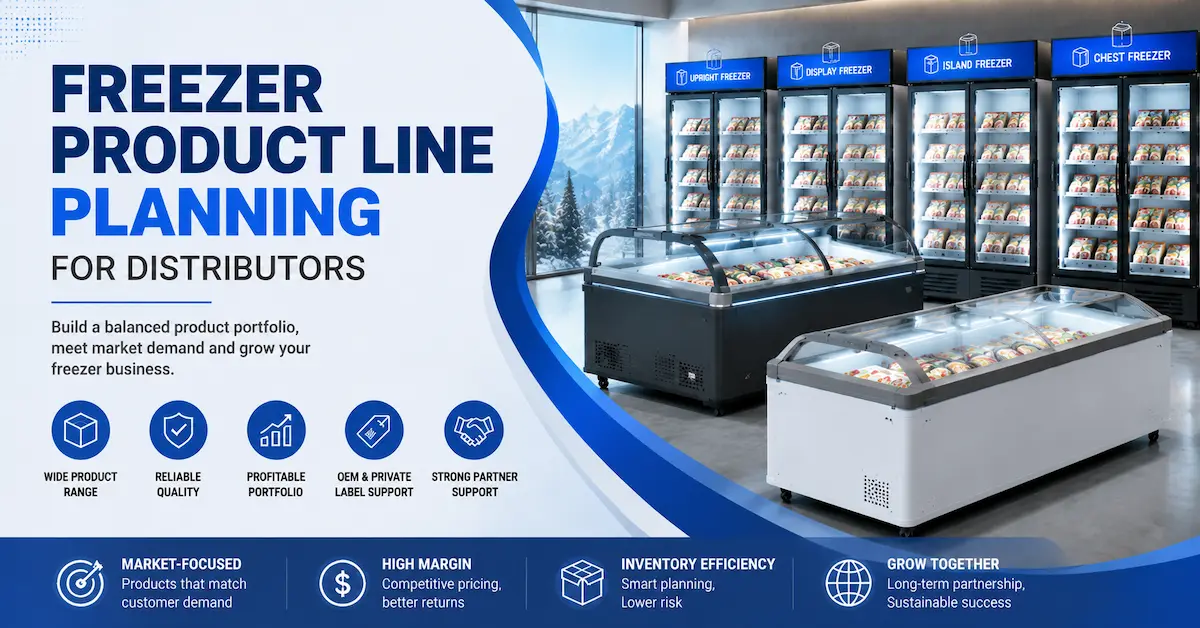
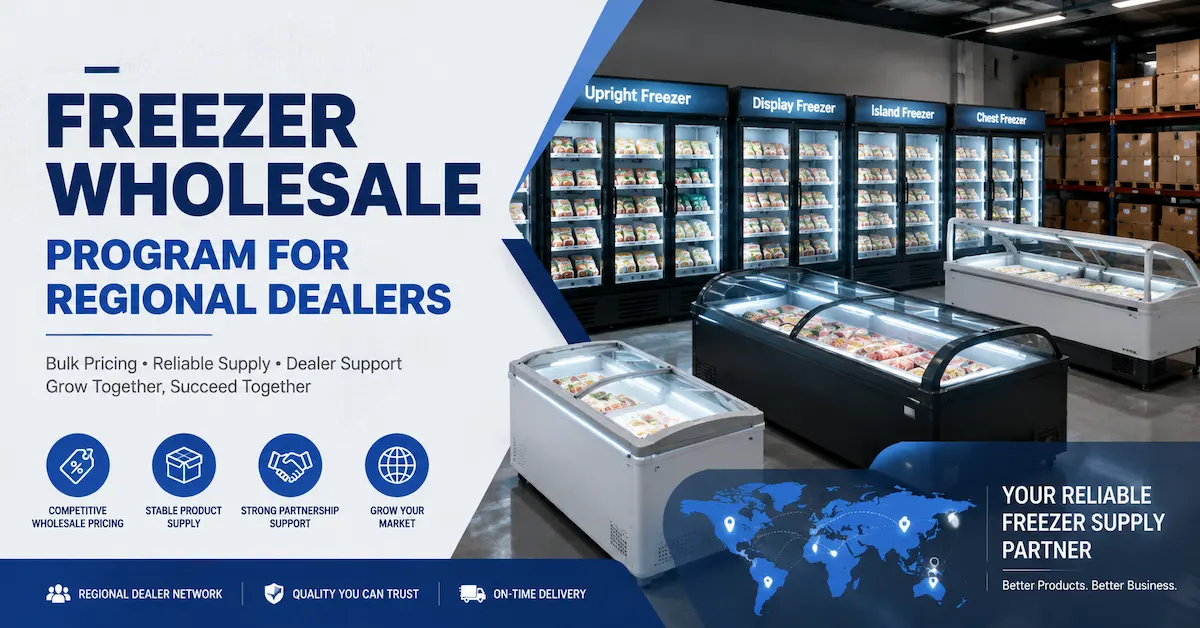
Snowsea provides commercial refrigeration products including chest freezers, upright freezers, display freezers, island freezers, sliding glass freezers, ice cream freezers, refrigerators, beverage coolers, and showcase cabinets. For private label freezer projects, Snowsea supports OEM/ODM customization, branding, export packaging, quality inspection, and long-term supply cooperation.
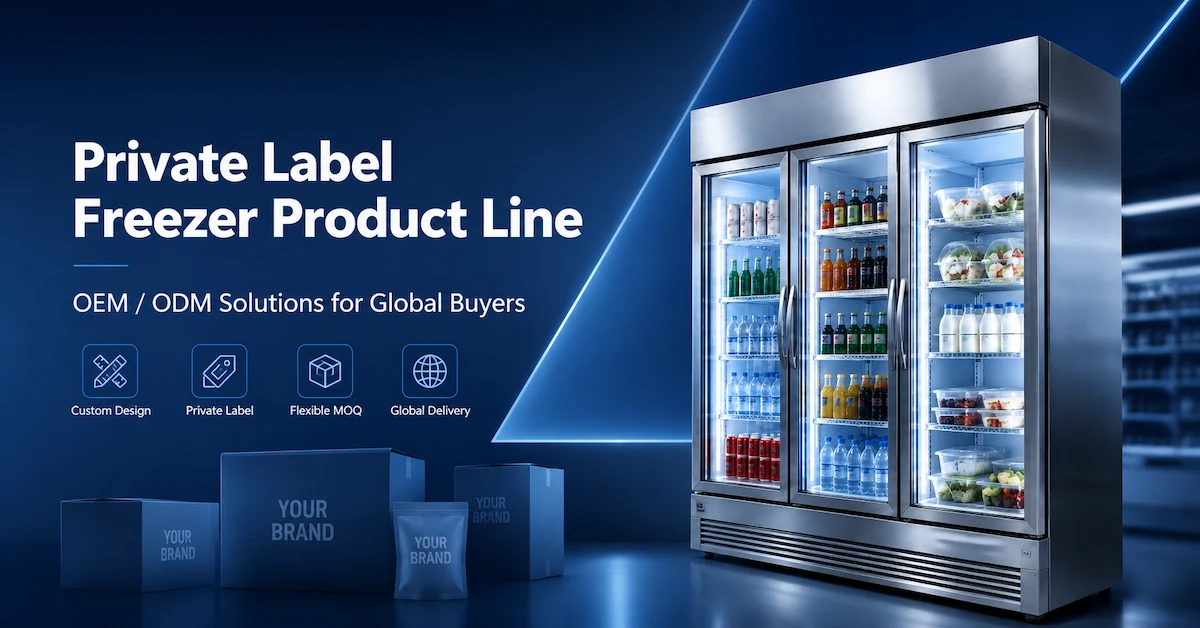
Why Build a Private Label Freezer Product Line?
Private label freezers help distributors and brands move from simple product reselling to building their own market identity.
A successful private label freezer product line can help businesses:
- Create stronger brand recognition
- Improve profit margins
- Reduce price-only competition
- Build customer loyalty
- Expand product categories
- Support supermarket and distributor partnerships
- Create repeat purchasing opportunities
For example, a frozen food distributor may create a branded freezer series for supermarkets, while an ice cream company may develop customized display freezers for retail promotion.
The key is creating products that match customer needs instead of simply copying existing models.
Step 1: Define Your Target Market and Customer Needs
Before developing a private label freezer product line, buyers should first define who will purchase and use the products.
Common target customers include:
| Customer Type | Suitable Freezer Direction |
|---|---|
| Supermarkets | Display freezers, island freezers, upright glass door freezers |
| Convenience stores | Compact upright freezers, sliding glass freezers |
| Seafood retailers | Chest freezers, island freezers, display freezers |
| Ice cream brands | Ice cream freezers, glass display cabinets |
| Restaurants | Chest freezers, solid door upright freezers |
| Frozen food distributors | Mixed freezer product portfolio |
Different customers have different requirements for:
- Storage capacity
- Display visibility
- Temperature performance
- Product access
- Cabinet size
- Energy efficiency
- Branding design
A clear market position helps buyers avoid building a freezer line that is difficult to sell.
Step 2: Select the Right Freezer Product Portfolio
A private label freezer product line usually includes multiple freezer types instead of one single model.
A balanced product portfolio may include:
Chest Freezers
Suitable for:
- Bulk frozen food
- Seafood
- Meat products
- Warehouse storage
Key advantages:
- Large storage capacity
- Strong insulation
- Efficient temperature retention
Upright Freezers
Suitable for:
- Supermarkets
- Convenience stores
- Retail frozen food display
Key advantages:
- Vertical space saving
- Easy product organization
- Better visibility
Display Freezers
Suitable for:
- Frozen food brands
- Retail stores
- Promotional displays
Key advantages:
- Strong product presentation
- Customer visibility
- Better shopping experience
Island Freezers
Suitable for:
- Large supermarkets
- Frozen food zones
Key advantages:
- Large capacity
- Multi-side access
- High retail impact
Ice Cream Freezers
Suitable for:
- Ice cream brands
- Dessert retailers
Key advantages:
- Attractive display
- Stable freezing performance
Buyers can review Snowsea product categories here:
https://www.snowseax.com/products
Step 3: Develop Your Private Label Branding Strategy
Branding is one of the most important parts of a private label freezer product line.
Customization options may include:
- Logo
- Cabinet color
- Product labels
- Model numbers
- User manuals
- Carton design
- Side panel graphics
- Lightbox branding
- Packaging marks
A strong branding strategy should consider:
- Target market style
- Customer expectations
- Retail environment
- Brand positioning
- Product differentiation
For supermarket projects, cabinet appearance and display design may influence purchase decisions. For distributors, consistent branding helps build recognition across different customer locations.
Step 4: Work With an OEM Freezer Manufacturer
Choosing the right OEM supplier is one of the most important steps when building a private label freezer product line.
A reliable OEM partner should provide:
- Product development support
- Freezer model recommendations
- Technical communication
- Customization capability
- Quality control
- Export experience
- Production consistency
Buyers should evaluate:
- Factory experience
- Product range
- Manufacturing capability
- Testing process
- Export history
- Customer support
A supplier should not only produce freezers but also help buyers create commercially successful products.
For Snowsea OEM/ODM projects, visit:
https://www.snowseax.com/oem-odm
Step 5: Customize Technical Specifications
Private label buyers may need technical customization to match different markets.
Important specifications include:
- Voltage
- Frequency
- Plug type
- Temperature range
- Compressor configuration
- Cabinet size
- Door type
- Shelf layout
- Basket design
- Energy efficiency requirements
Different countries and regions may have different electrical standards and market expectations.
Confirming specifications early helps avoid production delays and import problems.
Step 6: Build Quality Control Standards
A private label freezer product line represents the buyer’s brand. Product quality directly affects customer trust.
Quality control should include:
- Cabinet appearance inspection
- Freezing performance testing
- Electrical safety testing
- Door sealing inspection
- Glass quality inspection
- Controller accuracy testing
- Packaging inspection
- Branding verification
For distributors, consistent quality is especially important because one defective batch can affect multiple customers.
Step 7: Design Export Packaging and Shipping Process
Private label freezers require strong export preparation.
Packaging should protect:
- Glass doors
- Cabinet corners
- Compressor components
- Control panels
- Wheels and feet
- Accessories
- Product labels
Export preparation may include:
- Reinforced cartons
- Foam protection
- Wooden frame support
- Pallet loading
- Shipping marks
- Container loading planning
Good packaging reduces:
- Shipping damage
- Replacement costs
- Customer complaints
- Delivery delays
Step 8: Plan Inventory and Supply Strategy
Building a private label freezer product line requires long-term planning.
Buyers should consider:
- Initial order quantity
- Product range size
- Market testing
- Repeat order planning
- Warehouse capacity
- Spare parts availability
- Seasonal demand
Many successful brands start with several core models, test market demand, and gradually expand their product portfolio.
Private Label Freezer Product Line Checklist
Before starting a project, buyers should prepare:
| Information | Why It Matters |
| Target customers | Defines product positioning |
| Freezer categories | Builds suitable product portfolio |
| Branding requirements | Supports market differentiation |
| Technical specifications | Matches local requirements |
| Order quantity | Affects production planning |
| Packaging needs | Protects products during shipping |
| Quality standards | Protects brand reputation |
| Delivery schedule | Supports market launch |
Common Mistakes Buyers Should Avoid
Mistake 1: Treating Private Label as Only Logo Printing
A successful private label freezer product line requires product strategy, design, packaging, and market positioning.
Mistake 2: Choosing Suppliers Only by Price
Low prices may come with weaker components, poor packaging, unstable quality, or limited support.
Mistake 3: Creating Too Many Models at the Beginning
Starting with too many freezer models increases inventory pressure and management complexity.
Mistake 4: Ignoring Packaging Design
Packaging is part of the brand experience and protects products during international shipping.
Mistake 5: Not Planning Long-Term Supply
A private label brand needs consistent quality and reliable repeat production.
Why Snowsea Supports Private Label Freezer Projects
Snowsea focuses on commercial refrigeration and freezing equipment for supermarkets, frozen food retailers, seafood stores, restaurants, convenience stores, and food service applications.
For private label freezer product line projects, Snowsea can support:
- Chest freezer customization
- Upright freezer customization
- Display freezer solutions
- Island freezer solutions
- Ice cream freezer solutions
- OEM/ODM development
- Logo and branding customization
- Packaging customization
- Export support
- Quality inspection
- Bulk production
Buyers can learn more about Snowsea here:
https://www.snowseax.com/about-us
FAQ
1. What is a private label freezer product line?
A private label freezer product line is a series of commercial freezers customized and sold under a buyer’s own brand, including product design, branding, packaging, and specifications.
2. How do I start building a private label freezer product line?
Start by defining target customers, selecting freezer categories, choosing an OEM supplier, confirming customization requirements, testing products, and planning production.
3. Can freezer manufacturers customize products for distributors?
Yes. OEM manufacturers can customize logos, colors, labels, packaging, specifications, voltage, and product structures.
4. What freezer types can be included in a private label line?
A private label line may include chest freezers, upright freezers, display freezers, island freezers, sliding glass freezers, and ice cream freezers.
5. How can buyers choose the right OEM freezer supplier?
Buyers should evaluate product range, manufacturing capability, quality control, export experience, customization ability, and long-term support.
Conclusion
Building a private label freezer product line allows importers, distributors, and refrigeration brands to create differentiated products and strengthen their market position.
A successful private label project requires careful planning of freezer categories, branding, OEM customization, technical specifications, quality control, packaging, and supply management.
Snowsea provides commercial freezer solutions with OEM/ODM customization, export support, quality control, and long-term cooperation for global buyers.
To explore freezer solutions, visit:
https://www.snowseax.com/products
For private label freezer projects, visit:
https://www.snowseax.com/oem-odm