Refrigeration Equipment Manufacturer: How to Solve System Instability Under Real Operating Conditions
In commercial refrigeration projects, system instability rarely appears during installation—it shows up during real operation.
Operators often encounter situations such as:
- Temperature readings differ between display cabinets and storage units
- Systems struggle to maintain setpoints during peak operating hours
- Energy consumption increases after continuous use
- Equipment operates normally in isolation but inefficiently as a system
These are not isolated equipment problems. They are signs of system imbalance under dynamic load conditions.
At Snowsea, we frequently analyze these scenarios in field deployments. By examining thermal load distribution, airflow pathways, and compressor cycling behavior, we redesign systems to operate as coordinated units rather than independent devices. This approach allows us to resolve instability at its root.
Why System Instability Occurs in Real Refrigeration Environments
Understanding instability requires looking beyond equipment specifications and into operational conditions.
According to ASHRAE, refrigeration systems must balance cooling capacity with variable thermal loads, especially in environments with frequent access and fluctuating ambient temperatures.
Key Failure Mechanisms
- Dynamic Load Mismatch
Systems are designed for nominal load, but real conditions include peak spikes (door openings, warm product loading) - Airflow Short-Circuiting
Poor duct or fan design leads to uneven circulation, causing localized temperature deviation - Thermal Leakage Through Structural Gaps
Inconsistent insulation or sealing allows continuous heat infiltration - Compressor Cycling Inefficiency
Improper cycling leads to temperature oscillation and increased wear
These factors interact, meaning instability is often cumulative rather than singular.
Engineering Solutions: From Component-Based to System-Based Design
Solving these issues requires moving from component selection to system-level engineering.
Core Engineering Interventions
- Thermal Load Mapping
Identifying real heat gain sources under operational conditions (e.g., door frequency, ambient heat) - Airflow Field Optimization
Designing airflow velocity (typically 1.5–3 m/s in forced systems) to ensure uniform distribution - Insulation Continuity Control
Ensuring no thermal bridging across panels or joints - Compressor Capacity Matching
Aligning compressor output with both steady-state and peak load conditions
We define this integrated methodology as “dynamic thermal equilibrium engineering”, where system stability is achieved through continuous balance rather than static design.
Why Choosing the Right Refrigeration Equipment Manufacturer Matters
Many buyers focus on specifications such as cooling capacity or power rating. However, these values alone do not reflect real-world performance.
A qualified refrigeration equipment manufacturer must demonstrate:
- Ability to model real operating conditions
- Capability to design coordinated systems across multiple units
- Consistency in production that maintains engineering intent
At Snowsea, we validate system performance through:
- Load simulation testing before production
- Multi-point temperature measurement during testing
- Verification under continuous operation scenarios
This ensures that system behavior remains stable beyond laboratory conditions.
Performance Impact: Measurable Differences in System Behavior
When systems are engineered correctly, performance differences become measurable.
System Performance Comparison
| Parameter | Unbalanced System | Snowsea Engineered System |
|---|---|---|
| Temperature Variation | ±3–4°C | ±1°C |
| Recovery Time After Door Opening | 5–8 minutes | 2–3 minutes |
| Energy Consumption Trend | Increasing over time | Stable / optimized |
| Compressor Cycling Frequency | High fluctuation | Controlled cycles |
| System Efficiency (COP) | Lower | Improved |
These metrics directly impact product quality, operational cost, and equipment lifespan.
Real Operating Scenarios and Their Engineering Implications
Refrigeration systems behave differently depending on operational context. Understanding these differences is critical.
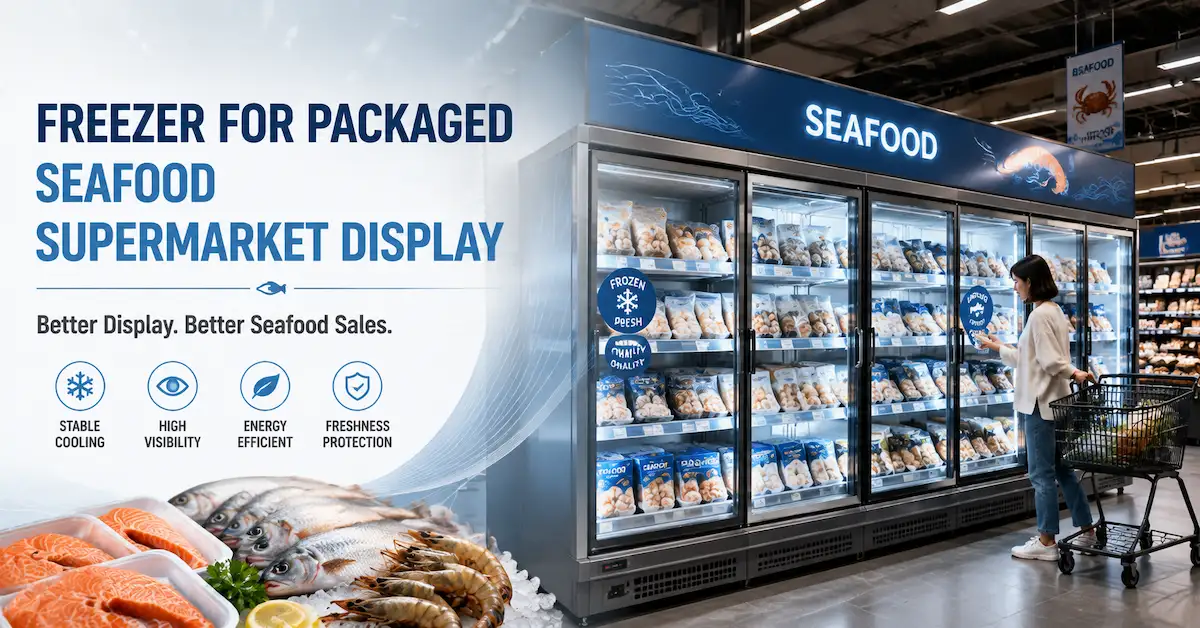
Multi-Zone Retail Systems
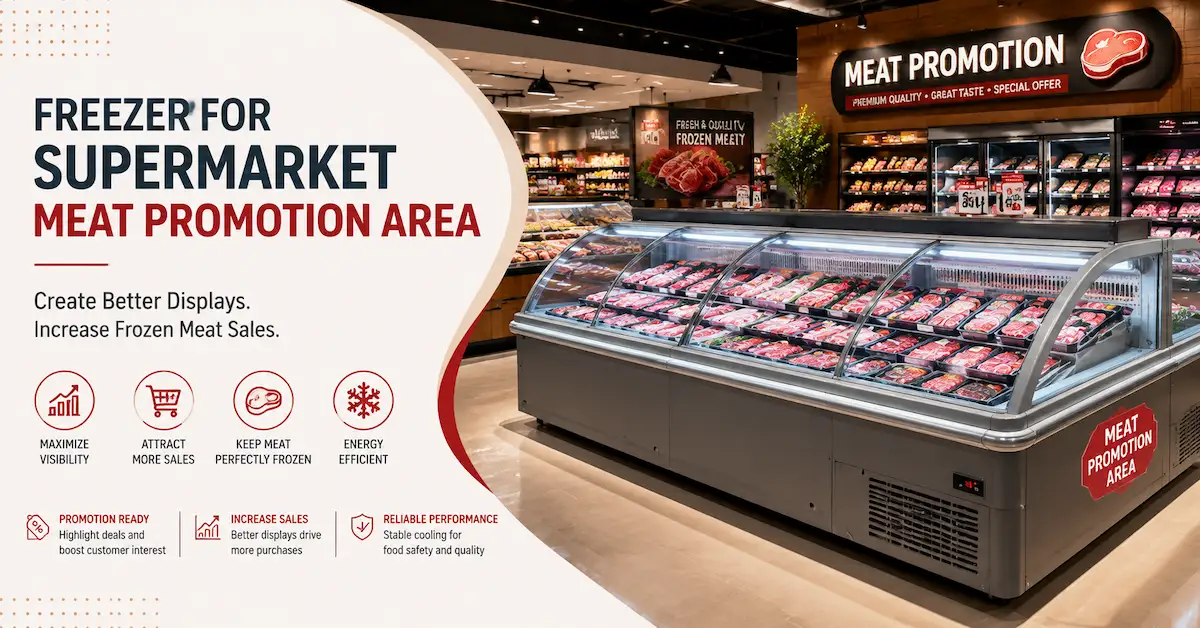
In supermarkets, multiple refrigeration units operate simultaneously.
Challenges include:
- Thermal interference between adjacent units
- Uneven cooling due to airflow disruption
- Load variation during peak hours
Engineering response:
- Synchronizing airflow systems
- Designing independent yet coordinated cooling loops
- Maintaining consistent temperature across zones
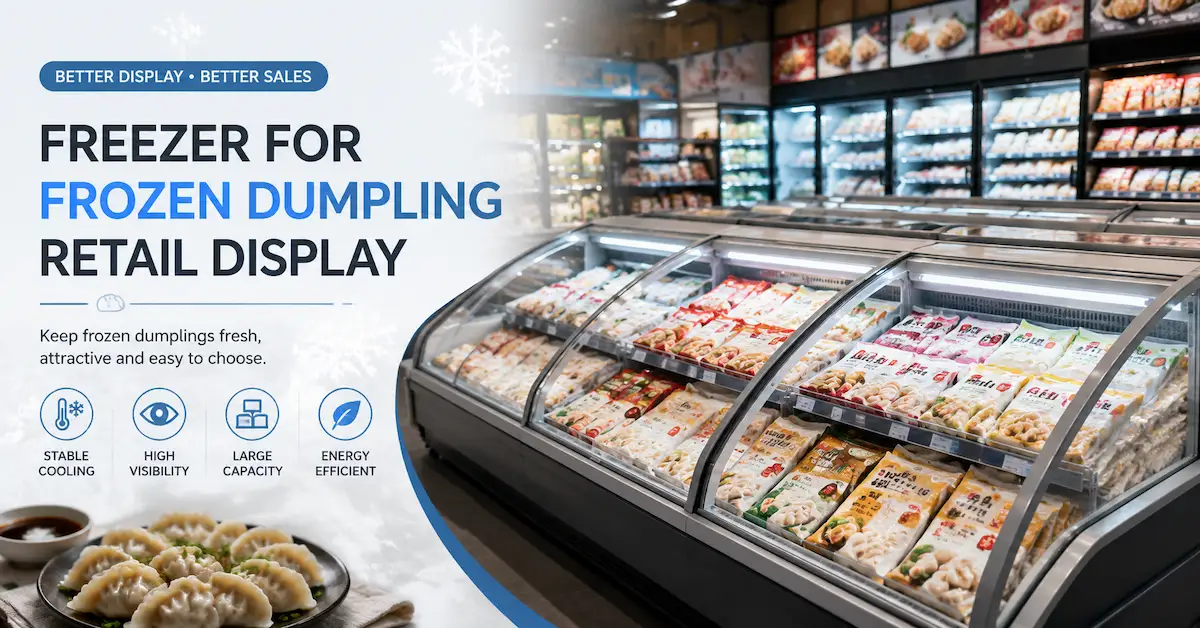
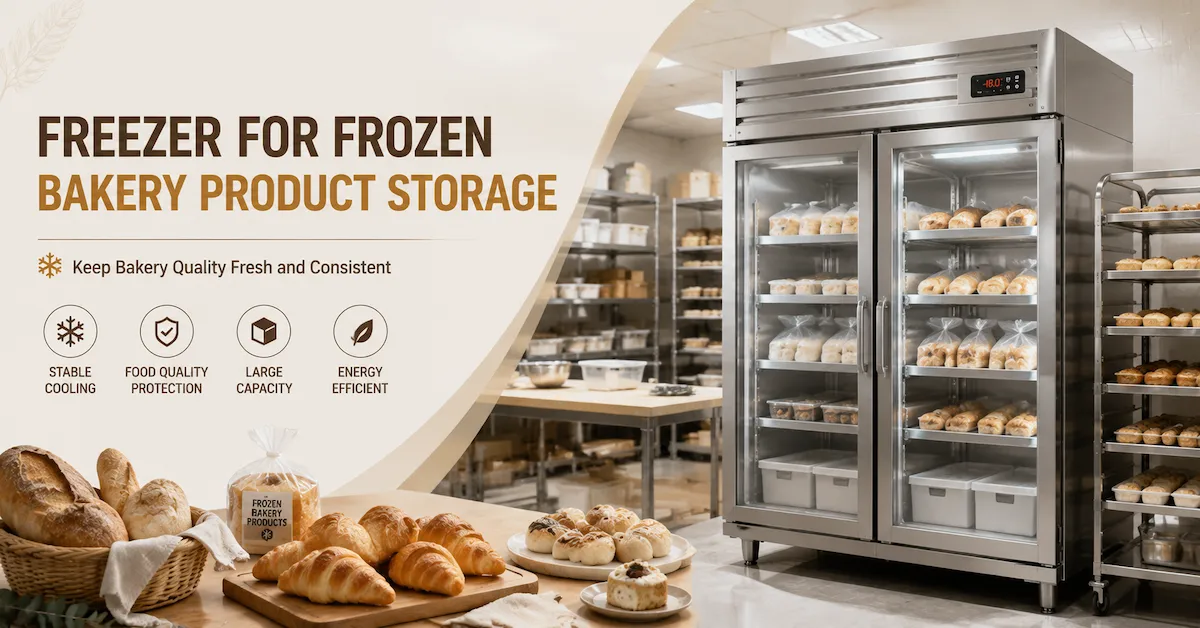
Food Processing and Cold Storage
Processing environments introduce high and variable thermal loads.
Typical conditions:
- Warm products entering storage
- Continuous door opening
- High humidity
Engineering response:
- High-capacity compressors with rapid load absorption
- Insulation thickness above standard (80mm+)
- Moisture-resistant design to prevent frost accumulation
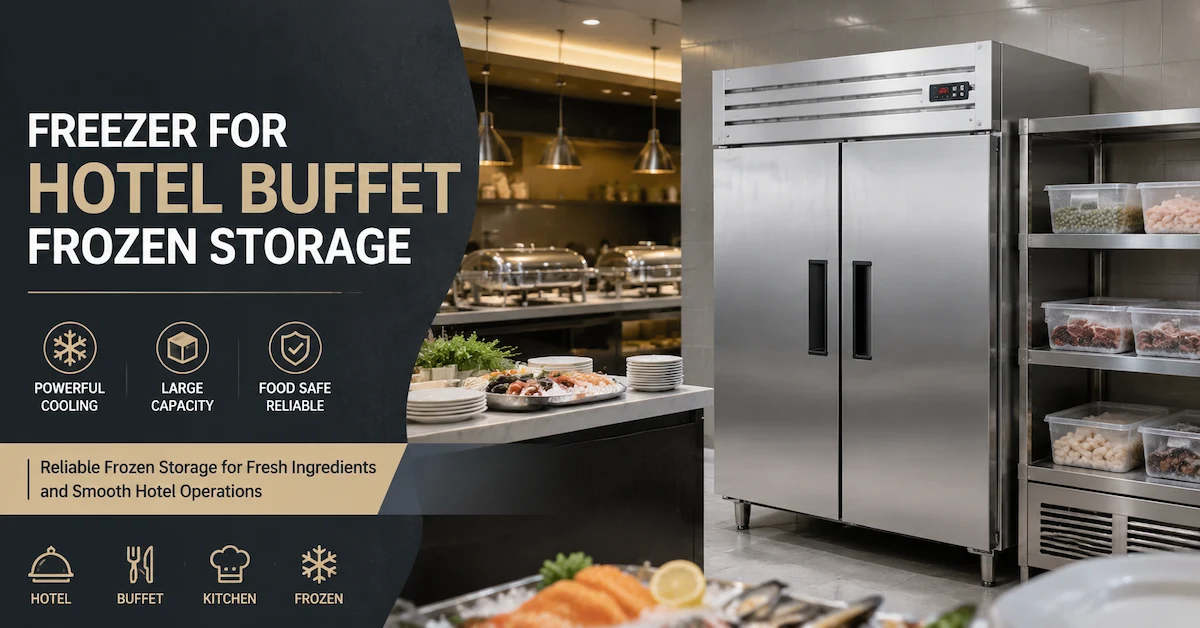
Commercial Kitchens
Kitchens create fluctuating thermal environments with limited space.
Challenges:
- Heat from cooking equipment
- Frequent access
- Limited ventilation
Engineering response:
- Compact systems with high airflow efficiency
- Fast recovery cooling cycles
- Reinforced structural design
Cold Chain Logistics
Distribution environments require stability under interruption.
Conditions include:
- Frequent loading/unloading cycles
- Partial door openings
- Variable ambient exposure
Engineering response:
- Rapid thermal recovery systems
- Optimized compressor cycling
- Stable temperature maintenance during interruptions
At Snowsea, we implement multi-scenario adaptive system tuning, ensuring systems maintain stability under varying operational stresses.
Case Study: Resolving System Instability in a Retail Deployment
A regional retail chain experienced inconsistent refrigeration performance across multiple stores.
Initial Conditions
- Temperature deviation up to ±4°C between units
- High energy consumption during peak hours
- Customer complaints regarding product quality
Engineering Adjustments
- Reconfigured airflow distribution
- Balanced compressor capacity across units
- Improved insulation continuity
Results
- Temperature variation reduced to ±1°C
- Energy consumption reduced by approximately 22%
- System stability maintained during peak operation
This demonstrates how system-level engineering directly improves performance.
What Buyers Should Evaluate When Selecting a Refrigeration Equipment Manufacturer
To avoid system instability, buyers should focus on three critical dimensions.
System Engineering Capability
- Can the manufacturer analyze real operating conditions?
- Are airflow, load, and insulation designed as a system?
Snowsea solution: We apply system-level modeling and validation to ensure stable performance.
Production and Performance Consistency
- Are systems tested under load conditions?
- Is performance consistent across production batches?
Snowsea advantage: We conduct batch-level validation and maintain strict process control.
Application-Specific Adaptation
- Can the system be tuned for specific environments?
- Is customization based on usage scenario available?
Snowsea capability: We provide scenario-driven system optimization for different industries.
Frequently Asked Questions
Q: Why do refrigeration systems perform differently in real use compared to specifications?
A: Because specifications are based on controlled conditions, while real environments involve dynamic thermal loads and airflow variations.
Q: Can system instability be solved by replacing components?
A: In most cases, no. Instability is usually caused by system imbalance rather than individual component failure.
Q: How can I improve refrigeration system efficiency?
A: Work with a refrigeration equipment manufacturer that focuses on system integration and real-condition engineering.
Building Stable Refrigeration Systems for Real-World Conditions
Choosing the right refrigeration equipment manufacturer is essential for achieving stable, efficient, and predictable system performance.
At Snowsea, we focus on:
- Dynamic thermal equilibrium engineering
- System-level design and validation
- Consistent production and application-specific optimization
Explore Our Product Range
To understand how our refrigeration systems support real operating conditions, visit:
https://www.snowseax.com/products
Contact Us for System Design Support
If you are facing system instability or planning a refrigeration project, contact our team for professional consultation:
https://www.snowseax.com/contact