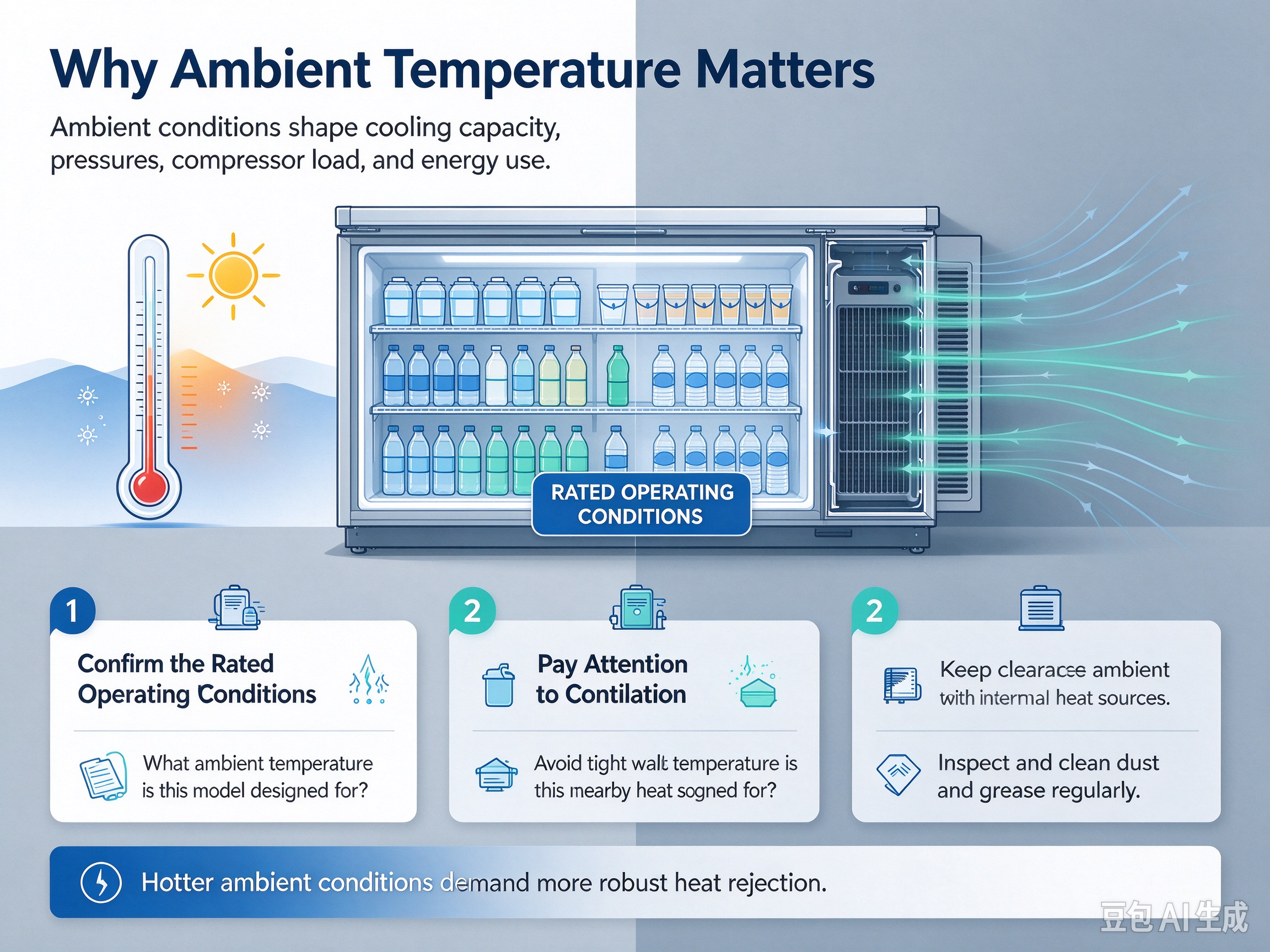
 Why Ambient Temperature Matters
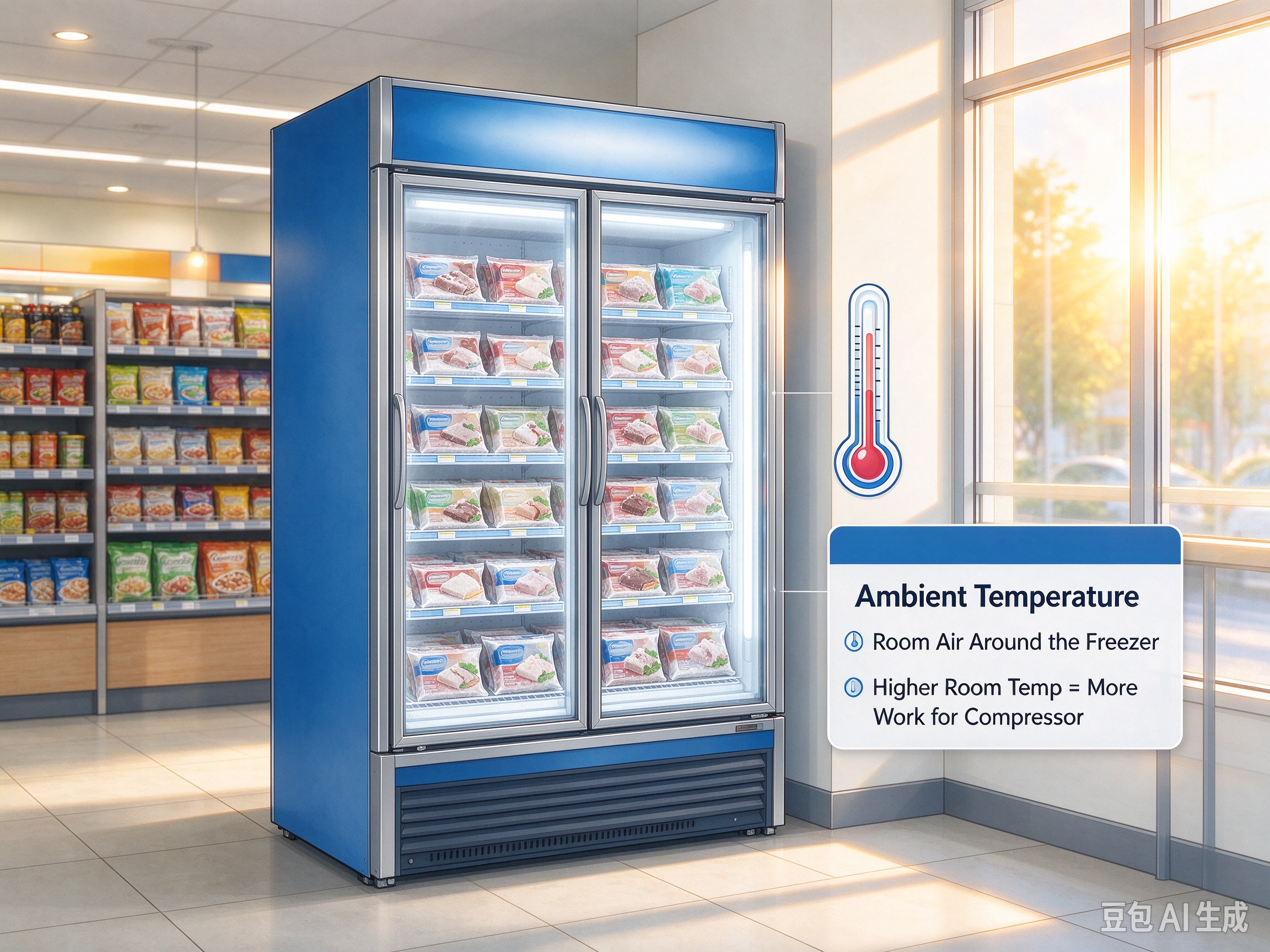
Ambient temperature is the temperature of the air around the freezer. A commercial freezer works by moving heat from inside the cabinet to the surrounding room. The hotter that room is, the harder the compressor and condenser must work to reject heat. If the unit was not designed for the conditions it actually operates in, the result is longer run times, higher electricity bills and unstable cabinet temperatures.
Rated Conditions vs. Real Conditions
Spec sheets usually state the ambient temperature and humidity at which the freezer was tested. A cabinet rated for moderate conditions may perform very differently in a kitchen with cooking equipment, a convenience store near a sun-facing window, or a warehouse without air conditioning. Buyers should compare the rated test conditions with the real environment, not just the headline temperature range.
What Happens When the Room Is Too Hot
• The compressor runs for longer cycles, increasing energy consumption and wear.
• Condenser coils shed heat less effectively, especially when dust or poor airflow is present.
• Cabinet temperature may drift upward during busy periods with frequent door openings.
• Frost and condensation behavior can change, affecting visibility and product quality on display units.
Design Features That Help in Warm Markets
Freezers intended for warm regions typically use appropriately sized condensers, robust fan motors, well-matched compressors and effective insulation. Good airflow design around the condensing unit also matters. When comparing suppliers, ask how these elements are selected for higher ambient conditions rather than assuming a standard model will cope.
Installation Choices Buyers Control
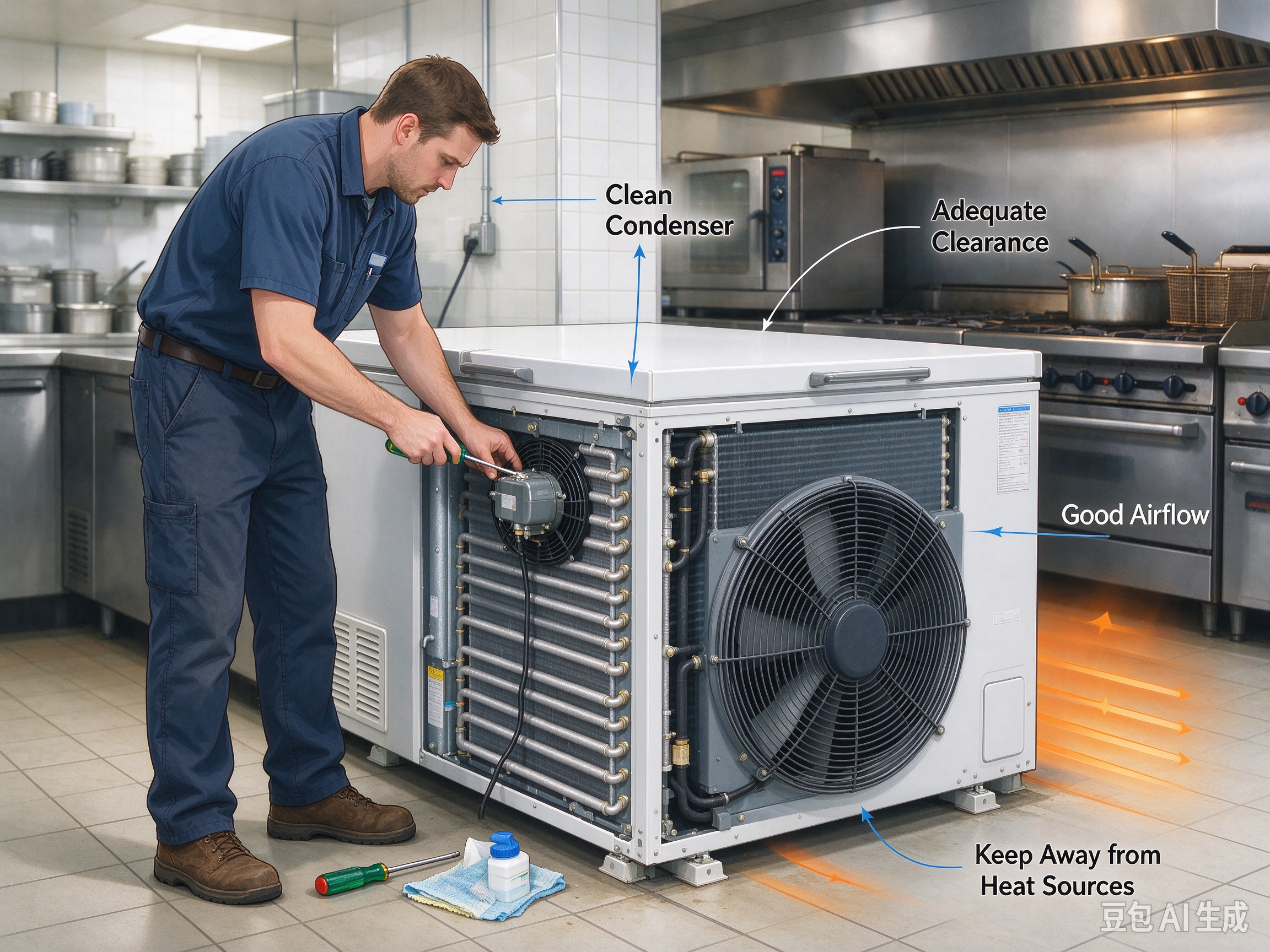
Even a well-built freezer will underperform if it is installed badly. Leave adequate clearance around the unit for ventilation, keep it away from ovens, fryers and direct sunlight, and avoid enclosed alcoves with no air exchange. Regular cleaning of the condenser is one of the simplest ways to protect performance in hot environments.
Questions to Ask Before You Order
• What ambient temperature and humidity was the freezer tested at?
• Can the supplier provide test data or a test report for higher ambient conditions?
• Is there a model variant designed for tropical or hot-climate use?
• What clearance and ventilation does the installation require?
 Conclusion
Ambient temperature is one of the most overlooked factors in freezer selection. By matching the freezer's tested conditions to your actual operating environment and asking suppliers for evidence, you reduce the risk of spoilage, high energy costs and early failure. Snowsea can help buyers review these requirements before production begins.
SNOWSEA offers commercial freezer, chest freezer and ice cream freezer platforms together with OEM/ODM support for retail, distributor and project requirements. Food retailers planning a new frozen category, store rollout or equipment standardization program can submit store formats, merchandise data, package dimensions, replenishment plans and expected quantities through SNOWSEA Contact Us to evaluate an appropriate freezer mix before bulk purchasing.