For importers, refrigeration distributors, supermarket equipment buyers, frozen food brands, and private label refrigeration companies, understanding how to reduce commercial freezer shipping damage is an important part of international sourcing.
Commercial freezers are large, heavy, and often contain sensitive components such as glass doors, compressors, controllers, lighting systems, wheels, shelves, and painted surfaces. During sea freight, container handling, warehouse transfer, and local delivery, improper protection can lead to dents, broken glass, damaged panels, compressor problems, scratches, or missing accessories.
A reliable commercial freezer shipping damage prevention strategy starts before production. It includes product design, factory inspection, export packaging, container loading, transportation planning, and supplier communication.
Snowsea provides commercial refrigeration products including chest freezers, display freezers, upright freezers, island freezers, sliding glass freezers, ice cream freezers, refrigerators, beverage coolers, and showcase cabinets. For international freezer projects, Snowsea supports OEM/ODM customization, export packaging, quality inspection, and bulk shipment planning.
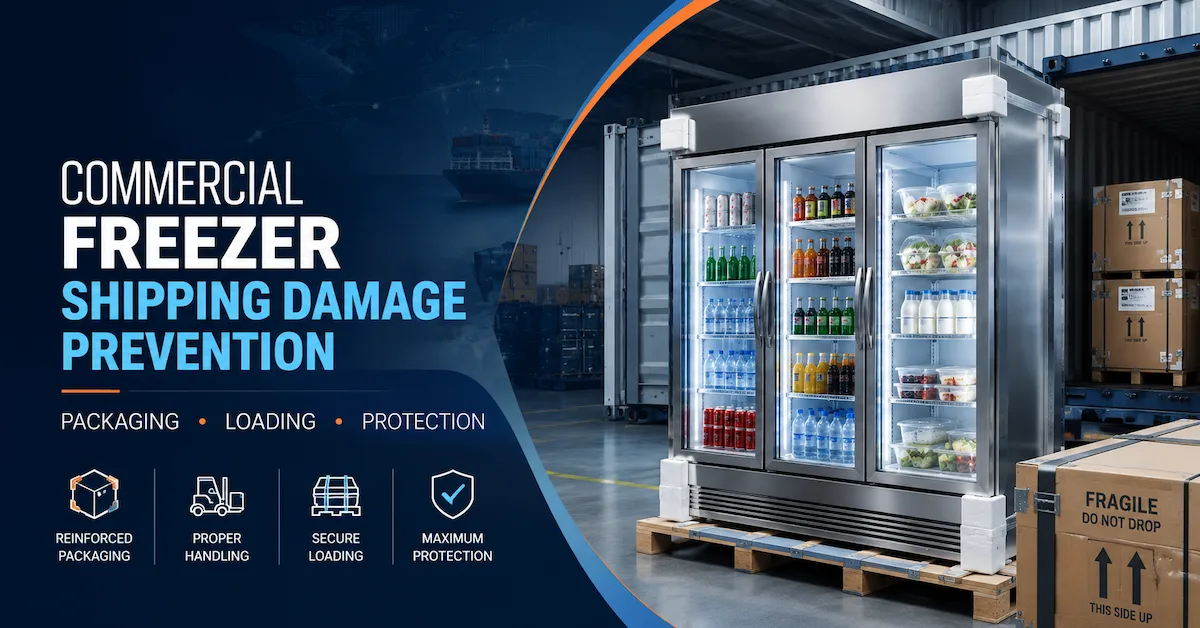
Why Commercial Freezer Shipping Damage Happens
Commercial freezers face higher shipping risks than many other products because of their size, weight, and complex structure.
Common causes of shipping damage include:
- Weak carton protection
- Insufficient corner protection
- Poor glass door protection
- Incorrect container loading
- Lack of internal support
- Improper forklift handling
- Excessive movement during transportation
- Missing accessories protection
- Poor supplier packaging standards
For importers and distributors, shipping damage creates additional costs:
- Replacement parts
- Customer complaints
- Delayed installation
- Higher logistics expenses
- Reduced profit margin
- Brand reputation damage
That is why buyers should evaluate shipping protection before placing bulk freezer orders.
1. Choose a Supplier with Export Packaging Experience
The first step in commercial freezer shipping damage prevention is selecting a supplier that understands international transportation requirements.
A professional freezer supplier should have experience with:
- Sea freight shipments
- Container loading
- Export carton standards
- Glass protection methods
- Pallet solutions
- Long-distance transportation
- Different destination markets
A supplier that only focuses on factory production may not provide enough protection for overseas delivery.
When comparing suppliers, buyers should ask:
- What packaging materials are used?
- How are glass doors protected?
- Is corner protection included?
- Are products fixed inside the package?
- Are loading photos available?
- How are accessories packed?
2. Protect Glass Doors and Display Components
Many commercial freezers include glass doors or glass lids, especially:
- Upright glass door freezers
- Display freezers
- Sliding glass freezers
- Ice cream display freezers
- Supermarket freezer cabinets
Glass damage is one of the most common shipping problems.
Effective protection methods include:
- Foam corner protection
- Protective film
- Reinforced frame support
- Wooden frame protection
- Internal fixing materials
- Shock-absorbing packaging
Buyers should confirm that glass parts are protected separately instead of relying only on standard carton packaging.
3. Use Proper Internal Packaging Support
Commercial freezers contain many internal components that can move or collide during transportation.
Important protection areas include:
- Compressor area
- Control panel
- Shelves
- Baskets
- Wheels
- Handles
- Lighting components
- Temperature controllers
- Accessories
Internal packaging should prevent movement during shipping.
Good practices include:
- Fixing movable parts
- Separating accessories
- Using foam inserts
- Protecting vulnerable surfaces
- Securing doors and lids
Proper internal support reduces damage caused by vibration and impact.
4. Confirm Container Loading Methods
Even strong packaging can fail if container loading is not handled correctly.
Buyers should check:
- Number of units per container
- Product stacking method
- Space between units
- Weight distribution
- Protection between products
- Forklift access
- Container securing methods
A professional supplier should understand how to maximize container space while protecting products.
Incorrect loading may cause:
- Product movement
- Cabinet dents
- Glass damage
- Packaging collapse
- Unbalanced container weight
For bulk freezer orders, container loading planning is an important part of total cost control.
5. Review Export Packaging Materials
Different freezer structures may require different packaging solutions.
Common export packaging materials include:
| Packaging Material | Purpose |
|---|---|
| Foam protection | Prevents scratches and impact damage |
| Corner protectors | Protects cabinet edges |
| Reinforced carton | Protects outer surfaces |
| Wooden frame | Supports heavy commercial equipment |
| Plastic film | Prevents dust and moisture |
| Pallet base | Improves handling safety |
| Protective boards | Protects glass and panels |
The right packaging combination depends on freezer size, destination, shipping method, and product structure.
6. Inspect Products Before Shipment
Pre-shipment inspection is an important step in commercial freezer shipping damage prevention.
Before loading, buyers should confirm:
- Cabinet appearance
- Glass condition
- Door operation
- Compressor protection
- Controller function
- Accessories completeness
- Packaging quality
- Shipping marks
Inspection helps identify problems before products leave the factory.
For bulk orders, it is much easier and cheaper to solve problems before shipment than after products arrive at the destination port.
7. Consider Destination Market Requirements
Different markets may have different transportation conditions.
Buyers should consider:
- Shipping distance
- Port handling conditions
- Climate environment
- Local transportation methods
- Warehouse conditions
- Installation location
For example, long-distance ocean shipping may require stronger packaging than short-distance regional delivery.
Export-ready suppliers should understand different market risks and recommend suitable packaging solutions.
8. Confirm Supplier Responsibility Before Ordering
Before placing a bulk order, buyers should confirm:
- Packaging standard
- Inspection process
- Loading responsibility
- Damage claim process
- Spare parts support
- Documentation support
Clear responsibility reduces disputes if damage occurs during transportation.
A reliable supplier should provide transparent communication and support throughout the shipment process.
Commercial Freezer Shipping Damage Prevention Checklist
Before importing commercial freezers, buyers should check:
| Checklist Item | Why It Matters |
| Export packaging design | Reduces transportation damage |
| Glass protection | Prevents door and lid breakage |
| Internal fixing | Prevents component movement |
| Container loading plan | Improves shipment safety |
| Pre-shipment inspection | Finds problems before delivery |
| Shipping marks | Helps warehouse handling |
| Spare parts preparation | Supports after-sales service |
| Supplier experience | Reduces import risk |
This checklist helps importers and distributors evaluate whether a supplier is prepared for international freezer shipments.
Common Mistakes Buyers Should Avoid
Mistake 1: Choosing the Cheapest Packaging Option
Weak packaging may reduce initial cost but increase replacement and after-sales expenses.
Mistake 2: Ignoring Glass Protection
Glass doors and lids require special protection. Standard packaging may not be enough.
Mistake 3: Not Checking Loading Photos
Loading photos help buyers confirm whether products are positioned and protected correctly.
Mistake 4: Skipping Pre-Shipment Inspection
Without inspection, buyers may discover damage only after receiving the shipment.
Mistake 5: Assuming All Suppliers Have Export Experience
Factory production experience does not always mean international shipping experience.
Why Snowsea Supports Safer Commercial Freezer Shipping
Snowsea focuses on commercial refrigeration and freezing equipment for supermarkets, frozen food stores, seafood retailers, restaurants, convenience stores, and food service applications.
For international freezer projects, Snowsea supports:
- Export packaging solutions
- Container loading planning
- Product protection methods
- OEM/ODM customization
- Quality inspection before shipment
- Bulk order support
- Long-term distributor cooperation
Snowsea commercial refrigeration products include:
- Chest freezers
- Upright freezers
- Display freezers
- Island freezers
- Sliding glass freezers
- Ice cream freezers
- Refrigerators
- Beverage coolers
Buyers can learn more about Snowsea here:
https://www.snowseax.com/about-us
FAQ
1. How can buyers reduce commercial freezer shipping damage?
Buyers can reduce shipping damage by choosing experienced suppliers, using strong export packaging, protecting glass components, planning container loading, and completing pre-shipment inspection.
2. What parts of commercial freezers are most vulnerable during shipping?
Glass doors, glass lids, cabinet corners, control panels, handles, wheels, and accessories are common areas requiring additional protection.
3. Is wooden packaging necessary for commercial freezers?
It depends on freezer size, shipping distance, and destination requirements. Heavy commercial freezers and long-distance shipments may benefit from wooden frame protection.
4. How should buyers check freezer packaging quality?
Buyers should review packaging materials, protection methods, loading photos, inspection reports, and supplier export experience before shipment.
5. Can Snowsea provide export packaging support?
Yes. Snowsea supports export packaging planning, product protection, quality inspection, and container loading support for international freezer projects.
Conclusion
Effective commercial freezer shipping damage prevention helps importers, distributors, supermarkets, frozen food brands, and private label buyers reduce transportation risk and protect their investment.
Commercial freezer shipping damage usually happens because of weak packaging, poor loading methods, insufficient protection, or lack of inspection. By choosing an experienced supplier and following a structured shipping preparation process, buyers can reduce damage, control costs, and improve customer satisfaction.
Snowsea provides commercial freezers with export support, OEM/ODM customization, quality control, and international shipment experience.
To explore commercial freezer solutions, visit:
https://www.snowseax.com/products
For OEM/ODM freezer projects, visit:
https://www.snowseax.com/oem-odm