For importers, distributors, supermarket equipment buyers, restaurant suppliers, frozen food brands, beverage companies, and private label refrigeration buyers, understanding the commercial freezer vs refrigerator difference is essential before placing bulk orders.
Both commercial freezers and commercial refrigerators are used to preserve products at controlled temperatures, but they serve different purposes. A commercial freezer is designed for frozen storage, low-temperature preservation, and frozen product display. A commercial refrigerator is designed for chilled storage, freshness protection, beverage display, dairy cooling, and food service use.
Choosing the wrong equipment can cause product loss, poor storage performance, customer complaints, wasted floor space, or higher after-sales cost. This guide explains the key differences from a B2B purchasing perspective.
Snowsea provides commercial refrigeration products including freezers, ice cream freezers, refrigerators, beverage coolers, display refrigerators, and showcase cabinets. For buyers who need OEM/ODM refrigeration solutions, Snowsea supports product customization, private label branding, quality inspection, and export-ready packaging.
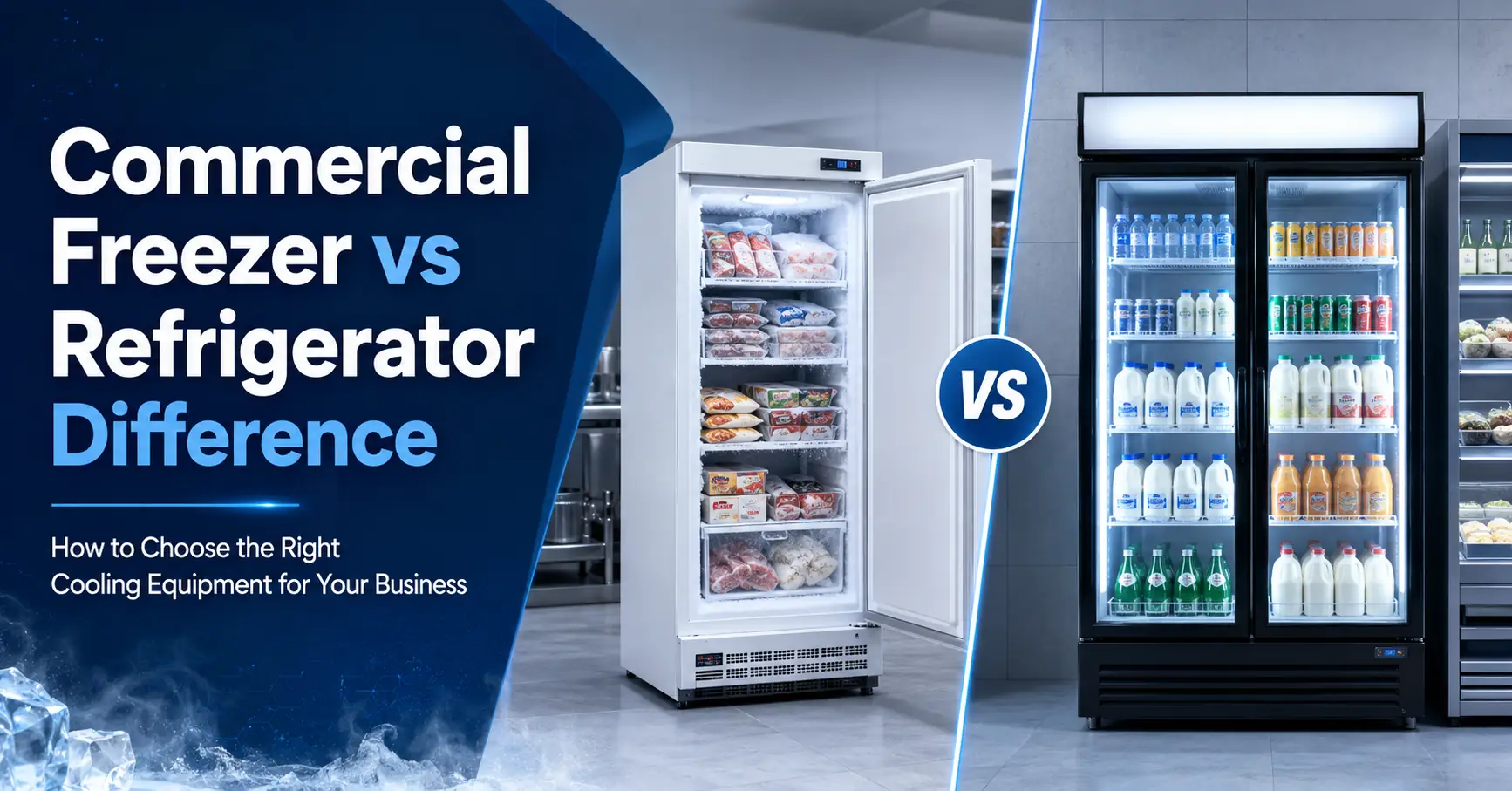
Commercial Freezer vs Refrigerator: Quick Comparison
| Comparison Point | Commercial Freezer | Commercial Refrigerator |
|---|---|---|
| Main Purpose | Frozen storage and frozen display | Chilled storage and fresh product display |
| Typical Products | Frozen food, meat, seafood, ice cream, frozen meals | Beverages, dairy, vegetables, desserts, chilled food |
| Temperature Need | Low freezing temperature | Chilled temperature above freezing |
| Common Structure | Chest freezer, upright freezer, display freezer, island freezer | Upright refrigerator, glass door cooler, showcase cabinet |
| Customer Access | Storage or retail display | Frequent access and display |
| Best Buyers | Frozen food brands, seafood suppliers, supermarkets | Beverage brands, restaurants, convenience stores |
| OEM Options | Logo, basket layout, glass lid, freezer structure, packaging | Logo, shelf layout, glass door, lightbox, packaging |
| Key Risk | Unstable freezing damages frozen products | Poor cooling affects freshness and display |
The right choice depends on product type, storage temperature, retail environment, and customer access needs.
What Is a Commercial Freezer?
A commercial freezer is refrigeration equipment designed to keep products frozen. It is commonly used for frozen food, meat, seafood, ice cream, frozen vegetables, frozen meals, and frozen desserts.
Common commercial freezer types include:
- Chest freezer
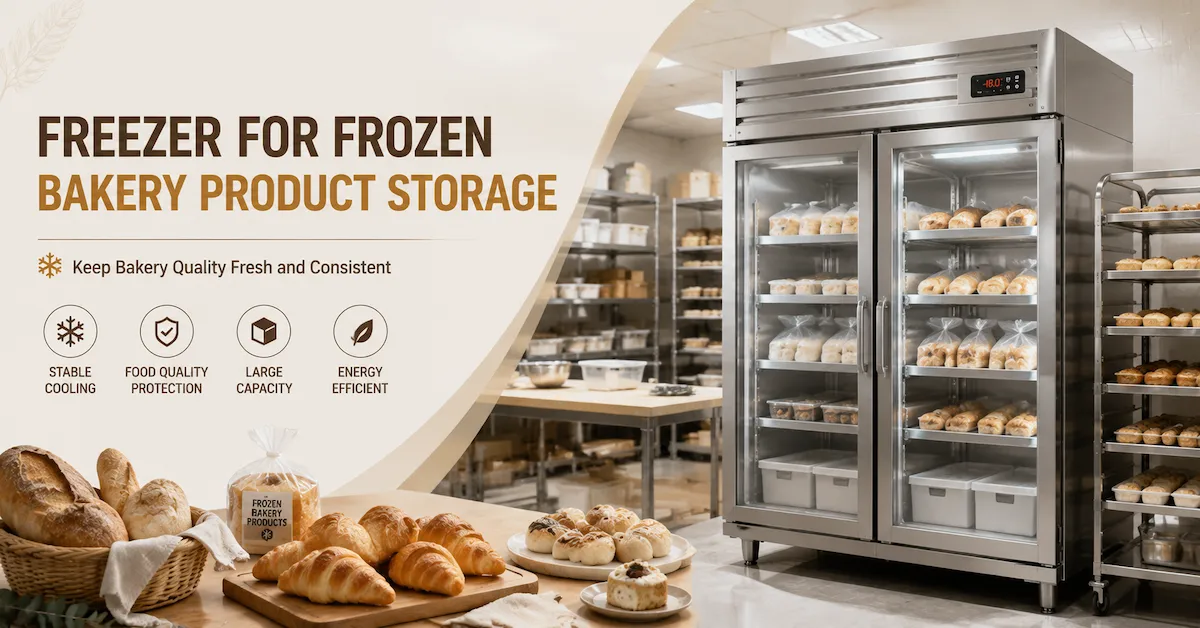
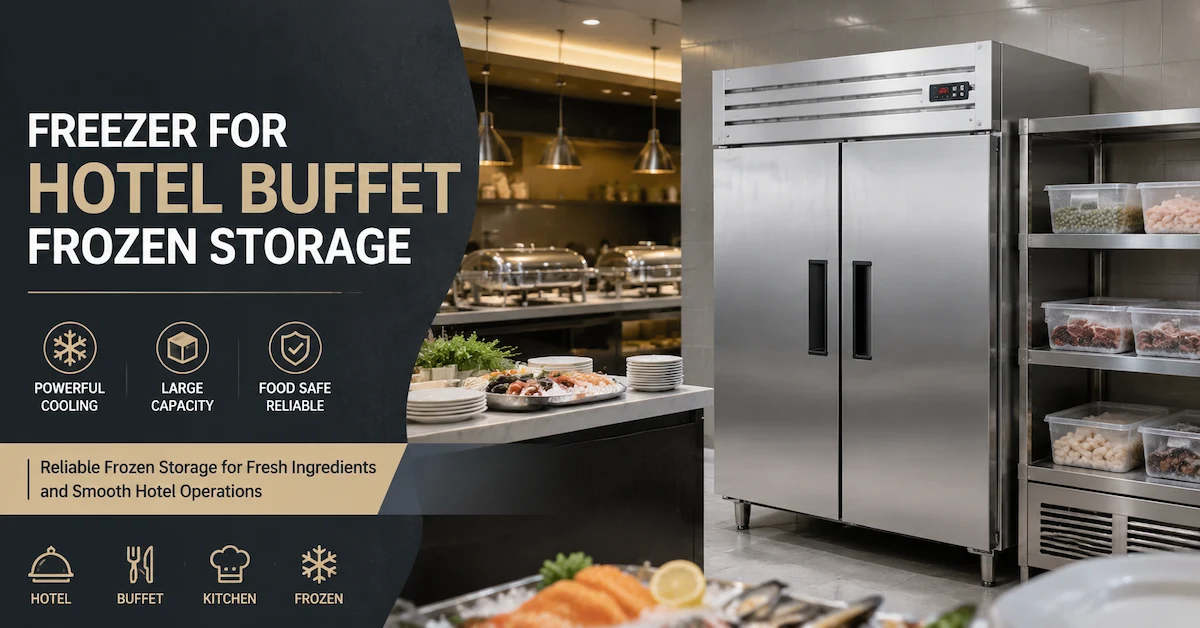
- Upright freezer
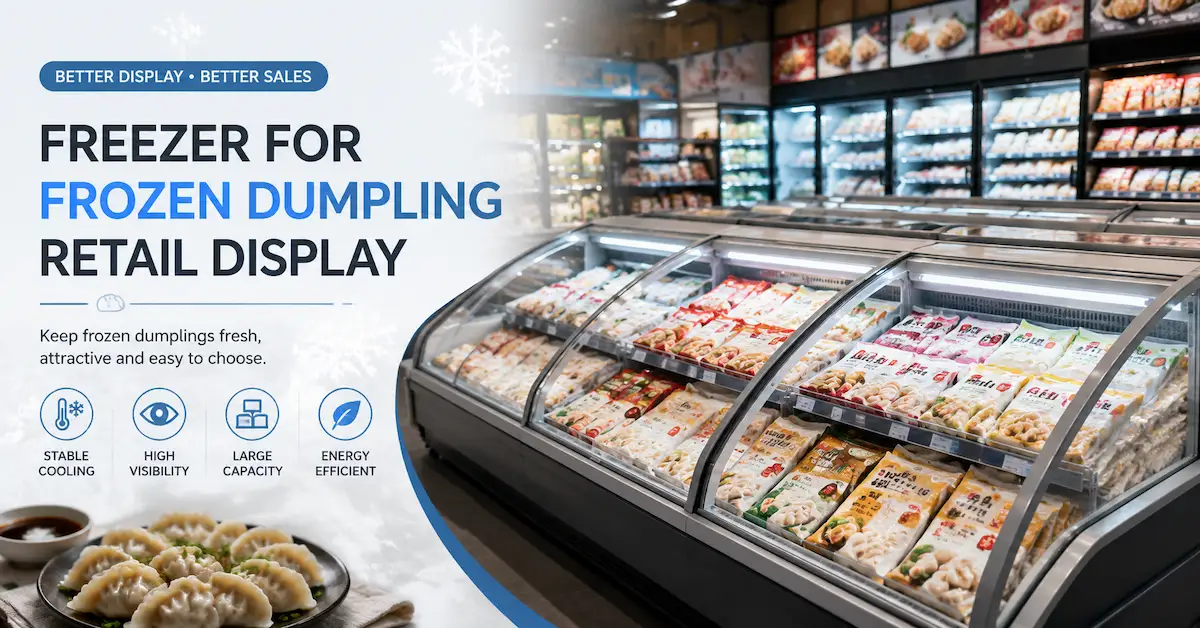
- Display freezer
- Ice cream freezer
- Island freezer
- Sliding glass freezer
- Curved glass freezer
Commercial freezers are used in supermarkets, frozen food shops, seafood stores, restaurants, ice cream shops, food distributors, and warehouses.
For buyers handling frozen products, stable freezing performance is the most important requirement.
What Is a Commercial Refrigerator?
A commercial refrigerator is designed for chilled storage, not freezing. It keeps products fresh, visible, and ready for sale or food service use.
Common commercial refrigerator types include:
- Upright refrigerator
- Glass door refrigerator
- Beverage cooler
- Showcase refrigerator
- Display refrigerator
- Single door refrigerator
- Double door refrigerator
- Multi-door refrigerator
Commercial refrigerators are widely used in supermarkets, convenience stores, restaurants, hotels, cafés, beverage shops, dairy display areas, and food service kitchens.
They are ideal for products that need cooling but should not be frozen.
Key Difference 1: Temperature Range
The biggest difference between a commercial freezer and a commercial refrigerator is temperature.
Commercial freezers are used for products that must remain frozen. These include ice cream, meat, seafood, frozen meals, and frozen vegetables.
Commercial refrigerators are used for chilled products such as beverages, milk, yogurt, fresh food, desserts, and prepared food.
Buyers should never choose equipment only by appearance. Temperature requirements should be confirmed first.
Before requesting a quote, prepare:
- Product type
- Target storage temperature
- Ambient operating environment
- Door opening frequency
- Loading volume
- Display or storage purpose
This helps Snowsea recommend suitable equipment faster.
Key Difference 2: Product Application
Different products require different cooling environments.
| Product Category | Better Choice | Reason |
| Ice cream | Commercial Freezer | Requires stable freezing |
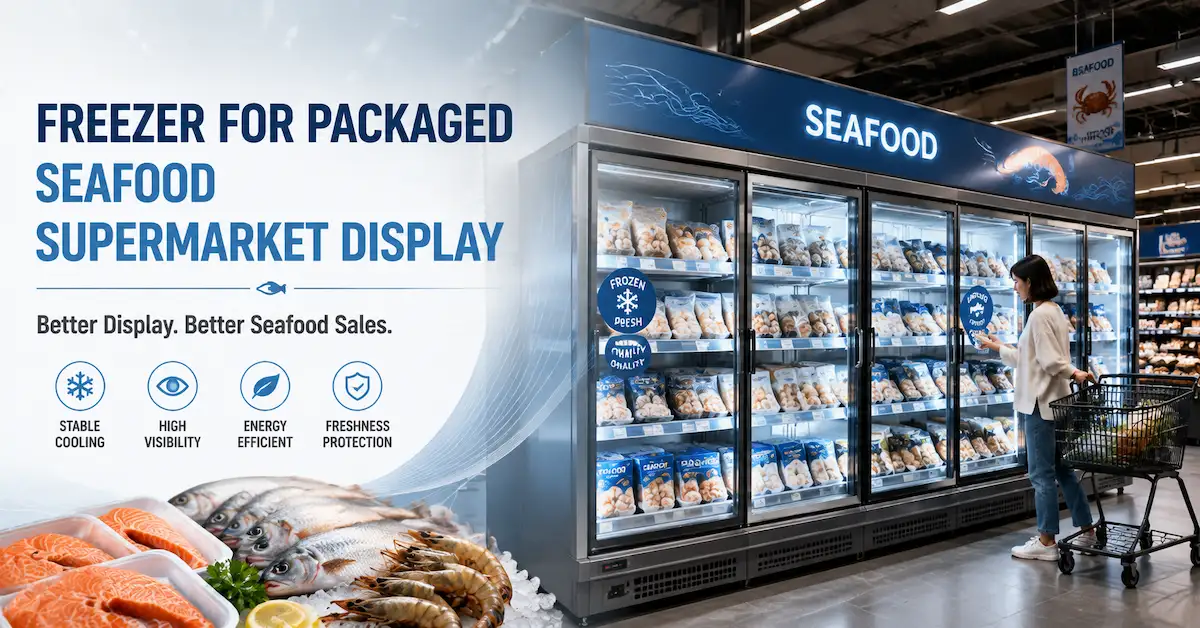
| Frozen seafood | Commercial Freezer | Protects freshness and storage safety |
| Meat storage | Commercial Freezer | Maintains frozen condition |
| Frozen meals | Commercial Freezer | Prevents thawing and quality loss |
| Bottled drinks | Commercial Refrigerator | Keeps drinks chilled, not frozen |
| Milk and yogurt | Commercial Refrigerator | Requires fresh chilled storage |
| Fresh food | Commercial Refrigerator | Avoids freezing damage |
| Desserts and chilled snacks | Commercial Refrigerator | Maintains texture and freshness |
For supermarkets and distributors, both freezers and refrigerators are often needed to serve different product categories.
Key Difference 3: Cabinet Structure
Commercial freezers and refrigerators often look similar, but their structures are designed for different use.
Commercial freezer structures may include:
- Strong insulation
- Low-temperature cooling system
- Glass lid or solid lid
- Sliding glass door
- Wire baskets
- Dividers
- Island display layout
Commercial refrigerator structures may include:
- Adjustable shelves
- Glass doors
- LED lighting
- Beverage shelf spacing
- Top lightbox branding
- Airflow design for chilled storage
- Easy customer access
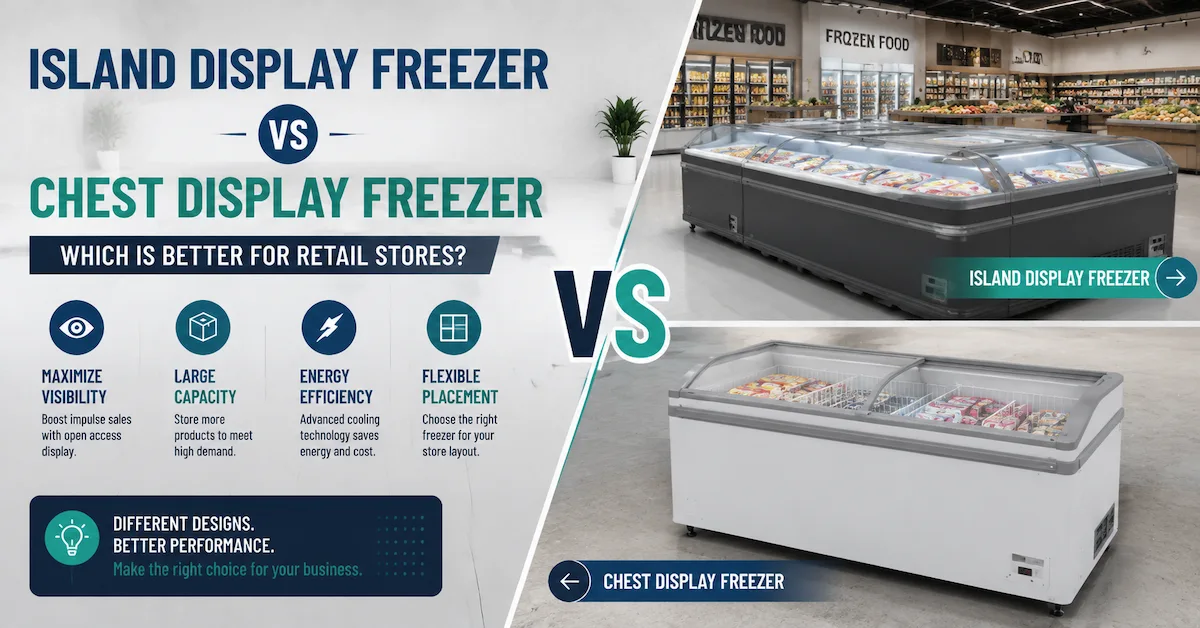
If the buyer needs frozen product display, a display freezer or island freezer may be suitable. If the buyer needs beverage or dairy display, a glass door refrigerator or showcase refrigerator is usually better.
Key Difference 4: Retail Display Value
Commercial freezers and refrigerators both support retail display, but they serve different product categories.
A commercial freezer is suitable for:
- Frozen food sections
- Ice cream display
- Frozen meat and seafood
- Supermarket frozen zones
- Bulk frozen storage
A commercial refrigerator is suitable for:
- Beverage display
- Dairy display
- Fresh juice display
- Chilled dessert display
- Convenience store drink sections
- Restaurant ingredient storage
For customer-facing retail, glass quality, lighting, shelf layout, and product visibility are important. For storage-focused projects, capacity, insulation, and temperature stability matter more.
Key Difference 5: Maintenance and Operation
Commercial freezers usually require stronger freezing performance and careful temperature control. If door sealing, insulation, or compressor configuration is weak, frozen products may be damaged.
Commercial refrigerators often focus on stable chilled airflow, easy access, shelf organization, and product display.
Buyers should check:
- Temperature control system
- Compressor performance
- Door sealing
- Defrost method
- Internal layout
- Energy efficiency
- Cleaning convenience
- Spare parts and after-sales needs
A reliable supplier should recommend equipment based on real use, not only catalog appearance.
OEM/ODM Customization Options
For importers, distributors, and private label brands, customization is often necessary.
Snowsea supports OEM/ODM options such as:
- Logo customization
- Cabinet color
- Product labels
- User manuals
- Carton design
- Basket layout for freezers
- Shelf layout for refrigerators
- Glass door or solid door options
- Top lightbox branding
- Voltage and plug adaptation
- Private label packaging
- Export packaging support
For OEM/ODM refrigeration projects, buyers can visit:
https://www.snowseax.com/oem-odm
How to Choose Between Commercial Freezer and Refrigerator
Choose a Commercial Freezer If You Need:
- Frozen food storage
- Ice cream display
- Meat or seafood freezing
- Frozen meal storage
- Supermarket frozen display
- Bulk frozen inventory
- Low-temperature performance
Choose a Commercial Refrigerator If You Need:
- Beverage cooling
- Dairy product display
- Fresh food storage
- Chilled dessert display
- Restaurant ingredient storage
- Convenience store drink display
- Customer-facing chilled products
Choose Both If You Are:
- A supermarket equipment buyer
- A distributor building a product catalog
- A restaurant supply company
- A private label refrigeration brand
- A frozen and chilled food supplier
For many B2B buyers, the best solution is not choosing one over the other. It is building a product mix that covers both frozen and chilled storage needs.
Buying Checklist Before Requesting a Quote
Before contacting a supplier, buyers should prepare the following information.
| Information to Prepare | Why It Matters |
| Product type | Determines freezer or refrigerator choice |
| Temperature range | Ensures correct cooling performance |
| Application scenario | Supermarket, restaurant, distributor, brand, or food service |
| Cabinet type | Chest, upright, island, showcase, or glass door |
| Size or capacity | Matches storage volume and floor space |
| Display needs | Helps select glass door, lighting, or shelf layout |
| Branding needs | Logo, color, labels, packaging |
| Order quantity | Affects quotation and production planning |
| Voltage and plug | Matches target market standards |
| Export packaging | Reduces shipping damage risk |
Clear project information helps Snowsea recommend the right model faster and provide a more accurate quotation.
Common Mistakes When Comparing Freezers and Refrigerators
Mistake 1: Only Looking at Appearance
Freezers and refrigerators may look similar, but they are designed for different temperature ranges and product uses.
Mistake 2: Ignoring Product Temperature Needs
Ice cream, seafood, beverages, dairy products, and fresh food cannot be stored under the same conditions.
Mistake 3: Choosing Display Equipment for Storage Only
If the equipment is mainly used for backroom storage, display features may not be necessary.
Mistake 4: Forgetting OEM Details
Logo, cabinet color, labels, packaging, voltage, and plug type should be confirmed before production.
Mistake 5: Not Checking Export Packaging
Commercial refrigeration equipment may include glass, compressors, wheels, shelves, baskets, and controllers. Strong packaging is important for international shipment.
Why Snowsea Can Support Commercial Refrigeration Buyers
Snowsea focuses on commercial refrigeration equipment for frozen food storage, supermarket refrigeration, convenience store cooling, beverage display, dairy cooling, ice cream display, restaurant storage, and food service applications.
For freezer and refrigerator projects, Snowsea can support:
- Chest freezer options
- Upright freezer options
- Display freezer customization
- Ice cream freezer solutions
- Commercial refrigerator options
- Beverage cooler customization
- Showcase refrigerator solutions
- OEM/ODM customization
- Private label branding
- Cabinet size and structure customization
- Basket and shelf layout options
- Temperature control configuration
- Export packaging support
- Quality inspection before shipment
Buyers can learn more about Snowsea here:
https://www.snowseax.com/about-us
FAQ
1. What is the main commercial freezer vs refrigerator difference?
A commercial freezer keeps products frozen, while a commercial refrigerator keeps products chilled. The right choice depends on product type and target temperature.
2. Can a refrigerator replace a freezer?
No. A refrigerator is not designed for frozen storage. Frozen food, seafood, meat, and ice cream require a commercial freezer.
3. Can a freezer be used for beverage storage?
It is not recommended unless the beverage is intended to be frozen. Beverages usually require a commercial refrigerator or beverage cooler.
4. Can I customize both commercial freezers and refrigerators?
Yes. Snowsea supports logo, cabinet color, shelf layout, basket layout, labels, packaging, voltage, and plug customization.
5. What information should I prepare for a quotation?
Prepare product type, temperature range, equipment type, application, size, branding needs, quantity, voltage, plug type, and packaging requirements.
Conclusion
Understanding the commercial freezer vs refrigerator difference helps buyers choose the right cooling equipment for their market.
Commercial freezers are designed for frozen food, ice cream, seafood, meat, and low-temperature storage. Commercial refrigerators are designed for beverages, dairy products, fresh food, chilled desserts, and food service cooling.
Snowsea provides commercial freezers, refrigerators, beverage coolers, display refrigerators, ice cream freezers, and showcase cabinets for different commercial applications.
To explore available models, visit:
https://www.snowseax.com/products
For OEM/ODM refrigeration projects, visit:
https://www.snowseax.com/oem-odm