For commercial freezer buyers importing equipment from overseas suppliers, documentation management is a critical part of the purchasing process.
Commercial refrigeration equipment involves international transportation, customs clearance, compliance requirements, and delivery coordination. Missing or incorrect documents can cause:
- Shipment delays
- Customs problems
- Additional costs
- Delivery interruptions
- Import risks
A complete freezer export documentation for buyers process helps importers prepare the required paperwork, communicate effectively with suppliers, and ensure smoother international shipments.
For distributors, supermarket equipment suppliers, and commercial refrigeration buyers, understanding export documents before ordering can significantly reduce supply-chain risks.
Why Export Documentation Matters for Freezer Buyers
When purchasing commercial freezers internationally, buyers must coordinate multiple parties:
- Manufacturers
- Freight forwarders
- Shipping companies
- Customs brokers
- Import authorities
- Local transportation providers
Each party may require specific documents.
Proper documentation helps confirm:
- Product information
- Shipment details
- Ownership transfer
- Customs value
- Compliance requirements
- Transportation arrangements
A professional freezer export documentation for buyers system allows buyers to manage the entire import process more efficiently.
Overview of Freezer Export Documentation Process
The export documentation process usually includes:
- Product specification confirmation
- Commercial quotation approval
- Purchase order confirmation
- Production completion
- Quality inspection
- Document preparation
- Container loading
- Shipment departure
- Customs clearance
- Final delivery
Each stage requires accurate information.
Errors in early documents may affect later procedures.
Essential Documents for Commercial Freezer Export
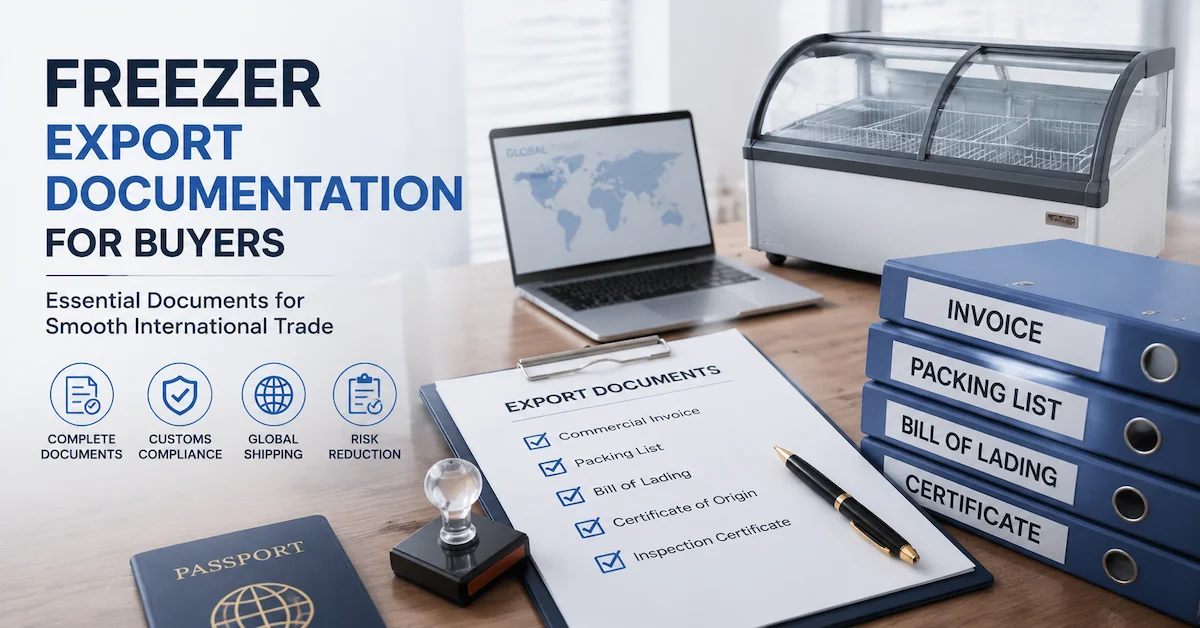
1. Commercial Invoice
The commercial invoice is one of the most important export documents.
It usually includes:
- Seller information
- Buyer information
- Product description
- Quantity
- Unit price
- Total value
- Payment terms
- Trade terms
Customs authorities use the commercial invoice to determine:
- Shipment value
- Import duties
- Tax calculation
- Product classification
Buyers should confirm that invoice details match the actual shipment.
2. Packing List
The packing list provides detailed shipment information.
It may include:
- Product models
- Quantity
- Package numbers
- Net weight
- Gross weight
- Package dimensions
For commercial freezers, packing information is especially important because products are large and require careful logistics planning.
The packing list helps:
- Freight companies arrange transportation
- Customs verify shipment details
- Warehouses receive products correctly
3. Bill of Lading
The bill of lading is issued by the shipping carrier.
It serves as:
- Shipping confirmation
- Transportation contract
- Cargo receipt
Important information includes:
- Shipper
- Consignee
- Port of loading
- Destination port
- Container number
- Product details
Buyers should carefully review bill of lading information before shipment arrival.
4. Certificate of Origin
A certificate of origin confirms where products are manufactured.
It may be required for:
- Customs clearance
- Trade agreements
- Import regulations
- Tax purposes
For commercial freezers manufactured in China, buyers may need origin documentation depending on the destination country.
5. Inspection Documents
Inspection documents prove that products meet agreed requirements.
They may include:
- Pre-shipment inspection reports
- Quality inspection records
- Product testing reports
- Factory inspection documents
Inspection records help buyers verify:
- Product condition
- Quantity accuracy
- Packaging quality
- Specification compliance
6. Product Compliance Documents
Different markets may require specific compliance documents.
Requirements vary depending on:
- Destination country
- Product category
- Electrical standards
- Refrigeration regulations
Possible documents include:
- Safety certificates
- Energy efficiency documents
- Technical specifications
- Test reports
Buyers should confirm requirements before production begins.
Supplier Responsibilities in Export Documentation
A professional freezer supplier should support buyers with accurate export paperwork.
Supplier responsibilities may include:
- Preparing commercial invoices
- Providing packing lists
- Sharing product specifications
- Supporting inspection procedures
- Coordinating shipping documents
- Providing certificates when required
A reliable manufacturer simplifies the freezer export documentation for buyers process by reducing communication errors.
Snowsea supports international buyers with commercial refrigeration manufacturing, export preparation, and documentation coordination.
Explore Snowsea’s commercial refrigeration products.
Buyer Checklist Before Shipment
Before shipment departure, buyers should confirm:
| Document | Check Points |
|---|---|
| Commercial invoice | Product value and quantity |
| Packing list | Package details and weights |
| Bill of lading | Shipping information |
| Certificate of origin | Manufacturing location |
| Inspection report | Product quality |
| Product certificates | Compliance requirements |
| Insurance documents | Cargo protection |
This checklist helps buyers complete freezer export documentation for buyers requirements before goods leave the factory.
Common Documentation Problems During Freezer Import
Incorrect Product Information
Differences between:
- Invoice
- Packing list
- Actual products
may create customs issues.
Missing Certificates
Some markets require specific compliance documents.
Missing paperwork may cause:
- Clearance delays
- Additional inspections
- Extra fees
Incorrect Shipping Details
Errors in:
- Container numbers
- Consignee information
- Port details
may delay cargo release.
Late Document Preparation
Export documents should be prepared before shipment departure.
Late preparation can affect:
- Shipping schedules
- Customs clearance
- Warehouse planning
How Buyers Can Avoid Documentation Delays
Confirm Requirements Early
Before ordering, buyers should check:
- Import regulations
- Required certificates
- Customs requirements
- Labeling rules
Communicate Clearly With Suppliers
Provide accurate:
- Company information
- Delivery address
- Import requirements
- Documentation requests
Review Documents Before Shipping
Before departure, verify:
- Product names
- Quantities
- Model numbers
- Shipping information
Early verification prevents expensive corrections later.
Export Documentation for OEM Freezer Projects
OEM freezer projects may require additional documents.
Customized products may involve:
- Custom labels
- Brand specifications
- Packaging requirements
- Special product drawings
- Technical files
Importers should discuss documentation requirements during the customization stage.
Snowsea provides OEM and ODM refrigeration solutions for distributors and buyers requiring customized freezer projects.
How Documentation Affects Import Costs
Documentation problems can increase costs through:
- Customs delays
- Storage charges
- Additional inspections
- Shipping adjustments
- Administrative fees
Accurate paperwork helps buyers control total landed costs.
A complete freezer export documentation for buyers strategy is not only about compliance; it also improves cost control and delivery efficiency.
Working With Experienced Freezer Export Suppliers
Supplier export experience is important when purchasing commercial refrigeration equipment.
Buyers should evaluate:
- Export history
- Documentation capability
- Shipping experience
- Quality systems
- Communication efficiency
An experienced supplier can help buyers:
- Prepare correct documents
- Avoid common export mistakes
- Improve shipment reliability
- Reduce import risks
Learn more about Snowsea’s manufacturing capabilities through the company profile.
Common Mistakes Buyers Should Avoid
Assuming Suppliers Handle Everything
Buyers should understand their own import responsibilities.
Ordering Before Checking Requirements
Documentation requirements should be confirmed before production.
Ignoring Document Accuracy
Small errors can create major shipment delays.
Not Keeping Document Records
Buyers should maintain:
- Invoices
- Certificates
- Inspection reports
- Shipping records
Choosing Suppliers Without Export Experience
International shipments require professional coordination.
Freezer Export Documentation Checklist
| Stage | Required Action |
|---|---|
| Before order | Confirm import requirements |
| During production | Verify specifications |
| Before shipment | Check packaging and inspection |
| Before departure | Review export documents |
| During transit | Track shipping information |
| After arrival | Complete customs clearance |
FAQ
What is freezer export documentation for buyers?
Freezer export documentation for buyers refers to the collection of commercial, shipping, inspection, and compliance documents required when importing commercial freezers internationally.
What documents are needed to import commercial freezers?
Common documents include commercial invoices, packing lists, bills of lading, certificates of origin, inspection reports, and product compliance documents.
Why are export documents important for freezer imports?
Export documents help customs authorities verify shipment information and allow buyers to complete international delivery procedures smoothly.
Who prepares freezer export documents?
Usually, suppliers prepare commercial and shipping documents while buyers confirm import requirements with customs authorities or brokers.
How can buyers avoid customs delays?
Buyers should verify document accuracy, confirm required certificates, and communicate import requirements with suppliers before shipment.
Do OEM freezers require additional export documents?
Yes. OEM projects may require additional technical files, labels, drawings, and customized documentation.
Conclusion
A complete freezer export documentation for buyers process helps importers manage international shipments more efficiently and reduce unnecessary risks.
Successful freezer importing requires careful coordination of:
- Commercial documents
- Shipping paperwork
- Compliance requirements
- Quality records
- Supplier communication
By working with an experienced commercial freezer manufacturer, buyers can simplify export procedures, improve shipment reliability, and build stronger international supply chains.
Snowsea supports global buyers with commercial freezer manufacturing, OEM customization, quality control, and professional export documentation assistance.