When selecting a commercial freezer for a supermarket, convenience store, frozen-food shop, ice cream retailer, or food distribution outlet, buyers often compare a glass lid freezer with a sliding door freezer.
Both designs provide product visibility while helping maintain frozen storage conditions, but they differ in customer access, opening method, merchandising efficiency, maintenance, and store-space requirements.
Understanding glass lid freezer vs sliding door freezer helps retailers choose equipment that fits their product categories, customer traffic, sales model, and available floor space.
In this guide:
- Glass lid freezer refers mainly to a chest or display freezer with hinged or lift-up glass lids.
- Sliding door freezer refers mainly to a horizontal freezer with sliding glass panels that move from side to side.
The best choice depends on how customers interact with the freezer and how frequently employees replenish products.
What Is a Glass Lid Freezer?
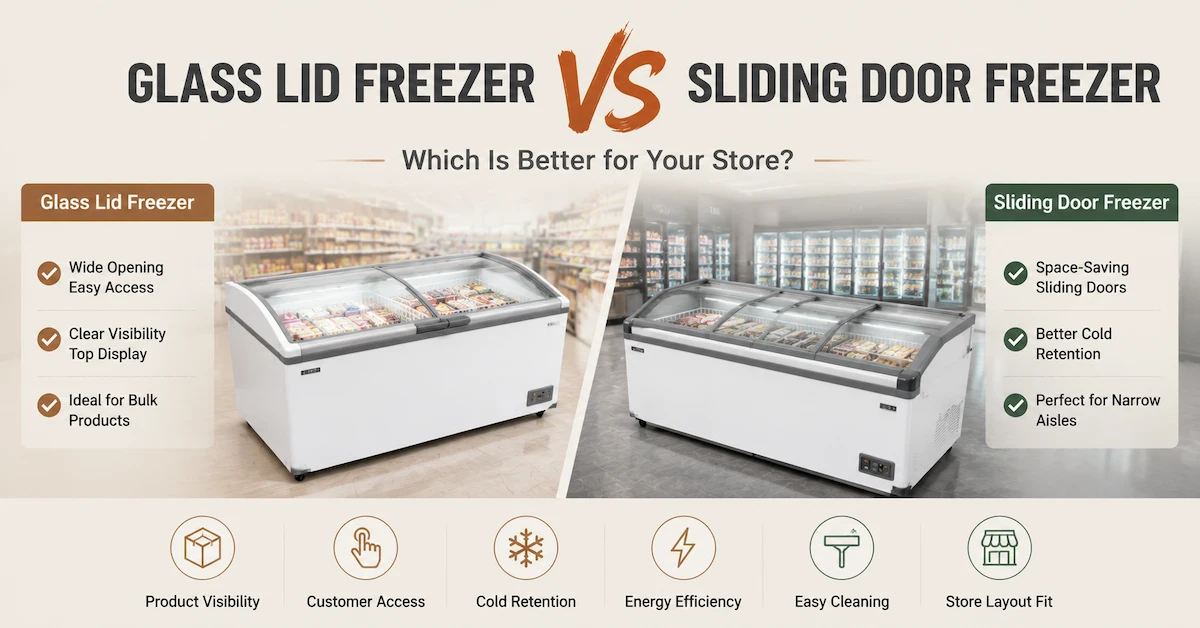
A glass lid freezer is a horizontal commercial freezer with transparent glass panels covering the top of the cabinet.
Depending on the design, the glass lid may be:
- Hinged
- Lift-up
- Curved
- Flat
- Removable
Glass lid freezers are commonly used for:
- Ice cream
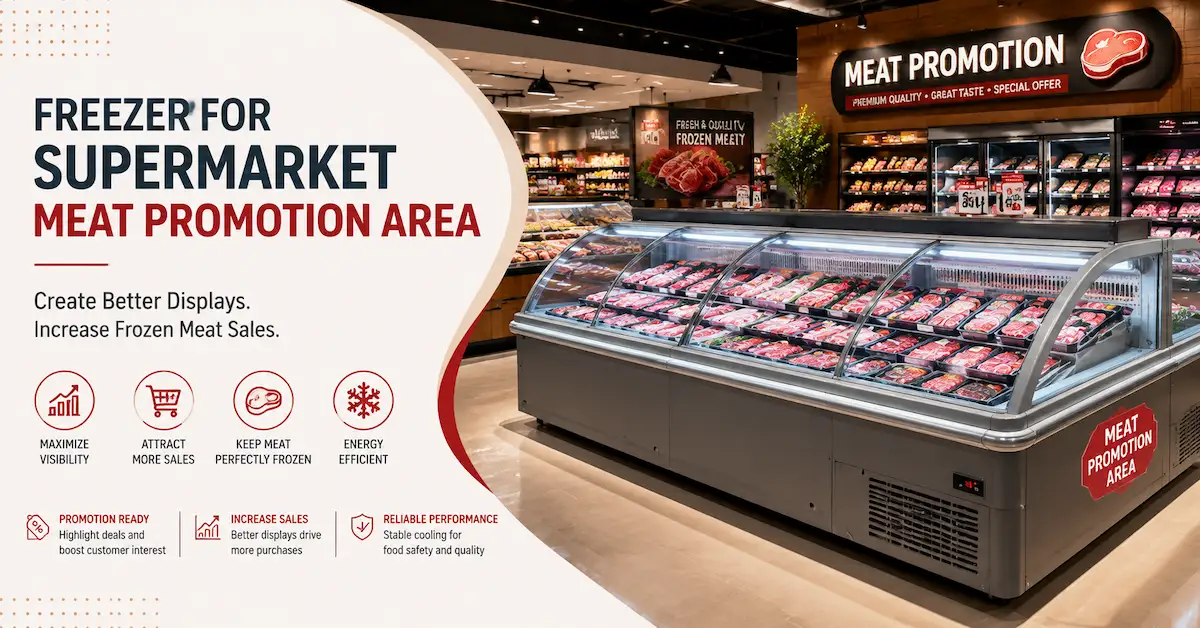
- Frozen meat
- Frozen seafood
- Frozen vegetables
- Packaged frozen meals
- Promotional products
- Bulk frozen food
The transparent top allows customers to see products before opening the freezer.
This helps reduce unnecessary lid opening and supports better merchandising than a solid-top chest freezer.
What Is a Sliding Door Freezer?
A sliding door freezer uses two or more glass panels that move horizontally along tracks.
Customers open only part of the cabinet instead of lifting the entire lid.
Sliding glass door freezers are commonly installed in:
- Supermarkets
- Convenience stores
- Frozen-food retailers
- Ice cream shops
- Discount food stores
- Self-service retail areas
The sliding design is especially useful where aisle space is limited because the doors do not extend outward or upward significantly.
Glass Lid Freezer vs Sliding Door Freezer: Quick Comparison
| Feature | Glass Lid Freezer | Sliding Door Freezer |
|---|---|---|
| Opening method | Hinged or lift-up lid | Horizontal sliding panels |
| Product visibility | High | High |
| Customer access | Wide opening | Partial opening |
| Aisle-space requirement | May need lid clearance | Minimal external clearance |
| Cold-air retention | Good | Very good with partial opening |
| Cleaning | Simple glass surface | Tracks require additional cleaning |
| Product loading | Convenient for large packages | Convenient for organized sections |
| Best application | Bulk products and wide access | Self-service retail and narrow aisles |
| Maintenance | Hinges and seals | Tracks, rollers, and seals |
| Retail convenience | Good | Excellent in busy stores |
Product Visibility
Both designs provide better visibility than a solid-door chest freezer.
Customers can see:
- Product types
- Package sizes
- Brands
- Prices
- Promotional products
Visibility in a Glass Lid Freezer
A large hinged glass lid can provide a broad, unobstructed viewing surface.
It is suitable for:
- Large meat packages
- Frozen seafood
- Bulk frozen products
- Promotional displays
Curved glass may improve the viewing angle from the front of the cabinet.
However, reflections, condensation, or frost can reduce visibility if the glass design is unsuitable for the store environment.
Visibility in a Sliding Door Freezer
Sliding panels divide the viewing surface into separate sections.
This can help retailers organize products by:
- Brand
- Flavor
- Product category
- Package size
- Promotion
The frame between panels may slightly reduce the uninterrupted viewing area, but organized product sections can make selection easier.
Customer Access
Customer access is one of the most important differences when comparing glass lid freezer vs sliding door freezer.
Glass Lid Freezer Access
A hinged or lift-up glass lid can provide a wide opening.
This is useful when customers or employees need to remove:
- Large cartons
- Heavy packages
- Bulk meat products
- Multiple items at once
However, the lid may need vertical or rear clearance.
In a busy aisle, a raised lid may also make customer movement less convenient.
Sliding Door Freezer Access
A sliding door opens only one section of the cabinet.
Advantages include:
- No large lid extending into the aisle
- Easier use in compact stores
- Reduced cold-air loss
- Convenient self-service access
- Multiple customers may use different sections
The opening width may be smaller, making very large packages more difficult to remove.
Cold-Air Retention
Horizontal freezers generally retain cold air effectively because cold air remains inside the cabinet when the top is opened.
However, the opening size still affects temperature recovery.
Glass Lid Freezer
When a large hinged lid is fully opened, a larger section of the freezer interior is exposed.
This may increase:
- Warm-air entry
- Humidity entry
- Temperature recovery time
- Frost formation
The effect depends on how long the lid remains open and how frequently customers use it.
Sliding Door Freezer
A sliding design allows customers to open only the section they need.
This can reduce:
- Air exchange
- Temperature fluctuations
- Compressor workload
- Moisture entry
For high-traffic self-service retail, sliding glass doors may provide better operational efficiency.
Energy Efficiency
Energy consumption is influenced by more than the door design.
Important factors include:
- Compressor efficiency
- Insulation thickness
- Glass construction
- Door seals
- Ambient temperature
- Product loading
- Opening frequency
- Defrost system
A well-designed glass lid freezer may perform more efficiently than a poorly insulated sliding door freezer.
However, sliding panels can help reduce energy loss because customers open a smaller section.
Buyers should request information about:
- Rated power
- Energy consumption
- Glass insulation
- Door-seal design
- Operating ambient temperature
- Temperature recovery performance
Store Layout and Space Requirements
The freezer must fit the store without reducing customer movement.
Glass Lid Freezer Placement
A hinged lid may require:
- Vertical opening clearance
- Space behind the cabinet
- Enough room for employees to load products
- Clear access around the freezer
This design works well in:
- Large supermarket aisles
- Wholesale stores
- Frozen-food outlets
- Backroom storage areas
Sliding Door Freezer Placement
Sliding panels remain within the freezer footprint.
This makes them suitable for:
- Narrow aisles
- Compact supermarkets
- Convenience stores
- Self-service zones
- Promotional islands
Retailers should still leave sufficient space for:
- Shopping carts
- Customer access
- Product replenishment
- Cleaning
- Ventilation
Product Capacity and Organization
Internal capacity depends on the cabinet dimensions and refrigeration structure rather than only the lid design.
However, the access method affects how products are arranged.
Glass Lid Freezer Organization
A wide opening makes it easier to load:
- Large packages
- Bulk cartons
- Meat products
- Seafood boxes
The interior may use:
- Wire baskets
- Dividers
- Product bins
Without sufficient dividers, products may become mixed or difficult to find.
Sliding Door Freezer Organization
Each sliding section can correspond to a different product category.
This supports:
- SKU separation
- Faster product selection
- Easier stock checking
- Organized promotions
- More efficient replenishment
Sliding door freezers are often suitable for retailers managing many smaller packaged products.
Cleaning and Maintenance
Freezer hygiene affects appearance, performance, and customer confidence.
Glass Lid Freezer Maintenance
Inspect and clean:
- Glass surfaces
- Hinges
- Handles
- Door seals
- Interior corners
- Drainage areas
A simple hinged lid may have fewer track components, making routine cleaning relatively straightforward.
Sliding Door Freezer Maintenance
In addition to the glass and seals, staff must clean:
- Sliding tracks
- Rollers
- Panel overlaps
- Drainage channels
- Door frames
Food particles, dust, and ice can collect inside the tracks and prevent smooth door movement.
Retailers should choose a design with removable or easily accessible tracks.
Condensation and Anti-Fog Performance
Clear glass is important for retail presentation.
Condensation may occur when:
- Store humidity is high
- Warm air contacts cold glass
- Doors are opened frequently
- Air conditioning is insufficient
- The glass insulation is unsuitable
Buyers should ask about:
- Double-glazed glass
- Low-emissivity glass
- Heated glass options
- Anti-condensation systems
- Frame heating
- Climate-class suitability
Sliding panels have overlapping sections where condensation or frost may develop if sealing is poor.
Hinged lids also require reliable gaskets to prevent warm-air entry.
Door Seals and Temperature Stability
Door seals should create continuous contact around the opening.
Damaged or uneven seals can cause:
- Cold-air leakage
- Frost accumulation
- Higher power consumption
- Longer compressor operation
- Unstable temperature
For a glass lid freezer, buyers should inspect:
- Gasket alignment
- Hinge pressure
- Lid closing force
For a sliding door freezer, buyers should inspect:
- Panel overlap
- Side seals
- Track alignment
- Closing position
The doors should move smoothly without leaving large gaps.
Security and Product Protection
Retailers may need locks for:
- After-hours security
- Store closing
- Product control
- Outdoor promotional use
- Restricted-access products
Glass lid freezers may use:
- Handle locks
- Central locks
- External lock brackets
Sliding door freezers may use:
- Track locks
- Central sliding locks
- Removable security devices
Buyers should confirm whether locks are standard or optional.
Best Products for Glass Lid Freezers
Glass lid freezers are suitable for products that require a wide opening or flexible arrangement.
Typical products include:
- Large frozen meat packages
- Seafood cartons
- Bulk frozen vegetables
- Family-size frozen meals
- Frozen poultry
- Promotional frozen products
They are also useful where employees frequently restock large packages.
Best Products for Sliding Door Freezers
Sliding door freezers are suitable for smaller self-service products, including:
- Ice cream
- Frozen desserts
- Packaged meat
- Frozen snacks
- Frozen vegetables
- Ready-to-cook meals
- Small seafood packages
The divided door sections support clear category organization.
Which Design Is Better for Ice Cream?
Sliding glass door freezers are widely used for packaged ice cream because they provide:
- Strong product visibility
- Convenient customer access
- Limited opening area
- Good basket organization
- Branding opportunities
A curved glass lid freezer may be suitable for premium ice cream displays where appearance is especially important.
The final decision depends on:
- Number of flavors
- Package dimensions
- Sales volume
- Branding requirements
- Store layout
Which Design Is Better for Frozen Meat?
For large or heavy meat packages, a hinged glass lid freezer may provide easier access because the entire top can be opened.
For smaller packaged meat products in a supermarket, a sliding door freezer may provide:
- Better category organization
- Easier self-service
- Reduced temperature loss
- Better use of narrow aisles
Buyers should confirm basket strength and loading capacity because frozen meat can be heavy.
Which Design Is Better for Busy Supermarkets?
Sliding door freezers are often more practical in high-traffic retail areas.
They allow:
- Partial opening
- Faster customer access
- Lower interference with aisle movement
- Multiple product sections
- Better cold-air retention
A glass lid freezer may still be suitable for promotional zones or bulk-product displays.
Many supermarkets use both designs in different parts of the store.
Purchase Price and Operating Cost
Purchase prices depend on:
- Cabinet dimensions
- Glass structure
- Compressor
- Insulation
- Controller
- Branding
- Packaging
- Order quantity
A simple hinged glass lid may have a lower manufacturing cost than a multi-panel sliding system.
However, long-term cost should also include:
- Energy consumption
- Track maintenance
- Seal replacement
- Glass replacement
- Cleaning labor
- Product losses
- Customer convenience
Retailers should compare total ownership cost rather than only the initial quotation.
Glass Lid Freezer vs Sliding Door Freezer by Retail Scenario
| Retail Scenario | Recommended Direction |
|---|---|
| Small convenience store | Sliding door freezer |
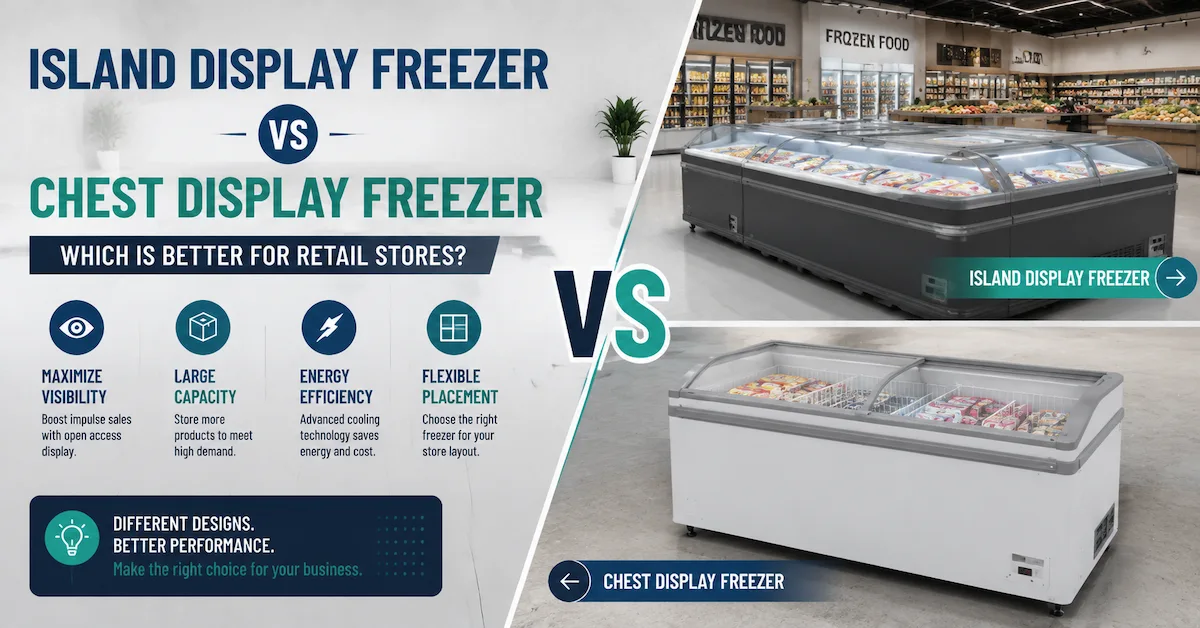
| Large supermarket aisle | Sliding door or island freezer |
| Bulk frozen meat retailer | Glass lid freezer |
| Ice cream shop | Sliding glass door freezer |
| Wholesale frozen-food store | Glass lid freezer |
| High-traffic self-service area | Sliding door freezer |
| Large-package storage | Hinged glass lid freezer |
| Promotional frozen-food display | Curved glass lid freezer |
How to Choose the Right Freezer
Before placing an order, buyers should evaluate the following factors.
Product Dimensions
Confirm:
- Package width
- Package height
- Package depth
- Average package weight
Number of SKUs
More product varieties may require:
- Additional baskets
- More dividers
- Multiple sliding sections
Store Space
Measure:
- Installation width
- Freezer depth
- Aisle clearance
- Lid-opening clearance
- Delivery route
Customer Traffic
Busy stores benefit from doors that are quick and easy to operate.
Ambient Conditions
Provide the manufacturer with:
- Store temperature
- Humidity
- Air-conditioning conditions
- Installation location
Cleaning Requirements
Choose a freezer with accessible:
- Tracks
- Hinges
- Gaskets
- Drainage systems
- Interior corners
Buyers can review Snowsea’s commercial freezer products to compare different cabinet configurations.
Commercial Freezer Selection Checklist
| Selection Area | Information to Confirm |
|---|---|
| Product type | Ice cream, meat, seafood, frozen meals |
| Package size | Dimensions and weight |
| Storage capacity | Required number of products |
| Opening method | Hinged or sliding |
| Store layout | Floor space and aisle clearance |
| Customer access | Shopping behavior and traffic |
| Temperature | Required operating range |
| Glass | Insulation and anti-fog performance |
| Cleaning | Track and gasket accessibility |
| Energy use | Rated consumption and recovery |
| Customization | Logo, color, baskets, packaging |
| Shipping | Export protection and loading quantity |
Common Selection Mistakes
Choosing Only by Appearance
An attractive freezer may not provide suitable access, temperature stability, or capacity.
Ignoring Door Clearance
A hinged lid may be difficult to use when installed under shelves or close to walls.
Not Checking Track Design
Poor sliding tracks can become difficult to clean or operate.
Ignoring Package Dimensions
Large packages may not pass through a narrow sliding opening.
Comparing Only Gross Capacity
Usable capacity depends on baskets, refrigeration components, and loading limits.
Overlooking Humidity
Unsuitable glass may fog in humid retail environments.
Selecting an Oversized Freezer
Excess capacity occupies valuable retail space and may increase operating costs.
How Snowsea Supports Retail Freezer Selection
Snowsea supplies commercial refrigeration equipment for supermarkets, convenience stores, frozen-food retailers, distributors, and food-service companies.
Available support includes:
- Freezer model recommendations
- Capacity and dimension selection
- Glass lid freezer options
- Sliding glass door configurations
- Basket and divider customization
- Cabinet color customization
- Private-label branding
- Voltage and plug customization
- Quality inspection
- Export packaging
Buyers requiring special dimensions, branding, or internal configurations can review Snowsea’s OEM and ODM refrigeration solutions.
FAQ
What is the main difference between a glass lid freezer and a sliding door freezer?
A glass lid freezer usually uses a hinged or lift-up lid, while a sliding door freezer uses horizontal glass panels that move along tracks.
Which freezer retains cold air better?
Both horizontal designs retain cold air effectively, but a sliding door freezer may reduce air exchange because only one section is opened.
Which freezer is easier to clean?
A simple hinged glass lid can be easier to clean, while sliding door tracks require additional maintenance.
Which design is better for narrow supermarket aisles?
Sliding door freezers are usually better because the doors remain within the cabinet footprint.
Can a glass lid freezer display frozen meat?
Yes. Glass lid freezers are suitable for frozen meat, seafood, ice cream, and other packaged frozen foods.
Can the doors and baskets be customized?
Manufacturers may provide customized glass styles, baskets, dividers, locks, colors, logos, voltage configurations, and packaging.
Conclusion
The glass lid freezer vs sliding door freezer decision depends on product dimensions, customer traffic, store layout, access requirements, temperature stability, and maintenance preferences.
Glass lid freezers provide wide access and are suitable for bulk products or large packages. Sliding door freezers save aisle space, support organized retail displays, and reduce the amount of cold air lost during customer access.
Snowsea supplies glass lid freezers, sliding door freezers, chest freezers, island freezers, and customized commercial refrigeration equipment for global retailers and distributors.
Explore Snowsea’s commercial refrigeration products or submit your requirements through the OEM and ODM service page for a suitable freezer recommendation.