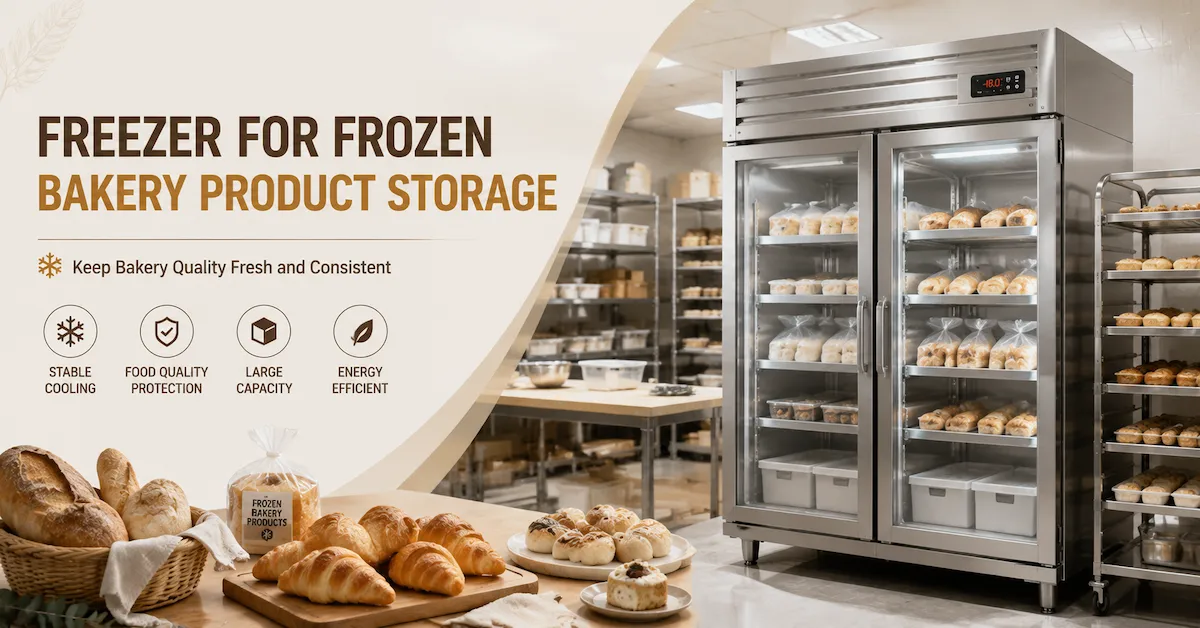
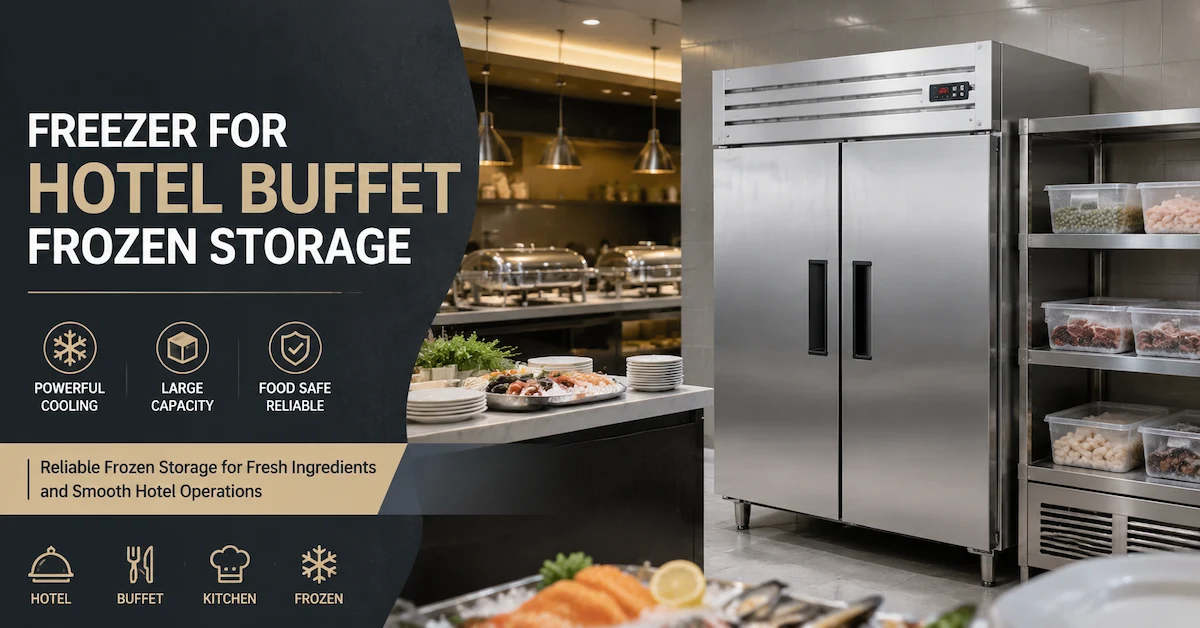
Commercial refrigeration equipment often operates continuously throughout the day and night. While cooling performance remains essential, noise levels have become increasingly important in modern business environments.
In supermarkets, convenience stores, hotels, cafés, restaurants, offices, and healthcare facilities, excessive refrigeration noise can negatively affect customer comfort and employee productivity.
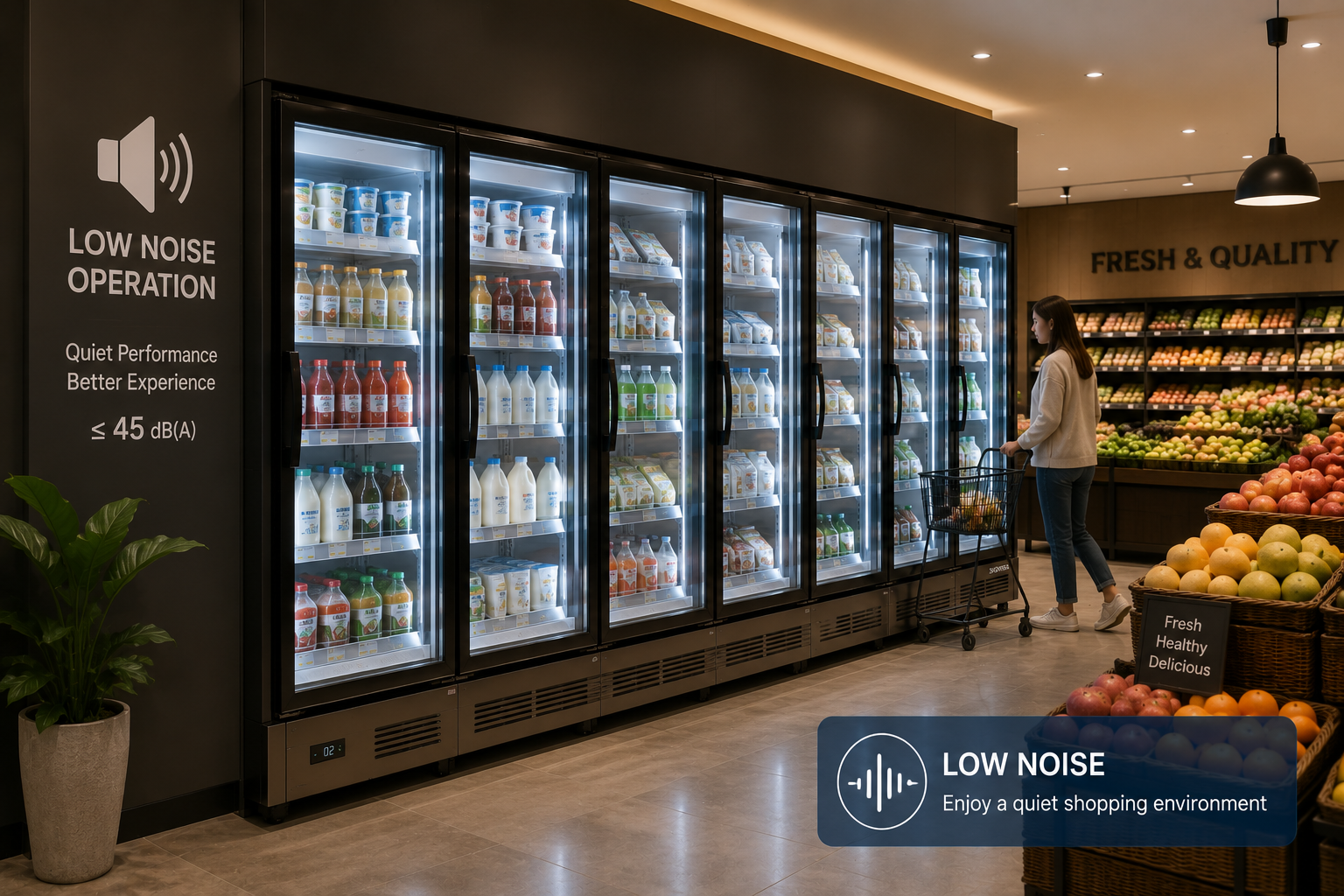
A properly engineered low noise commercial refrigerator helps maintain efficient cooling while minimizing operational noise, creating a more comfortable environment for both customers and staff.
For businesses seeking a balance between refrigeration performance and user experience, low-noise design is becoming a key purchasing factor.
Common Sources of Refrigeration Noise
Several refrigeration components can contribute to excessive operating noise.
Common sources include:
- Compressor vibration
- Condenser fan operation
- Airflow turbulence
- Mechanical resonance
- Cabinet vibration
- Refrigerant flow noise
When these factors are not properly controlled, noise levels can become noticeable in customer-facing environments.
A modern low noise commercial refrigerator addresses these issues through optimized component design and vibration management.
How Low-Noise Refrigeration Technology Works
Manufacturers use several engineering approaches to reduce refrigeration noise.
Vibration Isolation Systems
Specialized mounts help reduce compressor vibration transfer.
Low-Noise Fan Technology
Optimized fan blades reduce airflow turbulence and operating sound.
Acoustic Cabinet Design
Structural improvements minimize resonance and vibration amplification.
Intelligent Compressor Control
Variable-speed compressors operate more smoothly and quietly than traditional systems.
Because of these technologies, a well-designed low noise commercial refrigerator can maintain strong cooling performance while operating at significantly lower sound levels.
Standard Refrigerator vs Low-Noise Refrigerator
| Feature | Standard Refrigerator | Low Noise Commercial Refrigerator |
|---|---|---|
| Operating Noise | Higher | Lower |
| Customer Comfort | Standard | Improved |
| Workplace Environment | Average | Better |
| Cooling Performance | Reliable | Reliable |
| Energy Efficiency | Standard | Optimized |
| Premium Application Suitability | Moderate | Excellent |
The benefits become increasingly noticeable in environments where customer experience matters.
Solving Real Commercial Refrigeration Challenges
Customer Comfort Requirements
Retail and hospitality environments benefit from quieter equipment.
Open-Concept Store Layouts
Noise is more noticeable in modern open retail spaces.
Employee Productivity
Lower background noise improves workplace comfort.
Premium Brand Image
Quiet operation contributes to a higher-quality customer experience.
A properly engineered low noise commercial refrigerator helps businesses address these challenges while maintaining reliable refrigeration performance.
Key Advantages of Low-Noise Refrigeration Systems
Better Customer Experience
Reduced background noise creates a more pleasant shopping environment.
Improved Workplace Comfort
Employees benefit from quieter operating conditions.
Consistent Cooling Performance
Noise reduction technologies do not compromise refrigeration efficiency.
Lower Mechanical Stress
Advanced vibration control can improve component longevity.
Enhanced Brand Perception
Premium environments often require quieter equipment.
For many businesses, a low noise commercial refrigerator provides operational benefits that extend beyond refrigeration performance alone.
Common Commercial Applications
Low-noise refrigeration systems are widely used in:
- Supermarkets
- Convenience stores
- Hotels
- Cafés
- Restaurants
- Bakeries
- Healthcare facilities
- Premium retail stores
Businesses evaluating refrigeration suppliers should also consider manufacturing expertise and refrigeration engineering capabilities. Learn more about our company:
https://www.snowseax.com/about-us
What Buyers Should Evaluate Before Purchasing
Noise Level Ratings
Compare operating decibel levels under typical conditions.
Compressor Technology
Variable-speed compressors often operate more quietly.
Fan System Design
Efficient airflow systems can reduce operational noise.
Cabinet Construction
Strong structural designs help minimize vibration.
Cooling Performance
Noise reduction should not compromise refrigeration reliability.
Explore our commercial refrigeration solutions:
Choosing the right low noise commercial refrigerator helps businesses create more comfortable environments while maintaining reliable cooling performance.
FAQ
Additional refrigeration information can be found in our FAQ center:
Q1: Why is refrigerator noise important in commercial environments?
Noise can affect customer comfort, employee productivity, and overall business atmosphere.
Q2: Does a quieter refrigerator sacrifice cooling performance?
No. Modern low-noise refrigeration systems can maintain excellent cooling performance while reducing operational sound.
Q3: What component generates the most refrigeration noise?
Compressors and condenser fans are typically the primary noise sources.
Q4: Which businesses benefit most from low-noise refrigeration?
Hotels, cafés, restaurants, healthcare facilities, premium retail stores, and convenience stores often benefit most from quieter refrigeration systems.
Supporting Better Customer and Workplace Experiences
A modern low noise commercial refrigerator combines reliable cooling, efficient operation, and advanced noise control technologies. By reducing operational sound while maintaining refrigeration performance, businesses can improve customer satisfaction, workplace comfort, and long-term equipment reliability.
If you are planning a supermarket, restaurant, hotel, convenience store, healthcare, or retail refrigeration project, our specialists can help identify the most suitable solution for your application: