Durability testing ensures that refrigeration units perform reliably under extreme conditions, continuous usage, and fluctuating loads. For supermarkets, restaurants, and cold storage facilities, robust refrigeration equipment durability testing reduces downtime, maintenance costs, and ensures consistent food quality.
What types of durability tests are commonly applied to refrigeration equipment?
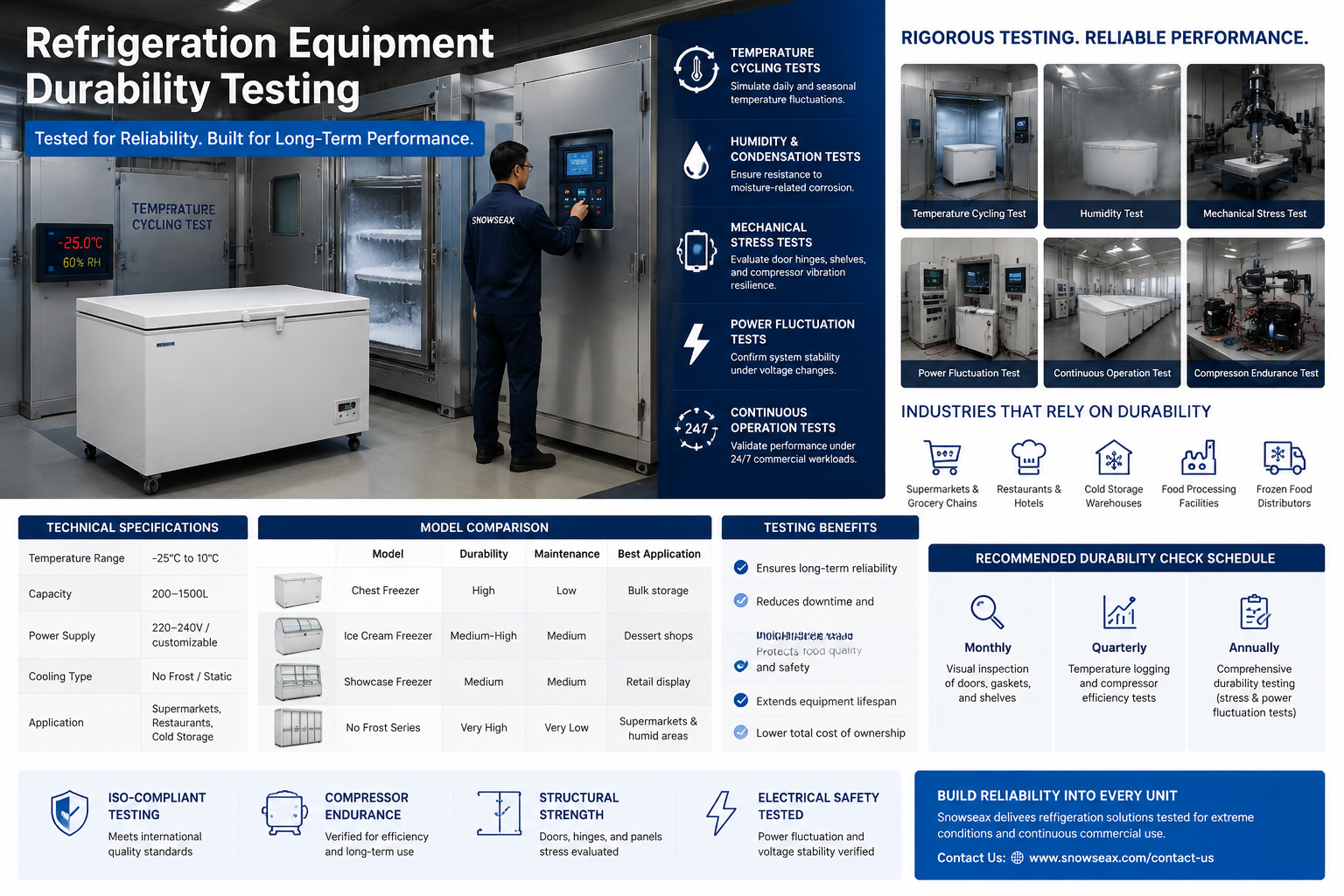
- Temperature Cycling Tests: Simulate daily and seasonal temperature fluctuations.
- Humidity & Condensation Tests: Ensure resistance to moisture-related corrosion.
- Mechanical Stress Tests: Evaluate door hinges, shelves, and compressor vibration resilience.
- Power Fluctuation Tests: Confirm system stability under voltage changes.
- Continuous Operation Tests: Validate performance under 24/7 commercial workloads.
These tests provide a complete assessment of refrigeration equipment durability testing results.
View OEM/ODM engineering solutions:
https://www.snowseax.com/oem-odm
How does testing impact the lifespan of refrigeration equipment?
Refrigeration units that undergo rigorous refrigeration equipment durability testing are more likely to deliver consistent temperatures, avoid early component failure, and achieve longer operational life. Proper testing directly correlates with lower total cost of ownership for businesses.
Learn more technical insights:
https://www.snowseax.com/blog
Which industries benefit most from refrigeration equipment durability testing?
- Supermarkets and grocery chains
- Restaurants and hotels
- Cold storage warehouses
- Food processing facilities
- Frozen food distributors
Testing ensures equipment can handle high usage and maintain refrigeration equipment durability standards over time.
For tailored industry solutions:
https://www.snowseax.com/products
How does Snowsea ensure its refrigeration equipment passes durability standards?
Snowsea integrates advanced testing protocols including:
- ISO-compliant temperature and humidity tests
- Compressor endurance and efficiency verification
- Structural stress evaluation for doors, hinges, and panels
- Electrical safety and power fluctuation assessment
This approach guarantees that every unit meets commercial reliability requirements and supports long-term refrigeration equipment durability testing performance.
Learn about our company quality system:
https://www.snowseax.com/about-us
Technical Specifications Table
| Item | Specification |
|---|---|
| Temperature Range | -25°C to 10°C |
| Capacity | 200–1500L |
| Power Supply | 220–240V / customizable |
| Cooling Type | No Frost / Static |
| Application | Supermarkets, Restaurants, Cold Storage |
Model Comparison Table
| Model | Durability | Maintenance | Best Application |
|---|---|---|---|
| Chest Freezer | High | Low | Bulk storage |
| Ice Cream Freezer | Medium-High | Medium | Dessert shops |
| Showcase Freezer | Medium | Medium | Retail display |
| No Frost Series | Very High | Very Low | Supermarkets & humid areas |
How often should businesses conduct durability checks on their refrigeration equipment?
Periodic checks are recommended:
- Monthly: Visual inspection of doors, gaskets, and shelves
- Quarterly: Temperature logging and compressor efficiency tests
- Annually: Comprehensive refrigeration equipment durability testing including stress and power fluctuation tests
Regular checks help maintain system performance and extend equipment lifespan.
Contact us for technical consultation:
https://www.snowseax.com/contact-us
FAQ
Q1: Can durability testing prevent food spoilage?
Yes, ensuring consistent temperature reduces the risk of spoilage and maintains food safety.
Q2: Are all commercial freezers tested for durability before delivery?
Reliable manufacturers, like Snowsea, perform comprehensive refrigeration equipment durability testing prior to shipment.
Q3: Does durability testing add to equipment cost?
While it may slightly increase upfront costs, the ROI is high due to fewer repairs and longer service life.
For more technical documentation and buyer guides:
https://www.snowseax.com/faqs