For importers, distributors, supermarket equipment suppliers, restaurant equipment buyers, and private label refrigeration brands, standard refrigerator models may not always match real market demand. Different buyers may need different cabinet sizes, door structures, shelf layouts, temperature ranges, branding designs, voltage standards, and packaging solutions.
This is why choosing a reliable refrigerator customization factory is important.
A refrigerator customization factory does more than supply ready-made products. It can help buyers adjust product structure, confirm technical specifications, customize appearance, support private label branding, manage production, test performance, and prepare products for export.
Snowsea provides commercial refrigeration products including refrigerators, freezers, ice cream freezers, and showcase cabinets. For buyers who need customized commercial refrigerator solutions, Snowsea supports OEM/ODM customization for different retail, food service, and distribution markets.
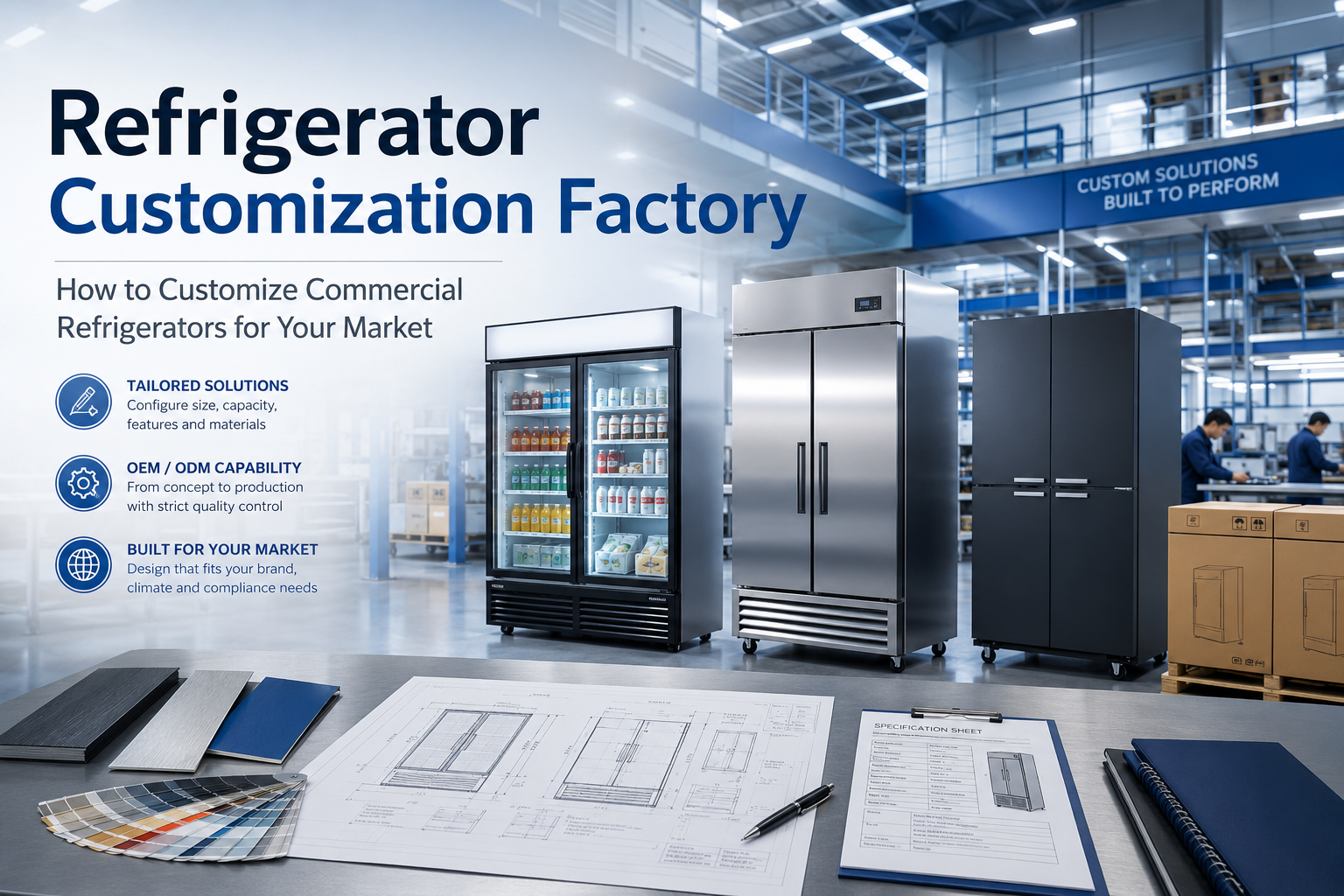
What Is a Refrigerator Customization Factory?
A refrigerator customization factory helps buyers modify or develop commercial refrigerator products based on specific market and application requirements. Compared with a standard supplier, a factory-level customization partner can provide stronger support in product structure, production control, quality inspection, and export preparation.
A refrigerator customization project may include:
- Cabinet size and capacity adjustment
- Single door, double door, side by side, or four door structure
- Glass door or solid door design
- Shelf and internal layout customization
- Temperature range configuration
- No frost or airflow system options
- Cabinet color customization
- Logo and brand graphics
- Product label and nameplate
- User manual customization
- Voltage and plug adaptation
- Carton and packaging design
- Export packaging support
For B2B buyers, customization helps commercial refrigerator products fit real customer needs instead of only matching a basic catalog model.
Who Needs Refrigerator Customization?
Refrigerator customization is suitable for buyers who need better product-market fit, stronger branding, or more practical commercial performance.
1. Importers
Importers often need refrigerators that match local voltage, plug type, label language, packaging standards, and customer preferences. A customization factory can help adjust products before they enter the local market.
2. Distributors
Distributors may sell to supermarkets, restaurants, hotels, cafés, beverage shops, convenience stores, and food service companies. Customized refrigerator models help them serve different customer groups more precisely.
3. Supermarket Equipment Suppliers
Supermarket equipment suppliers need refrigerators for beverage display, dairy storage, fresh food sections, chilled packaged food, and backroom storage. Custom cabinet size, glass door style, and branding can help match different store layouts.
4. Restaurant and Hotel Equipment Buyers
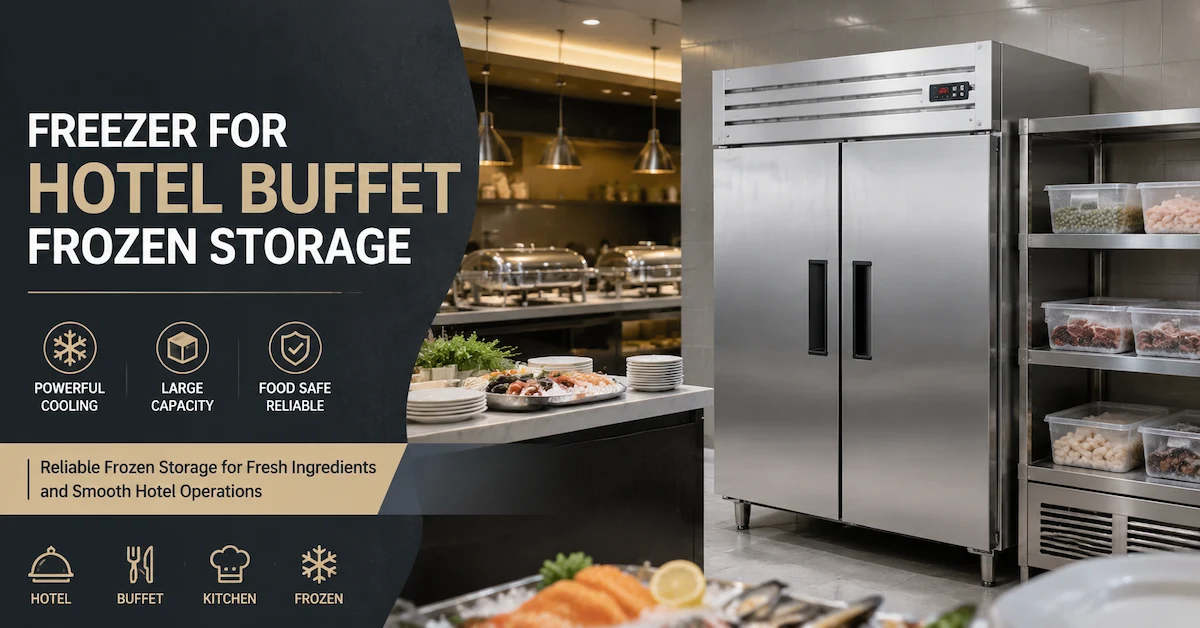
Restaurants, hotels, and central kitchens need durable refrigerators for ingredients, drinks, sauces, dairy products, prepared food, and daily kitchen operation. Custom internal layout and door structure can improve work efficiency.
5. Private Label Refrigeration Brands
Private label buyers need consistent logo placement, cabinet color, packaging, product labels, user manuals, and model naming. A refrigerator customization factory can help build a complete branded product line.
What Refrigerator Products Can Be Customized?
Snowsea offers several commercial refrigerator categories that can support customization projects.
| Product Type | Customization Options | Best Application |
|---|---|---|
| Single Door Refrigerator | Logo, cabinet color, shelf layout, label, packaging | Small stores, cafés, offices, beverage storage |
| Double Door Refrigerator | Door style, shelf layout, temperature control, branding | Restaurants, convenience stores, food service |
| Side by Side Refrigerator | Door configuration, internal layout, appearance | Retail, commercial storage, food service |
| Four Door Refrigerator | Storage zones, cabinet structure, branding | Hotels, restaurants, central kitchens |
| No Frost Refrigerator | Airflow design, defrost system, control panel | High-frequency commercial use |
| Showcase Refrigerator | Glass door branding, lightbox, cabinet color | Beverage, dairy, dessert, chilled food display |
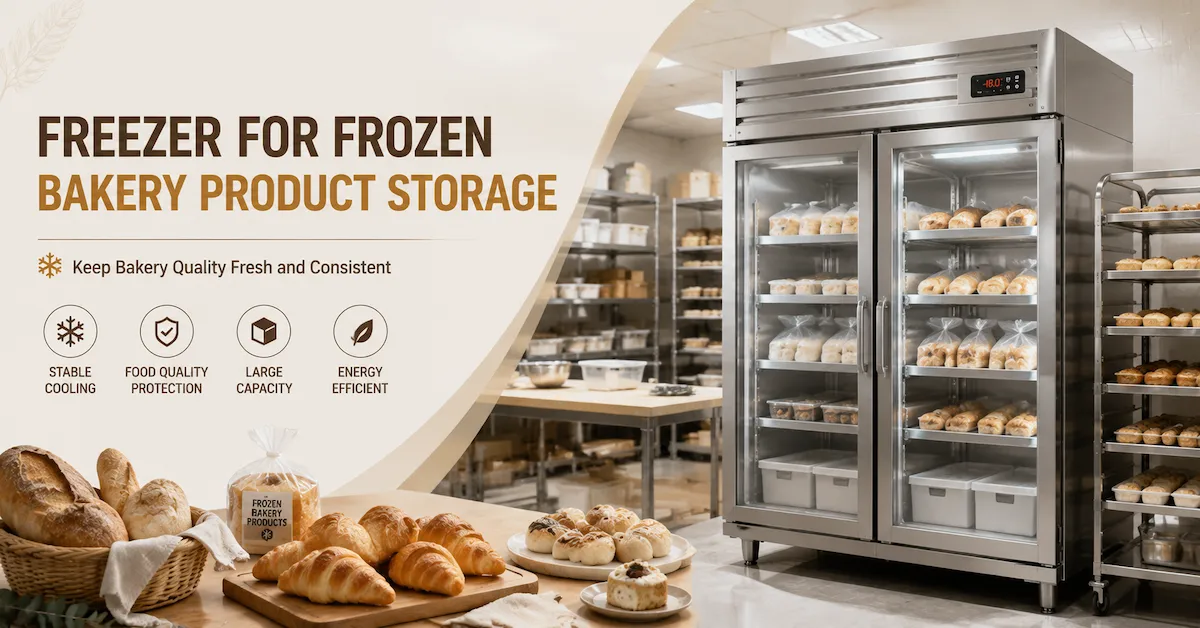
| Upright Freezer | Shelf design, door type, temperature range, packaging | Frozen storage, kitchens, retail backrooms |
Buyers can review suitable models on the Snowsea Products Page before confirming customization requirements.
Main Refrigerator Customization Options Buyers Should Consider
A good customization project should start from application needs, not only appearance. Buyers should confirm how the refrigerator will be used, where it will be placed, what products it will store, and how customers or staff will access it.
1. Size and Capacity Customization
Different business environments require different refrigerator sizes. A small café may need a compact single door refrigerator, while a hotel kitchen may need a four door refrigerator with larger capacity.
Capacity should be based on:
- Product type
- Daily storage volume
- Available floor space
- Door opening frequency
- Customer-facing or backroom use
- Product turnover speed
Choosing the right size helps reduce wasted space, poor airflow, and unnecessary energy use.
2. Door Type Customization
Door design affects access, insulation, product display, and daily operation.
Common options include:
- Single door structure for compact spaces
- Double door structure for larger storage
- Four door structure for classified food storage
- Glass door design for retail display
- Solid door design for kitchen storage
- Side by side structure for separated storage zones
For supermarkets and convenience stores, glass door refrigerators can improve product visibility. For restaurants and kitchens, solid door or multi-door refrigerators may be more practical.
3. Shelf and Internal Layout Customization
Internal layout affects storage efficiency and user experience. Poor shelf design can waste space or make products difficult to access.
Buyers may customize:
- Adjustable shelves
- Heavy-duty shelves
- Product dividers
- Beverage display layout
- Food storage zones
- Easy-clean internal structure
- Multi-layer storage design
For restaurants, supermarkets, and distributors, internal layout should match the actual product packaging and operating habits.
4. Temperature Range Configuration
Different products require different storage conditions. Beverages, dairy products, fresh food, prepared food, sauces, desserts, and chilled packaged goods may need different temperature settings.
A refrigerator customization factory should help buyers select suitable temperature ranges based on the product category and application environment.
5. No Frost and Airflow Configuration
No frost and airflow systems can reduce maintenance pressure and improve cooling consistency. For commercial refrigerators used frequently, stable airflow helps reduce temperature fluctuation after door opening.
Buyers should confirm whether the refrigerator design supports:
- Even cooling
- Fast temperature recovery
- Reduced frost build-up
- Stable airflow
- Easier daily maintenance
These factors are especially important for supermarkets, restaurants, hotels, and food service environments.
6. Branding and Appearance Customization
For private label buyers, appearance customization is part of product competitiveness. A customized refrigerator can support stronger brand presentation through logo, color, graphics, labels, and packaging.
Branding options may include:
- Cabinet logo
- Cabinet color
- Door sticker
- Top lightbox
- Product label
- Control panel label
- User manual
- Carton design
- Model naming system
This helps buyers build a more professional commercial refrigeration product line.
7. Voltage, Plug, and Market Configuration
Export buyers should confirm voltage, plug type, label language, user manual, packaging information, and local market requirements before production.
This is especially important for importers and distributors selling to different countries or regions.
Refrigerator Customization Factory vs Standard Supplier
Not every buyer needs deep customization. The right choice depends on order requirements, sales channel, target market, and brand strategy.
| Supplier Type | Best For | Main Advantage | Limitation |
| Standard Refrigerator Supplier | Quick purchasing of existing models | Fast model selection | Limited customization |
| Refrigerator Customization Factory | Application-specific refrigerator projects | Stronger control over size, structure, branding, and production | Requires clearer requirements |
| OEM Refrigerator Manufacturer | Branded refrigerator production | Logo, packaging, labels, and specification support | Less design flexibility than ODM |
| ODM Refrigerator Supplier | Product development and market adaptation | Better design and structure support | Longer development cycle |
If buyers need market-specific commercial refrigerator products, a customization factory is usually more suitable than a standard supplier.
How to Evaluate a Refrigerator Customization Factory
Choosing the wrong factory can lead to unstable cooling, inconsistent appearance, weak packaging, delayed delivery, and after-sales problems. Buyers should evaluate both technical and production ability.
1. Product Range
A capable factory should offer multiple refrigerator products, such as single door refrigerators, double door refrigerators, side by side refrigerators, four door refrigerators, no frost refrigerators, showcase refrigerators, and upright freezers.
A wider product range helps importers and distributors build a more complete commercial refrigeration catalog.
2. Technical Understanding
Customization should not weaken cooling performance. The factory should understand compressor configuration, insulation structure, airflow, defrost systems, and temperature control.
Buyers should ask how custom changes may affect cooling stability, energy use, maintenance, and long-term reliability.
3. Commercial Application Experience
A refrigerator for supermarket display is different from a refrigerator for hotel kitchen storage. A good factory should recommend models based on real use scenarios, not only cabinet appearance.
4. OEM/ODM Support
Custom projects often connect with OEM/ODM needs. Buyers may need logo, cabinet color, packaging, labels, manuals, voltage, plug, and market-specific configuration.
A capable factory should confirm these details clearly before production.
5. Quality Control Process
Custom refrigerators require strict quality control because small changes in structure, labels, components, or packaging can affect final consistency.
QC should include:
- Raw material inspection
- Cabinet assembly
- Foaming and insulation process
- Refrigeration system installation
- Electrical safety check
- Temperature performance testing
- Appearance inspection
- Packaging inspection
Quality control helps reduce after-sales risk and protect the buyer’s brand reputation.
6. Sample or Pre-Production Confirmation
For customized refrigerator projects, sample or pre-production confirmation helps buyers check appearance, function, branding details, packaging, and cooling performance before bulk production.
Refrigerator Customization Process
A clear process helps reduce communication mistakes and project risk.
Step 1: Requirement Communication
The buyer provides target market, refrigerator type, application, quantity, size, branding needs, voltage, plug type, and packaging requirements.
Step 2: Model Recommendation
The factory recommends suitable refrigerator models based on application, such as single door refrigerator, double door refrigerator, four door refrigerator, no frost refrigerator, or showcase refrigerator.
Step 3: Customization Plan Confirmation
Both sides confirm cabinet size, logo, color, door type, internal layout, temperature range, control panel, packaging, and labels.
Step 4: Sample or Pre-Production Approval
For customized projects, sample approval helps buyers check details before mass production.
Step 5: Bulk Production
After confirmation, production begins according to approved specifications.
Step 6: Testing and Quality Inspection
The factory checks cooling performance, electrical safety, appearance, branding details, and packaging.
Step 7: Export Packaging and Delivery
The products are packed for international shipping and prepared for delivery.
For buyers planning refrigerator customization projects, the Snowsea OEM/ODM Page provides more information about customization support.
Common Applications for Customized Commercial Refrigerators
Supermarkets and Grocery Stores
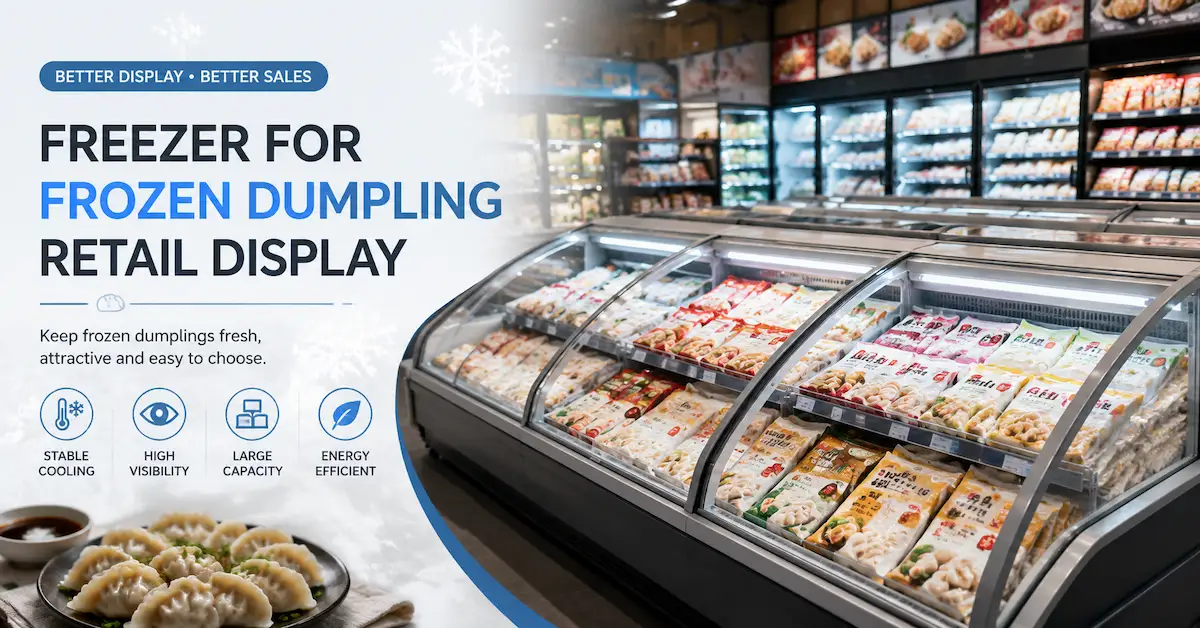
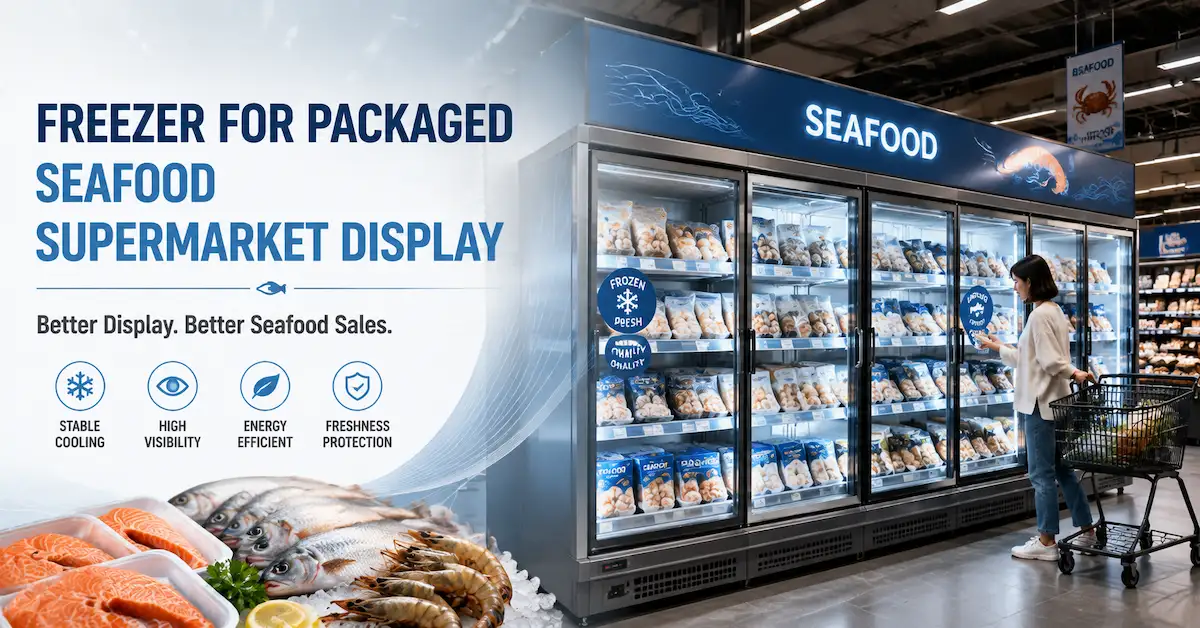
Supermarkets need refrigerators for beverages, dairy products, fresh food, chilled packaged goods, and prepared food. Custom glass door refrigerators and showcase refrigerators can improve product display.
Convenience Stores
Convenience stores often need compact refrigerators with good product visibility. Custom branding and cabinet size options can help match limited store space.
Restaurants and Commercial Kitchens
Restaurants need refrigerators for ingredients, sauces, dairy products, drinks, and prepared food. Double door and four door refrigerators can support organized kitchen storage.
Hotels and Central Kitchens
Hotels and central kitchens need larger capacity and better storage zones. Four door refrigerators and side by side refrigerators can support different food categories.
Beverage and Dairy Display
Showcase refrigerators are suitable for beverage, milk, yogurt, desserts, and chilled food display. Custom branding can improve product presentation in retail environments.
Common Mistakes in Refrigerator Customization Projects
Mistake 1: Only Customizing the Logo
Logo customization is useful, but a complete refrigerator project should also consider size, structure, shelf layout, cooling performance, packaging, labels, and user experience.
Mistake 2: Ignoring the Application Scenario
A refrigerator for restaurant storage is different from a refrigerator for retail display. Application should guide the product configuration.
Mistake 3: Not Confirming Temperature Requirements
Temperature range should match the stored products. Beverages, dairy, fresh food, prepared food, and desserts may need different storage conditions.
Mistake 4: Skipping Sample Review
For customized refrigerator orders, sample or pre-production approval can reduce batch risk.
Mistake 5: Choosing Based on Price Only
Low price may lead to unstable cooling, weak materials, poor packaging, or higher after-sales cost. Buyers should compare total value, not only purchase cost.
Why Snowsea Can Support Refrigerator Customization Buyers
Snowsea focuses on commercial refrigeration equipment for food storage, beverage display, supermarket refrigeration, restaurant storage, convenience store cooling, frozen food, and chilled product applications.
For refrigerator customization projects, Snowsea can support:
- Single door and double door refrigerator options
- Side by side and four door refrigerator options
- No frost refrigerator solutions
- Showcase refrigerator branding
- Cabinet size and structure customization
- Logo and private label support
- Cabinet color and appearance options
- Shelf and storage layout options
- Temperature control configuration
- Packaging and label customization
- Export packaging support
- Quality inspection before shipment
- OEM/ODM support for long-term cooperation
Buyers can also visit the Snowsea About Us Page to learn more about Snowsea’s company background and commercial refrigeration product direction.
FAQ
1. What is a refrigerator customization factory?
A refrigerator customization factory helps buyers customize refrigerator products based on size, structure, door type, temperature, internal layout, branding, packaging, and market requirements.
2. What refrigerator types can be customized?
Single door refrigerators, double door refrigerators, side by side refrigerators, four door refrigerators, no frost refrigerators, showcase refrigerators, and upright freezers can support customization.
3. Can I customize the logo and packaging?
Yes. Refrigerator customization projects can support logo, cabinet color, product labels, user manuals, carton design, nameplates, and packaging customization.
4. What should buyers prepare before starting a customization project?
Buyers should prepare target market, product type, quantity, application scenario, logo file, voltage, plug type, packaging needs, and preferred specifications.
5. Why is internal layout important?
Internal layout affects storage efficiency, airflow, product access, and daily operation. It should match the stored product type and business environment.
6. Is refrigerator customization suitable for private label brands?
Yes. It is suitable for private label brands that need consistent logo, appearance, packaging, model naming, and product configuration.
7. Do buyers need a sample before bulk production?
For customized refrigerator projects, sample or pre-production approval is recommended to confirm appearance, structure, branding, packaging, and cooling performance.
8. Can Snowsea support refrigerator customization projects?
Yes. Snowsea supports refrigerator customization projects, including model selection, size, branding, shelf layout, temperature configuration, packaging, export support, and OEM/ODM customization.
Conclusion
Choosing the right refrigerator customization factory helps importers, distributors, supermarket equipment suppliers, restaurant equipment buyers, and private label refrigeration brands create commercial refrigerator products that fit real business needs. A good customization solution should balance cooling performance, storage efficiency, cabinet structure, branding, packaging, and market requirements.
Snowsea provides commercial refrigerators, freezers, ice cream freezers, and showcase cabinets for different applications. For buyers who need custom size, structure, logo, packaging, shelf layout, temperature settings, or market-specific commercial refrigeration solutions, Snowsea can provide flexible OEM/ODM support.
To explore available models, visit the Snowsea Products Page. For refrigerator customization projects, visit the Snowsea OEM/ODM Page and contact the Snowsea team for a tailored solution.