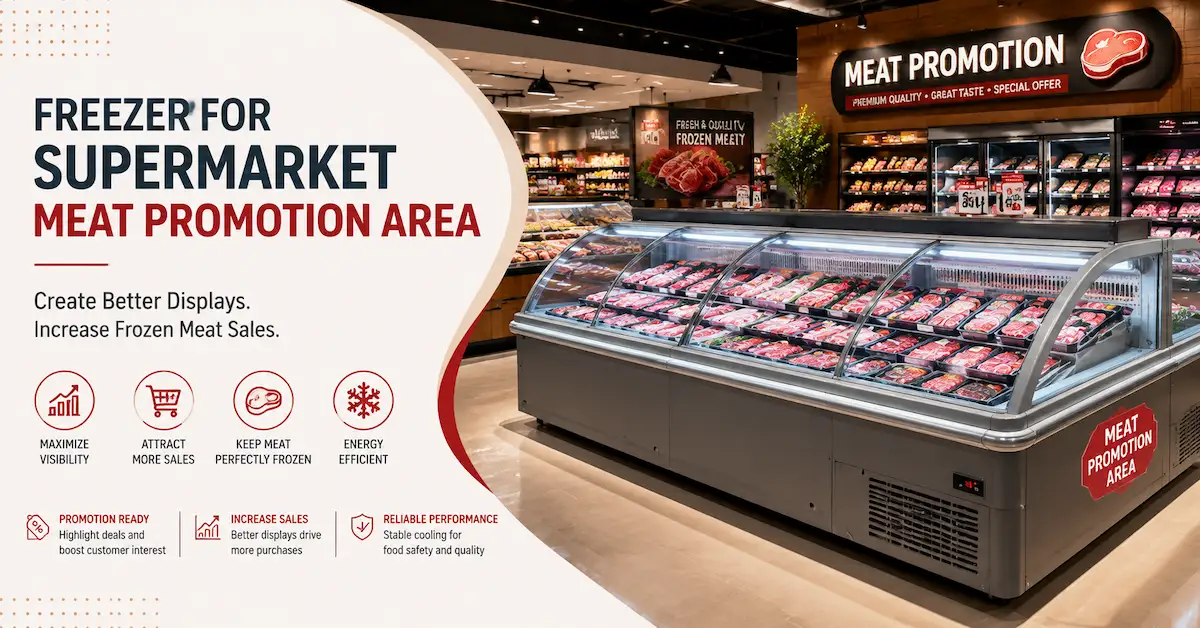
For grocery stores, supermarket chains, food retailers, refrigeration distributors, and commercial equipment buyers, selecting the right commercial freezer supplier for grocery stores is essential for maintaining product quality, improving store efficiency, and supporting long-term business growth.
Grocery stores rely on commercial freezers every day to store and display frozen products such as frozen meals, seafood, meat, vegetables, ice cream, and ready-to-cook foods. Unlike household freezers, commercial equipment must handle higher usage frequency, larger storage requirements, and continuous operation.
A reliable supplier should provide more than standard freezer products. Grocery store buyers need complete refrigeration solutions including:
- Suitable freezer models
- Stable cooling performance
- Energy-efficient designs
- OEM customization
- Quality control
- Export support
- Long-term service
The wrong supplier choice may result in:
- Product quality problems
- Higher energy costs
- Poor product display
- Frequent maintenance
- Delivery delays
- Customer complaints
Snowsea provides commercial refrigeration products including grocery store freezers, display freezers, upright freezers, chest freezers, island freezers, ice cream freezers, refrigerators, beverage coolers, and showcase cabinets. For grocery retail projects, Snowsea supports OEM/ODM customization, private label solutions, quality inspection, export packaging, and bulk production.
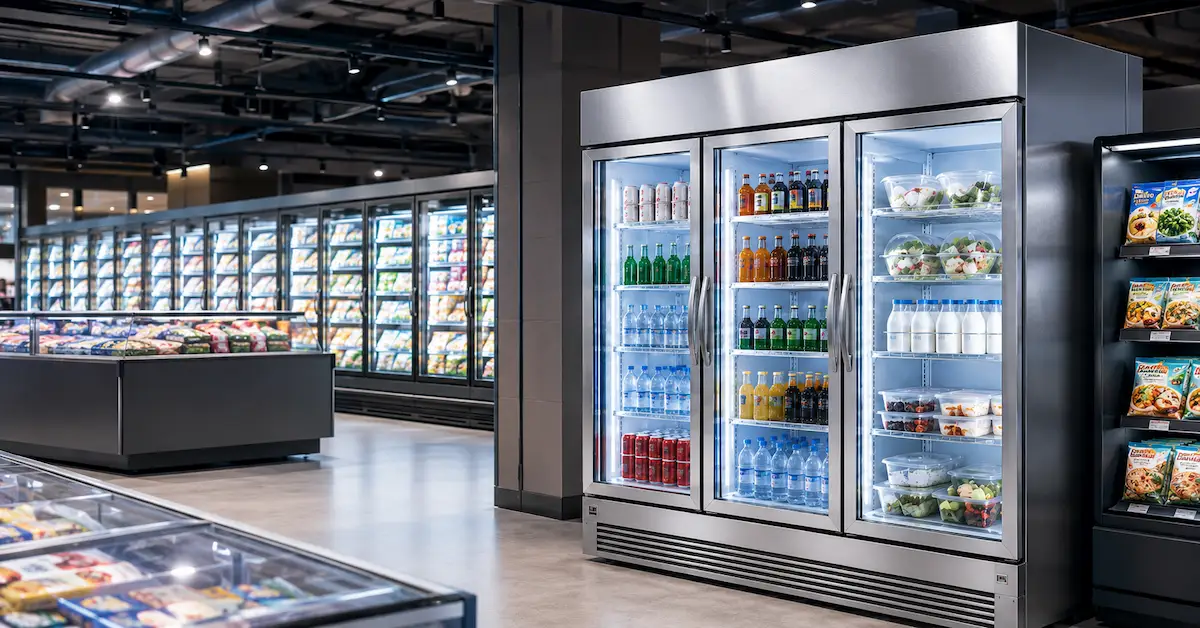
Why Grocery Stores Need a Reliable Commercial Freezer Supplier
Commercial freezers directly affect grocery store operations. A freezer failure can cause product loss, customer dissatisfaction, and unexpected maintenance costs.
A reliable supplier helps grocery stores:
- Protect frozen products
- Improve product presentation
- Reduce energy consumption
- Optimize store space
- Maintain consistent quality
- Expand store networks
For grocery chains, choosing the right supplier is especially important because multiple locations often require consistent equipment standards.
Common Commercial Freezer Types for Grocery Stores
Different grocery stores need different freezer solutions depending on store size, product categories, and customer flow.
| Freezer Type | Best Application |
|---|---|
| Upright Glass Door Freezer | Frozen food display and organization |
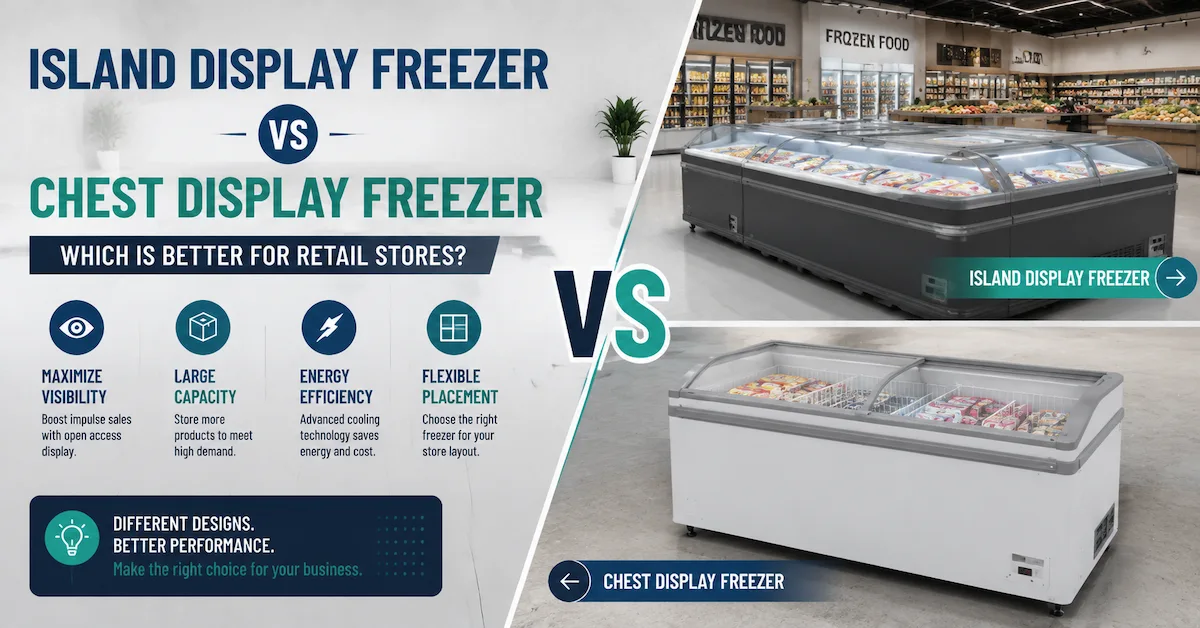
| Island Freezer | Large supermarket frozen zones |
| Chest Freezer | Bulk frozen storage |
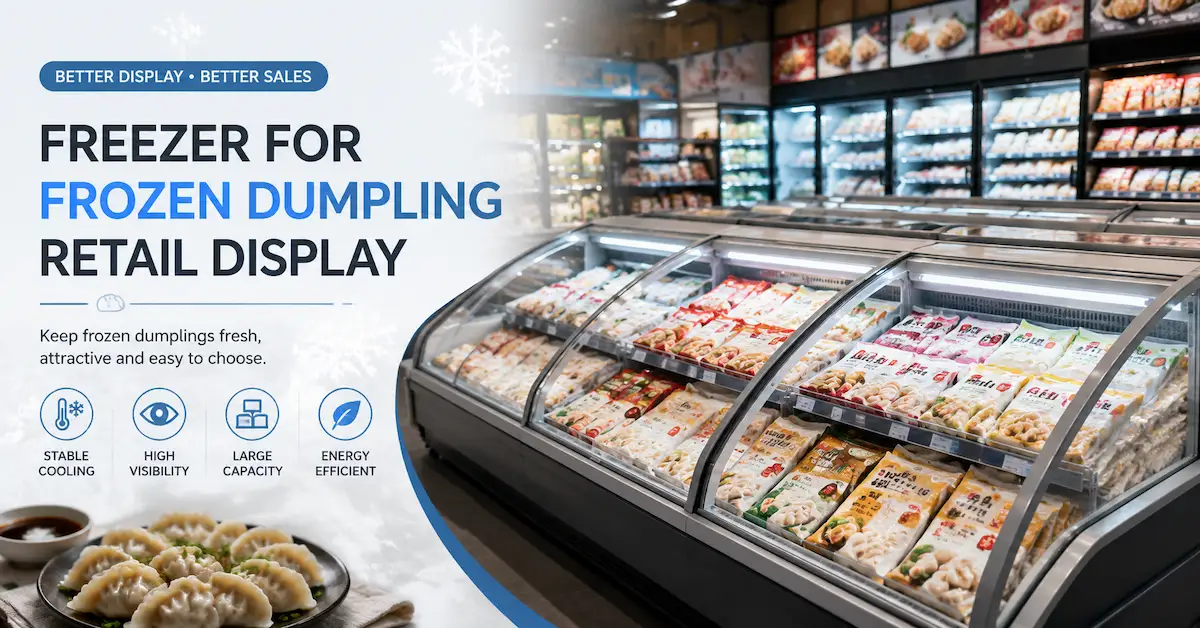
| Sliding Glass Freezer | Self-service frozen products |
| Ice Cream Freezer | Frozen dessert display |
| Display Cabinet | Premium product presentation |
A professional commercial freezer supplier for grocery stores should provide multiple solutions to match different retail environments.
Buyers can review Snowsea product categories here:
https://www.snowseax.com/products
Factor 1: Evaluate Freezer Solutions for Different Grocery Formats
Not all grocery stores have the same refrigeration requirements.
Small Grocery Stores
Need:
- Space-saving designs
- Easy product access
- Efficient operation
Recommended:
- Compact upright freezers
- Sliding glass freezers
Supermarket Chains
Need:
- Large capacity
- Strong display capability
- Consistent product appearance
Recommended:
- Island freezers
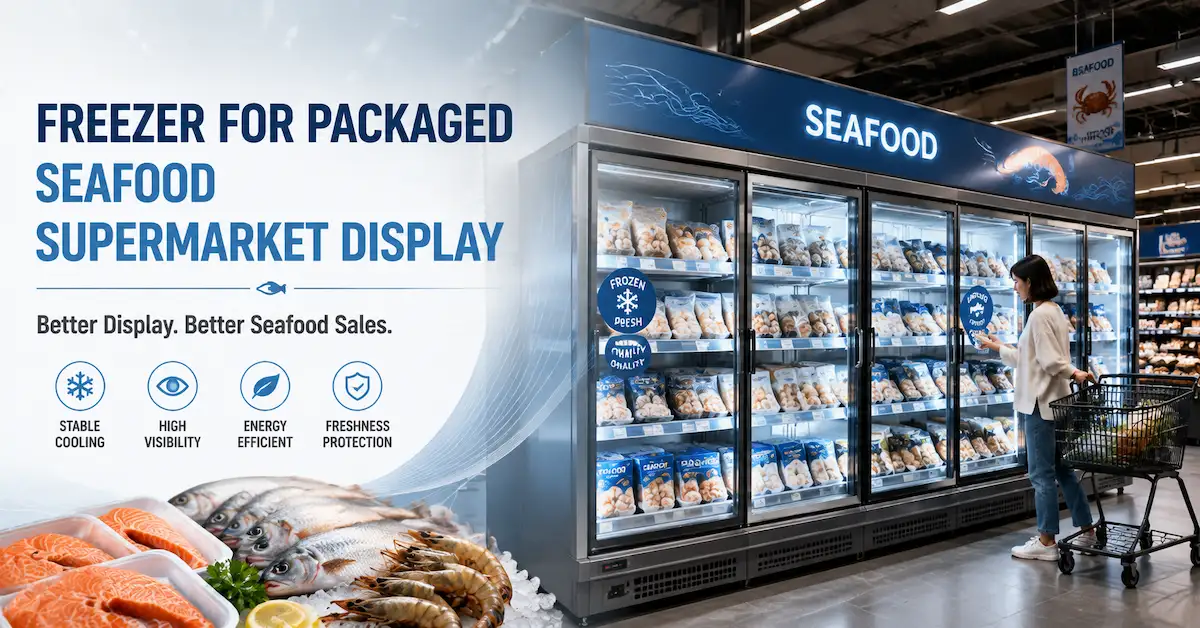
- Multi-door freezers
- Large display cabinets
Specialty Food Stores
Need:
- Premium product presentation
- Flexible storage
Recommended:
- Glass display freezers
- Customized freezer solutions
A reliable supplier should recommend equipment based on the store environment.
Factor 2: Check Cooling Performance
Cooling performance is one of the most important factors when choosing a commercial freezer supplier.
Buyers should evaluate:
- Temperature stability
- Compressor performance
- Cooling speed
- Temperature recovery
- Insulation quality
- Door sealing
- Defrost system
- Controller accuracy
- Energy efficiency
Grocery store freezers often experience frequent door opening and long operating hours. Stable cooling helps protect product quality and reduce waste.
For frozen seafood, meat, ice cream, and prepared foods, reliable temperature control is essential.
Factor 3: Consider Energy Efficiency
Energy costs are a major concern for grocery stores because refrigeration equipment operates continuously.
Buyers should check:
- Compressor efficiency
- Insulation materials
- Door sealing performance
- LED lighting
- Cooling system design
Energy-efficient commercial freezers help grocery stores reduce operating expenses while maintaining product quality.
Factor 4: Evaluate Product Display Design
Modern grocery stores need freezers that support both storage and sales.
Important display features include:
- Clear glass visibility
- LED lighting
- Shelf organization
- Product classification
- Customer access
- Restocking convenience
Good freezer design improves customer shopping experience and helps products attract attention.
Factor 5: Check OEM and Customization Capability
Many grocery chains and distributors require customized freezer solutions.
A capable supplier should support:
- Logo customization
- Cabinet color
- Side graphics
- Product labels
- Packaging design
- User manuals
- Shelf configuration
- Voltage customization
- Plug adaptation
OEM services allow grocery brands to create consistent store images.
For Snowsea OEM/ODM projects, visit:
https://www.snowseax.com/oem-odm
Factor 6: Evaluate Manufacturing Capability
Before choosing a supplier, grocery buyers should evaluate factory capability.
Important factors include:
- Manufacturing experience
- Production capacity
- Engineering support
- Testing equipment
- Quality management
- Delivery capability
For supermarket chains, consistent production is critical because multiple stores may require identical freezer models.
Factor 7: Review Quality Control
Quality control ensures commercial freezers perform reliably after installation.
A professional supplier should inspect:
- Cabinet structure
- Cooling performance
- Electrical safety
- Glass quality
- Compressor operation
- Door function
- Controller accuracy
- Accessories
- Packaging
Strong quality control reduces:
- Warranty problems
- Product replacement
- Maintenance costs
- Customer complaints
Factor 8: Confirm Export and Supply Capability
For international grocery chains and importers, export experience is important.
A professional supplier should support:
- Export documents
- Shipping preparation
- Packaging solutions
- Container loading
- Market requirements
Experienced suppliers help reduce international sourcing risks.
Commercial Freezer Buying Checklist for Grocery Stores
Before selecting a supplier, buyers should prepare:
| Information | Why It Matters |
|---|---|
| Store type | Determines freezer solution |
| Product category | Defines storage requirements |
| Freezer capacity | Matches business needs |
| Display requirements | Improves product presentation |
| Quantity | Affects pricing and production |
| OEM needs | Supports branding |
| Voltage requirements | Matches local market |
| Packaging needs | Reduces shipping risks |
| Delivery schedule | Supports store planning |
Common Mistakes Grocery Stores Should Avoid
Mistake 1: Choosing Only Based on Price
Low-cost equipment may create higher operating costs or maintenance problems.
Mistake 2: Ignoring Store Layout
The wrong freezer size can reduce store efficiency.
Mistake 3: Not Checking Supplier Experience
Manufacturing ability and retail experience should be evaluated.
Mistake 4: Skipping Customization Planning
Branding and technical requirements should be confirmed before production.
Mistake 5: Ignoring After-Sales Support
Long-term support is important for grocery operations.
Why Snowsea Is a Reliable Commercial Freezer Supplier for Grocery Stores
Snowsea focuses on commercial refrigeration and freezing equipment for grocery stores, supermarkets, food retailers, restaurants, convenience stores, seafood shops, and food service businesses.
For grocery store refrigeration projects, Snowsea supports:
- Commercial freezer solutions
- Display freezer supply
- Upright freezer projects
- Island freezer solutions
- Chest freezer supply
- Ice cream freezer solutions
- OEM/ODM customization
- Private label development
- Export packaging
- Quality inspection
- Bulk production
Snowsea product solutions include:
- Grocery store freezers
- Commercial freezer cabinets
- Display freezers
- Upright freezers
- Chest freezers
- Island freezers
- Beverage coolers
Buyers can learn more about Snowsea here:
https://www.snowseax.com/about-us
FAQ
1. What does a commercial freezer supplier for grocery stores provide?
A commercial freezer supplier provides refrigeration equipment designed for grocery stores, supermarkets, retailers, and food businesses.
2. What freezer types are commonly used in grocery stores?
Common options include upright freezers, island freezers, chest freezers, sliding glass freezers, and display cabinets.
3. Can grocery store freezers be customized?
Yes. Suppliers can customize logos, colors, labels, packaging, shelves, voltage, and product specifications.
4. How do grocery stores choose a reliable freezer supplier?
Buyers should evaluate product range, cooling performance, manufacturing capability, quality control, OEM support, export experience, and service.
5. Why is freezer energy efficiency important for grocery stores?
Energy-efficient freezers reduce long-term operating costs because refrigeration equipment runs continuously.
Conclusion
Choosing the right commercial freezer supplier for grocery stores helps grocery retailers, supermarket chains, importers, and distributors build reliable refrigeration systems.
A professional supplier should provide stable cooling performance, energy-efficient designs, OEM customization, quality control, export support, and long-term cooperation.
Snowsea provides commercial freezers, display freezers, upright freezers, chest freezers, island freezers, and complete grocery store refrigeration solutions for global buyers.
To explore freezer solutions, visit:
https://www.snowseax.com/products
For OEM/ODM refrigeration projects, visit: