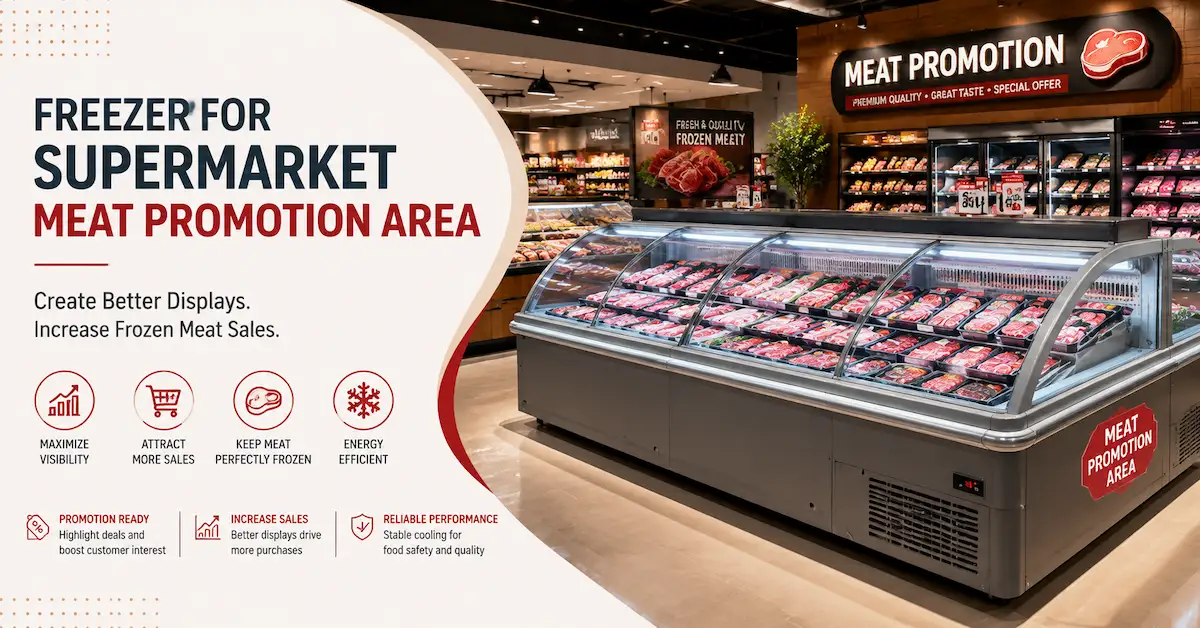
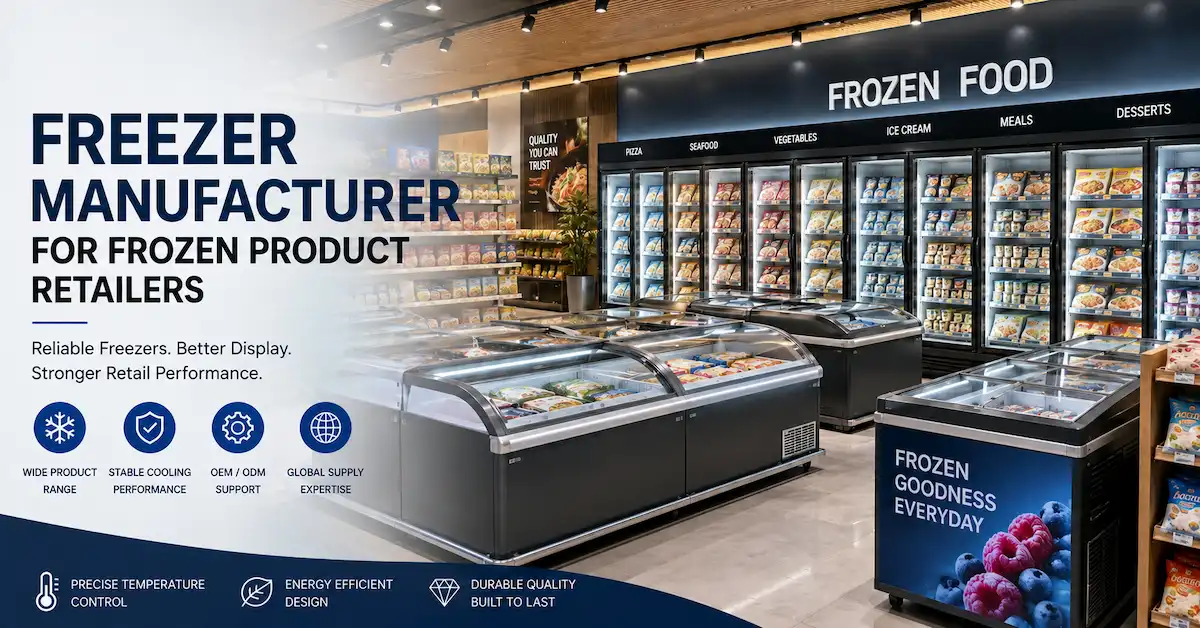
For supermarkets, frozen food shops, specialty food retailers, importers, and refrigeration distributors, choosing the right freezer manufacturer for frozen product retailers is essential for protecting product quality and improving retail performance.
Frozen product retailers sell a wide range of temperature-sensitive products, including frozen meals, seafood, meat, vegetables, desserts, ice cream, snacks, and ready-to-cook foods. The freezer equipment used in these stores must do more than maintain a low temperature. It must also support product visibility, customer access, restocking efficiency, energy management, and store presentation.
A reliable manufacturer should understand the difference between storage-focused refrigeration and customer-facing retail equipment. It should be able to recommend the right freezer type, cabinet size, display structure, temperature range, and customization options for each retail application.
Snowsea provides commercial refrigeration solutions including upright display freezers, island freezers, chest freezers, sliding glass freezers, ice cream freezers, refrigerators, beverage coolers, and showcase cabinets. Snowsea also supports OEM/ODM customization, private label projects, quality inspection, export packaging, and bulk production for frozen product retailers worldwide.
Why Frozen Product Retailers Need Specialized Freezer Solutions
Frozen product retailers operate differently from warehouses or commercial kitchens. Their equipment must support both product preservation and retail merchandising.
The right freezer solution can help retailers:
- Maintain stable product temperatures
- Improve product visibility
- Organize different frozen categories
- Simplify customer access
- Increase display capacity
- Reduce restocking time
- Strengthen brand presentation
- Control long-term energy use
A professional freezer manufacturer for frozen product retailers should understand that supermarkets, frozen food shops, convenience stores, and specialty retailers require different cabinet structures, capacities, display layouts, and temperature configurations.
The manufacturer should recommend suitable upright freezers, island freezers, chest freezers, sliding glass models, or customized display cabinets according to store size, frozen product category, customer flow, and merchandising requirements.
What Freezer Types Do Frozen Product Retailers Need?
A professional manufacturer should provide multiple freezer formats for different retail applications.
| Freezer Type | Best Application | Main Retail Advantage |
|---|---|---|
| Upright glass door freezer | Packaged frozen meals and vegetables | Strong visibility and organized shelving |
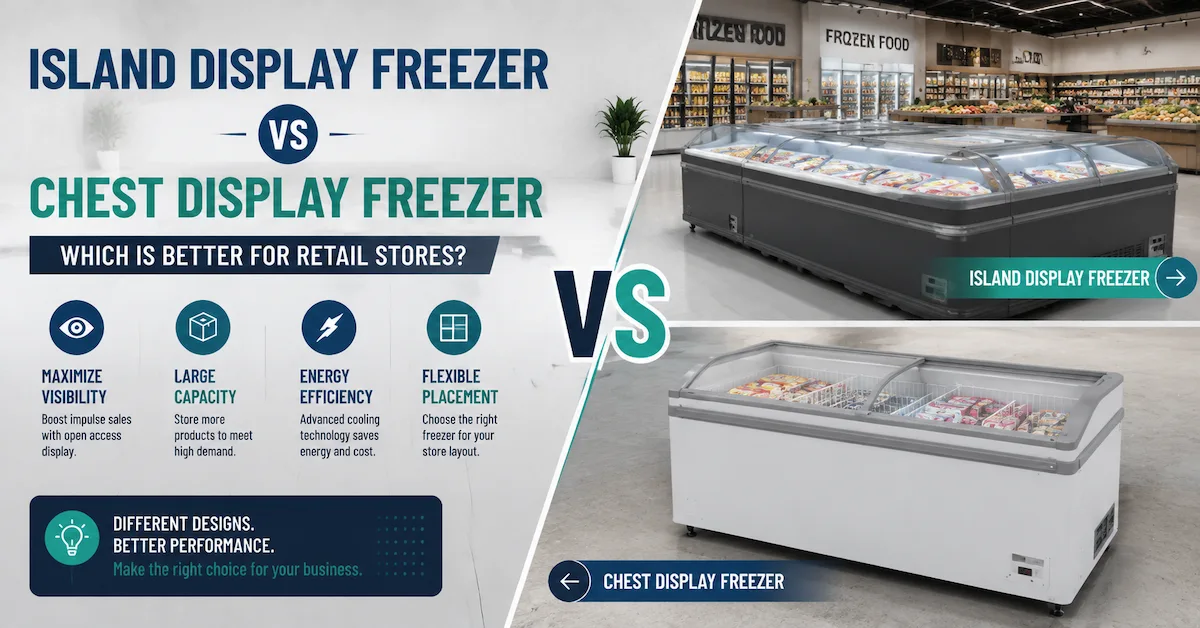
| Island freezer | Large supermarket frozen zones | High capacity and access from multiple sides |
| Chest freezer | Bulk products and backroom storage | Strong insulation and large storage volume |
| Sliding glass freezer | Ice cream, snacks, and self-service retail | Space-efficient access |
| Ice cream display freezer | Frozen desserts and branded retail | Attractive presentation |
| Multi-door display freezer | Large frozen product ranges | Clear category separation |
Buyers can review Snowsea’s available refrigeration categories on the commercial freezer products page.
Factor 1: Match the Freezer to the Product Category
Different frozen products require different display and storage arrangements.
Frozen Meals
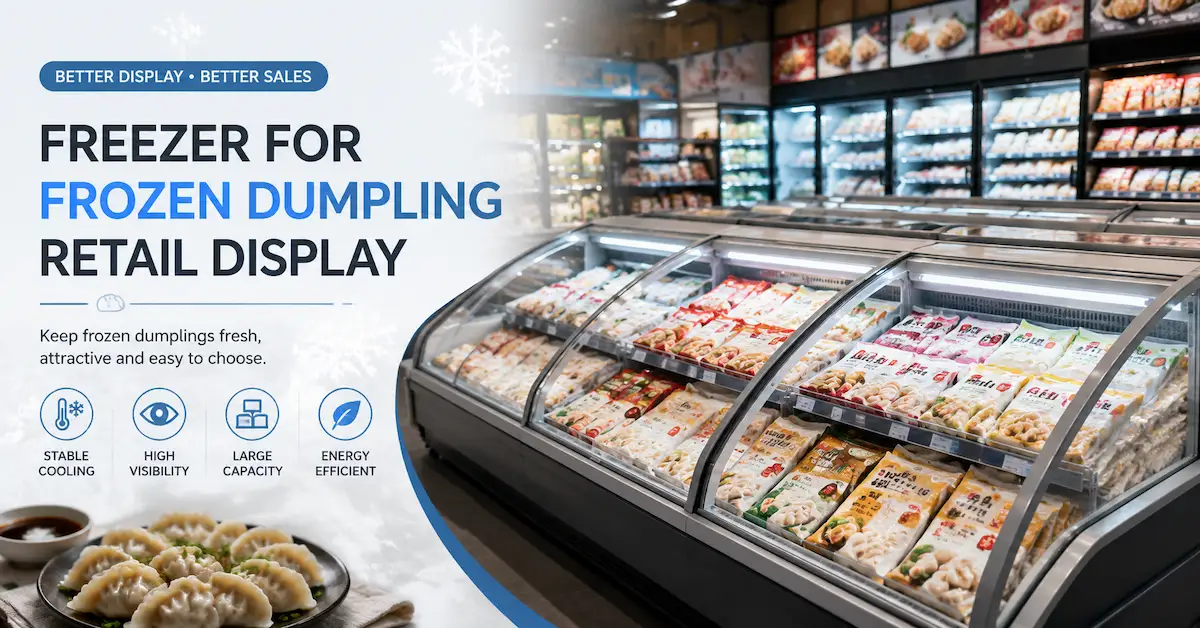
Frozen meal packaging usually needs front-facing visibility and organized shelving. Upright glass door freezers are often suitable because customers can compare products without opening the doors.
Frozen Seafood and Meat
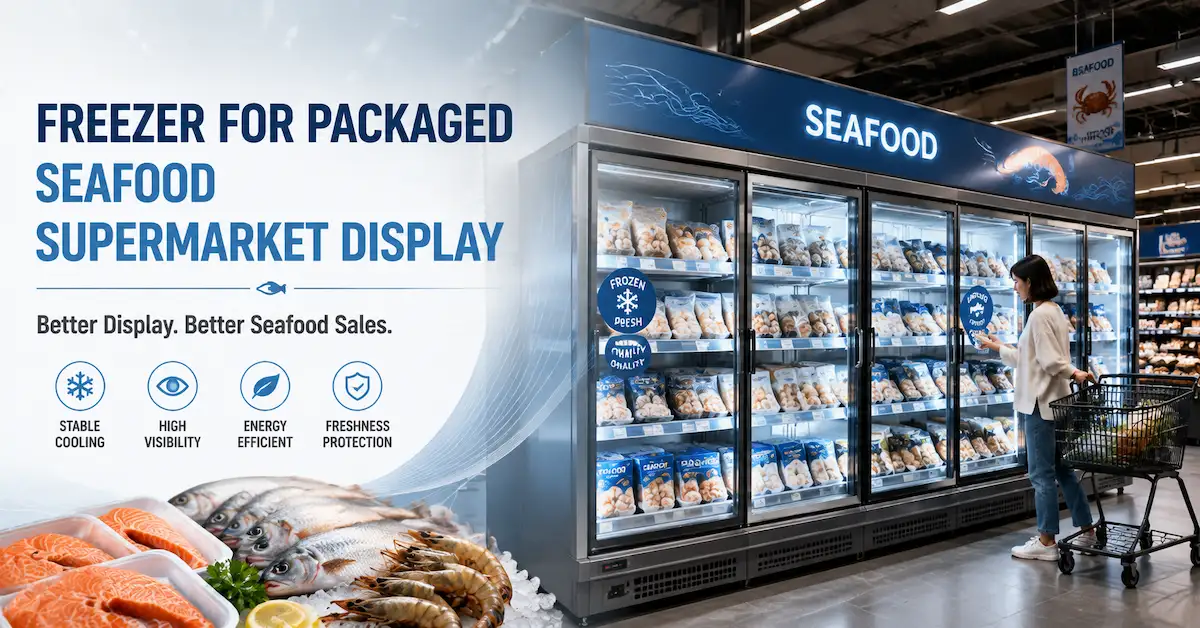
Seafood and meat retailers may require chest freezers, island freezers, or upright display cabinets depending on whether the products are packaged, displayed in bulk, or stored in backroom areas.
Ice Cream and Desserts
Ice cream requires stable low-temperature performance and easy product access. Sliding glass freezers, ice cream display cabinets, and upright glass door freezers are common options.
Frozen Vegetables and Snacks
These products benefit from visible shelving, category separation, and quick restocking. Upright display freezers and island cabinets can support these requirements.
The best manufacturer should ask what products will be sold before recommending a model.
Factor 2: Evaluate Temperature Stability
Reliable freezing performance is the foundation of any retail freezer.
Buyers should evaluate:
- Operating temperature range
- Compressor configuration
- Cooling recovery speed
- Cabinet insulation
- Door or lid sealing
- Defrost method
- Digital controller accuracy
- Ambient temperature adaptability
- Air circulation
- Energy efficiency
Retail freezers often experience frequent door opening and high customer traffic. The cooling system should recover quickly after access and maintain stable conditions throughout the cabinet.
Temperature instability may result in:
- Product softening
- Frost buildup
- Packaging damage
- Reduced food quality
- Customer complaints
- Higher product waste
A reliable manufacturer should provide freezers designed for continuous commercial use rather than occasional operation.
Factor 3: Check Product Visibility and Merchandising Design
Frozen food retail depends heavily on presentation. Customers should be able to see product packaging, compare options, and identify categories quickly.
Important display features include:
- Clear insulated glass
- Internal LED lighting
- Adjustable shelf spacing
- Basket or divider options
- Suitable viewing height
- Clear product labels
- Easy door operation
- Accessible product placement
Good merchandising design can help retailers:
- Display more products clearly
- Support promotional items
- Improve brand visibility
- Reduce customer search time
- Create a more professional frozen section
For distributors supplying retail chains, consistent cabinet design also helps create a uniform store image across multiple locations.
Factor 4: Choose the Right Capacity and Cabinet Dimensions
Freezer capacity should match sales volume, available floor space, and replenishment frequency.
Retailers should consider:
- Internal storage volume
- External cabinet dimensions
- Aisle width
- Door-opening clearance
- Shelf or basket quantity
- Product package dimensions
- Daily sales volume
- Restocking schedule
An oversized freezer increases investment, floor-space use, and energy consumption. An undersized freezer may require frequent restocking and limit product selection.
A professional freezer manufacturer should provide compact, medium, and large-capacity options for different store formats.
Factor 5: Consider Store Layout and Customer Flow
Freezer placement affects the shopping experience.
Retail buyers should evaluate:
- Main customer traffic routes
- Distance between freezer rows
- Visibility from store entrances
- Restocking access
- Electrical connection locations
- Proximity to promotional areas
- Emergency and maintenance access
Island freezers work well in open supermarket zones, while upright cabinets are suitable for wall installations and narrow aisles. Sliding glass models can reduce the opening clearance required in compact stores.
The equipment should support the store layout instead of making customer movement difficult.
Factor 6: Review Energy Efficiency and Operating Cost
Commercial freezers operate continuously, so the purchase price is only one part of the total cost.
Long-term operating cost may be influenced by:
- Compressor efficiency
- Insulation thickness
- Glass performance
- Door sealing
- Lighting system
- Defrost configuration
- Temperature settings
- Maintenance requirements
Retailers operating several stores should compare the total cost of ownership rather than selecting equipment only by initial price.
An energy-efficient freezer can reduce operating expenses across an entire retail network, especially when many units are installed.
Factor 7: Evaluate OEM and Retail Branding Options
Frozen product retailers, distributors, and food brands may need customized freezers to support their commercial identity.
Customization options may include:
- Company logo
- Cabinet color
- Top lightbox
- Side-panel graphics
- Product labels
- Shelf layout
- Basket configuration
- Model numbers
- User manuals
- Packaging design
- Voltage and plug requirements
Custom freezer cabinets can help frozen food brands create dedicated promotional displays inside supermarkets.
Snowsea supports private label, cabinet appearance, packaging, technical specifications, and retail branding through its OEM and custom freezer solutions.
Factor 8: Check Manufacturing and Quality-Control Capability
A strong product sample does not guarantee consistent bulk production. Retailers and distributors should evaluate the manufacturer’s ability to maintain quality across repeat orders.
Important quality checks include:
- Cabinet appearance
- Temperature performance
- Electrical safety
- Compressor operation
- Glass condition
- Door sealing
- Controller accuracy
- Lighting function
- Shelf and basket completeness
- Branding accuracy
- Packaging protection
Quality consistency is especially important for retailers operating multiple stores. Different production batches should maintain the same appearance, dimensions, performance, and branding details.
Factor 9: Review Export Packaging and Delivery Support
International freezer shipments require stronger preparation than local deliveries.
Commercial freezers may contain:
- Glass doors or lids
- Compressors
- Electronic controllers
- Lighting systems
- Shelves and baskets
- Wheels and feet
- Visible coated surfaces
Export packaging may include:
- Protective film
- Foam corner protection
- Reinforced cartons
- Internal fixing materials
- Wooden frame support
- Pallets
- Clear shipping marks
A manufacturer with export experience should also provide packing dimensions, loading quantities, document support, and container-loading information.
Strong packaging reduces shipping damage, replacement costs, and project delays.
Frozen Product Retailer Freezer Buying Checklist
Before requesting a quotation, buyers should prepare:
| Information | Why It Matters |
|---|---|
| Store type | Determines the suitable freezer format |
| Frozen product categories | Defines temperature and display needs |
| Cabinet dimensions | Ensures compatibility with store layout |
| Required capacity | Matches sales and storage volume |
| Door or lid type | Affects access and visibility |
| Branding requirements | Supports retail identity |
| Voltage and plug | Matches the destination market |
| Order quantity | Supports pricing and production planning |
| Packaging requirements | Reduces transportation risk |
| Delivery schedule | Supports store opening or replacement plans |
Providing clear project information helps the manufacturer recommend suitable models and prepare a more accurate quotation.
Common Mistakes Frozen Product Retailers Should Avoid
Choosing Only by Purchase Price
A lower initial price may come with poor insulation, unstable cooling, higher energy consumption, or limited support.
Using the Same Freezer Type for Every Product
Frozen meals, seafood, ice cream, and bulk storage products may require different equipment structures.
Ignoring Display Performance
Retail freezers should support product sales as well as temperature control.
Ordering Without Checking Store Dimensions
A freezer may have suitable capacity but still be too large for the aisle, entrance, or installation location.
Confirming OEM Details Too Late
Logo placement, labels, colors, cartons, voltage, and plug specifications should be approved before production.
Skipping Pre-Shipment Inspection
Inspection helps identify technical, branding, accessory, and packaging problems before international delivery.
Why Snowsea Supports Frozen Product Retailers
Snowsea focuses on commercial refrigeration and freezing equipment for supermarkets, frozen food retailers, convenience stores, food brands, distributors, and food-service businesses.
For frozen retail projects, Snowsea can support:
- Upright display freezer supply
- Island freezer solutions
- Chest freezer supply
- Sliding glass freezer models
- Ice cream freezer solutions
- OEM/ODM customization
- Private label development
- Quality inspection
- Export packaging
- Bulk production
- Repeat-order cooperation
Buyers can learn more about Snowsea’s manufacturing and business capabilities on the About Snowsea page.
FAQ
What should frozen product retailers look for in a freezer manufacturer?
Retailers should evaluate temperature stability, product visibility, cabinet capacity, energy efficiency, manufacturing quality, customization capability, packaging, and supplier support.
Which freezer is best for packaged frozen meals?
Upright glass door freezers are commonly used because they provide clear visibility, adjustable shelving, and efficient category organization.
Can retail freezers be customized for frozen food brands?
Yes. Freezers can be customized with logos, cabinet colors, graphics, lightboxes, shelves, labels, manuals, and packaging.
Should retailers buy display and storage freezers from the same manufacturer?
Working with one capable manufacturer can improve product consistency, communication, spare-parts management, and repeat-order planning.
How can retailers reduce freezer sourcing risks?
Buyers should confirm specifications, evaluate manufacturing capability, inspect quality, review packaging, and choose a supplier with commercial and export experience.
Conclusion
Choosing the right freezer manufacturer for frozen product retailers helps supermarkets, food brands, distributors, and specialty retailers protect frozen products while improving merchandising and store performance.
A professional manufacturer should provide stable cooling, suitable cabinet designs, clear product visibility, OEM customization, quality control, export packaging, and long-term supply support.
Snowsea provides commercial freezer solutions for frozen product retailers, including display freezers, upright freezers, chest freezers, island freezers, sliding glass freezers, and customized refrigeration equipment.
Explore Snowsea’s commercial refrigeration products or review its OEM and custom solutions to begin planning a frozen retail freezer project.