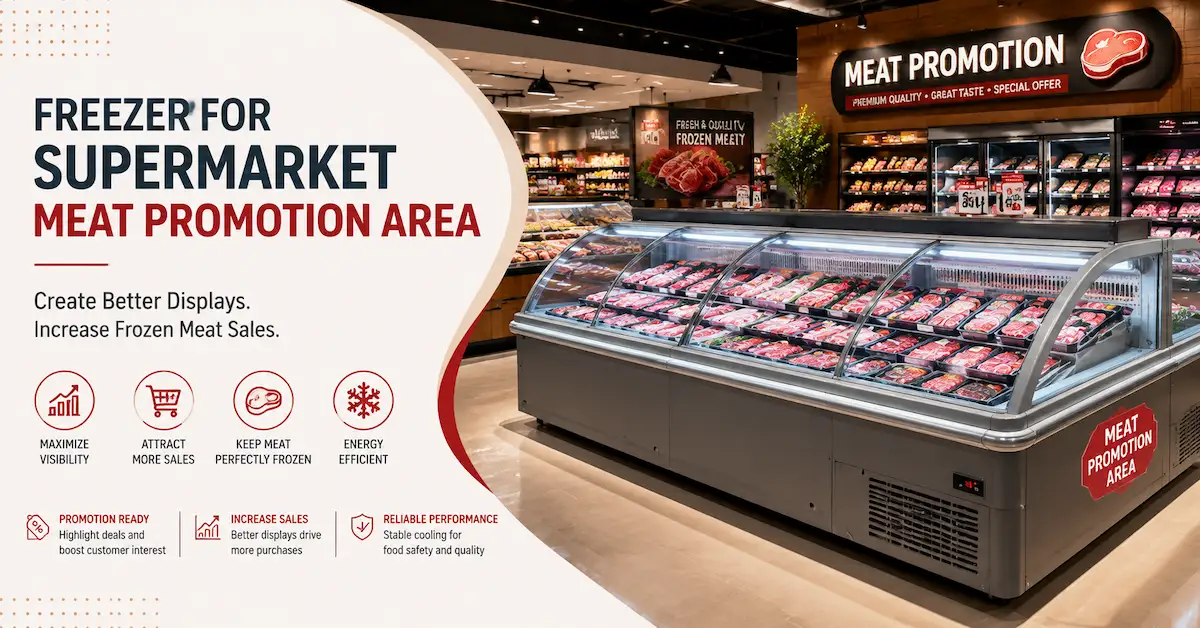
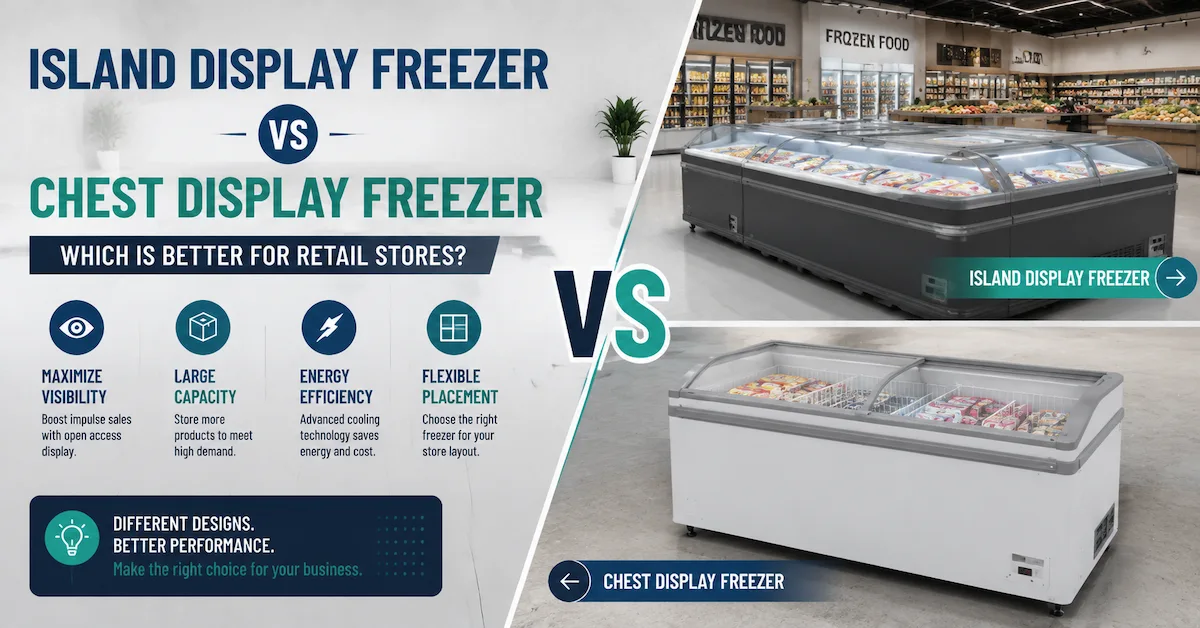
Commercial refrigeration systems operate continuously, making energy efficiency one of the most important factors affecting long-term operating costs. While compressors and cooling systems receive significant attention, insulation often plays an equally important role in refrigeration performance.
Poor insulation allows heat to enter the cabinet, forcing refrigeration systems to work harder and increasing electricity consumption. A properly engineered PU insulation freezer design minimizes thermal transfer and helps maintain stable temperatures under demanding commercial conditions.
For supermarkets, convenience stores, restaurants, and frozen food distributors, improved insulation can lead to lower operating costs and better product preservation.
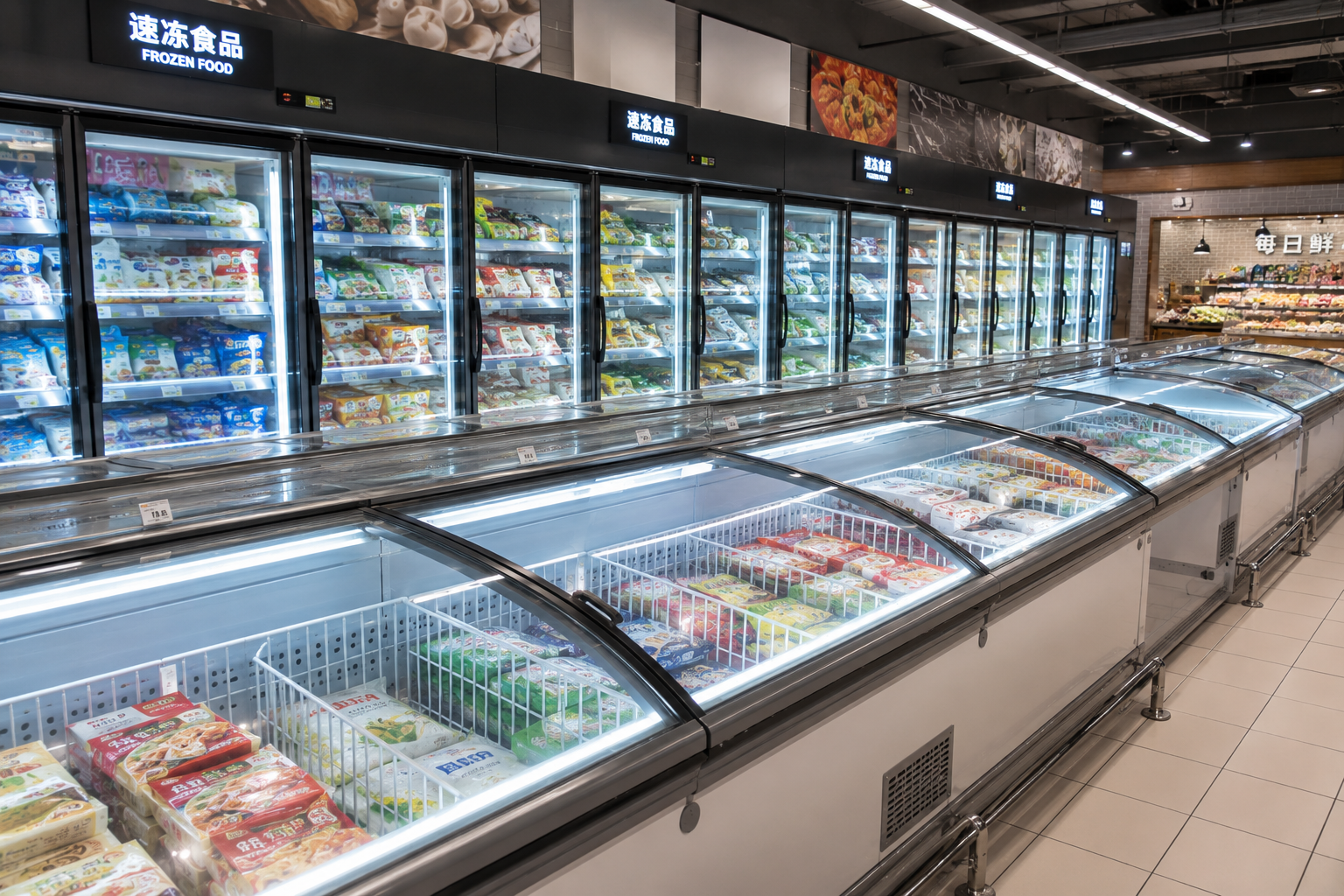
Common Challenges Caused by Poor Freezer Insulation
Many commercial refrigeration operators experience problems related to inadequate thermal insulation.
Common issues include:
- Temperature fluctuations
- Increased compressor cycling
- Higher electricity consumption
- Reduced product shelf life
- Frost buildup
- Uneven cooling performance
These problems become more noticeable in high-traffic environments where freezer doors are opened frequently.
A modern PU insulation freezer design helps address these challenges by creating a highly efficient thermal barrier between the refrigerated interior and surrounding environment.
How PU Insulation Technology Works
Polyurethane (PU) foam is widely recognized as one of the most effective insulation materials used in commercial refrigeration.
High-Density Polyurethane Core
The closed-cell structure reduces heat transfer and improves thermal retention.
Integrated Cabinet Construction
PU foam is injected directly into freezer walls, creating seamless insulation throughout the cabinet.
Reduced Thermal Bridging
Advanced manufacturing techniques minimize heat leakage points.
Long-Term Structural Stability
High-quality insulation maintains performance throughout the freezer's operational lifespan.
Because of these characteristics, a PU insulation freezer design delivers superior refrigeration efficiency compared to many traditional insulation methods.
Comparing Standard Insulation and PU Insulation
| Feature | Standard Insulation | PU Insulation Freezer Design |
|---|---|---|
| Thermal Efficiency | Moderate | Excellent |
| Energy Consumption | Higher | Lower |
| Temperature Stability | Standard | Improved |
| Compressor Workload | Higher | Reduced |
| Frost Formation | More Frequent | Reduced |
| Long-Term Performance | Average | Superior |
The performance advantages become increasingly valuable as energy costs continue to rise.
Solving Real Refrigeration Performance Problems
Rising Energy Costs
Poor insulation increases refrigeration demand and operating expenses.
Temperature Instability
Heat intrusion can affect product quality and storage consistency.
Excessive Compressor Wear
Continuous operation shortens equipment lifespan.
Product Preservation Concerns
Frozen foods require stable temperatures to maintain quality and shelf life.
A properly engineered PU insulation freezer design helps solve these problems while supporting more efficient refrigeration operation.
Key Advantages of PU Insulated Freezers
Better Temperature Retention
Cold air remains inside the cabinet for longer periods.
Improved Energy Efficiency
Lower heat transfer reduces refrigeration workload.
Reduced Operating Costs
Less compressor activity leads to lower electricity consumption.
Enhanced Product Preservation
Stable temperatures help maintain frozen food quality.
Longer Equipment Lifespan
Reduced mechanical stress improves refrigeration reliability.
For many businesses, a PU insulation freezer design becomes an important factor in achieving long-term cost savings.
Ideal Applications for PU Insulated Freezers
Common commercial applications include:
- Supermarkets
- Convenience stores
- Frozen food retailers
- Cold storage facilities
- Restaurants
- Hotels
- Food distribution centers
These environments require reliable refrigeration performance and efficient energy management.
How to Choose the Right PU Insulated Freezer
Evaluate Insulation Thickness
Thicker insulation generally provides better thermal performance.
Review Energy Efficiency Ratings
Compare long-term operating costs rather than purchase price alone.
Consider Cabinet Size
Larger cabinets may require enhanced insulation strategies.
Assess Refrigeration System Design
Insulation and cooling systems should work together efficiently.
Match Application Requirements
Different industries may require different storage temperatures and performance levels.
Selecting the right PU insulation freezer design helps maximize refrigeration efficiency while minimizing operational expenses.
FAQ
Q1: Why is PU insulation commonly used in commercial freezers?
PU foam offers excellent thermal resistance and energy efficiency compared to many alternative insulation materials.
Q2: Does better insulation reduce electricity consumption?
Yes. Improved insulation reduces heat transfer, lowering refrigeration workload and energy usage.
Q3: How does insulation affect freezer temperature stability?
Effective insulation helps maintain more consistent internal temperatures.
Q4: Is PU insulation suitable for supermarkets and convenience stores?
Absolutely. It is widely used in commercial refrigeration applications because of its efficiency and durability.
Building a More Energy-Efficient Refrigeration Strategy
A modern PU insulation freezer design improves temperature stability, reduces energy consumption, and supports reliable long-term refrigeration performance. By investing in high-quality insulation technology, businesses can improve operational efficiency while protecting product quality.
Learn more about our company: https://www.snowseax.com/about-us
Explore our refrigeration products: https://www.snowseax.com/
Visit our FAQ center: https://www.snowseax.com/faqs
Contact our refrigeration specialists: https://www.snowseax.com/contact-us