Many commercial refrigeration operators focus on compressor performance and temperature settings but overlook airflow management. However, even the most powerful refrigeration system can struggle if cold air is not distributed evenly throughout the cabinet.
Poor airflow often creates temperature variations that affect food quality, increase energy consumption, and reduce refrigeration efficiency. A properly engineered showcase airflow cooling design helps maintain consistent temperatures while improving product presentation and reducing operational costs.
For supermarkets, convenience stores, beverage retailers, and food service businesses, optimized airflow is a critical part of modern refrigeration performance.
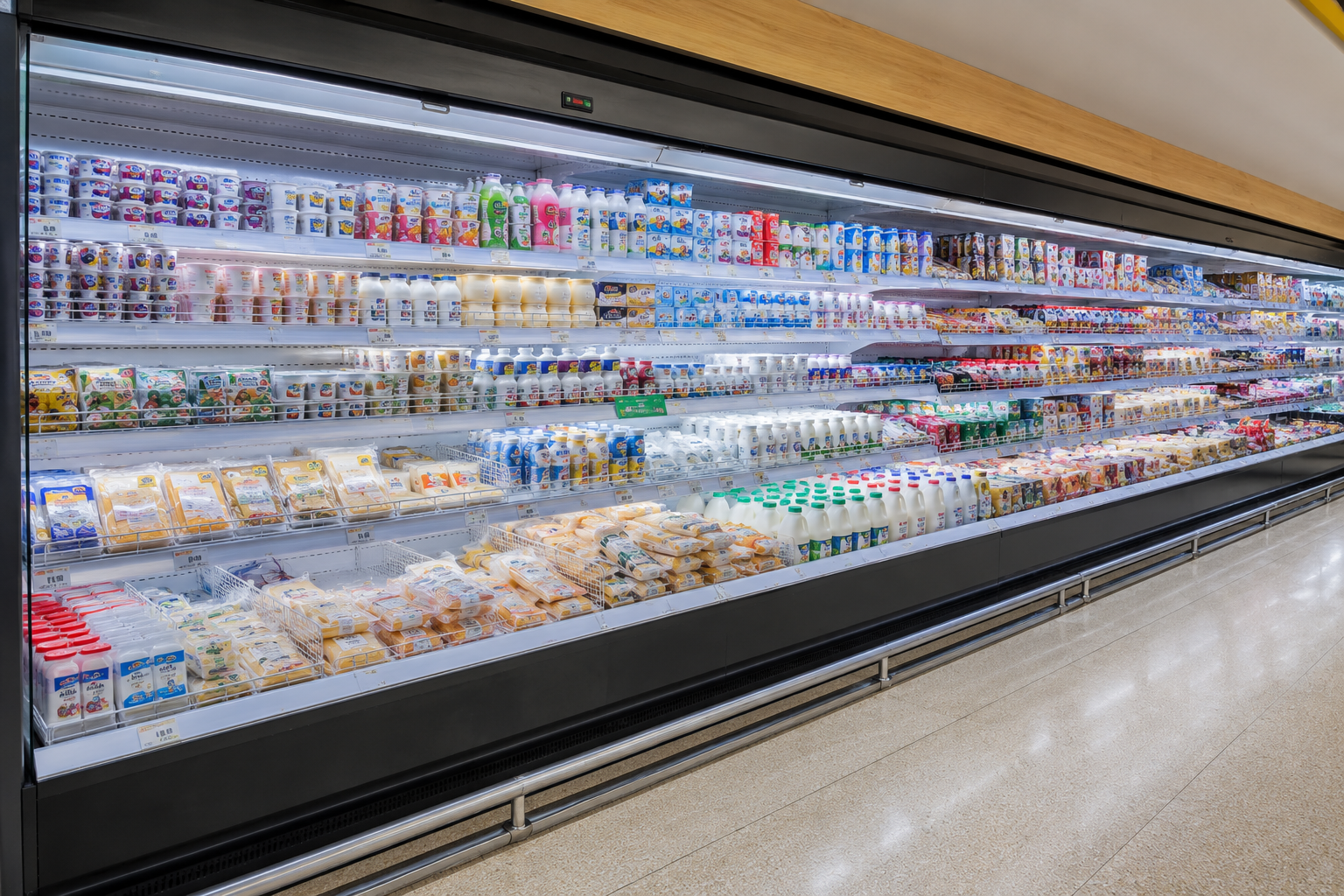
Common Problems Caused by Poor Airflow Design
Many display refrigerators experience operational issues because airflow distribution is uneven.
Common problems include:
- Temperature inconsistency between shelves
- Warm zones near doors
- Product spoilage risks
- Excessive frost accumulation
- Increased compressor workload
- Higher electricity consumption
Without effective airflow circulation, refrigeration systems must work harder to maintain target temperatures.
A modern showcase airflow cooling design addresses these issues through strategic airflow engineering and intelligent refrigeration management.
How Showcase Airflow Cooling Systems Work
Modern refrigeration displays use controlled airflow channels to distribute cold air throughout the cabinet.
Air Distribution Channels
Cold air is directed through carefully designed ventilation paths.
High-Efficiency Fans
Variable-speed fans maintain consistent circulation across all storage levels.
Digital Temperature Monitoring
Sensors continuously monitor cabinet conditions and adjust airflow accordingly.
Return Air Management
Warm air is efficiently collected and recirculated through the cooling system.
Because of these features, a showcase airflow cooling design can maintain more stable temperatures and improve refrigeration performance.
Comparing Traditional Cooling and Optimized Airflow Systems
| Feature | Traditional Display Refrigerator | Showcase Airflow Cooling Design |
|---|---|---|
| Temperature Uniformity | Moderate | Excellent |
| Cooling Recovery Speed | Standard | Faster |
| Energy Efficiency | Average | Improved |
| Product Preservation | Standard | Better |
| Frost Control | Limited | Enhanced |
| Refrigeration Stability | Moderate | High |
The difference becomes especially noticeable in busy retail environments with frequent door openings.
Solving Real Refrigeration Challenges
Uneven Product Temperatures
Airflow optimization helps eliminate hot spots and cold spots.
High Energy Costs
Balanced circulation reduces unnecessary compressor operation.
Product Quality Concerns
Stable temperatures help preserve beverages, dairy products, frozen foods, and packaged goods.
Display Performance Issues
Proper airflow supports anti-condensation systems and improves visibility.
A well-designed showcase airflow cooling design improves both refrigeration performance and customer experience.
Key Advantages for Retail Operators
Better Temperature Stability
Products remain consistently refrigerated throughout the cabinet.
Improved Energy Efficiency
Optimized airflow reduces refrigeration workload.
Faster Cooling Recovery
Cold air is redistributed more effectively after door openings.
Enhanced Product Preservation
Stable conditions help extend product shelf life.
Reduced Maintenance Requirements
Efficient airflow helps reduce frost buildup and refrigeration stress.
For many retailers, a modern showcase airflow cooling design contributes directly to lower operating costs and improved refrigeration reliability.
Best Applications for Airflow-Optimized Refrigeration
Common applications include:
- Supermarkets
- Convenience stores
- Beverage displays
- Dairy product refrigeration
- Restaurant refrigeration
- Hotel retail areas
- Airport convenience stores
These environments require consistent temperatures and reliable refrigeration performance.
How to Select the Right Airflow Cooling System
Evaluate Airflow Distribution
Look for designs that provide even cooling across all shelves.
Consider Cabinet Size
Larger cabinets require stronger airflow management.
Review Fan Technology
Variable-speed systems typically provide better efficiency.
Assess Energy Performance
Lower operating costs often justify higher initial investment.
Match Product Requirements
Different products require different cooling and airflow characteristics.
Choosing the right showcase airflow cooling design helps improve refrigeration performance while reducing long-term operating expenses.
FAQ
Q1: Why is airflow important in commercial refrigeration?
Airflow ensures consistent temperatures throughout the cabinet and helps prevent product quality issues.
Q2: Does better airflow improve energy efficiency?
Yes. Optimized circulation reduces refrigeration workload and compressor cycling.
Q3: Can airflow design reduce frost buildup?
Yes. Balanced airflow helps control moisture and reduce frost accumulation.
Q4: Is airflow management important for beverage displays?
Absolutely. Uniform temperatures help maintain beverage quality and refrigeration performance.
Building More Efficient Refrigeration Displays
A modern showcase airflow cooling design improves temperature consistency, product preservation, and energy efficiency. For retailers seeking reliable refrigeration and better display performance, airflow optimization is one of the most valuable design improvements available.
Learn more about our company: https://www.snowseax.com/about-us
Explore our refrigeration products: https://www.snowseax.com/
Visit our FAQ center: https://www.snowseax.com/faqs
Contact our refrigeration specialists: https://www.snowseax.com/contact-us