For importers, refrigeration distributors, supermarket equipment suppliers, and commercial freezer buyers, understanding commercial freezer export packaging is essential before placing international orders.
Commercial freezers are large and complex products containing:
- Glass doors
- Refrigeration systems
- Compressors
- Electronic controllers
- Electrical components
- Painted metal surfaces
- Shelves and accessories
Unlike small consumer products, commercial refrigeration equipment requires professional packaging to withstand:
- Factory handling
- Container loading
- Ocean transportation
- Port operations
- Customs inspections
- Warehouse unloading
- Final installation
Poor packaging can lead to:
- Broken glass panels
- Cabinet scratches
- Bent components
- Refrigerant-system damage
- Missing accessories
- Water damage
- Customer complaints
- Higher replacement costs
A reliable freezer manufacturer should provide not only high-quality products but also suitable export packaging solutions.
Snowsea supports international freezer projects with product manufacturing, quality inspection, export packaging, and container-loading coordination for global buyers.
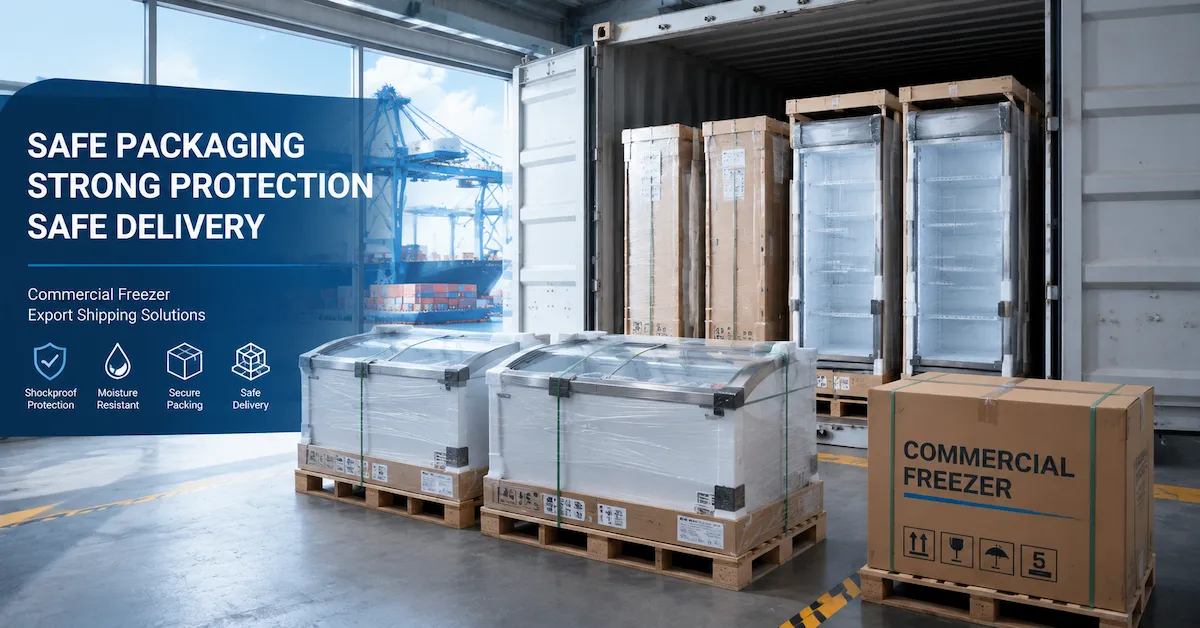
Why Commercial Freezer Export Packaging Matters
International transportation exposes commercial freezers to many risks.
During shipping, products may experience:
- Vibration
- Impact
- Compression
- Humidity
- Temperature changes
- Multiple loading and unloading operations
A freezer that leaves the factory in perfect condition can still arrive damaged if packaging is insufficient.
Effective packaging helps:
- Protect product appearance
- Prevent transportation damage
- Reduce insurance claims
- Improve customer satisfaction
- Simplify warehouse handling
- Support successful installation
For international buyers, packaging should be considered part of the product quality, not simply an additional shipping expense.
Main Risks During Freezer Export Shipping
Before selecting packaging methods, buyers should understand common transportation risks.
1. Glass Damage
Many commercial freezers include:
- Glass doors
- Sliding glass lids
- Curved glass panels
- Display windows
Glass is one of the most sensitive parts during transportation.
Possible risks include:
- Cracks
- Scratches
- Edge damage
- Pressure damage
- Vibration damage
Glass protection requires:
- Foam cushioning
- Corner protection
- Strong external packaging
- Proper loading methods
2. Cabinet Surface Damage
Commercial freezers often have finished surfaces designed for customer-facing environments.
Possible problems include:
- Scratches
- Dents
- Paint damage
- Surface contamination
Protective film and internal cushioning help maintain the appearance after long-distance shipping.
3. Compressor and Refrigeration System Damage
The refrigeration system includes precision components such as:
- Compressor
- Copper pipes
- Condenser
- Electrical connections
Strong impact or improper handling may affect refrigeration performance.
Packaging should prevent:
- Excessive movement
- Strong vibration
- Pressure on refrigeration components
4. Moisture and Humidity Damage
Ocean transportation can expose products to:
- High humidity
- Salt air
- Condensation
- Rain during handling
Moisture protection is especially important for:
- Electrical components
- Metal surfaces
- Packaging materials
Common Packaging Materials for Freezer Export Shipping
A professional export package usually combines multiple protective materials.
| Packaging Material | Main Purpose |
|---|---|
| Protective film | Prevent surface scratches |
| Foam inserts | Absorb impact |
| Corner protectors | Protect edges |
| Carton box | External protection |
| Wooden frame | Reinforce large equipment |
| Pallet base | Improve handling |
| Plastic wrapping | Moisture protection |
| Straps | Secure packaging |
The final packaging design depends on:
- Freezer size
- Product weight
- Shipping method
- Destination market
- Transportation distance
Protective Film for Cabinet Surfaces
Protective film is commonly applied to commercial freezer surfaces before final packaging.
It helps prevent:
- Scratches
- Dust contamination
- Minor handling marks
It is especially useful for:
- Stainless-steel surfaces
- Painted cabinets
- Display panels
- Decorative areas
The film should be removed after installation to reveal the finished product surface.
Foam Protection for Internal and External Components
Foam is one of the most important materials in freezer export packaging.
It protects:
- Glass corners
- Door frames
- Handles
- Control panels
- Cabinet edges
- Internal accessories
Good foam packaging should:
- Fit the product shape
- Absorb impact
- Prevent movement
- Protect vulnerable areas
For glass-door freezers, additional foam reinforcement may be required around the door structure.
Carton Packaging for Commercial Freezers
Carton packaging provides an external protective layer.
A suitable export carton should consider:
- Product weight
- Shipping distance
- Stacking pressure
- Handling conditions
Important carton features include:
- Strong cardboard structure
- Clear handling marks
- Correct product information
- Moisture-resistant treatment
Carton labels may include:
- Product model
- Quantity
- Handling instructions
- Shipping marks
- Destination information
Wooden Frame Packaging for Large Freezers
Large commercial freezers often require stronger protection than standard cartons.
Wooden frames provide:
- Structural support
- Impact resistance
- Better forklift handling
- Improved stacking protection
They are commonly used for:
- Large island freezers
- Multi-door display freezers
- Customized refrigeration equipment
- Heavy commercial cabinets
A wooden frame can help prevent:
- Cabinet deformation
- External impact
- Packaging collapse
For long-distance ocean shipping, reinforced wooden protection may significantly reduce transportation risks.
Pallet Packaging for Easier Handling
A pallet base allows easier movement during:
- Factory handling
- Warehouse storage
- Container loading
- Customer unloading
Benefits include:
- Forklift compatibility
- Reduced direct floor contact
- Improved stability
- Faster loading operations
The pallet size should match the freezer dimensions to maintain balance.
An oversized or undersized pallet may create:
- Unstable transportation
- Space waste
- Handling difficulties
Moisture Protection During Ocean Transportation
Ocean shipping may expose freezers to high humidity.
Moisture protection methods may include:
- Plastic wrapping
- Moisture barriers
- Desiccant bags
- Sealed protective covers
- Waterproof packaging layers
Protection is especially important for:
- Electrical components
- Metal surfaces
- Documentation
- Accessories
Buyers shipping to tropical or humid regions should discuss additional moisture protection with the supplier.
Glass Door Protection Requirements
Glass-door freezers require special attention.
Protection methods may include:
- Foam corner guards
- Full glass surface protection
- Cardboard separators
- Reinforced frames
- Anti-impact materials
Inspectors should confirm:
- Glass is stable
- Doors are locked or secured
- Protective materials are correctly installed
- No pressure is applied to glass surfaces
Glass damage is one of the most common and costly shipping problems.
Accessory Packaging Requirements
Commercial freezers often include separate accessories.
Examples include:
- Shelves
- Baskets
- Door keys
- Handles
- Manuals
- Spare parts
- Installation hardware
Accessories should be:
- Packed separately
- Clearly labeled
- Listed on packing documents
- Protected from movement
Missing accessories may delay installation even when the freezer itself arrives safely.
Export Labels and Shipping Marks
Correct labeling helps identify and handle products during transportation.
Packaging labels may include:
- Product model
- Serial number
- Quantity
- Gross weight
- Net weight
- Carton number
- Country of origin
- Customer reference
- Handling instructions
Common handling marks include:
- Fragile
- This side up
- Keep dry
- Handle with care
- Do not stack
For OEM projects, buyers may also require:
- Private-label cartons
- Custom shipping marks
- Distributor information
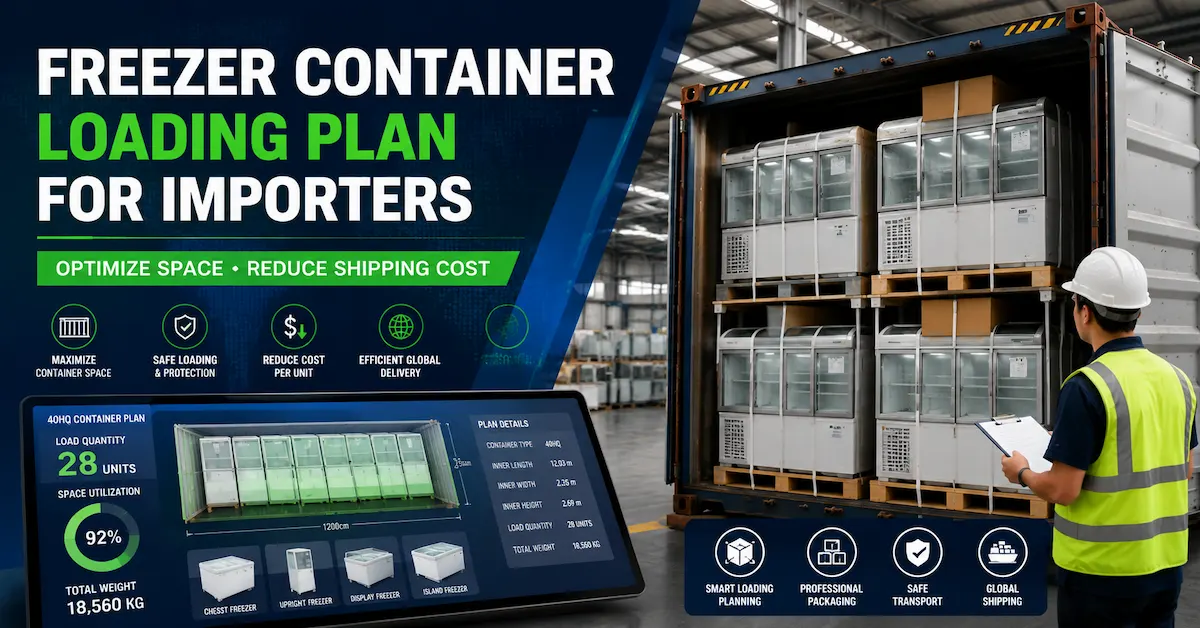
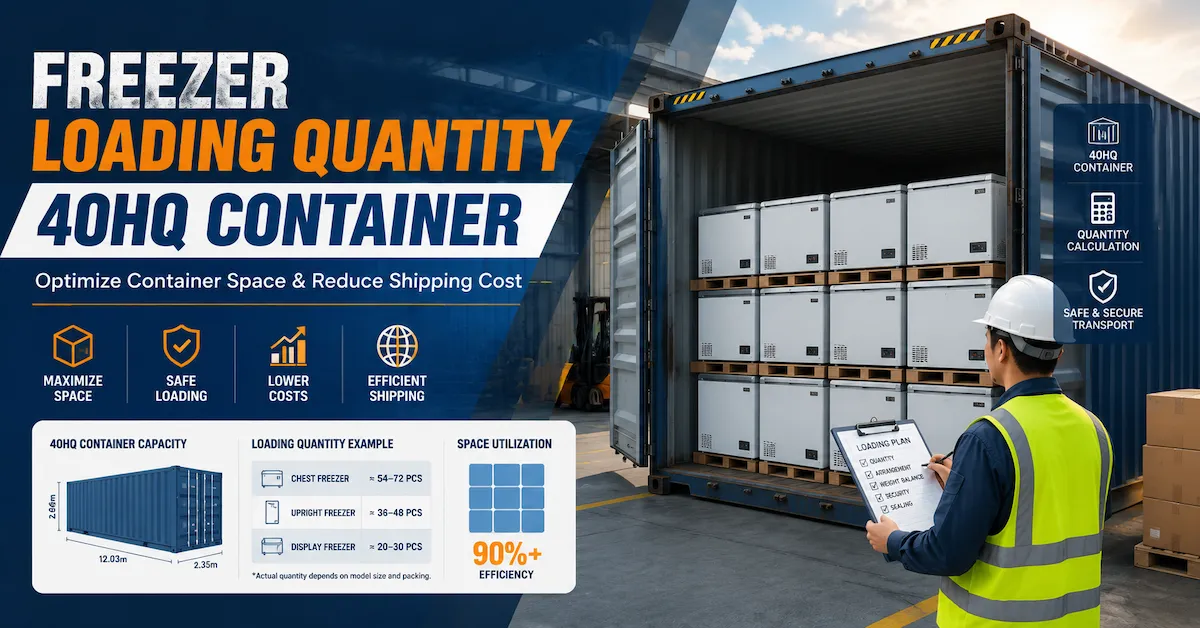
Container Loading Considerations
Packaging is only one part of safe freezer export shipping.
Correct container loading is equally important.
Before loading, buyers should confirm:
- Container size
- Product arrangement
- Weight distribution
- Loading sequence
- Securing methods
During loading, avoid:
- Excessive pressure between units
- Unstable stacking
- Blocking doors
- Incorrect forklift handling
Freezers should be positioned securely to reduce movement during transportation.
Snowsea supports export preparation and container-loading coordination for international orders.
How Packaging Requirements Differ by Shipping Method
Different transportation methods may require different packaging levels.
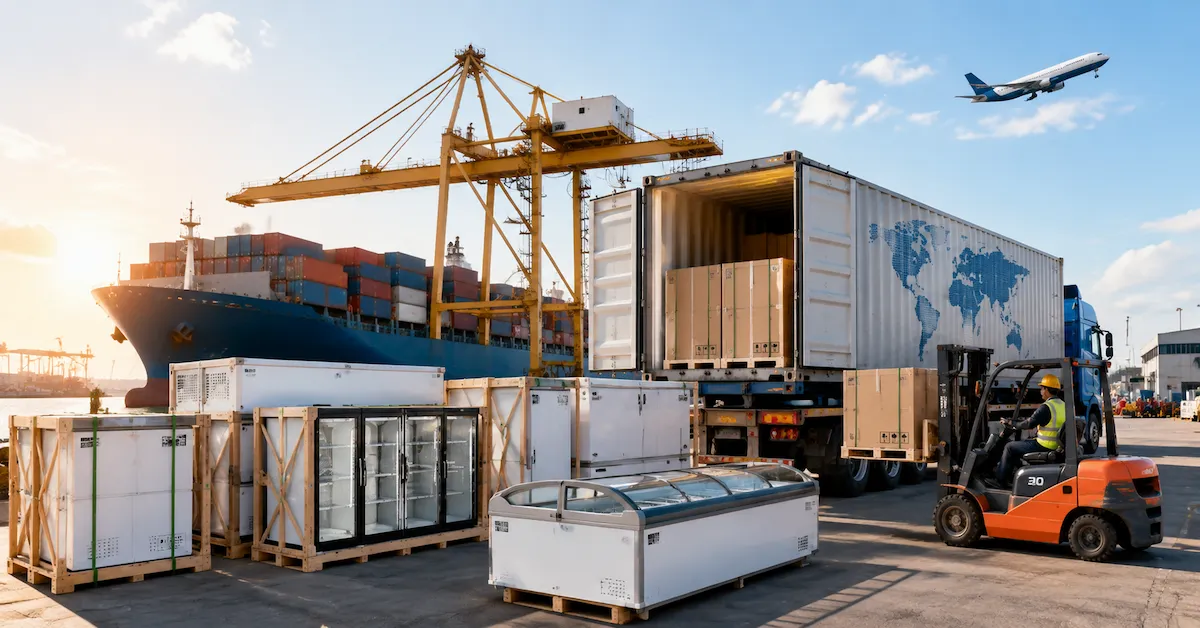
Ocean Shipping
Most commercial freezers are exported by sea.
Important requirements:
- Strong external protection
- Moisture resistance
- Secure pallet or frame
- Long-distance durability
Air Shipping
Air transportation usually requires:
- Lighter packaging
- Compact dimensions
- Strong impact protection
Truck Transportation
Domestic or regional transport requires:
- Vibration protection
- Secure loading
- Easy unloading
The packaging method should match the transportation environment.
How to Evaluate a Freezer Supplier’s Packaging Capability
When selecting a manufacturer, buyers should ask:
- What export packaging methods are available?
- Are wooden frames provided?
- How are glass doors protected?
- Are products tested after packaging?
- Can the supplier provide loading photos?
- What packaging standards are used for ocean shipping?
- Can packaging be customized?
A professional supplier should provide:
- Packaging specifications
- Loading plans
- Product protection recommendations
- Export experience
Packaging capability is an important part of supplier evaluation.
Packaging Checklist for Freezer Export Buyers
| Item | Check |
|---|---|
| Cabinet protection | Protective film applied |
| Glass protection | Foam and reinforcement installed |
| Door protection | Secured correctly |
| Accessories | Packed and labeled |
| Carton | Strong export quality |
| Wooden frame | Required for large units |
| Pallet | Suitable size and strength |
| Moisture protection | Included when needed |
| Labels | Correct shipping information |
| Container | Clean and suitable |
| Loading | Secure arrangement |
| Documents | Packing list completed |
Common Freezer Export Packaging Mistakes
Using Standard Packaging for Long-Distance Shipping
Domestic packaging may not be suitable for ocean transportation.
Ignoring Glass Protection
Glass damage can create expensive replacement problems.
Not Considering Humidity
Moisture protection is important for international shipments.
Poor Container Loading
Even good packaging can fail if products are loaded incorrectly.
Missing Accessory Management
Small missing parts can delay installation.
Choosing Suppliers Without Export Experience
Experienced exporters understand packaging and logistics requirements.
How Snowsea Supports Freezer Export Packaging
Snowsea provides commercial refrigeration solutions for international buyers, including:
- Product manufacturing
- OEM customization
- Quality inspection
- Export packaging
- Container loading support
- Shipping coordination
Snowsea products include:
- Chest freezers
- Upright freezers
- Display freezers
- Island freezers
- Refrigeration cabinets
- Customized commercial refrigeration equipment
Learn more about Snowsea:
https://www.snowseax.com/about-us
FAQ
What packaging is needed for commercial freezer export shipping?
Commercial freezer export packaging usually includes protective film, foam protection, cartons, pallets, wooden frames, moisture protection, and secure container loading methods.
Do commercial freezers need wooden crates for export?
Large or fragile freezer models may require wooden frames or reinforced packaging, especially for long-distance ocean shipping.
How are freezer glass doors protected during shipping?
Glass doors are protected using foam guards, corner protection, reinforced packaging, and secure loading methods.
Why is moisture protection important for freezer exports?
International shipping exposes products to humidity and condensation, which may affect electrical parts and metal surfaces.
Can freezer packaging be customized?
Yes. Packaging can be customized with private labels, shipping marks, reinforced structures, and customer-specific requirements.
How can buyers reduce freezer shipping damage?
Choose an experienced supplier, confirm packaging standards, inspect products before loading, and ensure proper container loading.
Conclusion
Proper commercial freezer export packaging plays an important role in protecting refrigeration equipment during international transportation.
The right packaging solution should protect glass components, cabinet surfaces, refrigeration systems, electrical parts, and accessories while supporting safe container loading.
Buyers should evaluate not only freezer quality but also the supplier’s export packaging capability, logistics experience, and quality-control process.
Snowsea provides commercial refrigeration solutions with OEM customization, export packaging, inspection support, and international shipping experience.
Explore Snowsea’s commercial refrigeration products or contact Snowsea through the OEM and ODM service page for your export freezer project.