What Is a Freezer for Convenience Store Frozen Food?
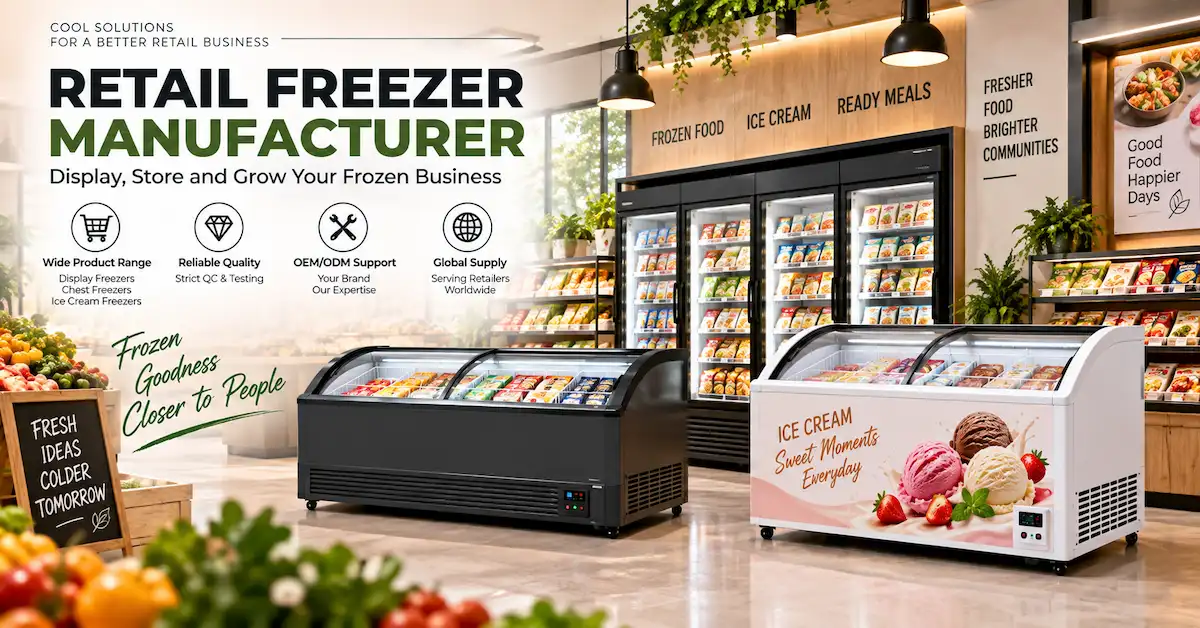
A Freezer for Convenience Store Frozen Food is a commercial refrigeration unit designed to store and display frozen products in convenience store environments.
Unlike large supermarket refrigeration systems, convenience store freezers need to balance:
- Limited floor space
- Product visibility
- Storage efficiency
- Energy consumption
- Easy customer access
A suitable freezer helps convenience stores maintain frozen food quality while improving product presentation and daily operation efficiency.
Common frozen food products stored in convenience stores include:
- Frozen meals
- Ice cream
- Frozen pizza
- Frozen snacks
- Meat products
- Seafood products
Snowsea provides commercial refrigeration products designed for retail stores, food service businesses, supermarkets, and global B2B refrigeration projects.
Why Do Convenience Stores Need Dedicated Frozen Food Freezers?
Frozen food sales depend heavily on reliable refrigeration and effective product display.
A professional freezer solution helps convenience stores improve:
Product Quality Protection
Stable freezing conditions help maintain:
- Product texture
- Food quality
- Storage life
Temperature fluctuations may negatively affect frozen food performance.
For temperature requirements, see Snowsea's commercial freezer temperature range guide.
Better Product Visibility
Convenience stores rely on quick customer decisions.
A display freezer helps customers:
- See products clearly
- Compare options quickly
- Access products easily
Glass door designs are especially useful for retail environments.
For glass door technology, see Snowsea's commercial freezer glass door thickness guide.
Efficient Use of Store Space
Convenience stores usually have limited space.
The right freezer design helps maximize:
- Product quantity
- Floor utilization
- Customer flow
Types of Freezers for Convenience Store Frozen Food
Different store layouts require different freezer solutions.
Upright Glass Door Freezer
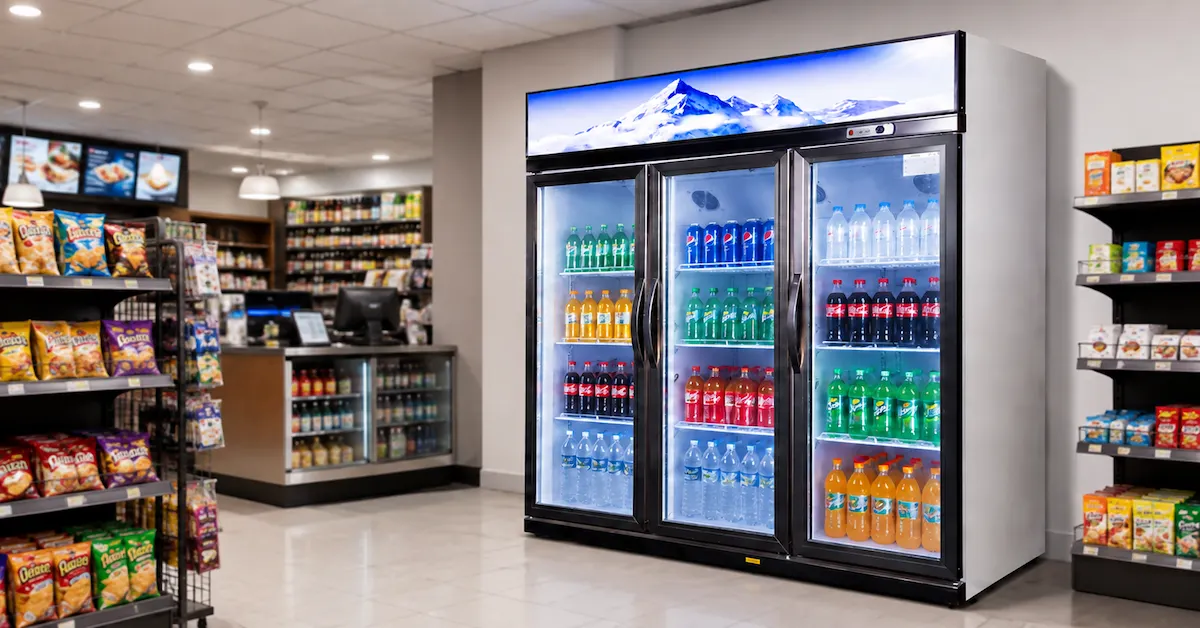
Upright display freezers are commonly used in convenience stores.
Advantages:
- Vertical storage
- Clear product visibility
- Efficient use of floor space
Suitable for:
- Frozen meals
- Ice cream
- Frozen snacks
- Ready-to-cook foods
Chest Freezer
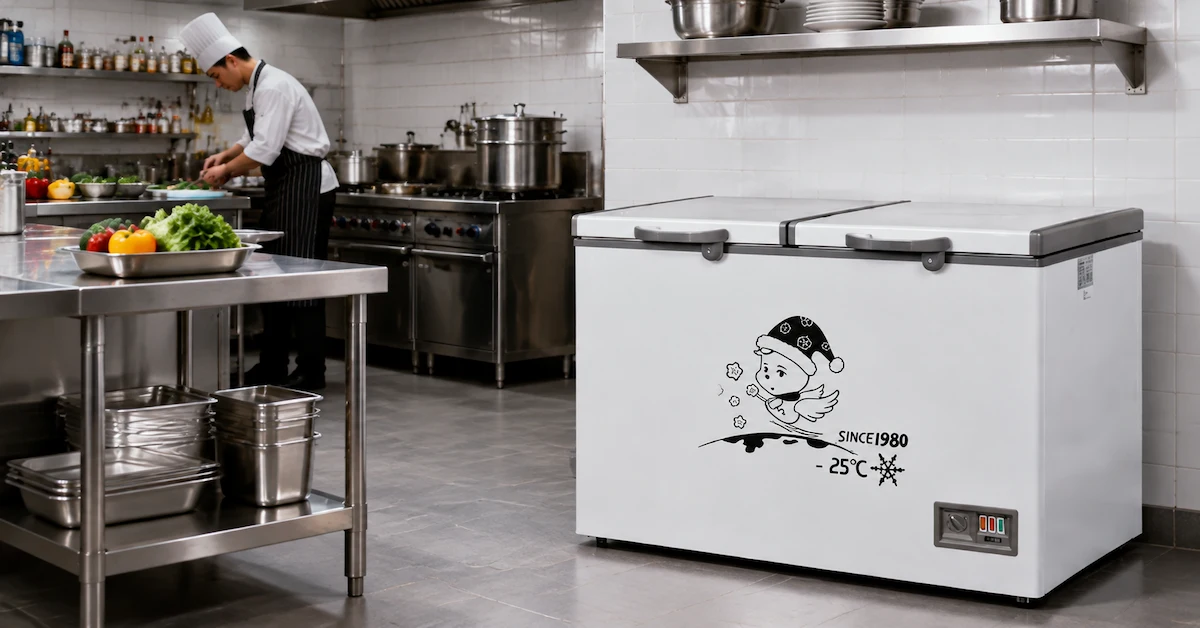
Chest freezers provide large storage capacity.
Advantages:
- Higher storage volume
- Strong cold retention
- Suitable for bulk frozen products
They are commonly used for:
- Backup inventory
- Bulk frozen food storage
Island Display Freezer
Island freezers provide open access for customers.
Advantages:
- Large display area
- Easy product browsing
- High customer interaction
Suitable for larger convenience stores and retail spaces.
Key Factors When Choosing a Freezer for Convenience Store Frozen Food
Storage Capacity
Capacity is one of the most important selection factors.
Retailers should consider:
- Product variety
- Daily sales volume
- Restocking frequency
- Available store space
A freezer with insufficient capacity may require frequent replenishment.
A freezer that is too large may increase unnecessary operating costs.
For storage planning, see Snowsea's commercial freezer shelf capacity guide.
Temperature Stability
Frozen food requires consistent temperature performance.
A reliable freezer should provide:
- Stable cooling
- Fast temperature recovery
- Uniform temperature distribution
This helps maintain product quality during:
- Frequent door opening
- Product loading
- Daily operation
Energy Efficiency
Energy consumption directly affects convenience store operating costs.
Efficient freezer designs help reduce:
- Electricity usage
- Cooling losses
- Long-term operating expenses
Important factors include:
- Compressor efficiency
- Insulation performance
- Glass door design
- Refrigeration system optimization
For energy solutions, see Snowsea's Energy Efficiency Solutions.
Product Display Design
Frozen food retail depends on visibility and accessibility.
Important display features include:
- Clear glass doors
- LED lighting
- Adjustable shelves
- Organized product layout
A better display design helps increase customer engagement.
How to Choose the Right Convenience Store Frozen Food Freezer?
Evaluate Store Layout
Before selecting equipment, consider:
- Available floor area
- Customer movement
- Display location
- Power availability
Compact stores may prefer upright freezers, while larger stores may use multiple freezer types.
Identify Product Categories
Different products require different storage solutions.
Examples:
Frozen Meals
Need:
- Easy product access
- Organized shelves
- Good visibility
Ice Cream Products
Need:
- Stable freezing conditions
- Attractive display
Frozen Pizza
Need:
- Suitable shelf spacing
- Efficient storage layout
Consider Daily Operation Requirements
Convenience stores often operate for long hours.
Important considerations include:
- Equipment reliability
- Easy cleaning
- Low maintenance requirements
Convenience Store Freezer Applications
Small Convenience Stores
Usually require:
- Compact footprint
- Efficient storage
- Easy customer access
Upright glass door freezers are often suitable.
Chain Convenience Stores
Large chains require:
- Standardized equipment
- Reliable supply
- Consistent performance
OEM and customized solutions may help meet different store formats.
Gas Station Convenience Stores
These locations often focus on:
- Quick customer selection
- High product visibility
- Space efficiency
Frozen Food Storage and Air Circulation
Air circulation affects freezer performance.
A properly designed refrigeration system helps:
- Maintain temperature uniformity
- Improve cooling efficiency
- Reduce cold spots
The fan system should work effectively with evaporator design.
For airflow technology, see Snowsea's commercial freezer fan motor selection guide.
Freezer Size and Space Planning
Convenience stores need to balance:
- Storage capacity
- Customer movement
- Display requirements
Large freezers provide more storage but require more floor space.
Small freezers save space but may limit product selection.
The right choice depends on:
- Store size
- Sales volume
- Product strategy
Common Mistakes When Choosing Convenience Store Freezers
Selecting Only Based on Price
Low-cost equipment may result in:
- Higher energy costs
- More maintenance
- Shorter service life
Ignoring Energy Consumption
A freezer running continuously can significantly affect operating expenses.
Choosing Incorrect Capacity
Incorrect sizing may cause:
- Product shortage
- Wasted space
- Higher operating costs
Ignoring Product Display
Retail freezers should not only store products but also support sales.
How Manufacturers Test Commercial Freezers
Professional refrigeration manufacturers perform multiple tests.
Cooling Performance Testing
Checks:
- Temperature stability
- Cooling recovery
Energy Efficiency Testing
Evaluates:
- Power consumption
- Refrigeration performance
Structural Testing
Verifies:
- Cabinet strength
- Door performance
- Component reliability
Long-Term Reliability Testing
Ensures:
- Stable operation
- Product durability
For quality evaluation methods, see Snowsea's commercial freezer quality testing guide.
What Information Should You Send a Freezer Supplier?
To receive suitable recommendations, buyers should provide:
- Store type
- Available installation space
- Frozen food categories
- Required capacity
- Temperature requirements
- Display preferences
- Energy efficiency targets
- Quantity requirements
- Certification requirements
- Customization needs
FAQ
What is the best freezer for convenience store frozen food?
The best freezer depends on store size, product categories, display requirements, and storage capacity needs.
Should convenience stores use upright or chest freezers?
Upright freezers are usually better for product display, while chest freezers provide larger storage capacity.
Why are glass door freezers popular in convenience stores?
Glass door freezers improve product visibility and help customers quickly select products.
What temperature should frozen food freezers maintain?
Commercial frozen food freezers should maintain stable temperatures according to frozen product storage requirements.
How can convenience stores reduce freezer energy costs?
Energy costs can be reduced through efficient compressors, better insulation, optimized airflow, and energy-efficient freezer designs.
How much freezer capacity does a convenience store need?
Capacity depends on product range, sales volume, available space, and restocking frequency.
Can convenience store freezers be customized?
Yes. Commercial refrigeration suppliers can customize size, layout, shelves, and technical specifications.
What maintenance does a convenience store freezer require?
Regular cleaning, temperature checks, and component inspections help maintain performance.
Can one freezer store different frozen food products?
Yes, but product organization and temperature requirements should be considered.
Can Snowsea provide convenience store freezer solutions?
Yes. Snowsea provides commercial refrigeration solutions based on retail application requirements.
Conclusion
A Freezer for Convenience Store Frozen Food is an important investment for retailers who need reliable frozen storage and effective product display.
The right freezer should provide:
- Stable temperature control
- Suitable storage capacity
- Efficient energy performance
- Easy customer access
- Reliable long-term operation
For convenience stores, selecting the correct commercial freezer helps protect frozen food quality while improving sales opportunities and operational efficiency.
Snowsea supports global B2B customers with commercial refrigeration products and OEM/ODM solutions. Explore Snowsea's commercial refrigeration products, review its OEM/ODM solutions, or contact Snowsea with your convenience store freezer requirements, application details, and project goals.