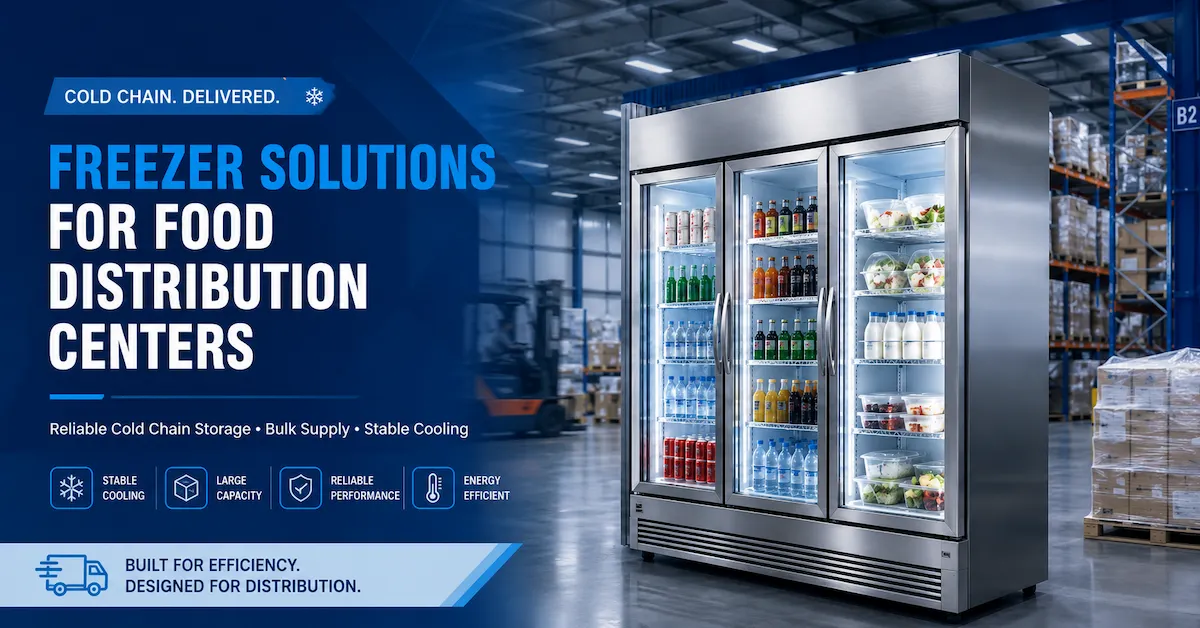
For frozen food distributors, logistics companies, warehouse operators, and food supply chain businesses, choosing the right freezer solutions for food distribution centers is essential for maintaining product quality, improving warehouse efficiency, and supporting large-scale cold chain operations.
Food distribution centers serve as important links between manufacturers, suppliers, retailers, restaurants, and consumers. Unlike small commercial kitchens or retail stores, distribution facilities need refrigeration equipment that can handle:
- Large inventory volumes
- Frequent product movement
- Long storage periods
- Continuous operation
- Different frozen product categories
- Strict temperature requirements
A reliable freezer system helps distribution centers reduce product risks, improve logistics efficiency, and maintain stable supply chain operations.
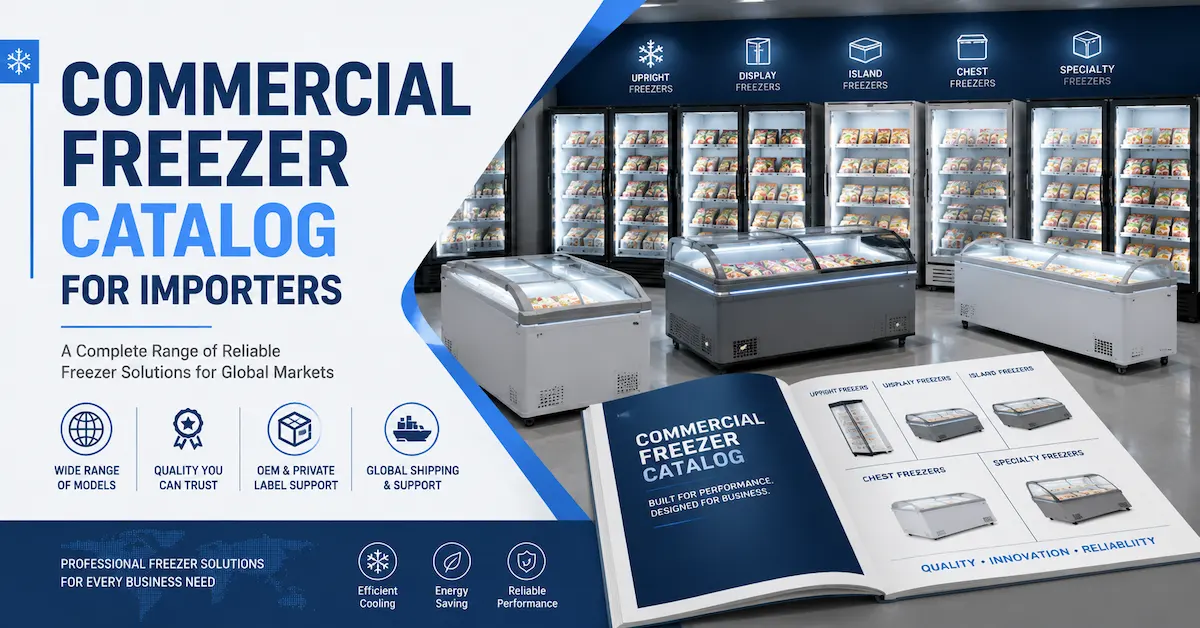
Snowsea provides commercial refrigeration solutions including chest freezers, upright freezers, display freezers, island freezers, refrigeration cabinets, refrigerators, and customized cold storage equipment. Snowsea supports OEM/ODM projects, bulk production, quality inspection, export packaging, and long-term refrigeration partnerships.
Why Food Distribution Centers Need Professional Freezer Solutions
Food distribution centers operate differently from retail stores.
Retail freezers focus heavily on product display, while distribution centers prioritize:
- Storage capacity
- Temperature stability
- Loading efficiency
- Inventory management
- Operational reliability
A suitable freezer solution helps distribution companies:
- Protect frozen products
- Reduce inventory losses
- Improve warehouse organization
- Support larger customer networks
- Maintain consistent product quality
Poor refrigeration planning can result in:
- Temperature fluctuations
- Product waste
- Higher energy costs
- Shipment delays
- Customer complaints
For growing food distributors, refrigeration equipment is a long-term operational investment.
Understanding Freezer Requirements in Distribution Centers
Different distribution businesses have different refrigeration needs.
Frozen Food Distributors
Usually require:
- Large-capacity freezer systems
- Efficient product storage
- Reliable temperature control
Products may include:
- Frozen meals
- Frozen vegetables
- Frozen seafood
- Meat products
- Ice cream
Restaurant Supply Distributors
Usually require:
- Flexible storage solutions
- Easy inventory access
- Multiple temperature zones
Cold Chain Logistics Companies
Usually require:
- Continuous operation
- High reliability
- Large storage capacity
- Export-ready equipment
The right freezer solution depends on product type, warehouse size, and distribution workflow.
Step 1: Analyze Distribution Center Storage Requirements
Before selecting equipment, businesses should evaluate their actual storage needs.
Important factors include:
- Daily product volume
- Inventory turnover
- Storage duration
- Product categories
- Warehouse layout
- Loading frequency
- Expansion plans
Buyers should consider:
Current Demand
How much frozen product needs to be stored daily?
Peak Demand
Will inventory increase during:
- Holidays
- Seasonal sales
- Promotional periods
- Large customer orders
Future Expansion
Will the distribution center increase:
- Customer numbers
- Product categories
- Geographic coverage
Accurate planning prevents both insufficient storage and unnecessary investment.
Step 2: Choose Suitable Freezer Types
Different freezer formats support different warehouse applications.
| Freezer Type | Application |
|---|---|
| Chest Freezer | Bulk frozen product storage |
| Upright Freezer | Organized inventory management |
| Commercial Freezer Cabinet | Flexible storage applications |
| Island Freezer | Large open storage areas |
| Display Freezer | Product presentation and retail support |
Chest Freezers for Bulk Storage
Chest freezers are widely used for large-volume frozen storage.
Advantages include:
- Large capacity
- Strong insulation
- Lower temperature loss
- Reliable operation
They are suitable for:
- Seafood distributors
- Meat suppliers
- Frozen food warehouses
For bulk products that do not require frequent access, chest freezers provide efficient storage performance.
Upright Freezers for Better Organization
Upright freezers are suitable for warehouses requiring easier inventory management.
Benefits include:
- Vertical storage
- Faster product identification
- Better organization
- Efficient space usage
They work well for:
- Multiple product categories
- Smaller packages
- Frequently accessed inventory
Commercial Freezer Cabinets for Flexible Applications
Commercial freezer cabinets provide a balance between storage and accessibility.
They are suitable for:
- Distribution centers
- Food suppliers
- Retail supply businesses
Benefits include:
- Flexible capacity options
- Easy product handling
- Professional appearance
- Convenient maintenance
Snowsea product categories can be viewed here:
https://www.snowseax.com/products
Step 3: Evaluate Temperature Stability
Temperature performance is one of the most important factors for distribution centers.
Buyers should evaluate:
- Temperature range
- Cooling speed
- Compressor performance
- Insulation quality
- Door sealing
- Temperature recovery
- Controller accuracy
Distribution centers often experience frequent opening, loading, and unloading.
Reliable freezer systems should maintain stable temperatures during:
- Product receiving
- Storage
- Order preparation
- Shipment preparation
Temperature instability can affect:
- Food quality
- Shelf life
- Customer satisfaction
- Business reputation
Step 4: Optimize Warehouse Workflow
Freezer placement affects operational efficiency.
Businesses should consider:
- Loading areas
- Picking routes
- Staff movement
- Product rotation
- Inventory zones
- Maintenance access
An efficient freezer layout helps:
- Reduce handling time
- Improve picking speed
- Lower labor costs
- Simplify inventory management
The freezer system should support warehouse operations rather than create additional workflow challenges.
Step 5: Consider Energy Efficiency
Distribution centers often operate refrigeration equipment continuously.
Energy costs can become a major operating expense.
Important evaluation factors include:
- Compressor efficiency
- Insulation performance
- Cooling system design
- Door sealing
- Temperature management
Energy-efficient freezer solutions help businesses:
- Reduce electricity costs
- Improve operational efficiency
- Lower long-term expenses
For large distribution networks, even small efficiency improvements can create significant savings.
Step 6: Evaluate Supplier Manufacturing Capability
A reliable freezer supplier should have strong manufacturing capability.
Buyers should review:
- Factory experience
- Production capacity
- Engineering support
- Quality management
- Delivery ability
Large distribution projects require suppliers that can support:
- Bulk orders
- Repeat purchasing
- Customized requirements
- Long-term cooperation
A strong manufacturer helps reduce supply risks.
Step 7: Consider OEM and Custom Refrigeration Solutions
Large food distribution businesses may require customized equipment.
Customization options may include:
- Cabinet design
- Company branding
- Product labels
- Packaging
- Voltage requirements
- Plug type
- Internal configuration
OEM solutions help companies:
- Standardize equipment
- Improve brand consistency
- Support different markets
Snowsea provides OEM/ODM refrigeration solutions:
https://www.snowseax.com/oem-odm
Step 8: Plan Bulk Purchasing and Delivery
Large refrigeration projects require careful planning.
Buyers should consider:
- Equipment quantity
- Production schedule
- Shipping time
- Installation requirements
- Future replacement needs
A reliable supplier should support:
- Order planning
- Production updates
- Quality inspection
- Shipping coordination
Proper planning reduces:
- Project delays
- Storage interruptions
- Emergency purchasing
Step 9: Review Quality Control
Before delivery, freezer equipment should be inspected.
Quality checks should include:
- Cabinet structure
- Cooling performance
- Electrical safety
- Compressor operation
- Controller function
- Door sealing
- Accessories
- Packaging
Pre-shipment inspection helps ensure equipment arrives ready for operation.
Step 10: Evaluate Export and Logistics Support
For international distribution projects, supplier export experience is important.
A professional supplier should support:
- Export documents
- Packaging requirements
- Container loading
- Shipping coordination
- Destination requirements
Commercial freezers require protection during transportation because they include:
- Cooling components
- Electrical systems
- Doors
- Shelves
- Cabinet surfaces
Professional packaging reduces transportation risks.
Freezer Solution Checklist for Food Distribution Centers
Before selecting equipment, buyers should prepare:
| Information | Purpose |
|---|---|
| Product type | Defines freezer requirements |
| Storage volume | Determines capacity |
| Warehouse size | Plans layout |
| Operating temperature | Protects product quality |
| Loading frequency | Supports workflow |
| Energy requirements | Controls operating costs |
| Quantity | Plans purchasing |
| Delivery schedule | Coordinates projects |
| Custom needs | Supports special requirements |
Common Mistakes Distribution Centers Should Avoid
Choosing Only Based on Price
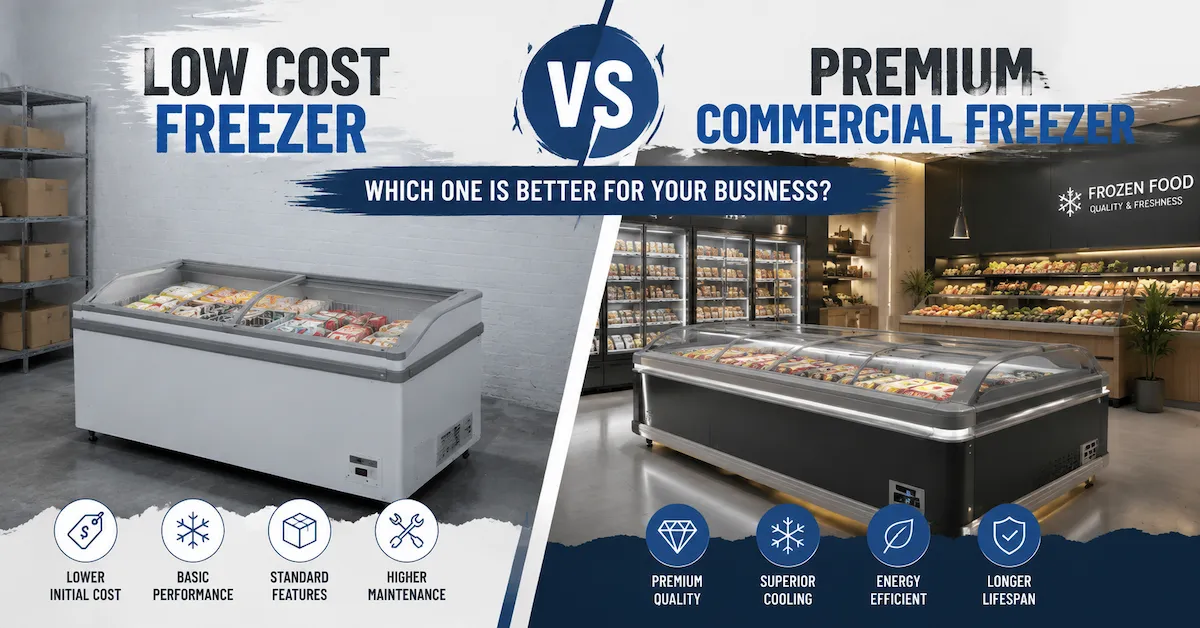
Low-cost equipment may create higher maintenance and operating expenses.
Ignoring Future Growth
Storage requirements often increase as distribution networks expand.
Selecting Incorrect Capacity
Oversized or undersized systems can reduce efficiency.
Ignoring Warehouse Workflow
Poor placement may increase labor costs.
Choosing Suppliers Without Project Experience
Large cold chain projects require experienced manufacturers.
Why Snowsea Provides Reliable Freezer Solutions for Food Distribution Centers
Snowsea focuses on commercial refrigeration solutions for food distributors, logistics companies, supermarkets, restaurants, and international buyers.
For distribution center projects, Snowsea supports:
- Freezer solution planning
- Commercial freezer supply
- Bulk refrigeration projects
- OEM/ODM customization
- Quality inspection
- Export packaging
- Production management
- Long-term supply cooperation
Snowsea product solutions include:
- Chest freezers
- Upright freezers
- Commercial freezer cabinets
- Display freezers
- Island freezers
- Refrigeration equipment
Learn more about Snowsea:
https://www.snowseax.com/about-us
FAQ
1. What freezer solutions are suitable for food distribution centers?
Common solutions include chest freezers for bulk storage, upright freezers for organized inventory, and commercial freezer cabinets for flexible applications.
2. How do distribution centers choose freezer capacity?
Capacity should be based on product volume, inventory turnover, storage duration, warehouse space, and future expansion plans.
3. Can freezer suppliers provide customized solutions?
Yes. Suppliers can customize cabinet design, branding, packaging, specifications, and technical requirements.
4. Why is temperature stability important for distribution centers?
Stable temperatures help protect frozen products, maintain quality, and reduce losses throughout the supply chain.
5. How can businesses reduce freezer operating costs?
Companies can reduce costs by selecting energy-efficient equipment, optimizing layouts, and working with reliable suppliers.
Conclusion
Choosing the right freezer solutions for food distribution centers helps frozen food businesses improve cold chain reliability, reduce operational risks, and support long-term growth.
A professional refrigeration supplier should provide suitable equipment, stable cooling performance, customization options, quality control, logistics support, and long-term cooperation.
Snowsea provides freezer solutions for food distribution centers worldwide, including chest freezers, upright freezers, commercial freezer cabinets, and customized refrigeration equipment.
Explore Snowsea refrigeration solutions:
https://www.snowseax.com/products
For customized projects: