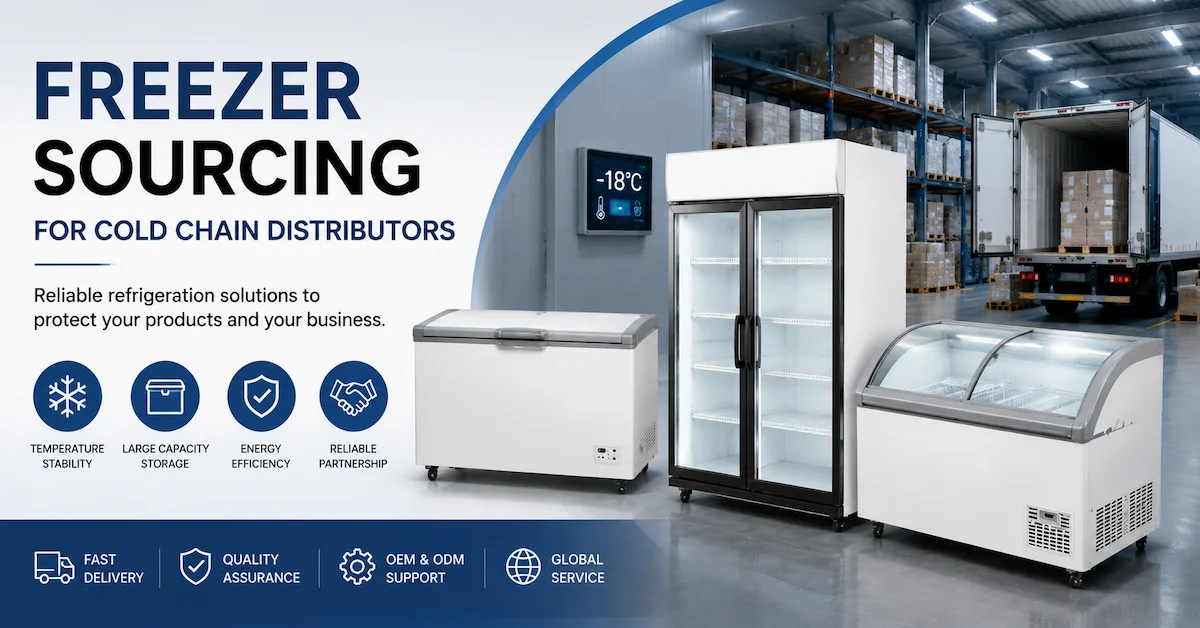
For cold chain distributors, frozen food logistics companies, warehouse operators, and food supply chain businesses, effective freezer sourcing for cold chain distributors is essential for maintaining product quality, reducing operational risks, and supporting reliable temperature-controlled distribution.
Cold chain distributors play an important role between food manufacturers, retailers, restaurants, and consumers. Their operations depend on refrigeration systems that can maintain stable temperatures during storage, handling, and distribution.
Unlike ordinary commercial refrigeration users, cold chain businesses require equipment that can support:
- Large-volume storage
- Continuous operation
- Frequent product movement
- Different frozen product categories
- Long-term inventory management
- Strict temperature requirements
A professional freezer supplier should understand the challenges of cold chain operations and provide solutions that match warehouse capacity, logistics requirements, and future business expansion.
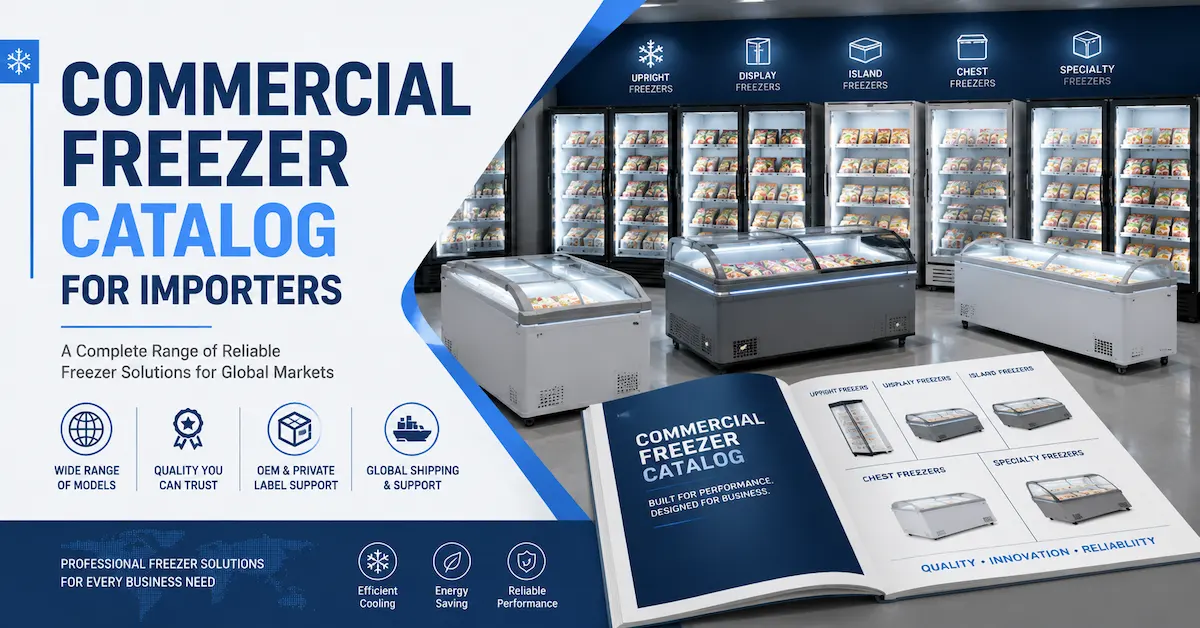
Snowsea provides commercial refrigeration solutions including chest freezers, upright freezers, commercial freezer cabinets, display freezers, island freezers, refrigerators, and customized refrigeration equipment. Snowsea supports OEM/ODM projects, bulk production, quality inspection, export packaging, and long-term supply partnerships.
Why Cold Chain Distributors Need Professional Freezer Sourcing
Cold chain distributors manage products that must remain within specific temperature ranges from storage to delivery.
A reliable freezer sourcing strategy helps businesses:
- Protect frozen products
- Reduce temperature risks
- Improve warehouse efficiency
- Maintain customer trust
- Support larger distribution networks
- Reduce long-term operating costs
Poor refrigeration decisions may lead to:
- Product quality problems
- Increased energy consumption
- Storage limitations
- Shipment delays
- Higher maintenance costs
For distributors, freezer equipment is not simply warehouse equipment. It is a key component of the entire cold chain infrastructure.
Understanding Freezer Requirements for Cold Chain Operations
Different cold chain businesses have different refrigeration requirements.
Frozen Food Distributors
Usually require:
- Large storage capacity
- Reliable temperature performance
- Flexible inventory management
Products may include:
- Frozen vegetables
- Frozen seafood
- Meat products
- Frozen meals
- Ice cream
Food Logistics Companies
Usually require:
- Continuous operation
- Durable equipment
- Efficient warehouse workflow
Regional Cold Storage Operators
Usually require:
- Multiple freezer units
- High-capacity solutions
- Stable supplier support
The correct freezer solution depends on product volume, warehouse design, and distribution requirements.
Step 1: Analyze Storage Capacity Before Purchasing
The first step in freezer sourcing is understanding actual storage demand.
Distributors should evaluate:
- Daily product volume
- Inventory turnover
- Storage duration
- Peak season demand
- Warehouse space
- Customer requirements
- Future expansion plans
Important questions include:
- How much frozen inventory is stored daily?
- How often are products loaded and unloaded?
- Which products require separate storage areas?
- Will business volume increase in the future?
Accurate planning helps avoid:
- Insufficient storage
- Excess equipment investment
- Poor warehouse utilization
Step 2: Select Suitable Freezer Types
Different freezer types serve different cold chain applications.
| Freezer Type | Main Application |
|---|---|
| Chest Freezer | Bulk frozen product storage |
| Upright Freezer | Organized inventory storage |
| Commercial Freezer Cabinet | Flexible warehouse applications |
| Island Freezer | Large open storage areas |
| Display Freezer | Retail supply and product presentation |
Chest Freezers for High-Volume Storage
Chest freezers are commonly used for bulk frozen products.
Advantages include:
- Large storage capacity
- Strong insulation
- Stable temperature retention
- Suitable for long-term storage
They are often used by:
- Seafood distributors
- Meat suppliers
- Frozen food warehouses
For businesses handling large quantities of similar products, chest freezers provide efficient storage performance.
Upright Freezers for Organized Inventory Management
Upright freezers are useful when distributors need better product organization.
Benefits include:
- Vertical storage design
- Faster product identification
- Easier inventory rotation
- Efficient warehouse space usage
They are suitable for:
- Multiple product categories
- Packaged frozen foods
- Frequently accessed inventory
Commercial Freezer Cabinets for Flexible Distribution Needs
Commercial freezer cabinets provide a balance between storage capacity and accessibility.
They are suitable for:
- Distribution centers
- Food suppliers
- Regional cold chain businesses
Benefits include:
- Flexible configurations
- Easier operation
- Professional design
- Convenient maintenance
View Snowsea refrigeration products:
https://www.snowseax.com/products
Step 3: Evaluate Temperature Stability
Temperature control is one of the most important factors in cold chain refrigeration.
Buyers should evaluate:
- Operating temperature range
- Cooling speed
- Compressor reliability
- Insulation performance
- Door sealing
- Temperature recovery
- Controller accuracy
Cold chain distributors often experience frequent:
- Loading
- Unloading
- Inventory movement
- Door opening
Reliable freezers should maintain stable temperatures during daily operations.
Temperature instability may cause:
- Product degradation
- Reduced shelf life
- Customer complaints
- Increased losses
Step 4: Consider Warehouse Workflow and Layout
Freezer placement directly affects distribution efficiency.
Businesses should consider:
- Loading zones
- Picking routes
- Staff movement
- Product rotation
- Maintenance access
- Equipment spacing
A good freezer layout helps:
- Reduce handling time
- Improve warehouse efficiency
- Simplify inventory management
Refrigeration equipment should support logistics operations rather than create workflow problems.
Step 5: Focus on Energy Efficiency
Cold chain facilities often operate refrigeration equipment continuously.
Energy efficiency affects long-term profitability.
Important factors include:
- Compressor efficiency
- Insulation materials
- Cooling system design
- Door performance
- Temperature management
Energy-efficient freezer solutions help distributors:
- Reduce electricity costs
- Improve operational efficiency
- Lower long-term expenses
For large distribution networks, small efficiency improvements can create significant savings.
Step 6: Evaluate Supplier Manufacturing Capability
Choosing the right supplier is an important part of freezer sourcing for cold chain distributors.
Buyers should evaluate:
- Factory experience
- Production capacity
- Engineering capability
- Quality management
- Delivery ability
A reliable manufacturer should support:
- Bulk orders
- Repeat purchasing
- Customized requirements
- Large projects
Strong manufacturing capability helps distributors maintain stable supply.
Step 7: Consider OEM and Custom Freezer Solutions
Cold chain distributors may require customized refrigeration equipment.
Customization options may include:
- Cabinet design
- Company branding
- Labels
- Packaging
- Voltage requirements
- Plug specifications
- Internal configuration
OEM solutions help distributors:
- Standardize equipment
- Support different markets
- Build stronger supplier relationships
Snowsea provides OEM/ODM refrigeration solutions:
https://www.snowseax.com/oem-odm
Step 8: Review Quality Control Procedures
Before delivery, freezer equipment should be carefully inspected.
Quality checks should include:
- Cabinet structure
- Cooling performance
- Electrical safety
- Compressor operation
- Controller function
- Door sealing
- Accessories
- Packaging
Pre-shipment inspection helps reduce:
- Installation issues
- Unexpected repairs
- Operational interruptions
Step 9: Plan Bulk Purchasing and Delivery
Large cold chain projects require detailed purchasing plans.
Buyers should consider:
- Equipment quantity
- Production timeline
- Shipping schedule
- Warehouse installation
- Future expansion
A professional supplier should provide:
- Production updates
- Quality reports
- Shipping coordination
- Technical documentation
Proper planning reduces project delays.
Step 10: Build Long-Term Supplier Cooperation
Cold chain distributors often need continuous equipment support.
A reliable supplier should provide:
- Spare parts
- Technical assistance
- Product updates
- Repeat-order support
- Project communication
Long-term cooperation helps distributors maintain consistent refrigeration standards.
Freezer Sourcing Checklist for Cold Chain Distributors
Before selecting a supplier, buyers should prepare:
| Information | Purpose |
|---|---|
| Product categories | Defines freezer requirements |
| Storage volume | Determines capacity |
| Warehouse layout | Plans installation |
| Temperature requirements | Protects products |
| Operating environment | Selects suitable equipment |
| Order quantity | Supports production |
| Delivery schedule | Coordinates logistics |
| Custom requirements | Supports special projects |
Common Mistakes Cold Chain Distributors Should Avoid
Choosing Only Based on Price
Low-cost equipment may increase energy costs and maintenance problems.
Ignoring Future Expansion
Growing distribution networks require scalable solutions.
Selecting Incorrect Capacity
Poor planning can reduce warehouse efficiency.
Ignoring Supplier Production Ability
Large projects require reliable manufacturing support.
Skipping Quality Inspection
Inspection helps prevent problems after delivery.
Why Snowsea Supports Cold Chain Distributor Projects
Snowsea provides commercial refrigeration solutions for cold chain distributors, frozen food suppliers, warehouses, supermarkets, and international buyers.
For cold chain projects, Snowsea supports:
- Freezer sourcing solutions
- Commercial freezer supply
- Bulk refrigeration projects
- OEM/ODM customization
- Quality inspection
- Export packaging
- Production management
- Long-term cooperation
Snowsea product solutions include:
- Chest freezers
- Upright freezers
- Commercial freezer cabinets
- Display freezers
- Island freezers
- Refrigeration equipment
Learn more about Snowsea:
https://www.snowseax.com/about-us
FAQ
1. What should cold chain distributors consider when sourcing freezers?
They should evaluate storage capacity, temperature stability, energy efficiency, supplier capability, customization options, and delivery support.
2. Which freezer types are suitable for cold chain distributors?
Common options include chest freezers for bulk storage, upright freezers for organized inventory, and commercial freezer cabinets for flexible applications.
3. Can freezer suppliers provide customized solutions?
Yes. Suppliers can customize cabinet design, branding, packaging, specifications, and technical requirements.
4. Why is temperature stability important in cold chain operations?
Stable temperatures help protect frozen products, maintain quality, and reduce losses throughout storage and distribution.
5. How can distributors reduce freezer sourcing risks?
They can choose experienced suppliers, confirm specifications, inspect products, and plan logistics carefully.
Conclusion
Effective freezer sourcing for cold chain distributors helps food logistics companies maintain reliable refrigeration systems, improve warehouse efficiency, and support business growth.
A professional freezer supplier should provide suitable equipment, stable cooling performance, customization options, quality control, export support, and long-term cooperation.
Snowsea provides freezer solutions for cold chain distributors worldwide, including chest freezers, upright freezers, commercial freezer cabinets, and customized refrigeration equipment.
Explore Snowsea refrigeration solutions:
https://www.snowseax.com/products
For customized projects: