What Is Commercial Freezer Compressor Sizing?
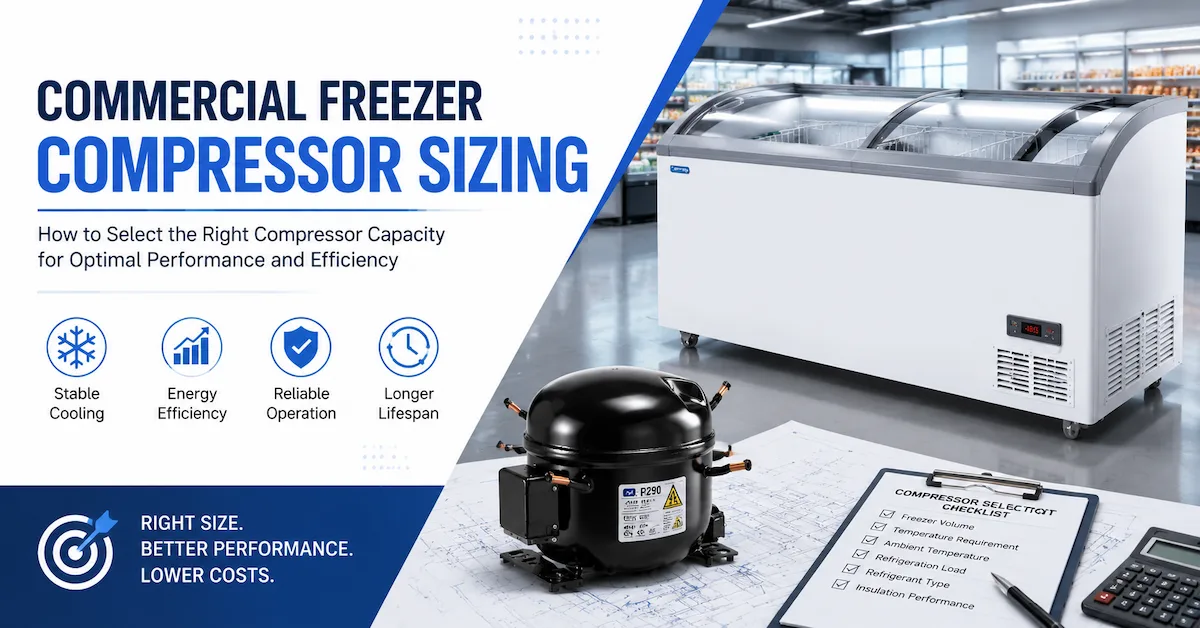
Commercial Freezer Compressor Sizing refers to the process of selecting a compressor with the appropriate cooling capacity for a commercial refrigeration system.
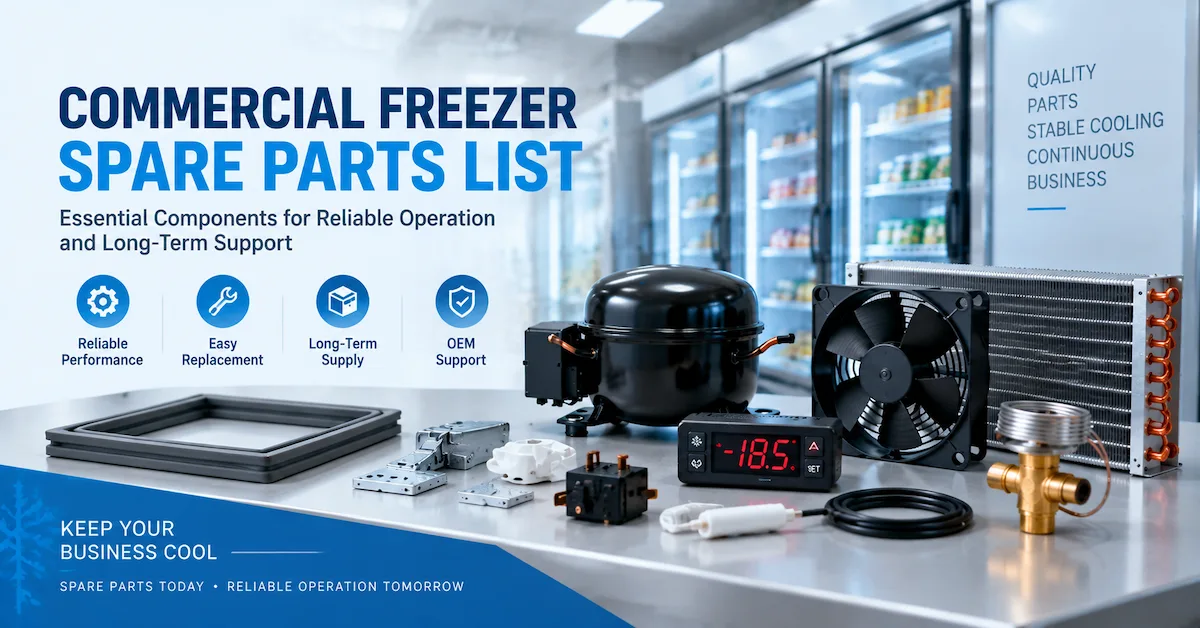
The compressor is the core component of a freezer refrigeration system. It circulates refrigerant and drives the cooling cycle.
Proper compressor sizing ensures:
- Stable cooling performance
- Efficient energy consumption
- Reliable operation
- Longer equipment lifespan
An incorrectly sized compressor may cause poor cooling performance, higher electricity costs, and unnecessary maintenance issues.
Snowsea provides commercial refrigeration products designed for supermarkets, restaurants, catering businesses, and global B2B refrigeration projects.
Why Compressor Sizing Matters for Commercial Freezers?
The compressor directly determines how effectively a freezer can remove heat.
Correct compressor sizing helps achieve:
Stable Cooling Performance
A properly matched compressor can provide:
- Faster temperature pull-down
- Stable freezing conditions
- Reliable temperature maintenance
This is especially important for commercial applications requiring continuous operation.
Better Energy Efficiency
A correctly sized compressor avoids unnecessary energy waste.
Benefits include:
- Reduced compressor cycling
- Lower electricity consumption
- Improved refrigeration efficiency
For energy-related performance, see Snowsea's Energy Efficiency Solutions.
Longer Compressor Lifespan
Incorrect compressor sizing can increase mechanical stress.
Proper matching helps reduce:
- Overloading
- Frequent starting and stopping
- Excessive operating pressure
Factors Affecting Commercial Freezer Compressor Sizing
Selecting compressor capacity requires evaluating multiple factors.
Freezer Volume and Storage Capacity
The size of the freezer cabinet directly affects cooling demand.
Larger equipment usually requires:
- Higher refrigeration capacity
- Stronger cooling output
- Larger compressor capability
Different applications require different compressor solutions:
- Small display freezers
- Commercial chest freezers
- Large storage freezers
Required Temperature Range
Different products require different storage temperatures.
Examples:
- Frozen food storage
- Ice cream display
- Deep freezing applications
Lower temperature requirements generally require higher refrigeration performance.
For temperature requirements, see Snowsea's commercial freezer temperature range guide.
Ambient Temperature Conditions
The surrounding environment affects refrigeration load.
Higher ambient temperatures can result in:
- Increased heat transfer
- Higher condenser pressure
- Longer compressor operation
Freezers installed in tropical markets often require compressor systems designed for higher thermal loads.
For environmental factors, see Snowsea's commercial freezer ambient temperature guide.
Insulation Performance
The freezer cabinet insulation affects compressor workload.
Important factors include:
- Insulation thickness
- PU foam density
- Door sealing performance
Better insulation reduces heat entering the cabinet.
For insulation design, see Snowsea's:
Refrigerant Type
Compressor selection must match the refrigerant system.
Different refrigerants influence:
- Cooling characteristics
- Operating pressure
- Compressor efficiency
Common commercial refrigerant options include:
- R290
- R404A alternatives
- Other low-GWP refrigerants
For refrigerant selection, see Snowsea's commercial freezer refrigerant options guide.
Understanding Compressor Capacity Calculation
Commercial freezer compressor sizing is based on refrigeration load requirements.
A simplified refrigeration load includes:
Cooling Load = Heat Entering + Product Load + Operating Conditions
Factors include:
- Cabinet dimensions
- Product temperature
- Product loading frequency
- Door opening frequency
- Ambient temperature
Professional manufacturers usually combine:
- Refrigeration calculations
- Engineering experience
- Performance testing
to determine suitable compressor specifications.
Compressor Oversizing vs Undersizing
Choosing the wrong compressor size can negatively affect freezer performance.
Problems With Oversized Compressors
An oversized compressor may cause:
- Higher equipment cost
- Frequent start-stop cycles
- Reduced operating efficiency
Although cooling capacity is higher, the system may not operate efficiently.
Problems With Undersized Compressors
An undersized compressor may result in:
- Slow cooling speed
- Continuous operation
- Temperature instability
- Increased wear
The compressor may struggle to maintain required temperatures during heavy loads.
Common Compressor Types Used in Commercial Freezers
Different compressor technologies are used depending on application requirements.
| Compressor Type | Characteristics |
|---|---|
| Reciprocating Compressor | Common commercial refrigeration solution |
| Rotary Compressor | Compact structure and efficient operation |
| Scroll Compressor | Smooth operation and high efficiency |
| Variable Speed Compressor | Adjustable capacity control |
The correct compressor type depends on:
- Freezer design
- Capacity requirement
- Operating environment
- Energy goals
Compressor Sizing for Different Commercial Applications
Supermarket Freezers
Supermarkets usually require:
- Long operating hours
- Stable temperature control
- Energy efficiency
Compressor selection should consider continuous operation requirements.
For retail solutions, see Snowsea's supermarket freezer project supplier guide.
Restaurant Freezers
Restaurants often experience:
- Frequent door opening
- High kitchen temperatures
- Rapid product turnover
A properly sized compressor helps maintain quick temperature recovery.
Catering Storage Freezers
Catering businesses require:
- Large storage capacity
- Stable freezing performance
- Reliable long-term operation
For catering solutions, see Snowsea's commercial freezer supplier for caterers guide.
Compressor Matching With R290 Commercial Freezers
Modern commercial refrigeration increasingly uses environmentally friendly refrigerants.
For R290 commercial freezers, compressor matching requires:
- Compatible compressor design
- Correct displacement
- Suitable lubrication system
- Proper refrigerant charge
The compressor and refrigerant system must work together to achieve efficient performance.
For more information, see Snowsea's commercial freezer R290 refrigerant guide.
Compressor Sizing and Energy Consumption
Compressor capacity directly influences energy performance.
A properly sized compressor can help:
- Reduce unnecessary operation
- Improve cooling efficiency
- Lower electricity usage
However, energy consumption also depends on:
- Refrigerant efficiency
- Insulation quality
- Temperature settings
- Ambient conditions
For electrical performance, see Snowsea's commercial freezer rated input power guide.
How Manufacturers Test Compressor Performance
Professional suppliers evaluate compressor systems through multiple tests.
Cooling Capacity Testing
Measures:
- Refrigeration output
- Cooling speed
- Temperature recovery
Energy Consumption Testing
Evaluates:
- Power usage
- Operating efficiency
Noise and Vibration Testing
Checks:
- Operating stability
- Mechanical performance
Reliability Testing
Verifies:
- Long-term durability
- Continuous operation capability
For overall quality evaluation, see Snowsea's commercial freezer quality testing guide.
Common Mistakes When Selecting Compressor Size
Choosing Only Based on Freezer Size
Cabinet volume alone does not determine compressor requirements.
Other factors include:
- Temperature
- Climate
- Refrigerant
- Usage frequency
Ignoring Ambient Conditions
A compressor suitable for one climate may not perform well in another.
Selecting Based Only on Price
Lower-cost compressors may increase:
- Energy costs
- Maintenance requirements
- Replacement risks
Ignoring Refrigerant Compatibility
Compressor and refrigerant must be properly matched.
How to Choose the Right Commercial Freezer Compressor
A practical selection process includes:
Step 1: Define Application Requirements
Identify:
- Freezer type
- Storage purpose
- Operating environment
Step 2: Calculate Cooling Requirements
Evaluate:
- Cabinet size
- Temperature range
- Heat load
Step 3: Match Compressor Specifications
Review:
- Cooling capacity
- Refrigerant compatibility
- Efficiency rating
Step 4: Verify Supplier Capability
Check:
- Engineering experience
- Testing procedures
- Quality control
What Information Should You Send a Freezer Supplier?
To receive accurate compressor recommendations, buyers should provide:
- Freezer application
- Cabinet dimensions
- Required temperature
- Ambient temperature
- Refrigerant preference
- Storage capacity
- Operating hours
- Energy efficiency requirements
- Certification requirements
- Customization needs
FAQ
What is commercial freezer compressor sizing?
Commercial freezer compressor sizing is the process of selecting the correct compressor capacity based on refrigeration requirements and operating conditions.
Why is compressor sizing important?
Correct sizing improves cooling performance, energy efficiency, and compressor lifespan.
What factors affect compressor size selection?
Important factors include freezer volume, temperature range, ambient temperature, insulation performance, and refrigerant type.
What happens if a compressor is too large?
An oversized compressor may cause higher costs, frequent cycling, and reduced efficiency.
What happens if a compressor is too small?
An undersized compressor may run continuously and fail to maintain stable temperatures.
Does insulation affect compressor sizing?
Yes. Better insulation reduces heat load and can influence required compressor capacity.
Does refrigerant affect compressor selection?
Yes. Compressor design must match refrigerant characteristics and operating pressure.
Are R290 compressors different from traditional compressors?
Yes. R290 systems require compressors designed for hydrocarbon refrigerant applications.
How do manufacturers test compressor performance?
Manufacturers test cooling capacity, energy consumption, noise, vibration, and reliability.
Can Snowsea help select the right compressor?
Yes. Snowsea can recommend suitable commercial refrigeration solutions based on application requirements and technical specifications.
Conclusion
Commercial Freezer Compressor Sizing is a critical part of designing reliable and energy-efficient refrigeration systems.
Choosing the correct compressor requires evaluating multiple factors, including freezer capacity, temperature requirements, insulation performance, ambient conditions, and refrigerant selection.
For supermarkets, restaurants, catering businesses, and global refrigeration buyers, professional compressor matching helps achieve better cooling performance, lower operating costs, and longer equipment life.
Snowsea supports global B2B customers with commercial refrigeration products and OEM/ODM solutions. Explore Snowsea's commercial refrigeration products, review its OEM/ODM solutions, or contact Snowsea with your compressor sizing requirements, application details, and project goals.