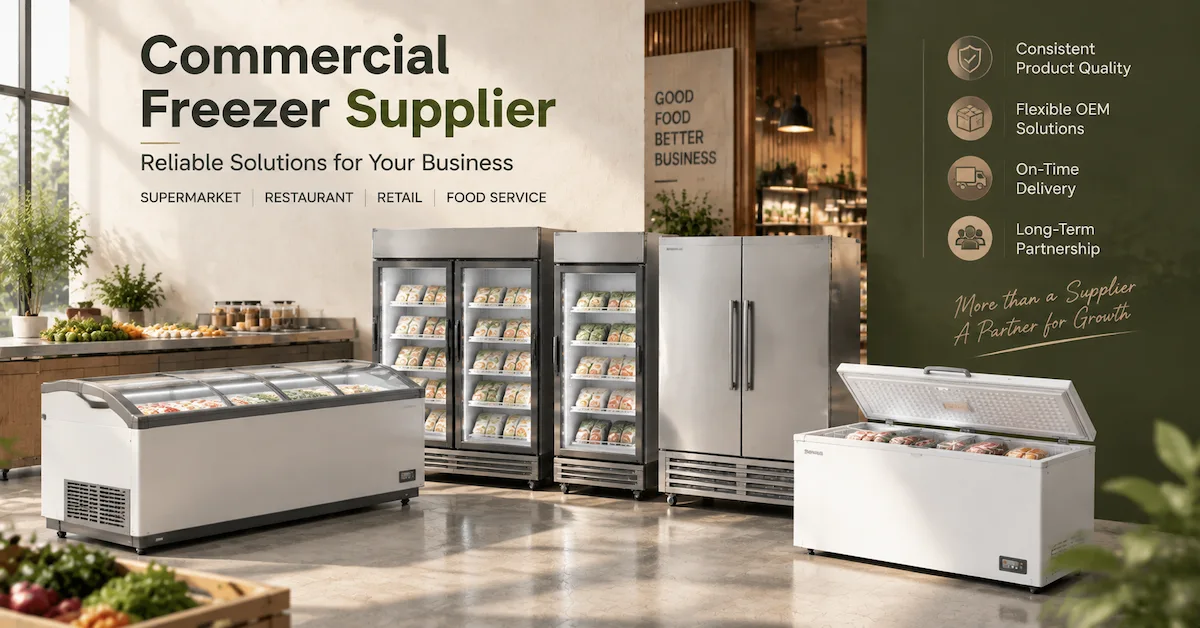
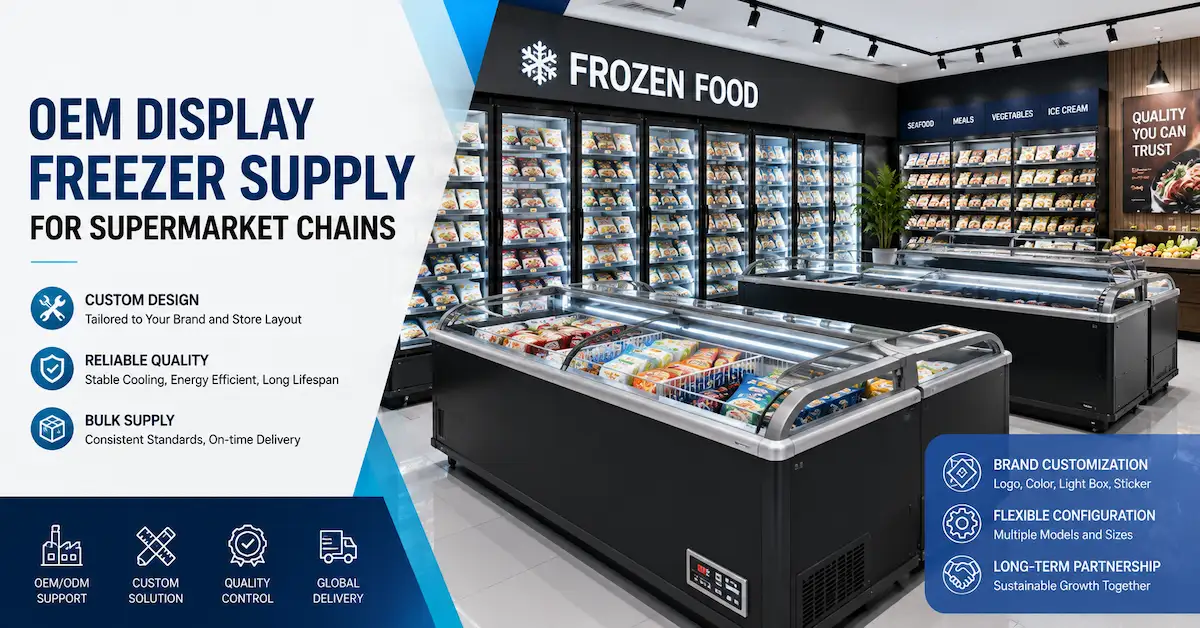
For supermarket chains, grocery groups, frozen food retailers, importers, and refrigeration distributors, reliable OEM display freezer supply for supermarket chains is essential for maintaining consistent store design, stable equipment performance, and predictable expansion schedules.
A single supermarket may use upright glass-door freezers, island freezers, sliding-glass cabinets, chest display freezers, and promotional frozen-food equipment. A chain operating multiple locations needs these products to follow consistent technical, branding, quality, and packaging standards.
Buying standard equipment from different suppliers may create variations in cabinet appearance, cooling performance, dimensions, spare parts, and operating procedures. An OEM supply program allows supermarket chains to develop approved freezer models that can be repeated across new stores, renovations, and replacement projects.
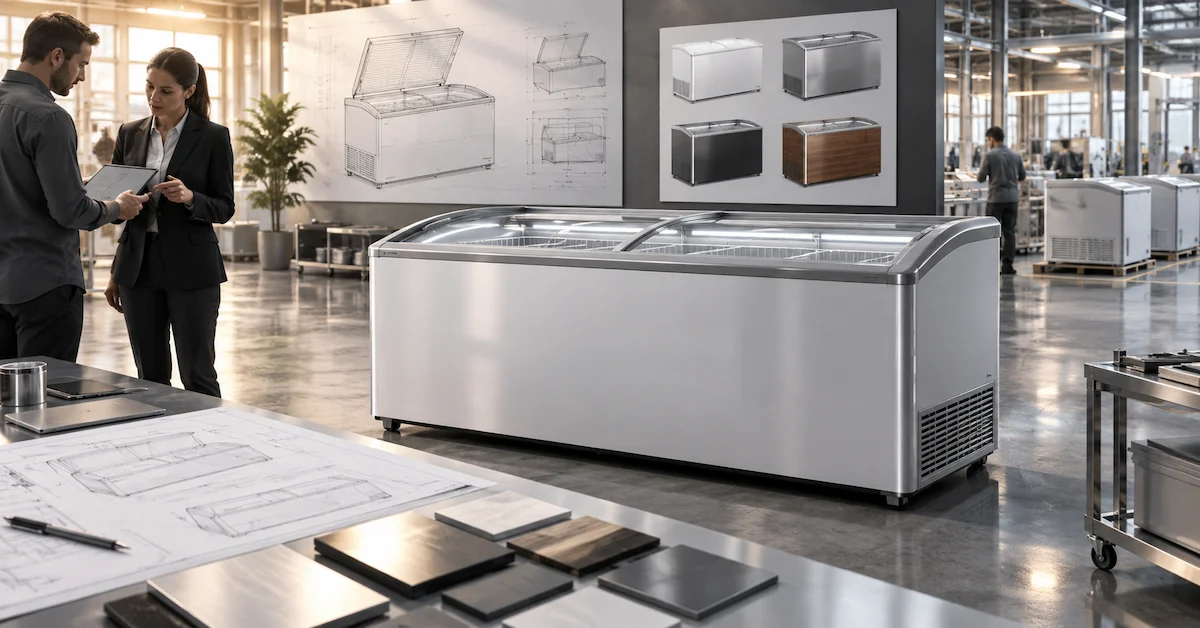
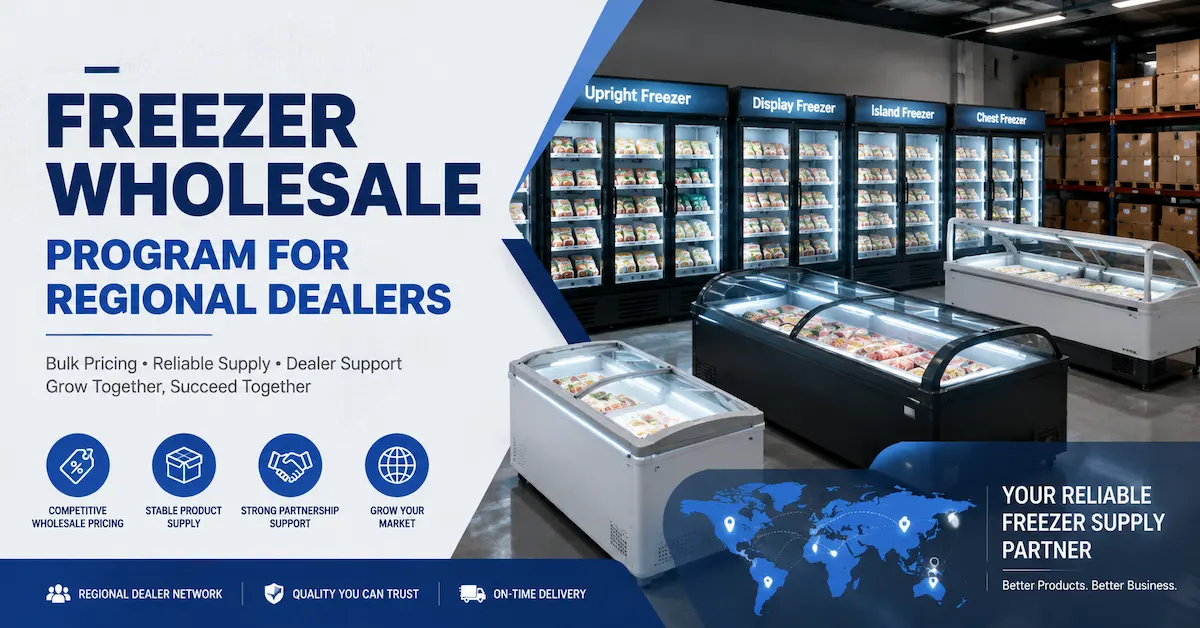
Snowsea supplies display freezers, upright freezers, island freezers, chest freezers, sliding-glass freezers, ice cream freezers, refrigerators, beverage coolers, and showcase cabinets. Snowsea also supports OEM/ODM development, private label branding, technical customization, quality inspection, export packaging, and bulk production.
Why Supermarket Chains Need an OEM Display Freezer Program
Supermarket chains operate differently from independent retailers. They need equipment that can be reproduced consistently across multiple stores and purchasing cycles.
A structured OEM freezer program can help supermarket chains:
- Maintain a consistent store image
- Standardize freezer dimensions and specifications
- Simplify equipment purchasing
- Improve spare-parts management
- Support new-store rollouts
- Control product quality across multiple batches
- Create private label refrigeration equipment
- Improve long-term supplier coordination
Standardization does not require every location to use exactly the same freezer. Large supermarkets, neighborhood grocery stores, and compact urban locations may need different capacities and cabinet structures.
The objective is to create a controlled range of approved freezer models for different store formats.
What Display Freezers Do Supermarket Chains Commonly Need?
A complete supermarket freezer program usually includes several equipment categories.
| Freezer Type | Main Application | Key Purchasing Focus |
|---|---|---|
| Upright glass-door freezer | Packaged frozen meals, vegetables, seafood | Visibility, shelving, door sealing |
| Island freezer | High-volume supermarket frozen zones | Capacity, customer access, store layout |
| Sliding-glass freezer | Ice cream, desserts, compact stores | Space efficiency and glass quality |
| Chest display freezer | Promotions and bulk frozen products | Storage volume and temperature retention |
| Multi-door display freezer | Large product ranges | Category organization and visual consistency |
| Ice cream display freezer | Frozen dessert retail | Stable low temperature and display appeal |
Supermarket buyers can review Snowsea’s available equipment on the commercial refrigeration products page.
Step 1: Define the Supermarket Chain’s Store Formats
Before selecting freezer models, buyers should divide stores into practical formats.
Large Supermarkets
Large supermarkets often require:
- Multi-door upright display freezers
- Large island freezer zones
- High-capacity frozen-food displays
- Equipment for different product categories
- Coordinated freezer layouts
These stores prioritize capacity, visibility, customer flow, and professional presentation.
Neighborhood Grocery Stores
Medium-sized grocery stores may need:
- Two-door or three-door upright freezers
- Compact island cabinets
- Sliding-glass freezers
- Space-efficient frozen-food sections
The equipment should provide sufficient display capacity without reducing aisle space.
Convenience-Style Stores
Compact stores usually prioritize:
- Narrow upright display freezers
- Small sliding-glass cabinets
- Easy customer access
- Efficient use of wall space
Specialty Frozen Food Stores
These stores may require:
- Long rows of glass-door freezers
- Category-specific shelving
- Promotional island cabinets
- Customized retail branding
Identifying store formats helps the supplier recommend a practical range instead of offering one model for every location.
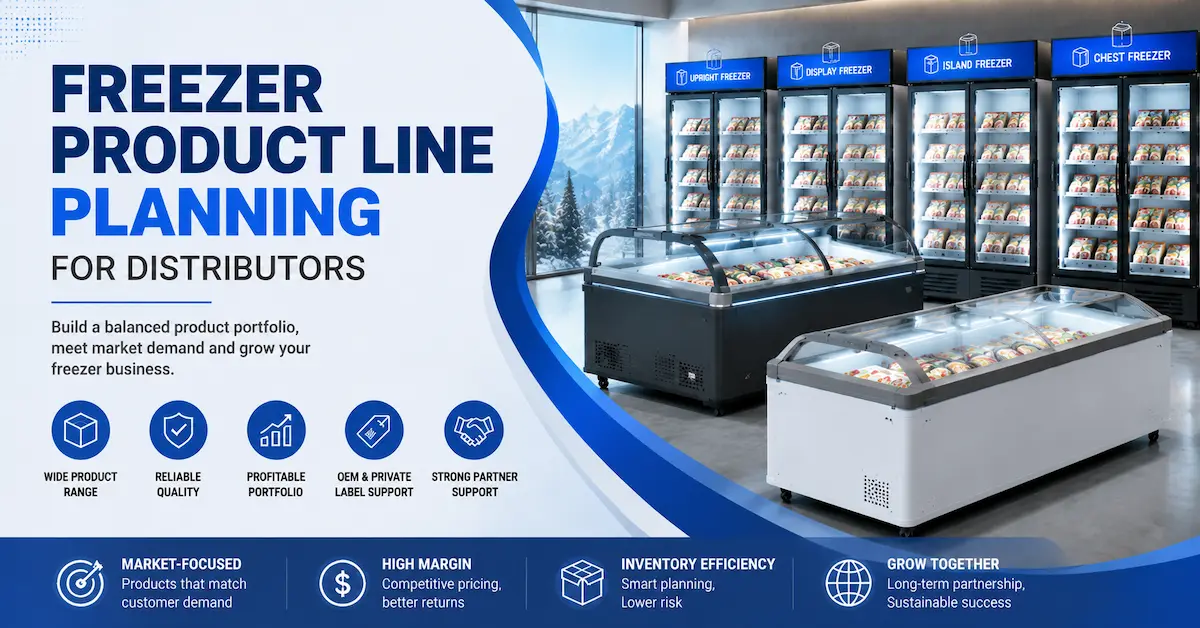
Step 2: Build an Approved Display Freezer Portfolio
Supermarket chains should avoid approving too many nearly identical models.
A practical portfolio may include:
- One compact upright freezer
- One standard three-door display freezer
- One large multi-door display cabinet
- One standard island freezer
- One compact sliding-glass freezer
- One promotional chest display freezer
This approach provides enough flexibility for different stores while keeping purchasing, maintenance, and spare-parts management under control.
Each approved model should have a documented specification covering:
- External dimensions
- Internal capacity
- Temperature range
- Door or lid configuration
- Shelf or basket quantity
- Compressor configuration
- Defrost method
- Controller type
- Refrigerant
- Voltage and plug
- Lighting
- Packaging dimensions
Step 3: Plan Product Categories and Merchandising
The freezer type should match the frozen products being displayed.
Frozen Meals
Upright glass-door freezers usually provide the best front-facing package visibility and shelf organization.
Seafood and Meat
Island freezers, chest display freezers, and upright cabinets may all be suitable depending on packaging size and store layout.
Frozen Vegetables
Upright cabinets and island freezers allow products to be separated by package size, brand, or category.
Ice Cream and Desserts
Sliding-glass freezers and specialized ice cream cabinets provide easy access and stable temperature retention.
Promotional Frozen Products
Island and chest display freezers can be positioned in high-traffic areas for seasonal campaigns and bulk promotions.
The supplier should understand product packaging dimensions and merchandising goals before recommending cabinet structures.
Step 4: Confirm OEM Branding Requirements
OEM customization should create a consistent supermarket image rather than simply adding a logo.
Customization may include:
- Cabinet colors
- Supermarket chain logos
- Top lightbox branding
- Side-panel graphics
- Product-category signs
- Model labels
- User manuals
- Rating labels
- Carton printing
- Shipping marks
- Internal shelf arrangement
Some supermarket chains prefer neutral freezer designs that match different store interiors. Others want clearly branded equipment that supports private label positioning.
Artwork, colors, logo placement, and label content should be approved before production begins.
Snowsea supports cabinet branding, packaging, labels, technical configurations, and private label development through its OEM and custom freezer solutions.
Step 5: Standardize Technical Specifications
A reliable OEM display freezer supply for supermarket chains requires approved technical standards that can be repeated across different production batches.
Important specifications include:
- Required temperature range
- Cooling method
- Compressor configuration
- Insulation structure
- Door sealing
- Defrost system
- Digital controller
- LED lighting
- Shelf load requirements
- Voltage and frequency
- Plug type
- Refrigerant
- Ambient operating conditions
Technical standards should reflect the destination market, store operating conditions, and frozen product categories.
For example, a freezer installed in a high-temperature retail environment may require a different cooling configuration from equipment used in a moderate climate.
Step 6: Evaluate Energy Efficiency and Operating Cost
Supermarket freezers operate continuously, so energy consumption affects the long-term cost of the entire store network.
Buyers should evaluate:
- Compressor efficiency
- Cabinet insulation
- Glass-door performance
- Door sealing
- LED lighting
- Defrost frequency
- Temperature recovery
- Controller settings
A lower equipment price does not always produce the lowest total cost.
Poor insulation, frequent compressor operation, or weak door sealing may increase energy expenses across hundreds of installed units.
Supermarket chains should compare expected operating cost, service requirements, and equipment lifetime alongside the initial purchase price.
Step 7: Create a Sample Approval Process
Before bulk production, buyers should approve a sample or pilot unit.
The approval process should review:
- Cabinet dimensions
- Exterior finish
- Logo placement
- Color accuracy
- Shelf layout
- Door operation
- Lighting
- Temperature performance
- Controller settings
- Labels and manuals
- Packaging design
The approved sample becomes a reference for future production.
All important details should also be recorded in technical documents, artwork files, and inspection standards. Relying only on verbal confirmation increases the risk of differences between batches.
Step 8: Build Consistent Quality-Control Standards
Supermarket chains need repeatable quality, not only a good first shipment.
Pre-shipment inspection should cover:
- Cabinet appearance
- Dimensions
- Temperature performance
- Cooling recovery
- Electrical safety
- Compressor operation
- Glass condition
- Door sealing
- Controller accuracy
- Lighting function
- Shelves and accessories
- OEM branding
- Packaging strength
Quality records should be maintained for repeat orders.
The buyer should also confirm how the supplier manages component changes. Unapproved compressor, controller, fan, or lighting changes may affect performance and spare-parts planning.
Step 9: Plan Production Around Store Rollouts
Supermarket equipment purchasing should align with new-store openings, renovations, and replacement schedules.
A rollout plan may include:
| Project Stage | Main Requirement |
|---|---|
| Store planning | Confirm freezer types, dimensions, and quantities |
| Sample approval | Approve technical and visual details |
| OEM artwork | Finalize branding, labels, and cartons |
| Production booking | Reserve manufacturing capacity |
| Inspection | Test products before shipment |
| Export preparation | Confirm documents and packaging |
| Delivery | Coordinate warehouse and store schedules |
| Repeat orders | Maintain approved specifications |
Supermarket chains should provide forecast demand as early as possible. This allows the manufacturer to plan production capacity, components, packaging materials, and delivery windows.
Step 10: Review Export Packaging and Container Loading
Display freezers contain glass doors, compressors, controllers, lighting systems, shelves, handles, and visible cabinet surfaces.
Export packaging should protect:
- Glass panels
- Cabinet corners
- Door handles
- Compressor areas
- Control panels
- Wheels and feet
- Shelves and accessories
- Branded surfaces
Common protection may include:
- Protective film
- Foam corner guards
- Reinforced cartons
- Internal fixing materials
- Wooden support
- Pallets
- Clear shipping marks
The supplier should provide packing dimensions and estimated loading quantities so the buyer can calculate freight and warehouse requirements.
Strong packaging helps reduce shipping damage, installation delays, and replacement costs.
Step 11: Prepare Spare Parts and Maintenance Support
Standardized equipment makes maintenance easier across a supermarket network.
Buyers should discuss the availability of:
- Door seals
- Handles
- Digital controllers
- Fans
- Lighting components
- Shelves
- Baskets
- Wheels
- Electrical parts
- Technical diagrams
Each model should have a clear model number and component record.
Supermarket maintenance teams and regional service partners can then identify replacement parts faster.
Step 12: Evaluate Long-Term Manufacturing Support
An OEM freezer program may continue for several years.
The manufacturer should be able to support:
- Repeat production
- Stable specifications
- New store expansion
- Product upgrades
- Additional cabinet sizes
- Branding updates
- Spare-parts communication
- Production forecasting
- Export documentation
A long-term supplier should also communicate clearly if components, materials, or regulations require product changes.
OEM Display Freezer Sourcing Checklist
Before confirming a supplier, supermarket chains should prepare:
| Information | Why It Matters |
|---|---|
| Store formats | Determines suitable cabinet types |
| Product categories | Defines temperature and merchandising needs |
| Approved freezer models | Controls product-line complexity |
| Technical standards | Maintains performance consistency |
| Branding guidelines | Creates a unified store image |
| Order forecast | Supports production planning |
| Quality requirements | Reduces operational risk |
| Packaging standards | Protects equipment during shipping |
| Delivery schedule | Supports store rollouts |
| Spare-parts plan | Simplifies maintenance |
Common Mistakes Supermarket Chains Should Avoid
Approving Too Many Similar Models
Too many models increase purchasing complexity, inventory requirements, and maintenance costs.
Treating OEM as Logo Printing Only
OEM development may include cabinet structure, shelves, voltage, labels, manuals, cartons, model numbers, and packaging.
Selecting Freezers Only by Initial Cost
Cooling performance, energy use, service requirements, packaging, and equipment lifetime should also be considered.
Confirming Store Dimensions Too Late
Cabinet size, aisle clearance, access routes, and installation space should be checked before ordering.
Failing to Document the Approved Sample
Technical specifications and artwork should be recorded to maintain consistency across repeat orders.
Skipping Pre-Shipment Inspection
Inspection reduces the risk of technical defects, branding errors, missing accessories, and weak packaging.
Why Snowsea Supports Supermarket Chain Projects
Snowsea supplies commercial refrigeration equipment for supermarkets, grocery stores, frozen food retailers, distributors, food brands, and international buyers.
For supermarket chain projects, Snowsea can support:
- OEM display freezer portfolio planning
- Upright glass-door freezer production
- Island freezer solutions
- Sliding-glass freezer supply
- Chest display freezer projects
- Private label branding
- Technical customization
- Quality inspection
- Export packaging
- Bulk production
- Repeat-order management
Buyers can learn more about Snowsea’s manufacturing and international business capabilities on the About Snowsea page.
FAQ
What does OEM display freezer supply for supermarket chains include?
It can include freezer selection, technical customization, branding, sample development, bulk production, quality inspection, export packaging, and repeat-order support.
Which display freezers are suitable for supermarket chains?
Common options include upright glass-door freezers, island freezers, sliding-glass cabinets, chest display freezers, and multi-door freezer cabinets.
Can supermarket chains customize freezer colors and branding?
Yes. Cabinet colors, logos, lightboxes, side graphics, labels, manuals, packaging, shelves, voltage, and plugs can be customized.
How can supermarket chains maintain consistent quality across different orders?
They should approve samples, document specifications, define inspection standards, keep artwork records, and require supplier approval before component changes.
How should buyers plan freezer orders for multiple stores?
Buyers should forecast demand, confirm store formats, standardize approved models, reserve production capacity, and coordinate inspection, shipping, warehousing, and installation schedules.
Conclusion
Reliable OEM display freezer supply for supermarket chains helps retail groups standardize equipment, maintain consistent store branding, improve frozen-product presentation, and support long-term expansion.
A capable manufacturer should provide suitable freezer models, technical customization, OEM branding, stable production, quality inspection, export packaging, spare-parts support, and repeat-order management.
Snowsea provides upright display freezers, island freezers, sliding-glass cabinets, chest display freezers, and customized commercial refrigeration solutions for supermarket chains worldwide.
Explore Snowsea’s commercial refrigeration products or review its OEM and custom freezer solutions to begin planning a supermarket freezer program.