What Does a Private Label Freezer Manufacturer Actually Provide?
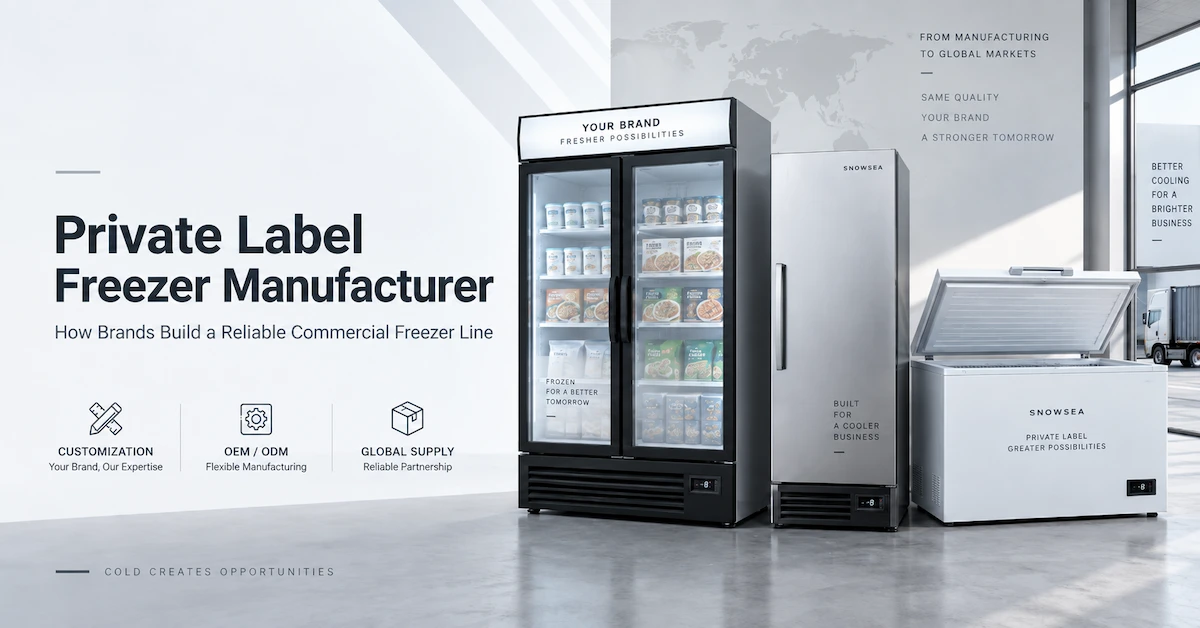
A private label freezer manufacturer does more than place another company’s logo on a finished cabinet. For a serious commercial refrigeration program, the manufacturer must help convert a market requirement into a repeatable product that can be produced, inspected, shipped, serviced, and reordered consistently.
The exact scope depends on how much the buyer wants to change. A basic private label project may involve branding, product labels, packaging, manuals, and exterior colors. A deeper project may involve cabinet dimensions, door styles, shelf or basket layouts, controllers, wiring, electrical configurations, refrigeration components, or other functional requirements.
This distinction matters because every additional change can influence engineering work, testing, documentation, cost, MOQ, and production lead time.
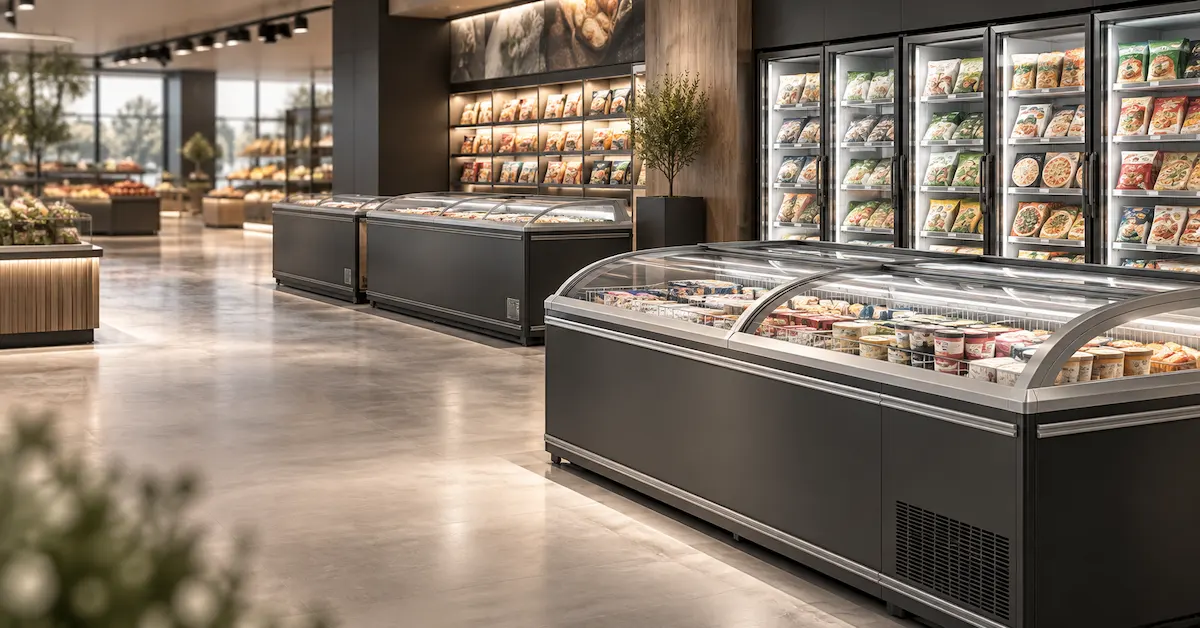
Snowsea offers commercial refrigeration categories including freezers, ice cream freezers, refrigerators, and display equipment through its commercial refrigeration product range. For private label buyers, the best starting point is usually an existing platform that already fits most of the intended market rather than beginning with a completely new design.
Who Should Work With a Private Label Freezer Manufacturer?
Private label manufacturing is particularly useful for buyers that understand their customers but do not want to build their own refrigeration factory.
Commercial Refrigeration Distributors
A distributor usually needs more than a visually attractive product. The freezer must be suitable for repeated orders, easy to explain to dealers, and practical to support after delivery.
Typical priorities include stable specifications, predictable supply, spare parts, market-appropriate electrical configurations, and manageable warranty support.
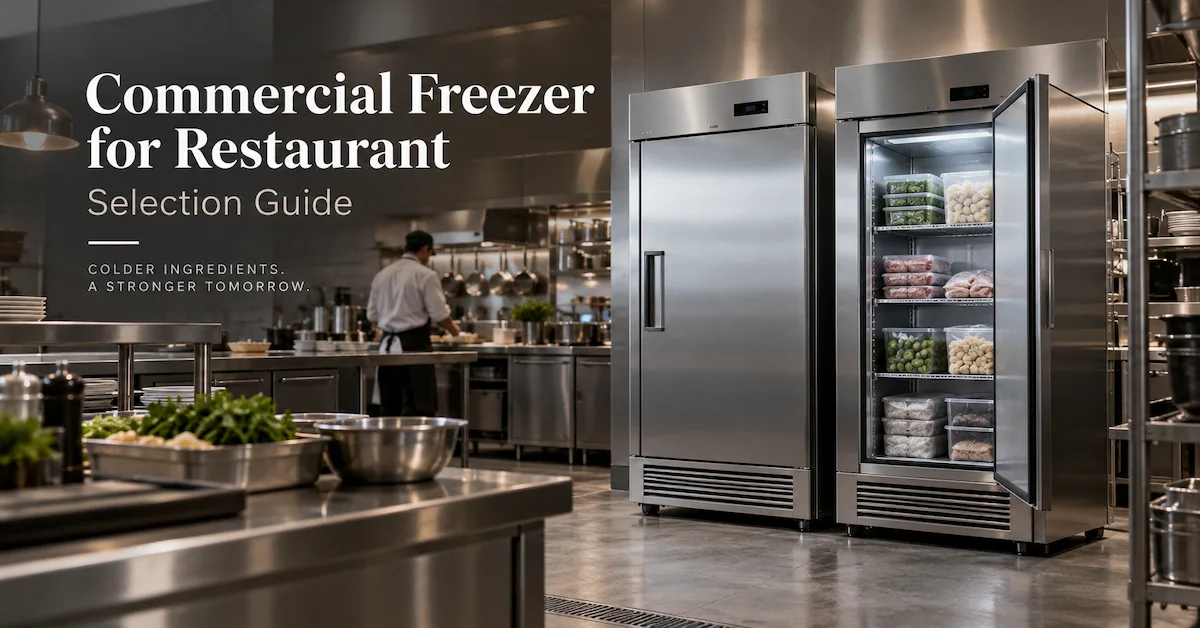
Foodservice Equipment Brands
Restaurant and catering equipment brands may use private label freezers to expand an existing product portfolio.
Their decisions often focus on usable storage layout, kitchen installation, temperature requirements, cleaning, durability, access, and compatibility with the rest of the equipment line.
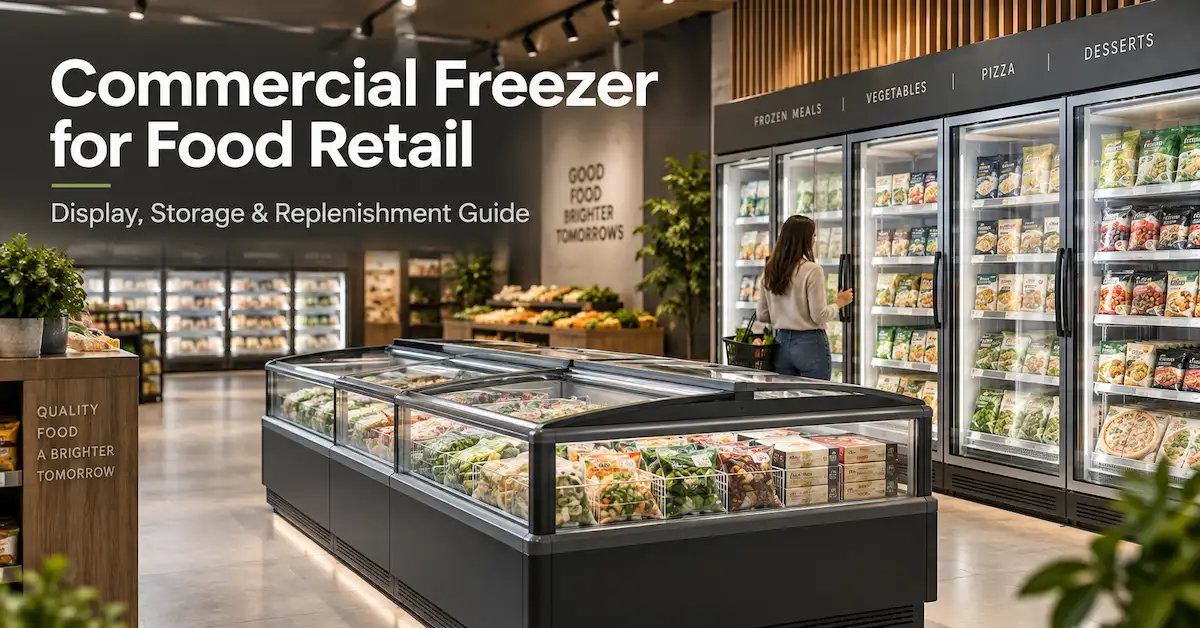
Supermarket and Retail Equipment Suppliers
Retail buyers may be more concerned with merchandising, glass-door visibility, cabinet appearance, customer access, floor layout, and coordination between different refrigeration products.
The product must function as part of a store environment rather than as an isolated appliance.
Regional Refrigeration Brands
A regional brand may use private label manufacturing to enter a market faster without investing in its own manufacturing plant.
The main concern is not whether the supplier can manufacture one sample. It is whether the same approved configuration can be reproduced across future orders.
Private Label vs OEM vs ODM: What Should Buyers Understand?
The terms private label, OEM, and ODM are often used interchangeably, but they describe different levels of manufacturer involvement.
| Cooperation Model | Buyer Usually Provides | Manufacturer Usually Provides | Best Fit |
|---|---|---|---|
| Private Label | Brand identity and market requirements | Existing product platform with agreed branding | Fast product-line expansion |
| OEM | Detailed specifications or defined configuration | Manufacturing according to agreed requirements | Buyers with clear technical specifications |
| ODM | Product concept and performance targets | Design, engineering, prototype, and manufacturing support | Projects requiring deeper product development |
A private label freezer manufacturer may provide all three approaches, but buyers should define the actual scope instead of relying on labels.
For example, changing a logo is very different from changing the controller, evaporator arrangement, refrigerant system, cabinet structure, or door design.
Before development begins, define which changes are cosmetic, which require engineering evaluation, and which may affect testing or documentation.
Start With the Market Before Choosing the Freezer
A private label project should begin with the intended customer and application.
A freezer for a restaurant kitchen has different priorities from a glass-door freezer used in a convenience store. A supermarket island freezer is evaluated differently from a chest freezer used for back-room storage.
Before requesting a quotation, document the main project requirements.
| Requirement | What the Buyer Should Define | Why It Matters |
|---|---|---|
| Application | Restaurant, supermarket, retail, hotel, convenience store, etc. | Determines the product platform |
| Product stored | Frozen food, ice cream, packaged goods, ingredients | Influences temperature and layout |
| Capacity | Required usable storage volume | Determines cabinet size |
| Installation | Back-of-house or customer-facing | Affects design and access |
| Electrical supply | Voltage and frequency | Must match the destination market |
| Environment | Expected ambient conditions | Influences refrigeration performance |
| Branding | Logo, labels, colors, packaging | Defines private label scope |
| Quantity | Sample, trial order, annual forecast | Influences MOQ and production planning |
| Target market | Country or region | Influences documentation and configuration |
| Service requirement | Spare parts, warranty, technical support | Affects long-term supply planning |
This information allows the manufacturer to recommend a suitable platform instead of simply sending a catalogue.
Buyers can first review Snowsea’s freezer and refrigeration product range and then identify which products require customization.
Which Freezer Platform Should a Private Label Brand Start With?
Existing platforms usually reduce development risk.
A mature production model already has a defined cabinet, refrigeration layout, component structure, manufacturing process, and quality-control routine. The buyer can focus on the changes that create market differentiation without rebuilding the entire product.
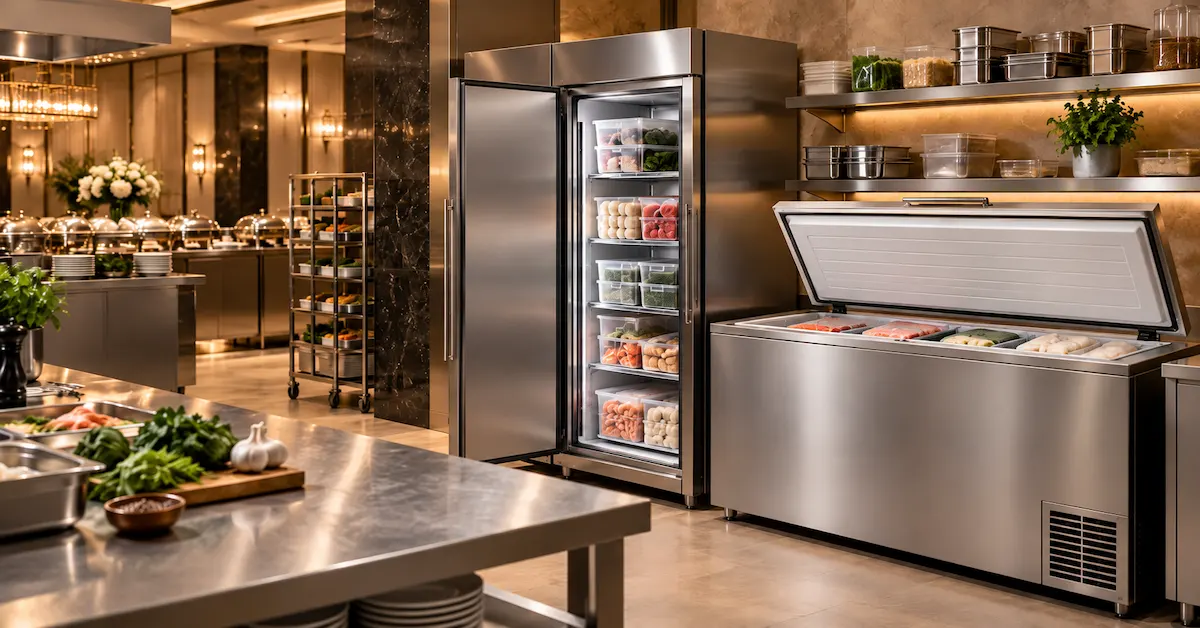
Chest Freezers
Chest freezers may suit bulk frozen-food storage, convenience stores, restaurants, and other applications where simple top-access storage is appropriate.
For private label projects, review usable internal space, basket configuration, lid construction, temperature requirements, exterior finish, and packaging.
Upright Commercial Freezers
Upright freezers can provide more organized shelf access in commercial kitchens, foodservice operations, and storage rooms.
Buyers should consider shelf layout, door clearance, cabinet footprint, service access, and internal storage efficiency.
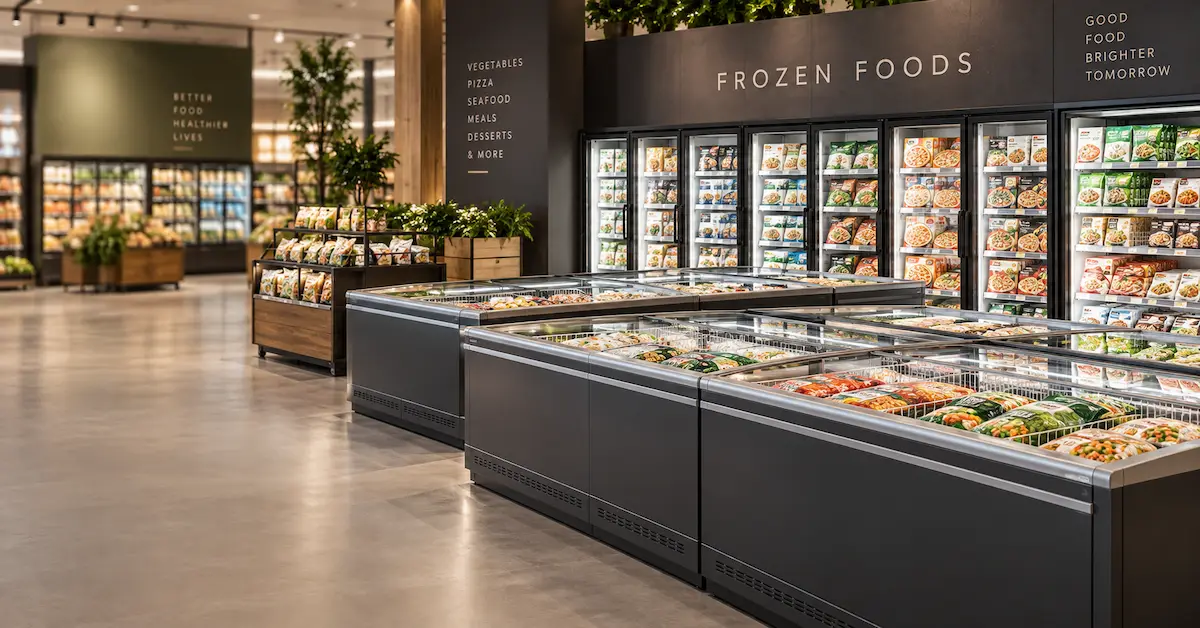
Glass-Door Freezers
Glass-door freezers are commonly used where product visibility influences purchasing behavior.
A private label buyer should consider glazing, lighting, door design, display area, product loading, energy performance, and the overall retail appearance.
Ice Cream Freezers
Ice cream applications may require different merchandising, basket, lid, and access arrangements.
The product should be selected for the actual sales model rather than simply because the cabinet reaches a low temperature.
Snowsea’s commercial refrigeration solutions can provide the product-platform starting point before private label specifications are finalized.
What Can Be Customized in a Private Label Freezer Project?
Customization can be divided into several levels.
Branding and Packaging
This is usually the lowest-risk level.
Typical options may include:
- Brand logo
- Rating-label layout
- Product sticker
- Packaging artwork
- User manual
- Model naming
- Outer-carton information
These elements should still be controlled by an approved artwork file and revision number.
Appearance
Exterior customization may include:
- Cabinet color
- Panel graphics
- Handle style
- Door appearance
- Trim
- Display graphics
Buyers should confirm whether the change affects tooling, materials, MOQ, or production lead time.
Interior Configuration
Interior customization may include:
- Shelves
- Baskets
- Dividers
- Storage layout
- Lighting
- Product-display arrangement
This is particularly important for commercial buyers because nominal cabinet volume does not always represent usable storage.
Electrical and Refrigeration Configuration
Technical changes require more careful review.
These may include:
- Voltage and frequency
- Plug configuration
- Temperature controller
- Compressor
- Refrigerant system
- Defrost configuration
- Fan arrangement
- Wiring
- Alarm functions
A responsible private label freezer manufacturer should explain whether requested changes require new validation or documentation instead of accepting every request as a simple customization.
Why Sample Approval Is Critical Before Mass Production
A sample is not only a demonstration product. It should become a controlled reference for mass production.
Before approving it, record the exact configuration.
The Sample Record Should Include
- Supplier model
- Buyer model
- Revision
- Exterior appearance
- Logo position
- Cabinet color
- Door or lid style
- Shelf or basket arrangement
- Electrical configuration
- Controller
- Packaging
- Labels
- Manuals
- Agreed technical specifications
If the sample is changed after evaluation, create a new revision instead of continuing to call both versions “the approved sample.”
This helps avoid one of the most common private label risks: the sales sample looks correct, but the first production shipment contains different components or details because the approved configuration was never formally frozen.
How Should Buyers Evaluate Freezer Quality Control?
Quality control should begin before final inspection.
Incoming Component Control
The manufacturer should manage the components that influence product performance.
Depending on the freezer design, these may include refrigeration components, controllers, electrical parts, cabinet materials, door or lid components, insulation materials, wiring, and packaging.
The buyer should identify any components that cannot be changed without approval.
Production Control
Production quality depends on repeatable procedures.
Buyers should understand how the factory controls assembly, refrigeration-system preparation, electrical connections, cabinet finishing, and other critical operations.
Performance Testing
Define what should be checked before shipment.
Depending on the product and project, this may include:
- Cooling operation
- Temperature behavior
- Electrical functions
- Controller operation
- Door or lid function
- Lighting
- Noise observations
- Visual condition
Do not use the vague phrase “100% tested” unless the actual test scope is defined.
Final Inspection
A final inspection should compare finished units with the approved sample and specification.
Appearance, function, labeling, accessories, packaging, and order quantity should all be included.
How Can Buyers Control Component Substitution Risk?
A private label freezer may remain visually identical while important internal components change.
That is why buyers should identify critical components or performance requirements in the approved specification.
A practical change-control rule is:
Any change that may affect performance, safety, compatibility, documentation, appearance, serviceability, or approved product identity requires review before implementation.
This is more useful than demanding famous component brands without understanding their role.
The goal is production consistency, not simply brand-name components.
What Documentation Should Be Confirmed Before Production?
Documentation requirements should be discussed before the final order, especially when a private label product will be sold in multiple markets.
Potential documentation may include:
- Product specification
- User manual
- Electrical information
- Product labels
- Test documents
- Packing details
- Model identification
- Market-related technical documents
A supplier’s existing documentation does not automatically apply to every customized version.
A significant change to the electrical system, refrigeration system, structure, or critical components may require additional review.
For private label programs, document responsibility should be included in the development schedule rather than handled only after production is complete.
MOQ Should Be Discussed at More Than One Level
Asking “What is your MOQ?” is too broad.
A private label project may have several minimum quantities:
Standard Product MOQ
The minimum quantity for an existing freezer with no significant changes.
Branding MOQ
The quantity needed for custom logo, packaging, or printed materials.
Technical Customization MOQ
A larger quantity may be required when changes create engineering work, unique materials, tooling, or dedicated components.
Shipment MOQ
The most efficient export quantity may depend on container utilization rather than the factory’s manufacturing minimum.
Buyers should ask Snowsea for a project-specific MOQ rather than assuming one number applies to every private label configuration.
How Should Production Lead Time Be Evaluated?
Lead time should be divided into stages.
A complete private label project may involve:
- Product-platform selection
- Customization review
- Artwork confirmation
- Sample production
- Sample evaluation
- Technical modification
- Final approval
- Material preparation
- Mass production
- Inspection
- Packing
- Shipment
The mass-production lead time should not be confused with the total project timeline.
If the buyer takes two weeks to approve packaging artwork, that is different from a two-week production delay.
Ask the manufacturer to show the main project milestones and identify which stage depends on buyer approval.
What Does a Private Label Freezer Really Cost?
The factory unit price is only one part of the commercial decision.
Development Costs
These may include:
- Custom samples
- Artwork
- Engineering changes
- Packaging development
- Testing
- Tooling where applicable
Manufacturing Costs
These include the freezer itself and any agreed customization.
Logistics Costs
Consider:
- Export packaging
- Freight
- Insurance
- Import-related costs
- Inland transport
After-Sales Costs
A cheaper product can become expensive if it creates:
- Warranty claims
- Replacement shipments
- Technician visits
- Spare-parts shortages
- Customer returns
For this reason, buyers should compare the total landed and support cost, not only the ex-factory price.
How Should Buyers Evaluate Long-Term Supply Capability?
A private label brand depends on repeat orders.
The supplier therefore needs to support more than a single production run.
Evaluate:
| Supply Factor | Why It Matters |
|---|---|
| Repeatable specification | Keeps future orders consistent |
| Component control | Reduces unexpected design changes |
| Production capacity | Supports growth |
| Spare parts | Supports distributors and end users |
| Packaging consistency | Protects branding and transport |
| Change control | Prevents silent product revisions |
| Warranty process | Defines responsibility after shipment |
| Technical support | Helps solve field issues |
A reliable private label freezer manufacturer should be viewed as part of the buyer’s supply chain rather than simply a short-term source of cheap cabinets.
What Are the Main Risks in a Private Label Freezer Project?
Choosing by Unit Price Alone
A low quotation can hide weaker packaging, different components, limited support, or missing documentation.
Approving Only the Appearance
A freezer can look good while its internal configuration differs from what the market requires.
Unclear Customization Scope
If the buyer expects technical changes while the supplier assumes only branding changes, disputes are likely.
Poor Revision Control
Multiple samples and artwork versions can create confusion during mass production.
Ignoring Spare Parts
Private label buyers often focus on launch quantities and discuss replacement parts only after products are already in the market.
Changing Too Much at Once
A heavily modified product can increase development time, MOQ, cost, and validation requirements.
Starting with a proven product platform and making commercially meaningful changes often creates a lower-risk path.
How to Prepare a Better Private Label Freezer RFQ
A useful RFQ gives the supplier enough information to recommend the right starting platform.
Include:
- Destination market
- Buyer type
- Application
- Freezer category
- Required capacity
- Target temperature requirement
- Electrical supply
- Preferred dimensions
- Expected environment
- Branding requirements
- Appearance requirements
- Functional customization
- First-order quantity
- Annual forecast
- Required documentation
- Target launch date
Where possible, include photographs, reference products, drawings, or a specification sheet.
Instead of writing:
Please quote your best private label freezer price.
write:
We are developing a private label commercial freezer range for foodservice distributors in our market. Please recommend suitable existing platforms and provide separate information for standard configuration, branding customization, technical customization, MOQ, sample terms, production timing, documentation, packaging, spare parts, and warranty support.
This gives the manufacturer enough context to provide a meaningful proposal.
Buyers can review Snowsea’s commercial refrigeration products before preparing the shortlist and then submit project details through the Snowsea contact page.
Frequently Asked Questions
What Is a Private Label Freezer Manufacturer?
A private label freezer manufacturer produces refrigeration equipment that another company sells under its own brand. The scope may range from logo and packaging changes to deeper product customization.
What Is the Difference Between Private Label and OEM Freezers?
Private label usually starts from an existing manufacturer platform and adds buyer branding or selected customization. OEM projects normally follow more specific buyer requirements. The exact responsibility should always be defined in writing.
Can I Put My Own Brand on Commercial Freezers?
Private branding can generally be evaluated as part of a private label project. Logo location, product labels, manuals, packaging, and any other branded elements should be approved before production.
Can the Freezer Color and Cabinet Design Be Customized?
Potentially, but the feasibility, MOQ, cost, and lead-time impact depend on the requested change. Significant structural changes may require more engineering work than a basic private label project.
What Is the MOQ for Private Label Freezers?
MOQ depends on the model, branding requirements, technical changes, materials, packaging, and order structure. Request a model-specific quotation rather than relying on a universal MOQ.
Should I Order a Sample Before Bulk Production?
For a new private label program, sample approval is highly valuable. It gives the buyer a physical reference for appearance, configuration, branding, packaging, and technical review before mass production.
How Should I Control Product Consistency Between Orders?
Use a controlled specification linked to an approved model, sample, revision, components where necessary, labels, packaging, and test requirements. Define how relevant production changes must be approved.
What Documents Should I Ask a Freezer Manufacturer to Provide?
The answer depends on the market and model. Typical project documents may include specifications, manuals, product labels, electrical information, test records, packing information, and relevant market documentation.
How Should I Compare Two Private Label Freezer Manufacturers?
Compare the complete offer: product platform, customization capability, sample process, quality control, documentation, MOQ, lead time, change management, spare parts, warranty, and long-term support. Unit price alone provides an incomplete comparison.
What Information Should I Send Snowsea for a Private Label Project?
Provide the destination market, freezer application, preferred type, capacity, electrical requirements, branding scope, required customization, expected quantity, documentation needs, and target launch schedule. This allows the project team to recommend a more appropriate product platform.
Conclusion
Choosing a private label freezer manufacturer is ultimately a product-development and supply-chain decision, not just a branding exercise. The right manufacturer should help the buyer select a suitable freezer platform, define practical customization, approve a controlled sample, maintain production consistency, provide the necessary project documentation, and support repeat orders after the initial launch.
For distributors and refrigeration brands, the lowest-risk approach is usually to start with a mature commercial freezer platform and customize only what creates real value for the target market. Branding, cabinet appearance, interior configuration, electrical requirements, packaging, and technical changes should all be controlled through a clear specification and approval process.
Before placing a bulk order, compare not only unit price but also sample quality, production control, lead time, change management, spare parts, after-sales support, and total landed cost. These factors determine whether a successful first shipment can become a scalable private label product line.
Review Snowsea’s commercial refrigeration product range and submit your market, application, customization, and quantity requirements through the Snowsea contact page to begin a private label freezer evaluation.