Why “Custom Freezer Supplier China” Searches Need More Than a Price Comparison
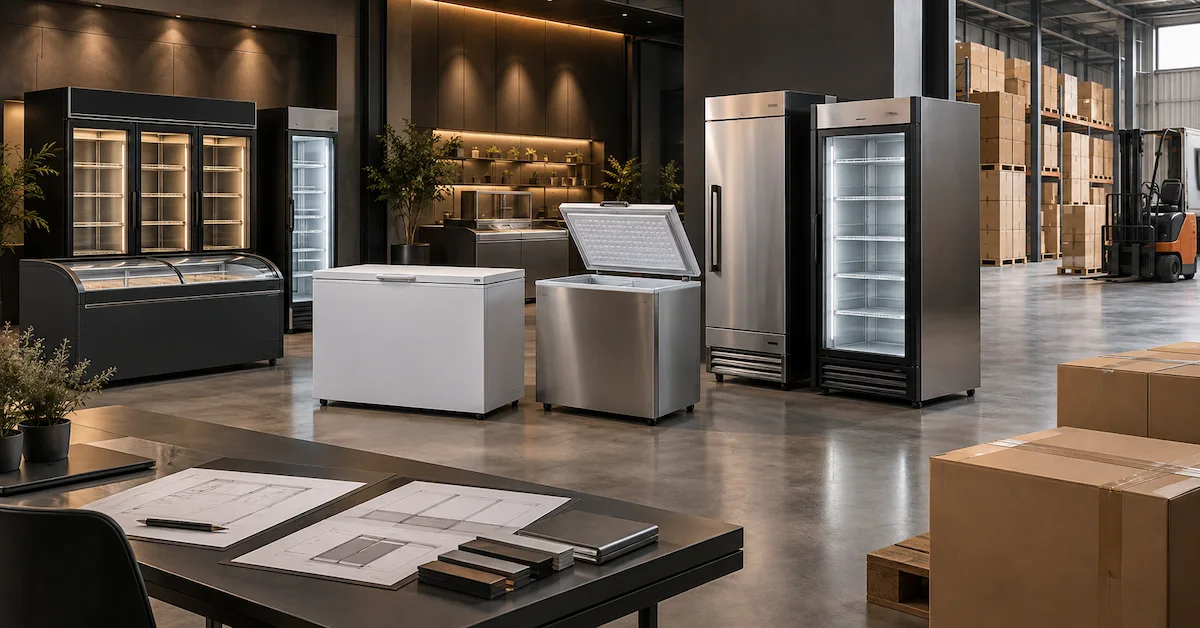
For buyers using the search phrase custom freezer supplier China, the real purchasing decision is rarely “Which factory has the lowest unit price?” Importers usually need a supplier that can translate a market requirement into a controlled freezer specification, manufacture the approved version consistently, prepare equipment for export, support replacement parts and reproduce the same product on later orders.
That makes China sourcing a combination of product selection, engineering, manufacturing control and supply-chain planning. A 300L freezer quoted by two factories may differ in cabinet construction, electrical version, controller, accessories, refrigerant configuration, packaging and testing scope. Comparing the two prices before those details are aligned can give a misleading result.
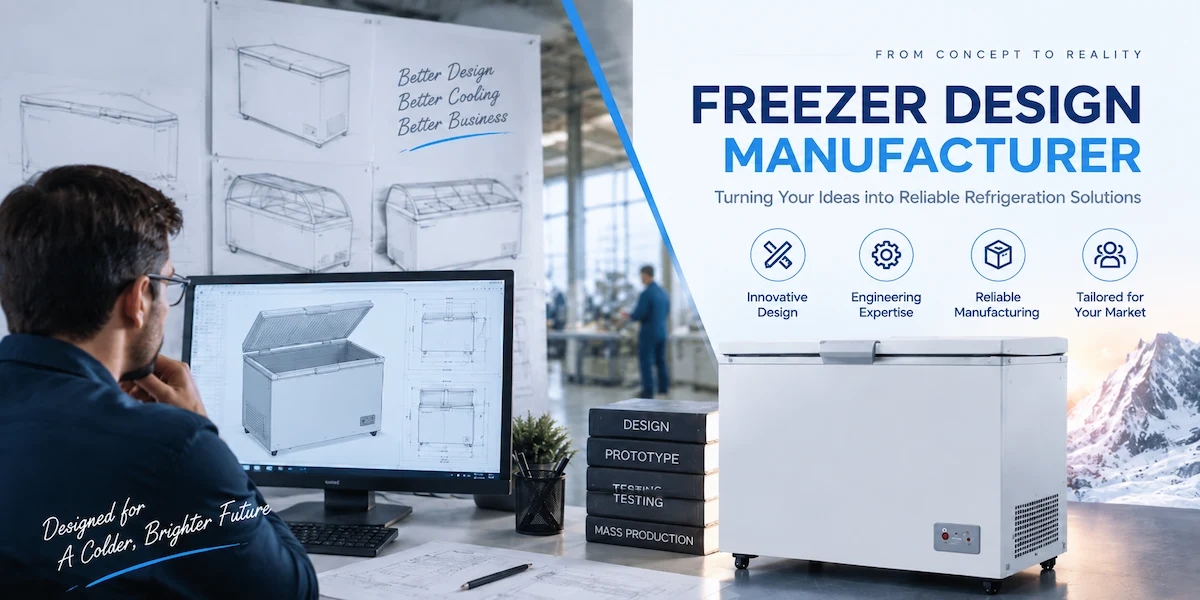
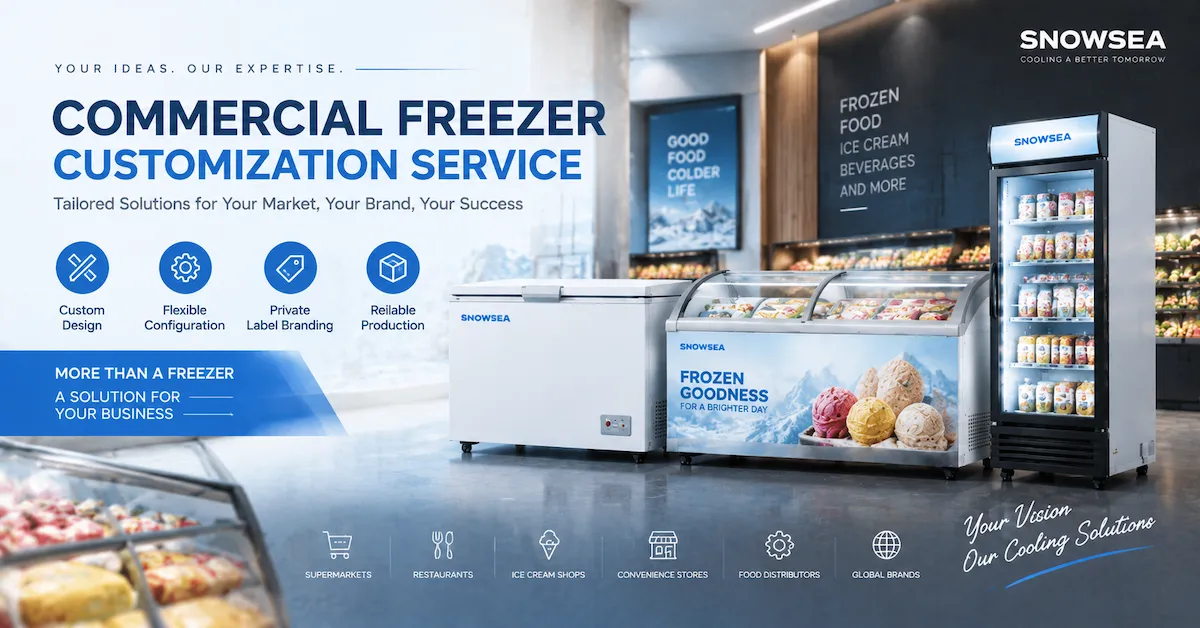
SNOWSEA’s current commercial freezer range includes multiple chest-freezer platforms, while its OEM/ODM manufacturing program describes integrated production and in-house testing for distributors, brand owners and project buyers.
Who Should Source Custom Freezers From China?
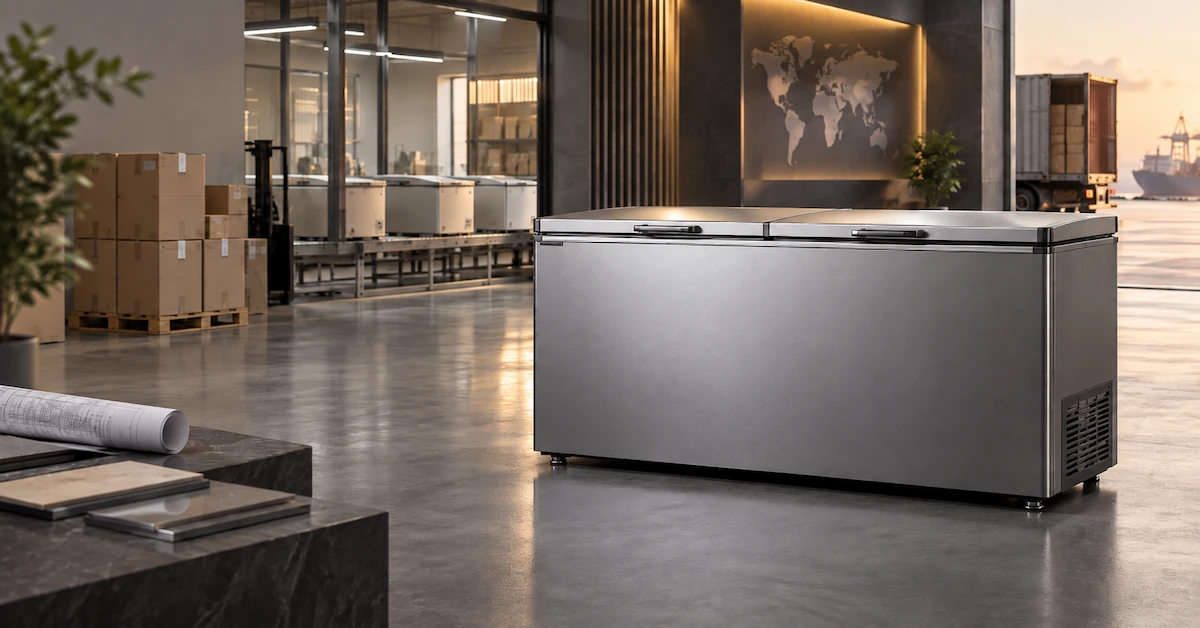
Factory-direct custom sourcing is most relevant to importers, refrigeration distributors, supermarket-equipment suppliers, ice cream brands, frozen-food companies and private-label refrigeration businesses that need recurring supply rather than one urgent replacement unit.
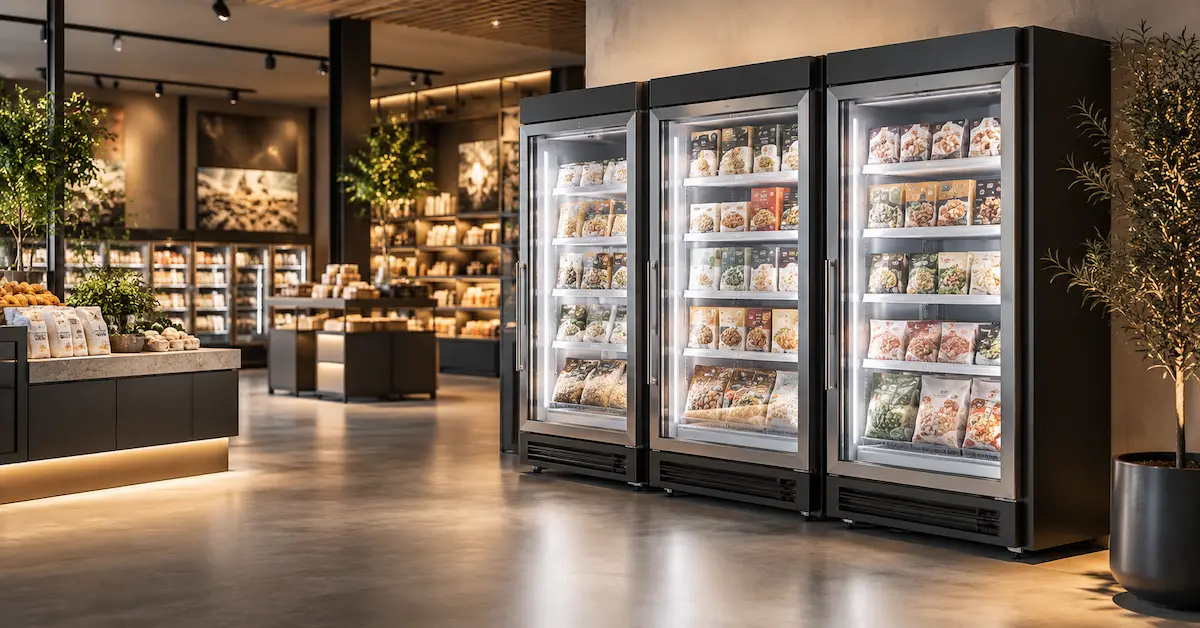
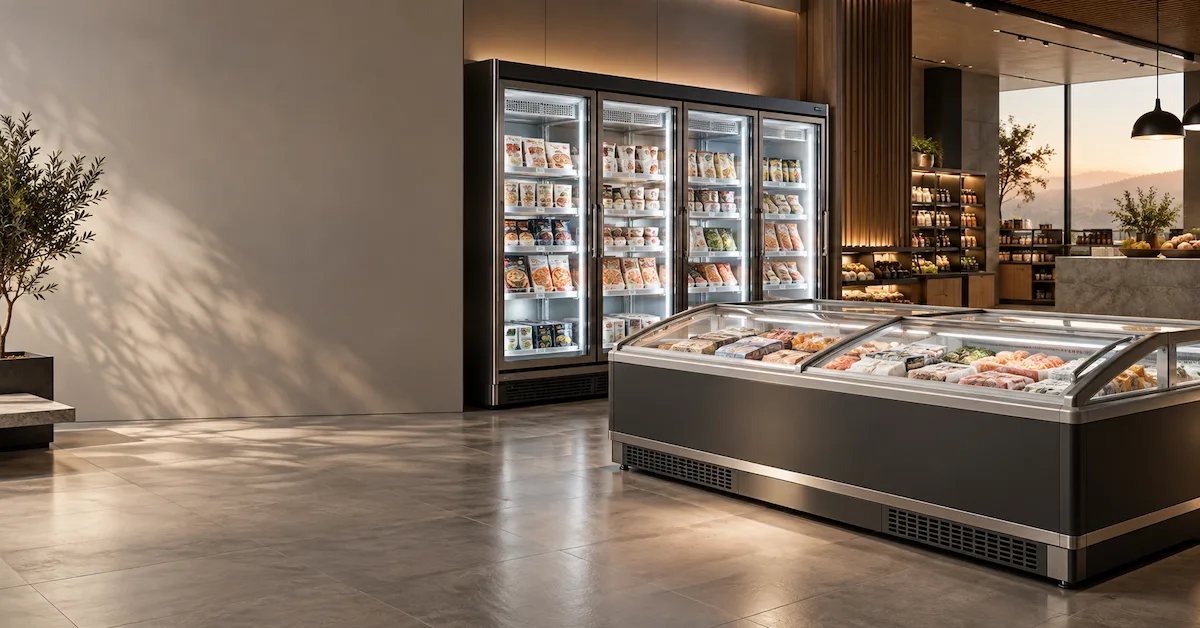
A distributor may want several freezer capacities under its own brand. An ice cream company may need a glass-top cabinet adapted to its package sizes and graphics. A supermarket supplier may require equipment that fits standardized store layouts. A regional brand may need a defined voltage, plug, label and carton for its market.
China factory sourcing is less attractive when the buyer needs only one unit immediately or depends entirely on local installation and same-day service. In those cases, local inventory may provide more commercial value than factory customization.
Define the Commercial Application Before Contacting Suppliers
A high-quality RFQ should begin with the end use. Do not start with “send your best 400L freezer price.”
Define what the freezer must store, where it will operate, how products are packaged and who will use it.
| RFQ Item | Buyer Should Provide | Why It Matters |
|---|---|---|
| Application | Restaurant, supermarket, ice cream retail, warehouse | Determines freezer type |
| Merchandise | Carton/tub/package dimensions | Determines usable layout |
| Required loading | Typical and peak inventory | Helps size the cabinet |
| Installation space | Maximum width, depth and height | Controls cabinet selection |
| Temperature requirement | Required storage condition | Guides refrigeration configuration |
| Ambient environment | Expected operating conditions | Influences thermal evaluation |
| Access pattern | Staff/customer opening frequency | Affects recovery requirements |
| Electrical supply | Voltage, frequency, plug | Defines export version |
| Branding | Logo, labels, colors, carton | Defines OEM scope |
| Quantity | Sample, first order, annual forecast | Helps assess MOQ and production planning |
| Destination | Country/region | Guides documentation and logistics discussion |
The clearer the application, the easier it becomes to distinguish a serious supplier from one that simply quotes whichever model is easiest to sell.
Start With a Proven Base Model Before Requesting Deep Customization
Custom sourcing does not mean every freezer should be redesigned from zero. A strong supplier should first identify the closest existing platform.
SNOWSEA currently lists models such as BD-208, BD-100A, BD-800, BCD-200, BD-500, BD-200, BD/BC-227WA, BD-308 and BCD-268 in its freezer category.
For example, the BD-500 chest freezer is published as a 500L double-lid platform with adjustable temperature control, removable basket, drain, lock and R290 refrigerant. Its page also states that cabinet dimensions, insulation thickness, refrigeration configuration, compressor options and control panels can be evaluated for project requirements.
The buying principle is:
Use the standard platform to solve as much of the application as possible, then customize only the remaining gap.
That approach can reduce engineering work, testing requirements, component complexity and repeat-order risk.
Separate Branding, Configuration and Engineering Customization
One of the most important questions to ask a China supplier is what kind of customization each request actually represents.
Branding Customization
This can include logo, model name, cabinet graphics, labels, manuals and private-label cartons. It normally creates less technical risk but still needs artwork and revision control.
Functional Configuration
This can include baskets, locks, wheels, selected controls or other model-dependent options. Compatibility should be confirmed for the chosen freezer.
Engineering Customization
Changes to cabinet dimensions, insulation, refrigeration architecture, compressor selection, controller logic or glass structure can affect product performance. These should be reviewed technically rather than treated as simple OEM options.
A supplier that says “everything can be customized” without explaining the engineering consequences is giving limited purchasing information.
Build One Controlled Custom Freezer Specification
Once the project scope is clear, convert the quotation into a controlled specification before sample production.
| Specification Area | What Should Be Locked |
|---|---|
| Buyer model | Private-label model number |
| Factory model | Base freezer platform |
| Application | Intended commercial use |
| Capacity/loading | Actual storage arrangement |
| Cabinet | Dimensions and construction |
| Refrigeration | Cooling/defrost configuration |
| Controller | Hardware and relevant settings |
| Electrical | Voltage, frequency and plug |
| Accessories | Basket, lock, wheel and options |
| Branding | Logo and graphics |
| Rating label | Technical/product information |
| Manual | Language and revision |
| Packaging | Protection and carton design |
| Testing | Required acceptance checks |
Give the specification a revision number. The purchase order, approved sample and later repeat orders should all point to that same controlled reference.
Verify the Supplier Is Controlling Manufacturing, Not Just Selling OEM
A custom freezer supplier in China should be able to explain how the approved configuration moves through production.
SNOWSEA’s published OEM/ODM process lists eight stages: material processing, panel and structural assembly, foaming and insulation, refrigeration-system installation, main assembly, performance and temperature testing, final inspection and packing, and storage and shipment.
When evaluating a supplier, ask how your order is identified at each relevant step. How does the assembly team know which electrical version to use? Where are custom accessories checked? How does QC know which controller belongs to the private-label SKU? How are custom labels and manuals prevented from being mixed with another buyer’s order?
This type of traceability is more valuable than a showroom presentation saying the factory provides “strict QC.”
Use a Factory Audit to Verify the Production Story
If the order value or customization level justifies it, a factory audit can reduce uncertainty before bulk production.
The audit should follow the freezer rather than only photograph the workshop. Begin with the approved specification and trace the model through cabinet production, insulation, refrigeration assembly, electrical assembly, testing, final inspection and packaging.
Useful audit evidence includes production instructions, model identification, component control, test criteria, failed-unit handling and custom packaging control.
You can also use SNOWSEA’s commercial freezer factory audit guide as an internal reference when preparing a supplier-review checklist.
Approve a Representative Sample Before the Bulk Order
The sample should represent the configuration you intend to purchase—not merely a visually similar freezer.
Check technical and commercial requirements separately.
Technical Approval
Confirm dimensions, electrical version, refrigeration configuration, controller, basket/accessory arrangement, real product loading and required temperature behavior.
Brand Approval
Confirm logo placement, model number, rating label, manual, carton artwork and exterior graphics.
If the project uses a customer-facing ice cream freezer, load actual products before approval. The SD/SC-268PM ice cream freezer provides an example of a different base platform where basket layout, sliding glass and package access become relevant alongside frozen-storage performance.
Do not sign off with only “sample approved.” Record the exact approved revision.
Make Quality Testing Specific to the Quoted Model
Testing should answer the application requirement.
SNOWSEA’s BD-500 page states that model testing can include temperature uniformity, cooling efficiency and operational stability. Buyers should still confirm the specific conditions and inspection scope for their own configuration.
A useful test discussion can cover cabinet load, ambient conditions, measurement positions, test duration, temperature stability and recovery after loading or opening where relevant.
If a technical component changes after sample approval, ask whether the original test evidence still represents the production version.
Check Destination-Market Requirements Before Artwork Is Printed
Do not finalize private-label rating labels or cartons before confirming the destination-market technical requirements.
The supplier should identify which documents apply to the exact model, electrical version and configuration. If your customization changes important technical elements, ask whether the existing documentation still applies.
SNOWSEA’s BD-500 product information states that certification support is arranged according to destination-country requirements rather than presenting one universal certification package for every project.
That is the safer sourcing approach: product-specific and market-specific confirmation before mass production.
Understand MOQ at Configuration Level
China sourcing often becomes commercially difficult when buyers look only at the total order quantity.
MOQ can be influenced by the base model, electrical version, color, logo method, custom carton, controller or special component.
For example, a 200-unit mixed order may look large overall, but if it contains four custom models with different cartons and electrical versions, the supplier may still need to discuss each configuration separately.
Ask:
What is the MOQ for this exact version, and which part of the customization creates that minimum?
That question can uncover opportunities to keep low-value features standard and reduce inventory risk.
Plan Mixed-Model Orders Around Demand, Not Container Space
Importers often buy several freezer models together. Mixed orders can make sense, but the model mix should follow expected sales.
The correct sequence is:
Market demand → SKU quantity → model MOQ → packing dimensions → loading plan
Do not add another freezer simply because unused container space remains.
Custom packaging can also change packing dimensions, so final logistics planning should use the approved carton rather than a standard-model estimate.
Compare Landed Cost Instead of Factory Price Alone
A custom freezer supplier China comparison should consider the total cost of making the freezer saleable in your market.
Relevant costs can include base equipment, customized components, private-label packaging, samples, inspection, international freight, import charges, local handling, spare parts and warranty responsibilities.
| Cost Area | Supplier A | Supplier B |
|---|---|---|
| Base freezer | Compare | Compare |
| Custom features | Compare | Compare |
| Sample/development | Compare | Compare |
| Packaging | Compare | Compare |
| Inspection | Compare | Compare |
| Spare parts | Compare | Compare |
| Freight responsibility | Confirm | Confirm |
| Warranty responsibility | Confirm | Confirm |
| Repeat-order MOQ | Confirm | Confirm |
A lower factory quotation can still produce a higher distribution cost if the specification creates difficult service parts or excessive MOQ.
Export Packaging Is Part of Product Quality
A freezer that passes factory testing but arrives damaged is not a successful supply result.
Ask how the cabinet corners, controls, lid, handle, base and accessories will be protected. For glass-top products, confirm protection for the glass assembly and frame.
Request the final packed dimensions before accepting container-loading figures.
Private-label cartons should also identify the model and electrical version clearly enough for warehouse staff to distinguish similar products without opening every package.
Plan Spare Parts Before the First Container Ships
After delivery, your customer will normally contact you—not the Chinese factory—when service is required.
Ask for a model-specific spare-parts structure before the first order. Depending on the model, this may include controllers, sensors, gaskets, baskets, handles, locks or other service components.
SNOWSEA’s About Us page states that standard spare parts are stocked and that technical documentation and remote support are available for installation and troubleshooting. Final responsibilities for your specific product should still be confirmed in the commercial agreement.
A private-label model should be linked to its factory model and production revision so service teams know which replacement component belongs to which batch.
Clarify Warranty Responsibility Before You Resell the Product
Factory warranty and your customer-facing warranty are different things.
Before approving the supplier, clarify the warranty start point, covered failures, claim evidence, technical-diagnosis process, replacement-parts responsibility, freight responsibility and local labor.
Do not promise your distributors or end users services that have not been built into your own after-sales plan.
This is particularly important when sourcing directly from China because local service is usually managed by the importer, distributor or its service network.
Use Change Control to Protect Repeat Orders
The first shipment is only the beginning of a successful sourcing relationship.
For later orders, reference the approved product revision and require the supplier to disclose proposed deviations before production.
A repeat-order instruction can state:
“Manufacture according to the approved specification revision and identify any proposed component, electrical, technical, artwork or packaging change before implementation.”
This prevents a private-label model from gradually changing internally while retaining the same external model name.
How to Compare Custom Freezer Suppliers in China
A practical supplier comparison should look beyond price and catalog size.
| Evaluation Area | What to Verify |
|---|---|
| Base products | Relevant proven freezer platforms |
| Custom engineering | Ability to explain technical impacts |
| Specification control | Controlled product revisions |
| Manufacturing | Clear production process |
| Quality testing | Model-specific test evidence |
| Sample process | Technical + branding approval |
| Market documents | Product/destination-specific support |
| MOQ | Explained by configuration |
| Packaging | Export-ready protection |
| Production planning | Realistic lead-time milestones |
| Spare parts | Identifiable replacement support |
| Change control | Repeat-order consistency |
When evaluating a custom freezer supplier China option, score only the evidence that applies to the exact project. A supplier may have excellent general capabilities while still being unsuitable for one specialized requirement.
What Should You Send SNOWSEA for a China Custom Freezer Project?
To receive a meaningful quotation, provide the target country, end-customer type, freezer application, products being stored, package dimensions, required capacity, installation limits, temperature requirement, ambient environment, electrical configuration, branding, custom features, sample quantity, bulk-order quantity, annual forecast and expected launch schedule.
SNOWSEA’s current OEM/ODM page explicitly positions its program for overseas distributors, brand owners and project buyers and describes integrated manufacturing and in-house testing.
You can send the project through SNOWSEA Contact Us and request a response that separates the recommended standard platform, OEM options, engineering changes, sample requirements, MOQ, production plan, packaging and spare-parts support.
Frequently Asked Questions
1. What is a custom freezer supplier in China?
A custom freezer supplier in China provides commercial freezer products that can be adapted to buyer requirements such as branding, electrical configuration, cabinet layout, controls, packaging or deeper engineering changes depending on the project.
2. How do I choose a reliable custom freezer supplier in China?
Evaluate the base product range, manufacturing process, engineering capability, specification control, sample procedure, testing, MOQ, packaging, spare-parts support and repeat-order change control.
3. Should I buy from a manufacturer or trading company?
The decision depends on your sourcing model. For custom technical projects, direct access to engineering and manufacturing control can be useful, while other sourcing structures may offer broader procurement services. Verify who actually manufactures the freezer and who is responsible for technical decisions.
4. What freezer features can be customized?
Depending on the selected platform and technical feasibility, projects can evaluate cabinet dimensions, internal layout, glass or lid design, controllers, electrical versions, branding, accessories and packaging.
5. Can SNOWSEA customize freezer structure and refrigeration configuration?
SNOWSEA’s BD-500 product page states that cabinet dimensions, insulation thickness, refrigeration-system configuration, compressor options and control panels can be evaluated according to project requirements.
6. Should I order a sample before bulk production?
For a new private-label or technically customized freezer, a representative sample is useful for checking the approved configuration, loading, operation, branding and relevant performance before bulk production.
7. What affects custom freezer MOQ in China?
MOQ can be influenced by base model, electrical version, color, private-label packaging, glass, controller and other custom components. Ask which requirement is driving the minimum.
8. How should I compare Chinese freezer supplier prices?
Align the technical configuration first, then compare base price, customization, packaging, testing, spare parts, commercial responsibilities and expected landed cost.
9. What should I check before shipment?
Confirm models, quantities, electrical versions, accessories, identification, workmanship, agreed functional checks, documentation and final export packaging against the purchase specification.
10. How do I request a custom freezer quote from SNOWSEA?
Provide your target market, application, loading requirement, required dimensions, electrical configuration, customization scope and expected quantities through SNOWSEA Contact Us and request a model-specific OEM proposal.
Conclusion
Choosing a custom freezer supplier China partner should be treated as building a repeatable international supply program rather than finding the cheapest customized cabinet. Define the application first, start from a proven freezer platform, separate branding from true engineering changes, control the final specification, validate a representative sample and verify how the approved version moves through manufacturing, testing, packaging and shipment. MOQ, landed cost, destination-market documentation, spare parts, warranty responsibility and repeat-order change control should all be settled before the relationship becomes dependent on large-volume purchasing. SNOWSEA currently provides a broad commercial freezer range together with OEM/ODM manufacturing support for overseas B2B buyers. If you are planning a private-label freezer range or a custom import project from China, send your application, product-loading data, destination market, customization requirements and expected volume through SNOWSEA Contact Us and request a project-specific proposal covering the product platform, customization scope, sample plan, MOQ, QC, export packaging and repeat-order control.