What Should a Commercial Freezer Customization Service Actually Solve?
A commercial freezer customization service should begin with a business or operating problem that a standard freezer cannot adequately solve. The reason might be limited installation space, unusual product packaging, a particular customer-access requirement, another electrical market, private-label branding or a technical operating condition. Customization should not begin with the assumption that changing more parts automatically creates a better product.
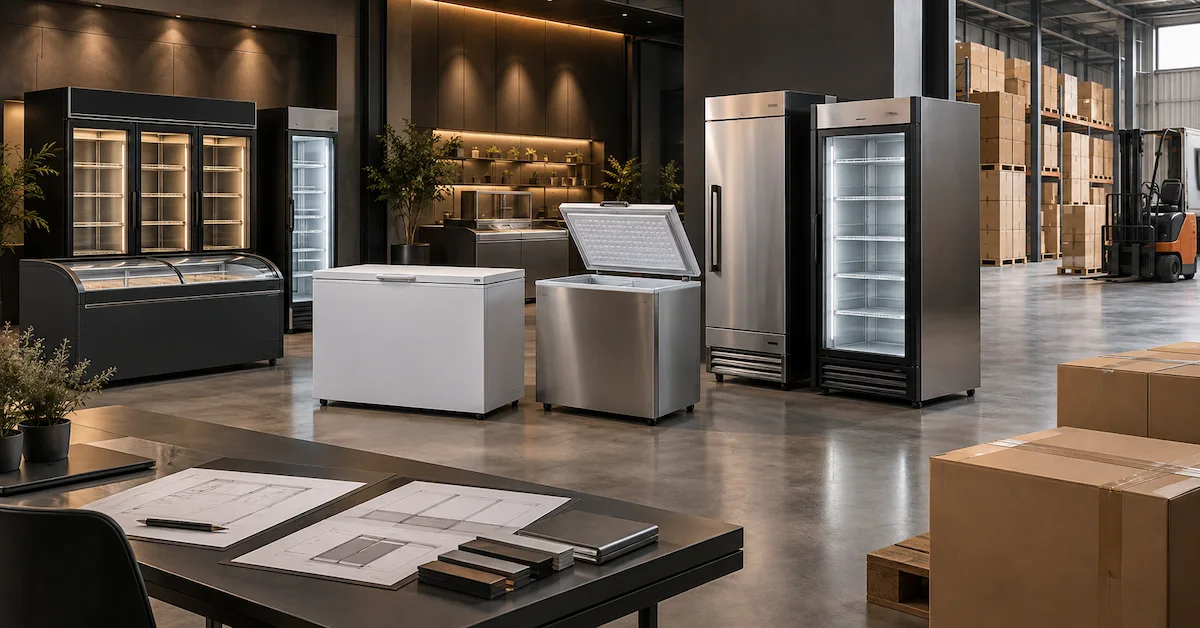
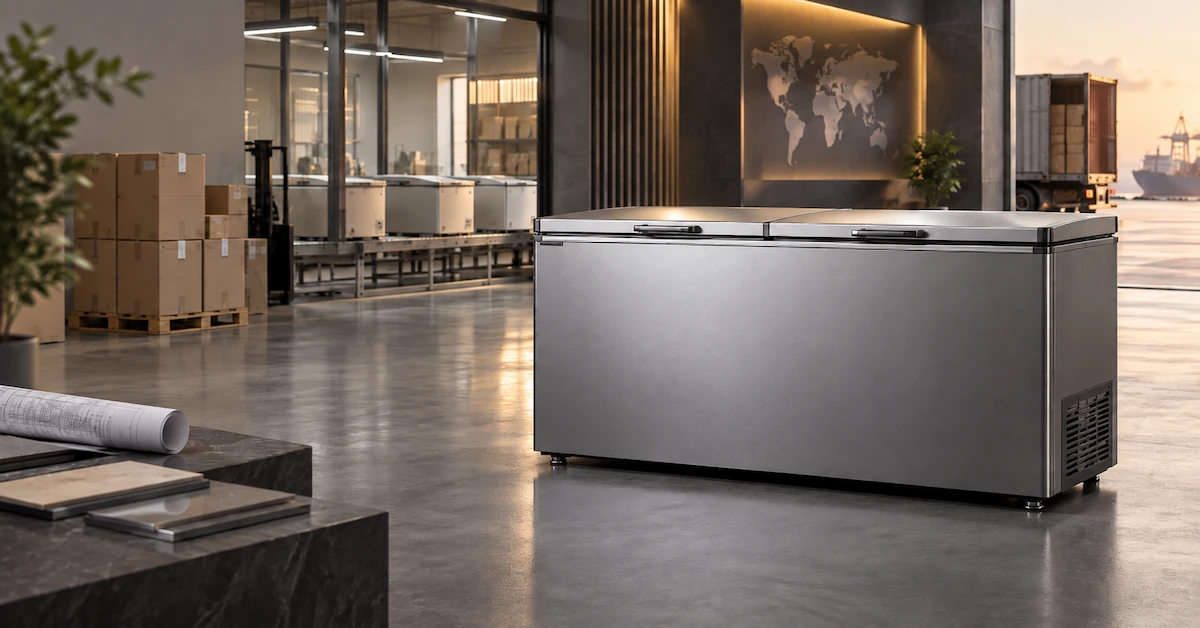
For distributors, frozen-food brands, ice cream companies, supermarket-equipment suppliers and private-label buyers, the strongest approach is to start with the closest proven product platform and modify only the areas that create measurable value. SNOWSEA provides a commercial freezer product range together with an OEM/ODM service for buyers requiring market-specific or project-specific refrigeration configurations.
The purchasing objective is therefore simple: keep proven elements standard where they already work, and customize only where the application requires a different solution.
Who Typically Needs Commercial Freezer Customization?
Commercial freezer customization is most relevant to B2B buyers building repeatable product programs rather than purchasing one replacement unit. A distributor may need a differentiated range for several customer groups. An ice cream brand may need freezer graphics and internal organization adapted to its package sizes. A supermarket chain may require equipment to fit standardized store layouts. A restaurant-equipment supplier may need another electrical configuration or storage format for a regional market.
Customization becomes less valuable when the standard freezer already performs the required job. In that case, changing dimensions, controls or components only to make a product appear unique can create additional MOQ, validation, spare-parts and repeat-order complexity.
The first question should therefore be:
What requirement does the current standard freezer fail to meet?
If that cannot be answered clearly, the project may not need technical customization.
Start With the Application Before Choosing Custom Options
A buyer should describe the real application before choosing cabinet dimensions, glass, controllers or components. The same freezer structure does not automatically suit every commercial environment.
| Application | Main Buyer Requirement | Possible Customization Focus |
|---|---|---|
| Restaurant frozen storage | Easy loading, usable capacity, reliable access | Cabinet size, baskets, electrical version |
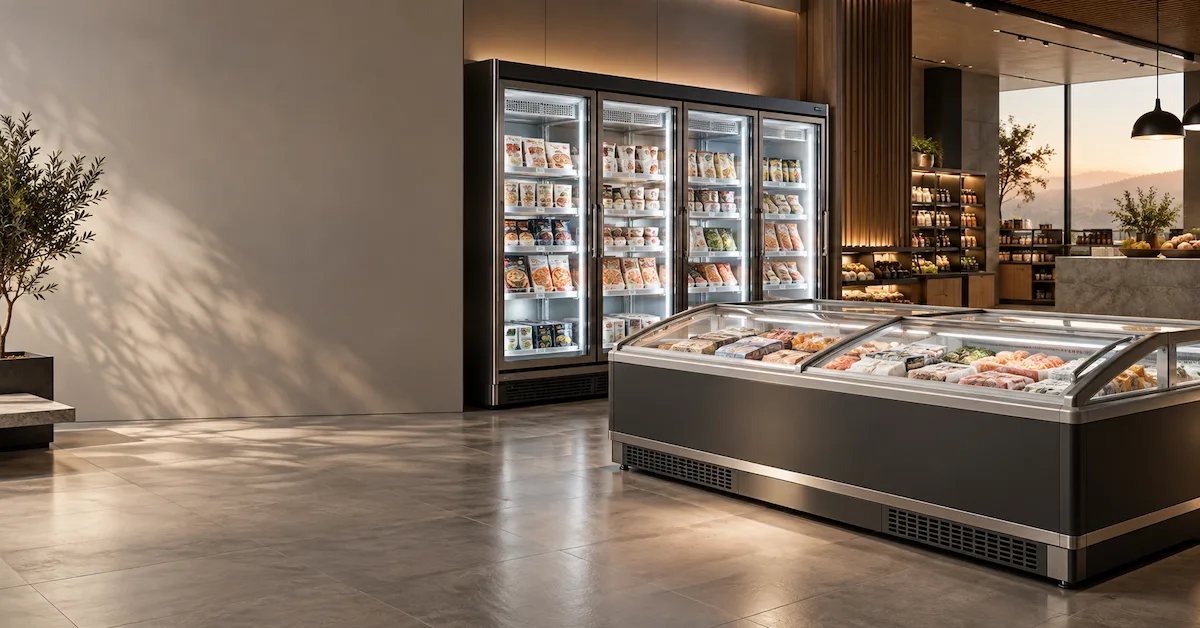
| Supermarket reserve storage | Repeatable store fit and inventory capacity | Dimensions, configuration, branding |
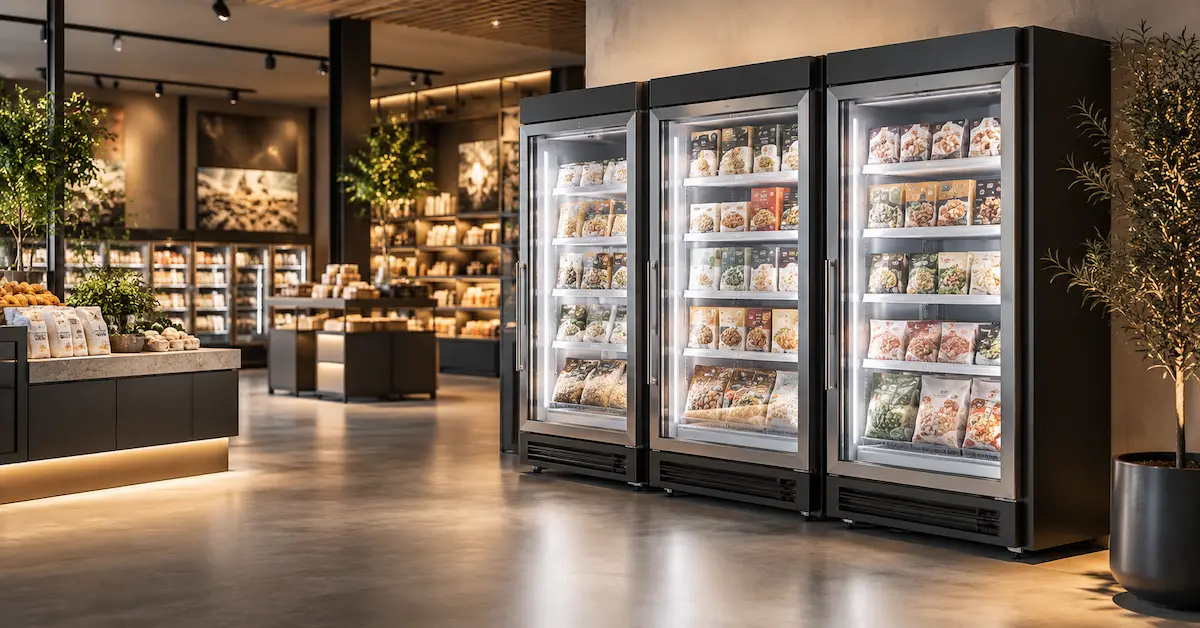
| Packaged ice cream retail | Visibility, customer access, merchandising | Glass, baskets, graphics |
| Frozen-food distributor | Multiple customer segments | Model mix, labeling, packaging |
| Private-label brand | Product differentiation and repeatability | Branding, controls, specifications |
| Hot-market project | Stable operation under demanding conditions | Refrigeration evaluation, controls, insulation |
The buyer should use this application information to screen suitable SNOWSEA products before deeper engineering discussions begin.
Separate Customization Into Three Levels
Not all freezer customization has the same technical impact. A professional commercial freezer customization service should distinguish three levels.
Brand and Market Customization
This includes logo placement, private-label model names, manuals, cartons, product labels, colors, plug types and other localization requirements. These changes usually create less engineering risk but still require revision control.
Functional Configuration
This can include baskets, locks, lighting, shelves where relevant, selected controller functions and model-specific accessories. Compatibility should be confirmed on the selected base freezer.
Engineering Customization
Cabinet dimensions, insulation, glass structure, refrigeration configuration, compressor selection, controller logic and other technical changes can affect cooling performance and therefore require engineering evaluation and validation.
The quotation should identify which request belongs to which level instead of describing everything simply as “custom available.”
What Freezer Features Can Be Customized?
The available scope depends on the selected model and technical feasibility, but B2B freezer projects commonly evaluate several areas.
| Customization Area | Typical Buyer Reason | Main Risk to Evaluate |
|---|---|---|
| Cabinet dimensions | Fit store or installation space | Refrigeration load and packaging |
| Internal layout | Fit actual cartons or products | Usable capacity and access |
| Glass/lid structure | Improve merchandising or access | Heat gain, sealing, transport |
| Controller | Add required operating functions | System behavior and service |
| Temperature range | Match storage application | Refrigeration capability |
| Electrical version | Match destination market | Production identification |
| Branding | Build private-label product | Artwork/version errors |
| Accessories | Improve usability | MOQ and spare-parts complexity |
| Packaging | Brand and export protection | Packed size and logistics |
Not every option should be used on every project. The useful question is whether each customization changes something the end customer actually values.
Cabinet Size Customization Requires More Than a New Drawing
Changing the cabinet width, depth or height can affect more than store fit. The modified enclosure may change usable volume, heat-transfer area, insulation arrangement, refrigeration load and final packaging dimensions.
Before asking for a new cabinet size, provide real package dimensions and installation constraints. The manufacturer may find that a different existing product, internal basket arrangement or loading method solves the problem without requiring a new enclosure.
If a custom cabinet is still necessary, the buyer should confirm both external dimensions and usable internal dimensions. The revised design should also be reviewed for refrigeration performance, lid or glass operation, service access and export packaging before mass production.
Internal Layout Should Be Designed With Real Products
A nominal capacity figure does not explain how efficiently the buyer’s products can actually be loaded.
For frozen-food storage, buyers should provide representative carton dimensions and typical quantities. The sample should be loaded with realistic products so staff access, basket usage and lower-level retrieval can be checked.
For ice cream applications, the buyer should test the actual packages instead of approving basket layouts only from drawings. Product visibility, customer reach and replenishment behavior can be as important as total liters.
This is one area where a commercial freezer customization service can create meaningful value without redesigning the complete refrigeration system: optimize the internal organization around the actual merchandise.
Glass and Lid Customization Must Remain Part of the Thermal Design
For customer-facing frozen displays, glass is both a merchandising component and part of the cabinet enclosure. A different sliding structure, glass area, frame or sealing arrangement can affect access, heat transfer, condensation behavior and transport protection.
A buyer requesting another glass configuration should define the purpose first. Is the problem limited customer access? Poor package visibility? A store-fixture restriction? Another merchandising format?
Once the objective is clear, the complete modified cabinet should be evaluated instead of approving only the appearance.
Temperature Range Customization Is Not Just a Thermostat Setting
A common purchasing mistake is assuming a different temperature requirement can be achieved simply by changing the controller setpoint. The complete refrigeration system has to support the required operating condition.
A temperature customization brief should define the stored product, target condition, surrounding environment, expected loading and access pattern. Engineering can then determine whether the base refrigeration system remains suitable.
If the project asks for significantly different operating behavior, the manufacturer may need to review components, controls, heat rejection and other system variables. The resulting sample should then be validated under agreed conditions.
Controller Customization Should Begin With Required Functions
A custom controller can add commercial value when the buyer genuinely needs different operating or interface functions. Possible requirements can include temperature display, setpoint limits, compressor restart delay, sensor inputs, alarms, defrost parameters or parameter locking.
However, a controller change should not be treated as only a cosmetic interface update. Control logic can influence compressor cycling, defrost, fan operation where applicable and temperature recovery.
For projects requiring deeper control customization, buyers can define the functions through SNOWSEA’s OEM/ODM service and then validate the complete freezer with the approved control version.
Branding and Private Label Customization Need Version Control
Branding is usually one of the simpler areas technically, but mistakes can still create expensive commercial problems. The wrong model number, voltage label, logo, manual or carton can make otherwise correct equipment difficult to distribute.
A private-label project should control:
- Logo artwork
- Private-label model number
- Product label
- Electrical information
- Manual revision
- Carton artwork
- Shipping marks
- Product photography reference where needed
Technical information on labels and packaging should come from the final approved product specification rather than from an early quotation.
Build One Controlled Freezer Customization Specification
Before sample production, convert all agreed requirements into one controlled document.
| Specification Item | What Should Be Locked |
|---|---|
| Base freezer | Factory model/platform |
| Application | Intended storage/display use |
| Cabinet | Approved dimensions and construction |
| Internal layout | Baskets, loading arrangement |
| Lid/glass | Approved structure |
| Refrigeration | Final system configuration |
| Controller | Hardware and relevant settings |
| Electrical | Voltage, frequency and plug |
| Accessories | Included custom options |
| Branding | Final artwork |
| Label/manual | Approved revisions |
| Packaging | Final protection and carton |
| Testing | Defined acceptance requirements |
Give the document a revision reference. The purchase order and sample approval should both point to the same version.
How Should a Custom Freezer Sample Be Approved?
The sample should prove the requirement that caused the customization.
If cabinet dimensions were changed, test installation fit. If internal storage was modified, load actual merchandise. If glass changed, evaluate access and visibility. If temperature or controls changed, verify the operating result.
Technical Approval
Technical approval can include structure, electrical configuration, refrigeration behavior, controller, accessories and relevant performance.
Commercial Approval
Commercial approval should separately cover logo, color, model identity, manual, label and packaging.
Separating the two approvals makes corrections easier and reduces the risk that a visually acceptable sample is treated as technically complete.
Performance Testing Should Match the Customization
Testing requirements depend on what changed.
A simple logo or carton change normally does not justify the same technical validation as a modified cabinet or refrigeration system. By contrast, changes affecting enclosure size, glass, cooling configuration or controls may require additional model-level review.
When technical performance is relevant, record the model, configuration, ambient condition, loading, controller settings, measurement locations, test duration and acceptance criteria.
SNOWSEA’s broader OEM/ODM manufacturing process gives buyers a useful framework for connecting customized product development with manufacturing and testing.
Mass Production Must Match the Approved Sample
Sample approval is not useful if normal factory production silently uses another configuration.
Before bulk production begins, ask how the approved customization is transferred to:
- Material preparation
- Cabinet assembly
- Refrigeration installation
- Electrical assembly
- Final assembly
- Quality inspection
- Branding application
- Packaging
The custom product should have one identifiable production version.
If an important component later becomes unavailable, the supplier should disclose the proposed change and determine whether buyer approval or new validation is necessary.
MOQ Depends on the Actual Custom Scope
There is no meaningful universal MOQ for all customization.
Minimum quantity can be driven by the freezer model, electrical version, color, custom packaging, glass, controller or other dedicated components.
A small custom part can sometimes create more MOQ pressure than the freezer assembly itself.
Before locking the design, ask what is driving each minimum. If an optional feature creates a disproportionately large MOQ without significant customer value, consider keeping that element standard.
Customization Can Change Production Lead Time
A standard model can often enter production more directly than a technical customization project.
The complete schedule may include requirement confirmation, engineering review, artwork approval, sample manufacturing, sample corrections, specification freeze, material preparation, production, inspection and packing.
Buyers should ask what starts the quoted lead time and which approvals are still their responsibility. This makes launch planning much more realistic than relying on one headline number such as “30 days.”
Compare Standard and Customized Versions Before Approving the Cost
A buyer should understand how much additional cost is created by the customized version and what commercial value that cost delivers.
| Cost Area | Standard Freezer | Customized Freezer |
|---|---|---|
| Base equipment | Benchmark | Recurring cost |
| Engineering | Limited | Possible development work |
| Sample | Standard sample | Customized validation |
| Tooling | Usually existing | Possible where required |
| Custom parts | Standard | May add unit cost/MOQ |
| Branding | Limited | Custom artwork/application |
| Packaging | Standard | Project-specific |
| Testing | Existing scope | Additional where required |
| Spare parts | Existing system | Unique items possible |
| Freight | Known package | Recalculate after changes |
The objective is not to avoid additional cost at all times. It is to confirm that the change solves a sufficiently valuable problem.
Customization Should Not Create an Unserviceable Product
Unique components can become long-term service liabilities.
Before approving a custom controller, gasket, glass panel, basket or other dedicated part, ask how the replacement will be identified and sourced. Determine whether it has its own MOQ and whether the distributor should stock it locally.
For private-label buyers, create a reference connecting the private-label SKU to the factory product revision and its spare parts.
SNOWSEA’s About Us page provides company and service context, while order-specific spare-parts requirements should be confirmed during the project itself.
How Should Buyers Evaluate a Commercial Freezer Customization Service?
A useful supplier evaluation should examine whether the manufacturer manages customization as a controlled engineering and production process.
| Evaluation Area | Key Buyer Question |
|---|---|
| Product range | Is there a suitable base freezer? |
| Requirement analysis | Does the supplier understand why customization is needed? |
| Engineering | Can technical consequences be explained? |
| Specification control | Can one final version be clearly defined? |
| Sample process | Does validation match the real application? |
| Manufacturing | Can bulk production reproduce the sample? |
| Quality control | Are custom items included in QC? |
| MOQ | Are minimums explained by configuration? |
| Lead time | Are approval and production stages separated? |
| Spare parts | Can customized components be supported later? |
| Repeat orders | Is change control defined? |
The best service is not the one offering the largest menu of custom options. It is the one that helps buyers decide which changes are worth making and controls those changes through production.
What Should You Send SNOWSEA for a Customization Project?
A useful project brief should explain the application and the problem with the standard product. Include the target market, buyer type, freezer application, required capacity, real package dimensions, installation limitations, temperature requirement, ambient environment, electrical configuration, required custom features, branding needs, sample quantity, expected bulk order and project timing.
Use SNOWSEA Contact Us to submit the project and request a proposal that separates the closest standard freezer, available options, branding customization, engineering changes, sample requirements, MOQ impact and production timeline.
A better inquiry is:
“This is our application and this is the limitation of the standard freezer. Please recommend which parts need modification and which should remain standard.”
That gives the manufacturer a clear engineering problem instead of an uncontrolled custom-feature list.
Frequently Asked Questions
1. What is a commercial freezer customization service?
A commercial freezer customization service adapts an existing freezer platform to defined buyer requirements such as cabinet dimensions, loading, branding, electrical configuration, controls, glass or selected technical features.
2. Who needs custom commercial freezers?
Distributors, supermarkets, frozen-food brands, ice cream companies, restaurant-equipment suppliers and private-label refrigeration brands may require customization when standard equipment does not satisfy their application.
3. What parts of a commercial freezer can be customized?
Depending on the model and engineering feasibility, projects can evaluate cabinet dimensions, internal layout, glass or lids, controllers, electrical versions, accessories, branding and packaging.
4. Should every custom freezer use a different refrigeration system?
No. If the existing refrigeration configuration already meets the modified application, retaining it can reduce development risk. Engineering changes should only be made where required.
5. Can SNOWSEA customize freezer branding and packaging?
SNOWSEA provides OEM/ODM services for distributors, brands and project buyers. Final branding and packaging scope should be confirmed for the selected model.
6. Does cabinet-size customization affect freezer performance?
It can. Changing enclosure dimensions can alter usable capacity, cabinet heat load, insulation geometry and packaging, so the refrigeration design should be reviewed.
7. Do customized freezers need samples?
A sample is especially useful when customization affects dimensions, loading, glass, controls, electrical configuration or technical performance. The sample should be validated against the requirement that justified the customization.
8. Does commercial freezer customization increase MOQ?
It can. Custom colors, cartons, glass, controllers or other dedicated components may introduce their own material minimums.
9. How can repeat custom freezer orders remain consistent?
Use a controlled specification linked to the approved sample and require proposed component, electrical, technical, artwork or packaging changes to be disclosed before production.
10. How do I request commercial freezer customization from SNOWSEA?
Send your application, product-loading requirement, installation dimensions, target market, electrical configuration, customization needs and expected quantity through SNOWSEA Contact Us for project evaluation.
Conclusion
A commercial freezer customization service should make a freezer more suitable for a defined business requirement, not simply make it more different from the standard product. Start with the closest suitable commercial refrigeration platform, identify the precise problem that remains unresolved, keep proven elements standard wherever practical, and place deeper engineering control around cabinet, glass, refrigeration and controller changes. Then connect the customized sample to measurable application validation, production specifications, quality control, MOQ, packaging and spare-parts planning before mass manufacturing. SNOWSEA provides OEM/ODM customization support for distributors, brands and commercial refrigeration project buyers. If a standard freezer does not fit your product loading, store space, market, branding or operating requirement, send SNOWSEA the constraint you need to solve and request a project-specific customization proposal showing what should change, what should remain standard and how the final freezer will be validated and controlled for repeat production.