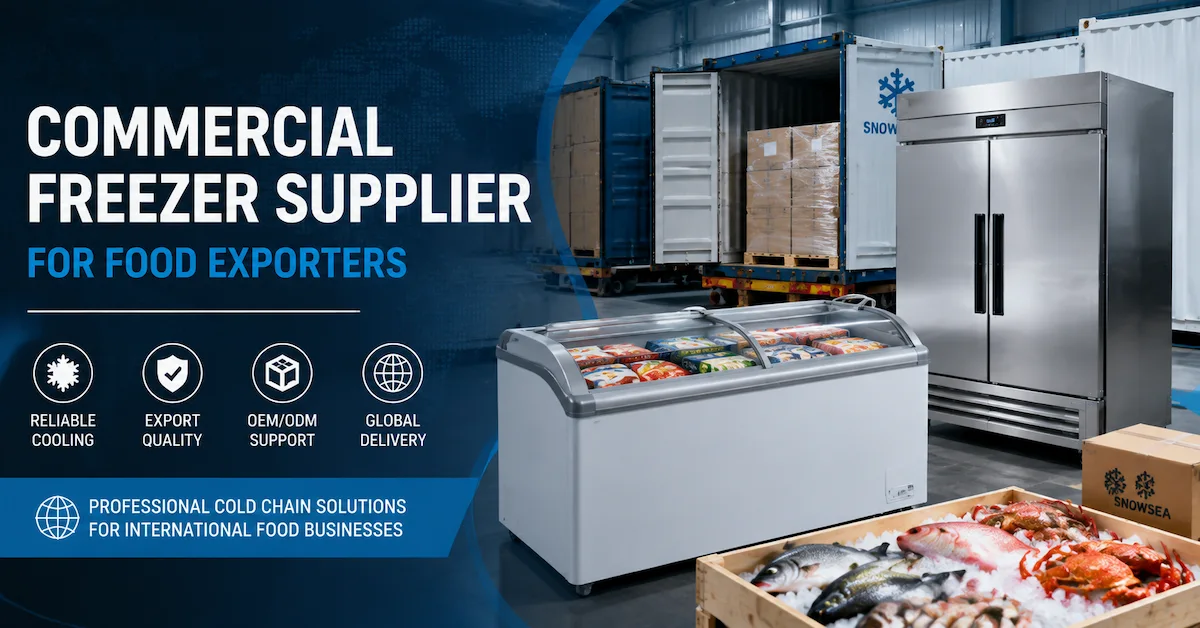
For food exporters, frozen food manufacturers, seafood suppliers, meat processors, and international food trading companies, selecting the right commercial freezer supplier for food exporters is essential for maintaining product quality throughout the cold chain.
Food export businesses often deal with long-distance transportation, international regulations, large-volume storage, and strict temperature requirements. The freezer equipment used during storage and distribution must provide stable performance, efficient operation, and reliable protection for frozen products.
Unlike ordinary commercial refrigeration users, food exporters need equipment that supports:
- Large-volume frozen storage
- Stable low-temperature operation
- International shipping requirements
- Long-term inventory management
- Export market standards
- Continuous operation
A reliable freezer supplier should provide more than standard equipment. Exporters need a partner that understands cold chain requirements, product handling, customization, quality inspection, packaging, and international delivery.
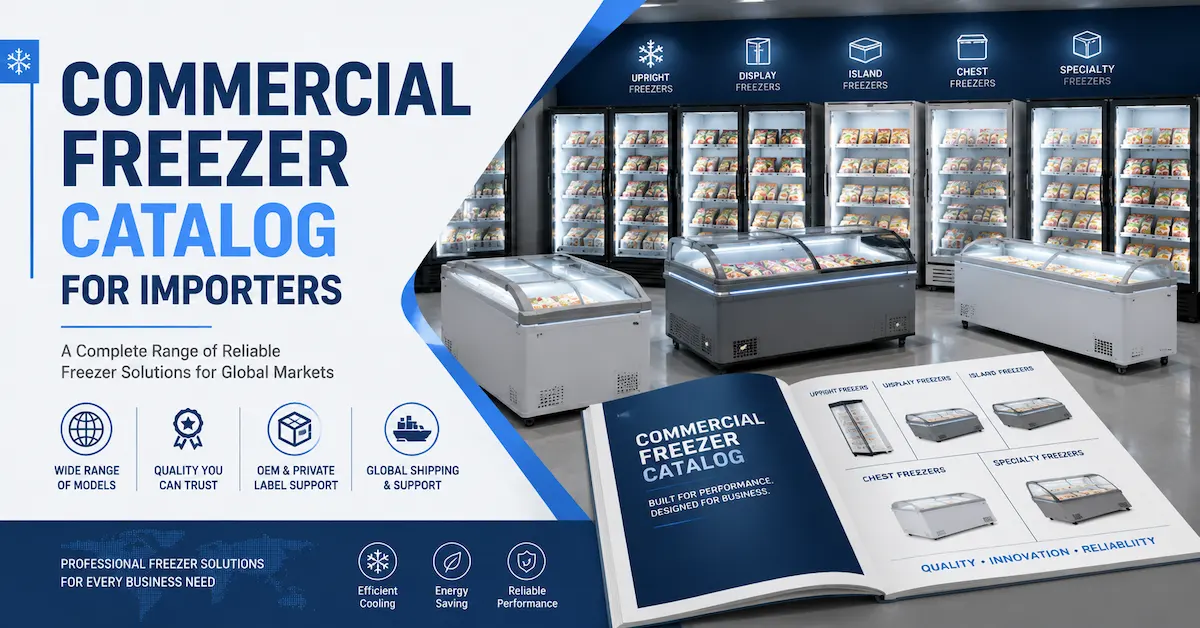
Snowsea provides commercial refrigeration solutions including upright freezers, chest freezers, display freezers, island freezers, refrigerators, beverage coolers, and showcase cabinets. Snowsea supports OEM/ODM customization, bulk production, export packaging, quality inspection, and international supply cooperation.
Why Food Exporters Need Professional Freezer Solutions
Food exporters manage products that may travel thousands of kilometers before reaching the final market. Any temperature issue during storage or transportation can affect:
- Product quality
- Shelf life
- Customer satisfaction
- Brand reputation
- Export compliance
A professional freezer solution helps exporters:
- Protect frozen products before shipment
- Maintain inventory stability
- Reduce product losses
- Improve warehouse efficiency
- Support international customer requirements
Typical food export applications include:
- Frozen seafood
- Frozen meat
- Frozen vegetables
- Frozen fruits
- Ready-to-eat meals
- Ice cream products
- Processed frozen foods
Each product category may require different storage conditions, capacities, and freezer configurations.
What Should Food Exporters Consider When Choosing a Freezer Supplier?
A suitable freezer supplier should understand the complete export workflow, including:
- Product receiving
- Frozen storage
- Inventory rotation
- Order preparation
- Container loading
- International shipment
Important evaluation factors include:
- Storage capacity
- Temperature stability
- Energy efficiency
- Product durability
- Export experience
- Customization capability
- Quality control
- Delivery reliability
The supplier should help exporters choose equipment based on actual cold chain requirements rather than simply recommending popular models.
Step 1: Evaluate Storage Capacity Requirements
The first step in selecting freezer equipment is understanding storage demand.
Food exporters should evaluate:
- Daily production volume
- Export order frequency
- Seasonal demand
- Warehouse space
- Product packaging size
- Inventory turnover rate
- Shipping schedules
For example:
Seafood Exporters
May require:
- Large-capacity chest freezers
- High-performance storage cabinets
- Stable low-temperature operation
Meat Exporters
May require:
- Heavy-duty commercial freezers
- Organized storage systems
- Reliable temperature recovery
Frozen Food Manufacturers
May require:
- Multiple freezer units
- Flexible storage arrangements
- Long-term supply planning
Correct capacity planning helps exporters avoid both insufficient storage and unnecessary investment.
Step 2: Choose Suitable Commercial Freezer Types
Different export businesses require different freezer solutions.
| Freezer Type | Application |
|---|---|
| Chest Freezer | Bulk frozen product storage |
| Upright Freezer | Organized inventory management |
| Glass Door Freezer | Product display and inspection |
| Island Freezer | Large frozen storage areas |
| Storage Cabinet | Commercial warehouse applications |
Chest Freezers
Suitable for:
- Seafood exporters
- Meat suppliers
- Large frozen inventories
Advantages:
- Large storage volume
- Strong insulation
- Good temperature retention
Upright Freezers
Suitable for:
- Export warehouses
- Food distribution centers
- Organized product storage
Advantages:
- Easy product classification
- Efficient space utilization
- Faster inventory access
Display Freezers
Suitable for:
- Food brands
- Retail export projects
- Customer demonstration areas
Advantages:
- Better product presentation
- Easier product inspection
A professional supplier should recommend equipment based on export operations.
Buyers can review Snowsea product categories here:
https://www.snowseax.com/products
Step 3: Ensure Stable Temperature Performance
Temperature stability is one of the most important factors for food exporters.
Exporters should evaluate:
- Temperature range
- Cooling speed
- Compressor performance
- Insulation quality
- Door sealing
- Defrost system
- Controller accuracy
- Temperature recovery
Frozen products may lose quality if temperatures fluctuate during storage.
Reliable freezer performance helps protect:
- Product texture
- Food safety
- Shelf life
- Export value
A professional freezer supplier should provide equipment designed for continuous commercial operation.
Step 4: Consider Energy Efficiency for Long-Term Operation
Export warehouses often operate freezers continuously.
Energy consumption can significantly affect operating costs.
Important factors include:
- Compressor efficiency
- Insulation structure
- Cooling system design
- Door sealing
- Temperature control system
Energy-efficient freezers help exporters:
- Reduce electricity costs
- Improve warehouse efficiency
- Lower operating expenses
For companies managing large frozen inventories, even small efficiency improvements can create significant savings.
Step 5: Check Export Experience and International Support
Food exporters often purchase equipment internationally, making supplier export experience important.
A reliable supplier should understand:
- Export documents
- International packaging
- Shipping requirements
- Container loading
- Destination market requirements
Export support may include:
- Commercial invoices
- Packing lists
- Product specifications
- Shipping coordination
- Technical documents
A supplier familiar with international projects can reduce communication problems and delivery risks.
Step 6: Evaluate OEM and Customization Options
Many food exporters require customized refrigeration solutions.
Customization may include:
- Company logo
- Cabinet design
- Product labels
- Packaging
- User manuals
- Voltage configuration
- Plug type
- Internal storage layout
OEM solutions help exporters:
- Build their own product identity
- Meet customer requirements
- Standardize equipment across markets
For Snowsea OEM/ODM projects, visit:
https://www.snowseax.com/oem-odm
Step 7: Review Quality Control Before Shipment
Quality inspection is essential for export equipment.
A professional supplier should check:
- Cabinet structure
- Cooling performance
- Electrical safety
- Compressor operation
- Door sealing
- Controller function
- Accessories
- Packaging quality
Pre-shipment inspection helps exporters reduce:
- Delivery problems
- Installation delays
- Customer complaints
- Replacement costs
Exporters should confirm inspection procedures before placing bulk orders.
Step 8: Plan Packaging and International Transportation
Commercial freezers may include sensitive components such as:
- Compressors
- Controllers
- Glass panels
- Shelves
- Electrical components
Export packaging should protect:
- Cabinet surfaces
- Doors
- Control systems
- Internal accessories
- Product appearance
Common packaging solutions include:
- Foam protection
- Reinforced cartons
- Wooden support
- Pallets
- Protective film
Proper packaging reduces transportation damage during long-distance shipping.
Step 9: Build a Long-Term Supply Partnership
Food exporters often require continuous equipment supply as their business grows.
A reliable freezer supplier should provide:
- Repeat-order support
- Technical assistance
- Spare parts communication
- Product updates
- Production planning
- Long-term cooperation
A stable supplier relationship helps exporters manage expansion and international customer demand.
Commercial Freezer Selection Checklist for Food Exporters
Before selecting a supplier, exporters should prepare:
| Information | Purpose |
|---|---|
| Product category | Defines storage requirements |
| Export market | Determines standards |
| Storage volume | Plans freezer capacity |
| Temperature requirements | Protects product quality |
| Order frequency | Supports purchasing plans |
| Custom requirements | Supports branding |
| Delivery schedule | Coordinates projects |
| Packaging needs | Reduces shipping risks |
| Quality standards | Ensures reliability |
Common Mistakes Food Exporters Should Avoid
Choosing Only Based on Price
Low-cost equipment may result in higher operating costs or quality problems.
Ignoring Temperature Stability
Poor temperature control can affect exported product quality.
Selecting the Wrong Capacity
Incorrect sizing may create storage shortages or unnecessary investment.
Ignoring Export Packaging
Poor packaging can cause damage during international transportation.
Not Evaluating Supplier Experience
Export projects require suppliers familiar with global logistics.
Why Snowsea Is a Reliable Commercial Freezer Supplier for Food Exporters
Snowsea focuses on commercial refrigeration solutions for food exporters, frozen food companies, distributors, supermarkets, and international buyers.
For export projects, Snowsea supports:
- Commercial freezer supply
- Bulk freezer solutions
- Cold chain equipment planning
- OEM/ODM customization
- Private label development
- Quality inspection
- Export packaging
- Bulk production
- Long-term supply cooperation
Snowsea product solutions include:
- Chest freezers
- Upright freezers
- Commercial freezer cabinets
- Display freezers
- Island freezers
- Beverage coolers
Buyers can learn more about Snowsea here:
https://www.snowseax.com/about-us
FAQ
1. What should food exporters look for in a commercial freezer supplier?
Food exporters should evaluate storage capacity, temperature stability, export experience, quality control, customization ability, and long-term support.
2. Which freezers are suitable for food export businesses?
Common options include chest freezers, upright freezers, storage cabinets, and display freezers depending on product type and operation requirements.
3. Can freezer suppliers provide customized solutions?
Yes. Suppliers can customize branding, packaging, technical specifications, voltage, and internal configurations.
4. Why is temperature stability important for food exporters?
Stable temperatures help protect product quality, maintain shelf life, and reduce losses during storage.
5. How can exporters reduce freezer sourcing risks?
They can reduce risks by selecting experienced suppliers, confirming specifications, inspecting products, and planning transportation carefully.
Conclusion
Choosing the right commercial freezer supplier for food exporters helps international food businesses maintain reliable cold chain operations and protect product quality.
A professional supplier should provide stable cooling performance, suitable freezer solutions, OEM customization, export support, quality inspection, and long-term cooperation.
Snowsea provides commercial freezer solutions for food exporters worldwide, including chest freezers, upright freezers, storage cabinets, display freezers, and customized refrigeration equipment.
Explore Snowsea’s commercial refrigeration products:
https://www.snowseax.com/products
For customized freezer projects: