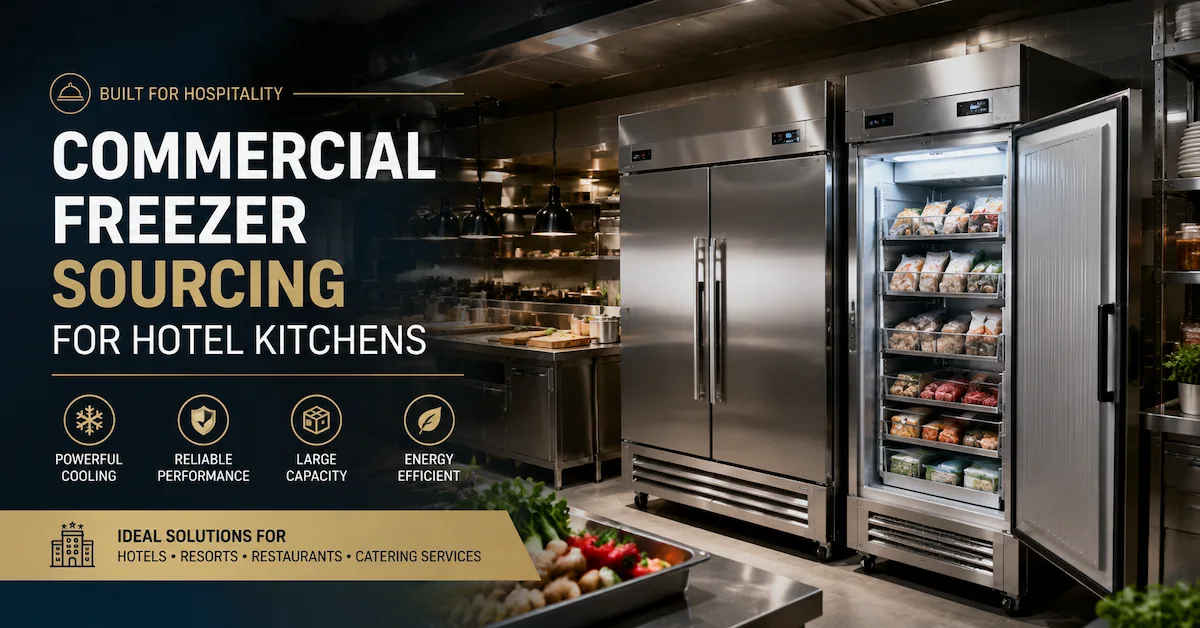
For hotel groups, hospitality operators, commercial kitchen contractors, importers, and food-service equipment distributors, effective commercial freezer sourcing for hotel kitchens is essential for maintaining food quality, controlling inventory, and supporting uninterrupted kitchen operations.
Hotel kitchens often serve several food-service areas at the same time, including breakfast restaurants, banquet halls, room service, bars, cafés, pastry kitchens, staff dining areas, and event catering operations. Their freezer requirements are therefore more complex than those of a small restaurant or retail store.
A suitable commercial freezer program must support:
- High-volume ingredient storage
- Frequent door opening
- Organized food categories
- Fast access during service
- Reliable temperature stability
- Easy cleaning and maintenance
- Peak occupancy and banquet demand
- Long-term energy management
Choosing equipment only according to purchase price can result in insufficient capacity, inefficient workflows, unstable temperatures, or high operating costs.
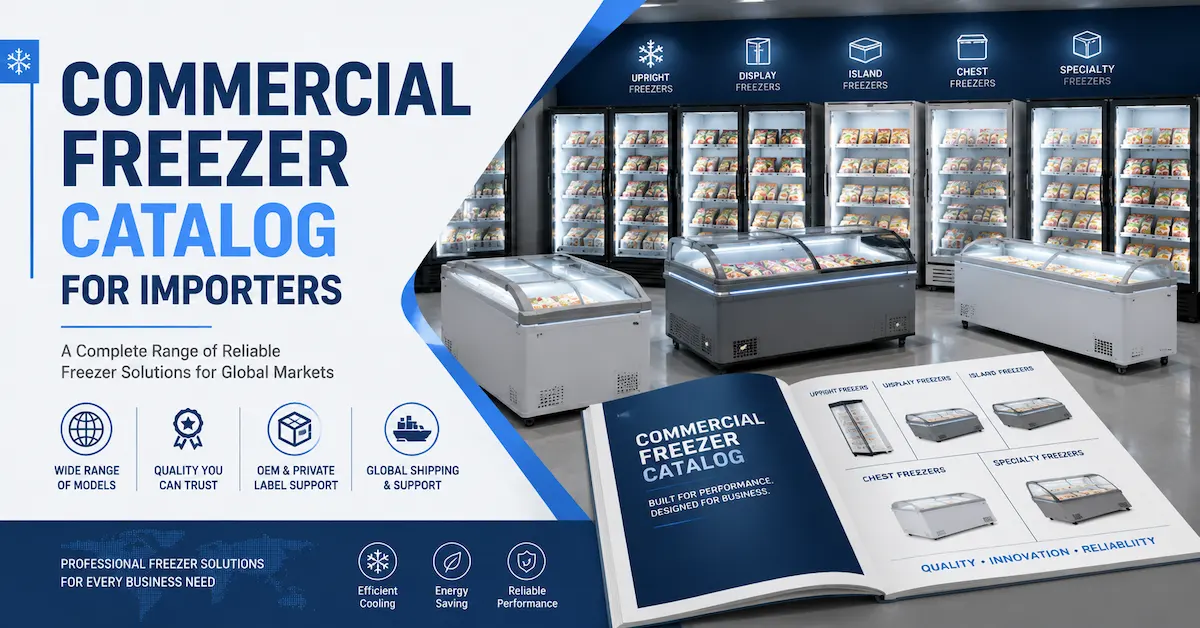
Snowsea provides commercial refrigeration products including upright freezers, chest freezers, display freezers, island freezers, ice cream freezers, refrigerators, beverage coolers, and showcase cabinets. Snowsea also supports OEM/ODM customization, quality inspection, export packaging, and bulk production for hospitality and food-service projects.
How Commercial Freezer Sourcing for Hotel Kitchens Differs from Restaurant Purchasing
Hotel kitchens normally operate across longer service periods and serve more varied food categories than independent restaurants.
A hotel may need to store:
- Frozen meat
- Seafood
- Bakery ingredients
- Desserts
- Prepared banquet dishes
- Frozen vegetables
- Ice cream
- Breakfast products
- Emergency inventory
Demand can also change quickly according to room occupancy, conferences, weddings, holiday events, and seasonal tourism.
For this reason, hotel freezer sourcing should consider the entire operation rather than selecting one freezer for one kitchen station.
Hotel buyers need to evaluate:
- Number of restaurants and service areas
- Average and peak guest volume
- Frequency of deliveries
- Menu complexity
- Banquet capacity
- Available kitchen space
- Existing cold-storage facilities
- Emergency backup requirements
- Expansion plans
The correct freezer combination may include several upright units for organized daily access and chest freezers for bulk or reserve inventory.
Step 1: Map the Hotel’s Kitchen and Food-Service Areas
Before requesting quotations, buyers should identify every area that requires frozen storage.
| Hotel Area | Typical Freezer Requirement |
|---|---|
| Main kitchen | High-capacity upright or chest freezers |
| Banquet kitchen | Large reserve capacity for events |
| Pastry kitchen | Organized ingredient and dessert storage |
| Room-service kitchen | Fast-access freezer near preparation stations |
| Restaurant outlet | Dedicated storage for outlet-specific menus |
| Pool bar or café | Compact freezer for desserts and frozen products |
| Central receiving area | Bulk storage before internal distribution |
| Staff kitchen | Practical standard storage freezer |
This assessment prevents two common problems: placing all frozen inventory in one distant location or purchasing too many small units without a coordinated plan.
Freezer locations should support the movement of food from receiving to storage, preparation, cooking, and service.
Step 2: Select the Right Freezer Types
A hotel may need several freezer formats for different applications.
Upright Commercial Freezers
Upright freezers are suitable for products that kitchen staff need to access frequently.
Main advantages include:
- Organized vertical storage
- Adjustable shelving
- Easy product identification
- Smaller floor-space requirement
- Faster access during service
They are useful for separating meat, seafood, vegetables, prepared items, and desserts.
Chest Freezers
Chest freezers are suitable for:
- Bulk ingredients
- Reserve inventory
- Large frozen packages
- Banquet stock
- Less frequently accessed products
Their horizontal layout offers high storage capacity and strong temperature retention, but products should be organized with baskets or dividers to avoid difficult access.
Glass-Door Freezers
Glass-door models allow staff to identify products before opening the cabinet.
They can help reduce unnecessary door opening and support organized storage, but buyers should evaluate glass insulation, door sealing, and the intended kitchen environment.
Display Freezers
Hotels with lobby shops, cafés, dessert counters, poolside retail areas, or grab-and-go stores may also need customer-facing display freezers.
Snowsea’s available equipment categories can be reviewed on the commercial refrigeration products page.
Step 3: Calculate Capacity Based on Peak Demand
Freezer capacity should not be calculated only from average daily consumption.
Hotel buyers should consider:
- Peak room occupancy
- Banquet reservations
- Weekend demand
- Seasonal events
- Delivery frequency
- Emergency inventory
- Menu changes
- Food-package dimensions
A hotel that receives frozen products several times per week may require less reserve capacity than a resort with limited delivery access.
However, oversizing equipment also creates problems. An excessively large freezer may increase:
- Initial investment
- Energy consumption
- Floor-space use
- Internal handling time
- Inventory overstock
A practical capacity plan should provide sufficient reserve space without encouraging unnecessary inventory.
Step 4: Match the Freezer to the Kitchen Workflow
Freezer placement affects staff productivity.
Buyers should evaluate:
- Distance from receiving areas
- Distance from preparation stations
- Door-opening clearance
- Aisle width
- Staff traffic
- Cleaning access
- Ventilation clearance
- Electrical connection locations
- Product restocking routes
Frequently used products should be stored close to preparation areas. Bulk inventory can be located in central or back-of-house storage zones.
A poorly positioned freezer may force staff to walk through busy cooking areas, interrupt other workstations, or leave freezer doors open while transporting ingredients.
Step 5: Evaluate Temperature Stability and Recovery
Hotel kitchen freezers may be opened frequently during breakfast, banquet preparation, and peak dinner service.
Buyers should evaluate:
- Operating temperature range
- Cooling recovery speed
- Compressor performance
- Cabinet insulation
- Door sealing
- Defrost method
- Controller accuracy
- Internal air circulation
- Ambient-temperature suitability
Temperature recovery describes how quickly the freezer returns to its set temperature after the door is opened or new products are loaded.
Slow recovery may lead to:
- Temperature fluctuations
- Product softening
- Frost formation
- Increased compressor operation
- Higher energy use
A commercial freezer should be designed for continuous operation and repeated access rather than occasional household use.
Step 6: Plan Food Separation and Inventory Organization
Hotels usually store several food categories. The storage plan should reduce cross-contact risks and make stock rotation easier.
Freezer organization may include:
- Dedicated shelves for meat
- Separate seafood storage
- Labeled vegetable sections
- Dessert and pastry areas
- Prepared food zones
- Date and batch labels
- First-in, first-out rotation
Buyers should evaluate:
- Shelf quantity
- Shelf spacing
- Basket configuration
- Divider options
- Shelf load capacity
- Ease of label visibility
A freezer with suitable capacity but poor internal organization can still reduce kitchen efficiency.
Step 7: Consider Cleaning and Hygiene Requirements
Commercial kitchen equipment should be easy to clean and inspect.
Hotel buyers should evaluate:
- Interior surface design
- Removable shelves or baskets
- Accessible cabinet corners
- Door-gasket cleaning
- Drainage design where applicable
- Resistance to frequent cleaning
- Ease of moving or accessing the surrounding area
Food debris, packaging damage, and condensation can create hygiene problems if cabinet interiors are difficult to reach.
Cleaning requirements should be considered during product selection, not after installation.
Step 8: Compare Energy Efficiency and Total Operating Cost
Hotel freezers operate continuously, so energy use can exceed the initial purchase price over the equipment’s working life.
Important factors include:
- Compressor efficiency
- Insulation quality
- Door sealing
- Defrost configuration
- Lighting
- Temperature settings
- Maintenance condition
- Frequency of door opening
Hotel groups purchasing multiple units should compare total operating cost across the full project.
A small efficiency difference multiplied across several kitchens, restaurants, and years of operation can create a significant cost difference.
Buyers should therefore compare:
| Cost Area | What to Evaluate |
|---|---|
| Purchase cost | Unit price and customization |
| Energy cost | Expected continuous operation |
| Installation cost | Electrical and space requirements |
| Maintenance cost | Parts, cleaning, and service access |
| Replacement risk | Product durability and supplier continuity |
| Shipping cost | Packaging dimensions and loading quantity |
Step 9: Confirm Electrical and Destination-Market Requirements
International hotel projects may require market-specific electrical configurations.
Buyers should confirm:
- Voltage
- Frequency
- Plug type
- Power requirements
- Product labels
- Manual language
- Destination-market standards
- Required documentation
These requirements should be finalized before production.
Incorrect voltage or plug specifications can delay hotel openings, create installation problems, and increase modification costs after delivery.
Step 10: Evaluate OEM and Hotel-Group Standardization
OEM customization can help hotel groups standardize equipment across multiple properties.
Customization may include:
- Hotel-group logo
- Cabinet color
- Model-number system
- Internal shelf arrangement
- Product labels
- User manuals
- Packaging
- Voltage and plug configuration
- Identification labels for different kitchen zones
Back-of-house equipment does not always require visible branding, but standardized model labels and documentation can simplify purchasing, maintenance, and asset management.
Snowsea supports technical configurations, labeling, packaging, and private label requirements through its OEM and custom refrigeration solutions.
Step 11: Review Manufacturing and Quality-Control Capability
Bulk hotel projects require consistent equipment across several units or locations.
The supplier should inspect:
- Cabinet appearance
- Dimensions
- Temperature performance
- Cooling recovery
- Electrical safety
- Compressor operation
- Door sealing
- Controller accuracy
- Shelves and accessories
- OEM details
- Packaging strength
Hotel groups should define approved specifications before production.
Repeat orders should maintain the same:
- Dimensions
- Components
- Performance
- Internal arrangement
- Labels
- Packaging
Unapproved component changes may complicate maintenance across multiple hotel properties.
Step 12: Plan Production and Hotel Opening Schedules
Freezer purchasing should be coordinated with kitchen construction, renovation, and opening dates.
A project schedule may include:
| Project Stage | Freezer-Sourcing Requirement |
|---|---|
| Kitchen planning | Confirm equipment type and dimensions |
| Model selection | Review capacity and workflow |
| Sample approval | Check technical and visual details |
| OEM confirmation | Approve labels and specifications |
| Production | Reserve factory capacity |
| Quality inspection | Test equipment before shipment |
| Export preparation | Confirm packaging and documents |
| Delivery | Coordinate warehouse and installation |
| Opening | Complete testing before kitchen operation |
Late equipment decisions can affect electrical planning, kitchen layouts, and opening schedules.
Step 13: Review Export Packaging and Delivery Support
Commercial freezers may contain sensitive components such as:
- Compressors
- Controllers
- Door systems
- Glass panels
- Shelves
- Wheels
- Painted or stainless surfaces
Export packaging should protect:
- Cabinet corners
- Doors
- Control panels
- Compressor areas
- Handles
- Accessories
- Surface finishes
Common protection methods include:
- Protective film
- Foam padding
- Reinforced cartons
- Corner guards
- Internal fixing
- Wooden support
- Pallets
The supplier should provide packing dimensions and container-loading information so buyers can estimate freight and delivery requirements.
Commercial Freezer Sourcing Checklist for Hotel Kitchens
Before requesting a quotation, hotel buyers should prepare:
| Information | Why It Matters |
|---|---|
| Hotel size | Defines overall equipment demand |
| Number of kitchens | Determines freezer distribution |
| Food-service outlets | Identifies application requirements |
| Peak guest capacity | Supports capacity planning |
| Food categories | Defines internal storage layout |
| Available dimensions | Prevents installation problems |
| Temperature requirements | Protects food quality |
| Electrical standards | Matches the destination market |
| Quantity | Supports production planning |
| Delivery schedule | Aligns with hotel opening plans |
Common Mistakes Hotel Buyers Should Avoid
Purchasing One Freezer Type for Every Kitchen
Main kitchens, banquet areas, cafés, and outlet kitchens may require different capacities and access methods.
Calculating Capacity Only from Average Demand
Peak occupancy, events, and delivery disruptions should also be considered.
Ignoring Workflow and Equipment Placement
A suitable freezer in the wrong location can reduce staff productivity.
Selecting Equipment Only by Initial Price
Energy use, maintenance, quality consistency, and supplier support affect long-term cost.
Confirming Electrical Requirements Too Late
Voltage, plug, labels, and documentation should be approved before production.
Skipping Pre-Shipment Inspection
Inspection helps identify performance issues, missing accessories, or packaging weaknesses before delivery.
Why Snowsea Supports Hotel Kitchen Freezer Projects
Snowsea supplies commercial refrigeration equipment for hotels, restaurants, food-service companies, supermarkets, distributors, and international project buyers.
For hotel kitchen projects, Snowsea can support:
- Upright freezer supply
- Chest freezer solutions
- Commercial freezer cabinets
- Display freezer options
- Multi-unit project planning
- OEM/ODM customization
- Quality inspection
- Export packaging
- Bulk production
- Repeat-order support
Buyers can learn more about Snowsea’s commercial refrigeration capabilities on the About Snowsea page.
FAQ
What freezers are most suitable for hotel kitchens?
Hotel kitchens commonly use upright freezers for organized daily access and chest freezers for bulk or reserve inventory. The correct combination depends on kitchen workflow and storage volume.
How should hotels calculate freezer capacity?
Hotels should consider average demand, peak occupancy, banquet events, delivery frequency, menu categories, and emergency inventory.
Can commercial freezers be customized for hotel groups?
Yes. Buyers can customize labels, model numbers, internal layouts, manuals, packaging, voltage, plugs, and selected cabinet details.
What should hotels check before placing a bulk freezer order?
Buyers should confirm capacity, dimensions, temperature performance, electrical requirements, quality standards, packaging, delivery schedules, and supplier production capability.
Why is commercial freezer sourcing for hotel kitchens different from restaurant sourcing?
Hotels often operate multiple kitchens and food-service outlets, serve larger guest volumes, and require standardized equipment across different operating areas.
Conclusion
Effective commercial freezer sourcing for hotel kitchens helps hospitality groups protect food quality, improve kitchen workflows, manage inventory, and control long-term operating costs.
A reliable supplier should provide suitable freezer types, stable cooling performance, appropriate capacities, flexible customization, quality inspection, export packaging, and coordinated bulk delivery.
Snowsea provides upright freezers, chest freezers, commercial freezer cabinets, display freezers, and customized refrigeration solutions for hotel kitchens and hospitality projects worldwide.
Explore Snowsea’s commercial refrigeration products or review its OEM and custom solutions to begin planning a hotel kitchen freezer project.