For importers, refrigeration distributors, supermarket equipment buyers, frozen food suppliers, and private label refrigeration brands, understanding commercial freezer import documents is an essential part of international purchasing.
Commercial freezers are large commercial refrigeration products that usually involve international shipping, customs clearance, local transportation, and installation. Unlike small consumer products, commercial freezers require more detailed documentation to ensure smooth import procedures.
Before placing bulk orders, buyers should understand what documents are needed, who prepares them, and why each document matters.
A complete import preparation process helps buyers avoid:
- Customs delays
- Shipping problems
- Incorrect product information
- Clearance issues
- Additional handling costs
- Delivery delays
Snowsea provides commercial refrigeration products including chest freezers, display freezers, upright freezers, island freezers, sliding glass freezers, ice cream freezers, refrigerators, beverage coolers, and showcase cabinets. For international freezer projects, Snowsea supports OEM/ODM customization, export documentation preparation, quality inspection, and shipping coordination.
Why Import Documents Matter for Commercial Freezer Buyers
Import documents are not just paperwork. They provide important information for customs authorities, shipping companies, logistics providers, and buyers.
Proper documentation helps confirm:
- Product identity
- Shipment details
- Commercial value
- Country of origin
- Packaging information
- Technical specifications
- Transportation requirements
For distributors importing commercial freezers in bulk, missing documents can delay entire shipments and affect customer delivery schedules.
A professional supplier should help buyers prepare accurate export documents before shipment.
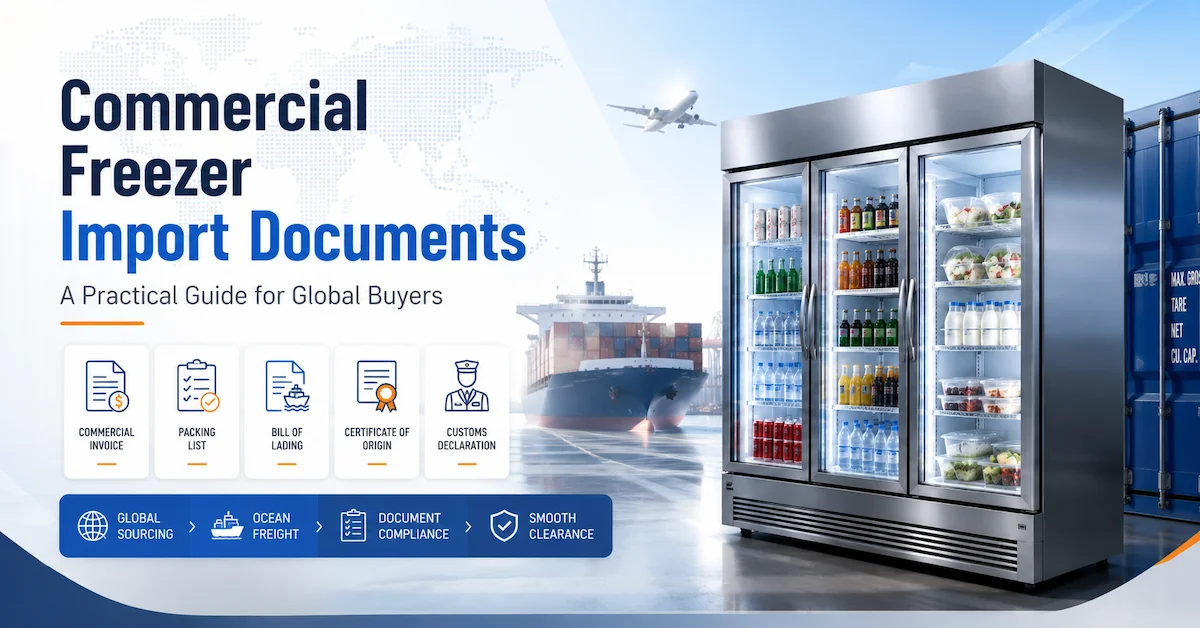
1. Commercial Invoice
The Commercial Invoice is one of the most important commercial freezer import documents.
It provides details about the transaction between buyer and seller.
A commercial invoice usually includes:
- Seller information
- Buyer information
- Product description
- Model number
- Quantity
- Unit price
- Total value
- Trade terms
- Payment information
- Country of origin
Customs authorities use the commercial invoice to evaluate shipment value and calculate possible import duties or taxes.
For commercial freezer imports, the product description should clearly state:
- Freezer type
- Model
- Quantity
- Main specifications
- Intended application
Clear descriptions help reduce customs questions.
2. Packing List
The Packing List provides detailed information about how products are packed and shipped.
It usually includes:
- Product quantity
- Number of packages
- Package dimensions
- Gross weight
- Net weight
- Packing method
- Container information
For commercial freezers, packing information is especially important because the products are large and require careful transportation planning.
A packing list helps:
- Customs inspection
- Warehouse receiving
- Container unloading
- Logistics planning
Importers should check whether packing details match the actual shipment.
3. Bill of Lading
The Bill of Lading is an important shipping document issued by the carrier.
It confirms:
- Shipment details
- Exporter information
- Importer information
- Port of loading
- Port of destination
- Cargo description
- Transportation terms
For ocean freight commercial freezer shipments, the Bill of Lading is usually required for cargo release.
Buyers should carefully check:
- Consignee information
- Product description
- Destination port
- Shipping details
Incorrect information may delay cargo clearance.
4. Certificate of Origin
The Certificate of Origin confirms where the commercial freezers were manufactured.
It may be required for:
- Customs clearance
- Import regulations
- Trade agreements
- Country-specific requirements
It usually includes:
- Manufacturer information
- Product description
- Country of manufacture
- Export information
For buyers importing from China, the Certificate of Origin helps customs verify the manufacturing location.
5. Product Specification Sheet
A Product Specification Sheet provides technical details about the freezer.
It may include:
- Product model
- Dimensions
- Capacity
- Temperature range
- Refrigerant type
- Compressor information
- Voltage
- Power requirements
- Material details
- Product functions
This document helps:
- Customs classification
- Technical evaluation
- Installation preparation
- Customer communication
For distributors, a clear specification sheet also supports local sales activities.
6. Compliance and Certification Documents
Different countries may require different compliance documents for commercial refrigeration equipment.
Common documents may include:
- Safety certificates
- Electrical compliance documents
- Energy efficiency information
- Environmental compliance documents
- Test reports
Requirements vary by destination country.
Before importing, buyers should confirm:
- Local regulations
- Required certifications
- Label requirements
- Electrical standards
A professional supplier should help confirm available compliance documents before production.
7. Customs Declaration Information
Customs declaration documents provide information required by authorities to process imported goods.
They may include:
- Product category
- HS code information
- Shipment value
- Origin information
- Importer details
- Supporting documents
Commercial freezer classification should be confirmed before shipment because incorrect classification may create customs problems.
Importers should work with experienced customs brokers when necessary.
8. Insurance Documents
Depending on shipping terms, buyers may need cargo insurance documents.
Insurance can help protect against:
- Transportation damage
- Cargo loss
- Unexpected shipping risks
For large commercial freezer shipments, insurance planning can reduce financial risk during international transportation.
9. OEM and Private Label Documents
For buyers importing private label freezers, additional documents may be required.
These may include:
- Logo approval files
- Packaging artwork
- Label designs
- User manuals
- Product catalogs
- Brand authorization documents
These documents help ensure the imported products match the buyer’s brand requirements.
For Snowsea OEM/ODM freezer projects, visit:
https://www.snowseax.com/oem-odm
Commercial Freezer Import Documents Checklist
Before shipment, importers should prepare:
| Document | Purpose |
|---|---|
| Commercial Invoice | Confirms transaction value and product details |
| Packing List | Shows packaging and shipment information |
| Bill of Lading | Confirms transportation details |
| Certificate of Origin | Confirms manufacturing country |
| Product Specification Sheet | Provides technical information |
| Compliance Documents | Supports local regulations |
| Customs Documents | Supports import clearance |
| Insurance Documents | Protects shipment risk |
| OEM Documents | Supports private label requirements |
How Importers Can Prepare Documents Before Shipment
A smooth import process requires early preparation.
Recommended steps:
Step 1: Confirm Product Information
Before production, confirm:
- Model numbers
- Specifications
- Quantity
- Packaging details
- Branding requirements
Step 2: Confirm Destination Requirements
Check:
- Import regulations
- Required certificates
- Label requirements
- Customs procedures
Step 3: Review Export Documents
Before shipment, review:
- Invoice
- Packing list
- Shipping information
- Certificates
- Product specifications
Step 4: Coordinate With Logistics Partners
Confirm:
- Shipping schedule
- Port information
- Customs broker requirements
- Delivery arrangements
Early preparation reduces unnecessary delays.
Common Mistakes When Importing Commercial Freezers
Mistake 1: Preparing Documents After Shipment
Waiting until the shipment is already moving may create unnecessary delays.
Mistake 2: Incorrect Product Descriptions
Vague descriptions may create customs questions.
Mistake 3: Ignoring Destination Requirements
Different countries may require different compliance documents.
Mistake 4: Not Matching Documents With Actual Products
Invoice, packing list, and product specifications should be consistent.
Mistake 5: Forgetting OEM Documentation
Private label buyers should confirm branding files, labels, and packaging documents early.
Why Snowsea Supports International Freezer Import Projects
Snowsea focuses on commercial refrigeration and freezing equipment for supermarkets, frozen food retailers, seafood stores, restaurants, convenience stores, and food service applications.
For international commercial freezer projects, Snowsea can support:
- Commercial freezer supply
- OEM/ODM customization
- Private label freezer development
- Export documentation support
- Product specification preparation
- Quality inspection
- Export packaging
- Container loading support
Buyers can learn more about Snowsea here:
https://www.snowseax.com/about-us
FAQ
1. What commercial freezer import documents are required?
Common documents include commercial invoices, packing lists, bills of lading, certificates of origin, product specification sheets, customs documents, and compliance certificates.
2. Who prepares commercial freezer import documents?
Usually, the exporter prepares commercial documents such as invoices, packing lists, and certificates, while importers handle local customs requirements.
3. Do all countries require the same freezer import documents?
No. Requirements vary by country. Buyers should confirm destination regulations before shipment.
4. Are OEM private label documents required for freezer imports?
For private label projects, buyers may need branding files, labels, packaging artwork, manuals, and other product documents.
5. How can importers avoid customs delays?
Importers should prepare documents early, confirm product information, check local requirements, and ensure all documents match the actual shipment.
Conclusion
Understanding commercial freezer import documents helps importers, distributors, supermarkets, and refrigeration buyers prepare smoother international purchases.
Commercial freezer imports require accurate documentation, including invoices, packing lists, shipping documents, certificates, technical files, and customs information.
Working with an experienced supplier helps buyers reduce import risks, avoid delays, and manage international freezer projects more efficiently.
Snowsea supports global commercial refrigeration projects with OEM/ODM customization, export documentation support, quality control, and international shipping preparation.
To explore commercial freezer solutions, visit:
https://www.snowseax.com/products
For OEM/ODM freezer projects, visit: