Commercial Refrigeration Equipment Manufacturer Guide: How to Choose Equipment That Provides Stable Cooling and Reduces Operating Costs
In a commercial environment, cold storage failures rarely manifest as sudden breakdowns. Instead, they tend to appear as minor issues that persist and disrupt daily operations.
You may have seen this situation before:
- Products stored in different locations may have different temperatures.
- Freezers have difficulty restoring temperature during peak hours.
- Energy bills rise for no reason
- The rate of equipment performance degradation exceeded expectations.
These are not isolated defects, but signs of systemic imbalance.
At Snowseax, we work with distributors and commercial buyers who encounter these issues. We eliminate discrepancies at the source, rather than remedying them afterward, by improving airflow engineering, insulation construction, and production consistency.
Construction process: materials, structure and thermal engineering
Before discussing suppliers, it is necessary to understand the definition of high-performance commercial refrigeration units from a structural perspective.
According to ASHRAE , thermal stability depends on insulation efficiency, airflow balance, and refrigeration cycle coordination.
Key engineering components
- High-density polyurethane insulation material (60-80 mm)
Improve insulation performance and reduce compressor cycle frequency - Cabinet structural integrity : Reinforced panels prevent deformation during long-term commercial use.
- Sealing system design: Magnetic gaskets and strict tolerance control reduce cold air leakage.
- The airflow channel layout aims to eliminate temperature stratification inside the cabinet.
We call this integration approach “thermally consistent architecture” —a system-level design principle that ensures stable performance under all conditions.
Reasons for choosing Snowseax: Extensive experience translates into stable security.
Once the technological foundation is clear, the next step is to consider implementation. Not all manufacturers can translate a design into stable production.
At Snowseax, we rely on structured production processes:
- Component standardization between production batches
- Pre-shipment thermal performance testing
- Multi-stage quality control (assembly → calibration → verification)
- Climate-adaptive configurations for different markets
Our experience comes from supporting a wide range of business scenarios—from retail chains to high-temperature regions—where consistency is more important than specifications.
What are the real drivers of long-term operating costs?
When evaluating equipment, upfront price often seems to be the primary factor. However, operating costs reveal a very different story.
Let's explore the real impact of engineering quality:
📊 Performance and cost comparison
| factor | Entry-level devices | Snowseax Engineering System |
|---|---|---|
| Temperature stability | ±3°C fluctuation | ±1°C control |
| Energy consumption | higher baseline | Reduced by 20-30% |
| Maintenance frequency | Frequent services | Reduce intervention |
| Service life | 2-3 years | 5-8 years old |
| Cooling uniformity | uneven area | Balanced airflow |
Over time, these differences accumulate into measurable financial impacts—especially for multi-unit deployments.
Match equipment design with actual usage conditions
In actual commercial operations, the performance of a refrigeration unit is not defined in a laboratory, but under pressure: peak hours, frequent access, and fluctuating ambient temperature.
This is why selecting equipment based solely on general specifications often leads to mismatches. Even the same freezer model can have vastly different performance characteristics depending on its usage and location.
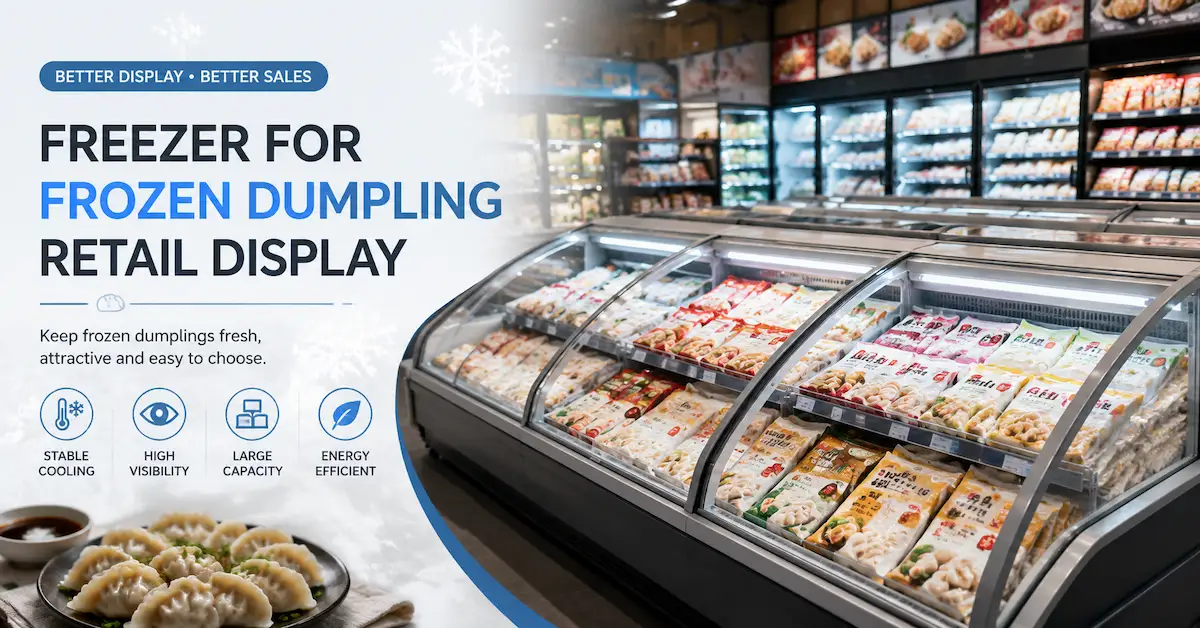
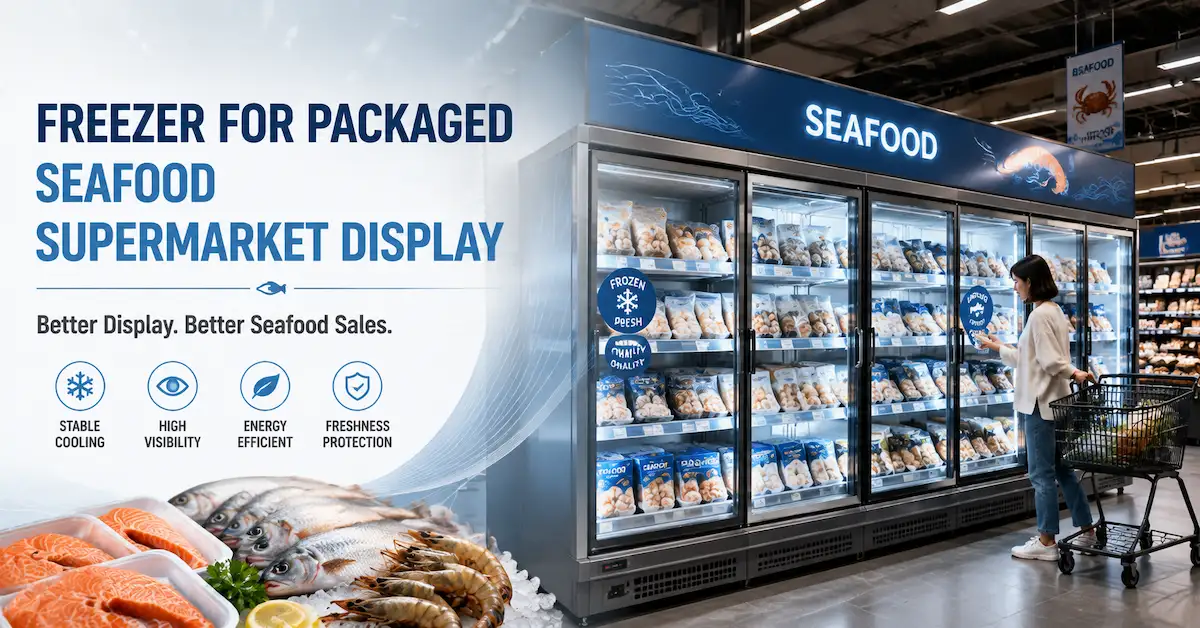
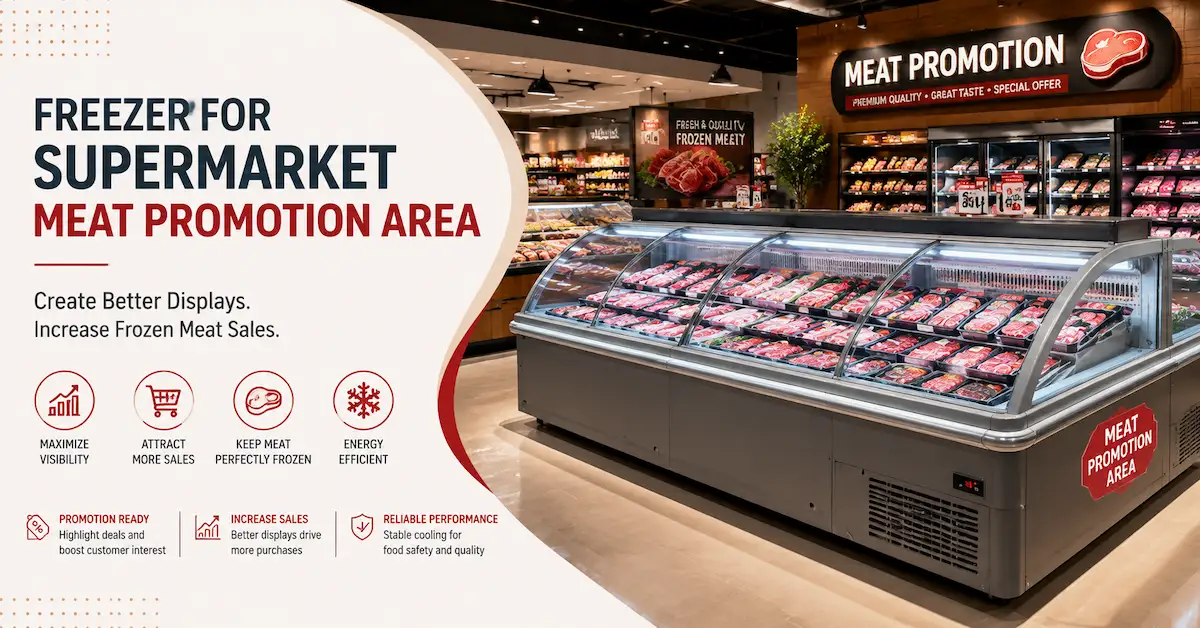
🏪 Retail and supermarket environment
In supermarkets, doors may open and close dozens of times per hour. This causes continuous temperature fluctuations.
To maintain stability, a freezer must have the following features:
- High air circulation rate (forced air cooling system)
- Temperature recovers rapidly within 2-3 minutes
- Anti-condensation glass and stable internal airflow
Without these features, products closer to the front end tend to heat up faster, leading to uneven quality.
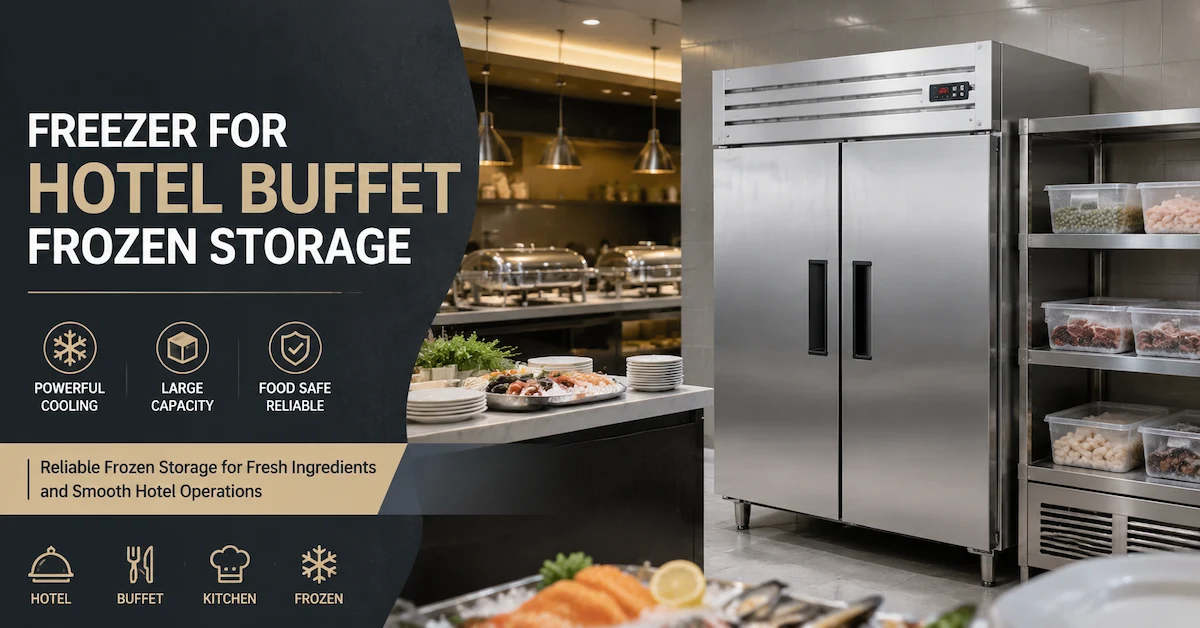
🍽 Commercial kitchens and catering services
The kitchen environment is characterized by frequent use. The freezer is frequently opened and contains warm food.
This requires:
- Large-capacity compressors are used to handle peak heat loads.
- Reinforced internal structure ensures long-term durability
- Stable cooling cycle under continuous operation
In such an environment, a typical retail freezer could quickly malfunction if poorly designed.
🍦 Ice cream and display apps
Ice cream is extremely sensitive to temperature fluctuations—even a change of 1-2 degrees Celsius can affect its texture and appearance.
The main requirements include:
- Precise temperature control (typically -18°C ± 1°C)
- Uniform airflow to avoid localized thawing
- Anti-fog glass to maintain clear vision
This requires collaboration between display design and cooling engineering.
🌍High Temperatures and Emerging Markets
In areas where the ambient temperature is above 40°C, the efficiency of the standard system will drop rapidly.
The modified system requires:
- Increased condenser surface area
- Enhanced heat dissipation airflow
- Compressor recalibration under high environmental load
At Snowseax, we implement what we call “ambient adaptive cooling regulation” to ensure stable performance even under extreme conditions.
Case Study: Stabilizing Retail Network Performance
To illustrate how system design affects actual operations, we will take a Southeast Asian retail customer as an example.
Initial Challenges
- Uneven temperature across different shelf levels
- Frequent maintenance interventions
- High energy consumption
Project Adjustment
- Redesigned airflow distribution system
- Increase insulation density
- Optimize compressor matching
result
- Temperature fluctuations decreased from ±3°C to ±1°C
- Energy consumption has been reduced by approximately 25%.
- Maintenance frequency significantly reduced
This improvement stems from system integration, rather than component replacement.
What aspects should buyers check before selecting a manufacturer?
When evaluating commercial freezer manufacturers , many buyers tend to focus on obvious factors such as price or specifications. However, long-term performance depends on deeper system functionality.
Structured assessment can be simplified into three key dimensions:
1. Engineering System Capabilities
This determines whether the freezer can operate stably under actual usage conditions.
Key issues:
- Is this airflow system designed for uniform cooling?
- Can the temperature remain stable when the door is frequently opened and closed?
- Is the density of the insulation material consistent during the production process?
👉 Snowseax Solution:
We designed a complete thermal system, not just components, to ensure balanced airflow, controlled temperature changes, and optimized cooling circulation.
2. Production consistency and quality control
Many suppliers provided samples of excellent quality, but they performed poorly in mass production.
Key issues:
- Are there batch-level performance tests?
- Are the materials standardized or frequently replaced?
- Is quality control implemented during the production process, or only after production is completed?
👉 Snowseax Advantages:
We implement multi-stage quality control, including pre-shipment thermal testing and batch calibration, to ensure consistency from the first unit to the last.
3. Application compatibility and OEM capabilities
Strong manufacturers should tailor their products to real-world usage environments rather than offering only a standard solution.
Key issues:
- Can this design be adjusted to accommodate climate differences?
- Has OEM customization been integrated into the production process?
- Configurations can be customized for retail, kitchen, or industrial use.
👉 Snowseax Method:
We offer scenario-based configuration optimization, enabling customers to tailor products to specific markets, usage intensities, and brand requirements.
This three-tiered evaluation helps buyers shift from passive purchasing to proactive decision-making.
Frequently Asked Questions
Q: Why do different models of freezers have different performance?
A: In most cases, the differences stem from inconsistent insulation, unbalanced airflow, or a lack of production standardization.
Q: How to reduce long-term operating costs?
A: We focus on thermal efficiency, stable cooling design, and durable construction, not just the initial price.
Q: Is OEM manufacturing important to commercial buyers?
A: Yes. OEM capabilities allow for better control over product configuration, performance optimization, and brand promotion.
Build a more reliable cooling strategy
Choosing a commercial freezer manufacturer is not just about choosing equipment, but about establishing a predictable and scalable supply system.
At Snowseax, we combined:
- Engineering-driven refrigeration design
- Stable and standardized production process
- Flexible OEM solutions for different markets
Explore our commercial refrigeration solutions
If you are comparing different configurations or planning a purchase, you can view our full range of products, including freezers, refrigerators, and display cases, here:
https://www.snowseax.com/products
Please discuss your project with our team.
If you are evaluating vendors or facing performance challenges, our team can help you analyze your needs and recommend the right configuration for your market.
https://www.snowseax.com/contact