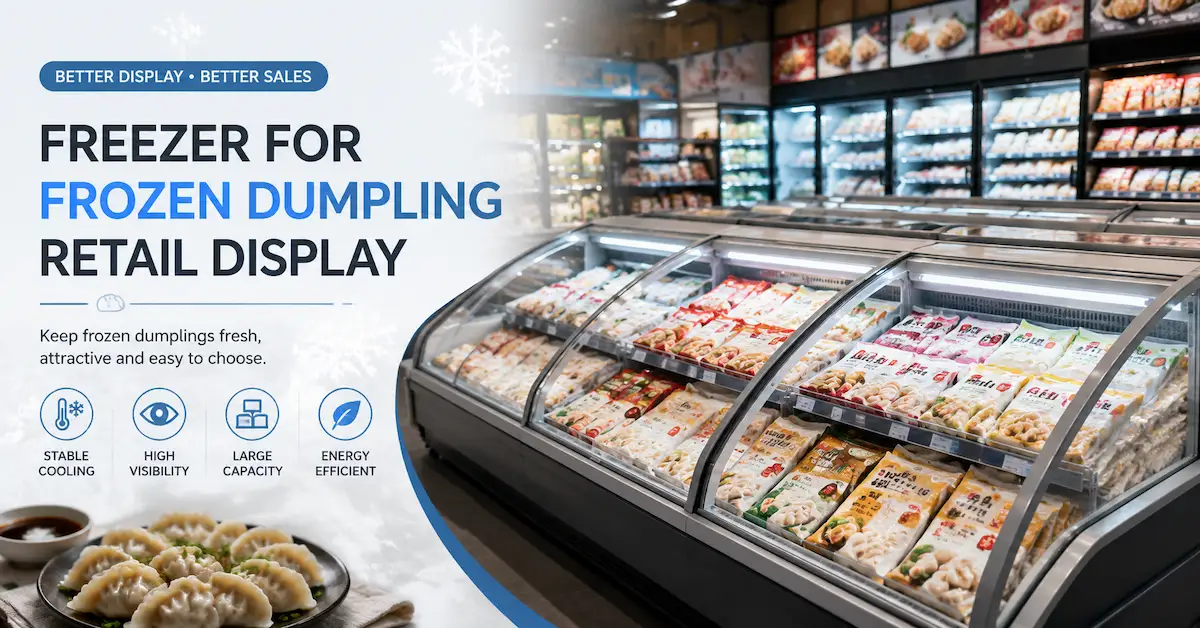
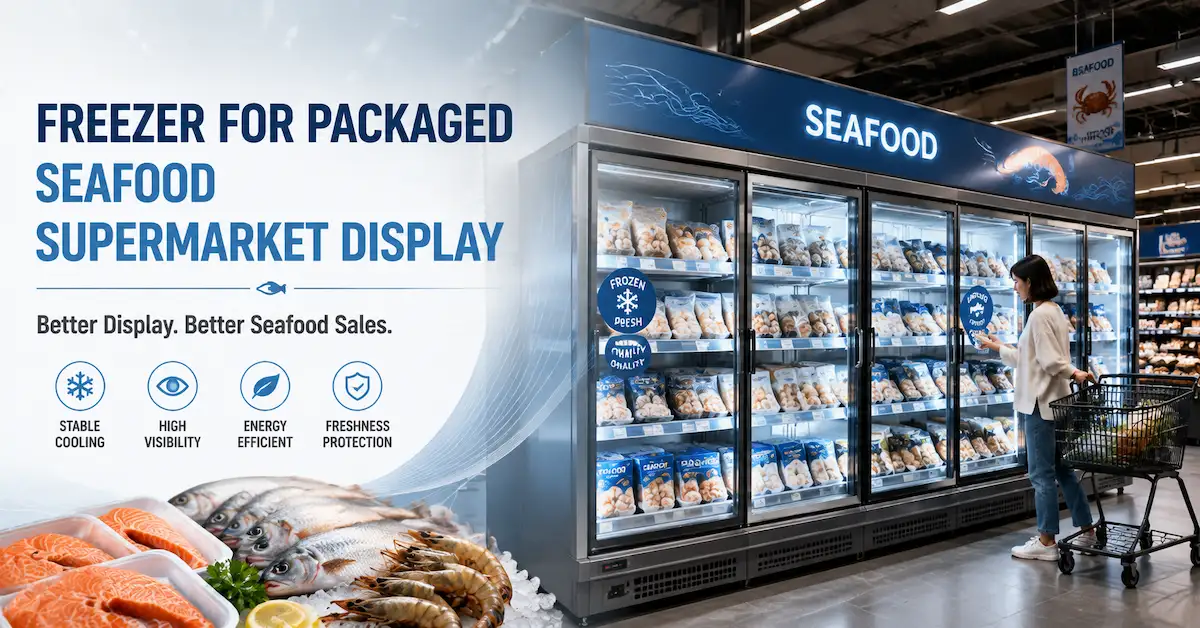
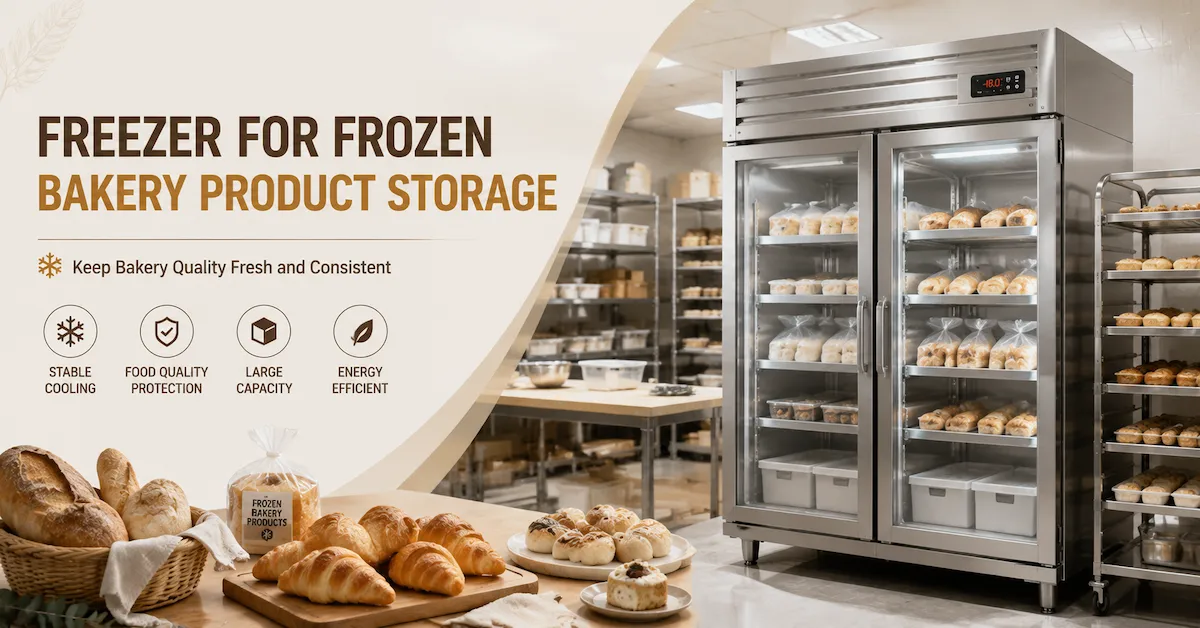
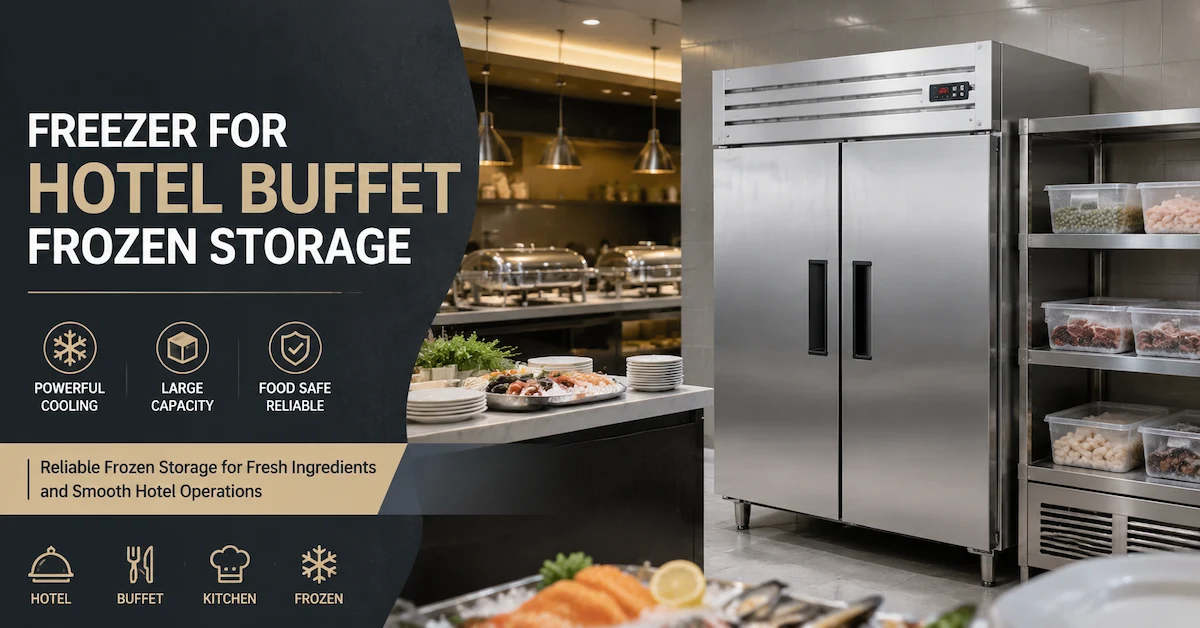
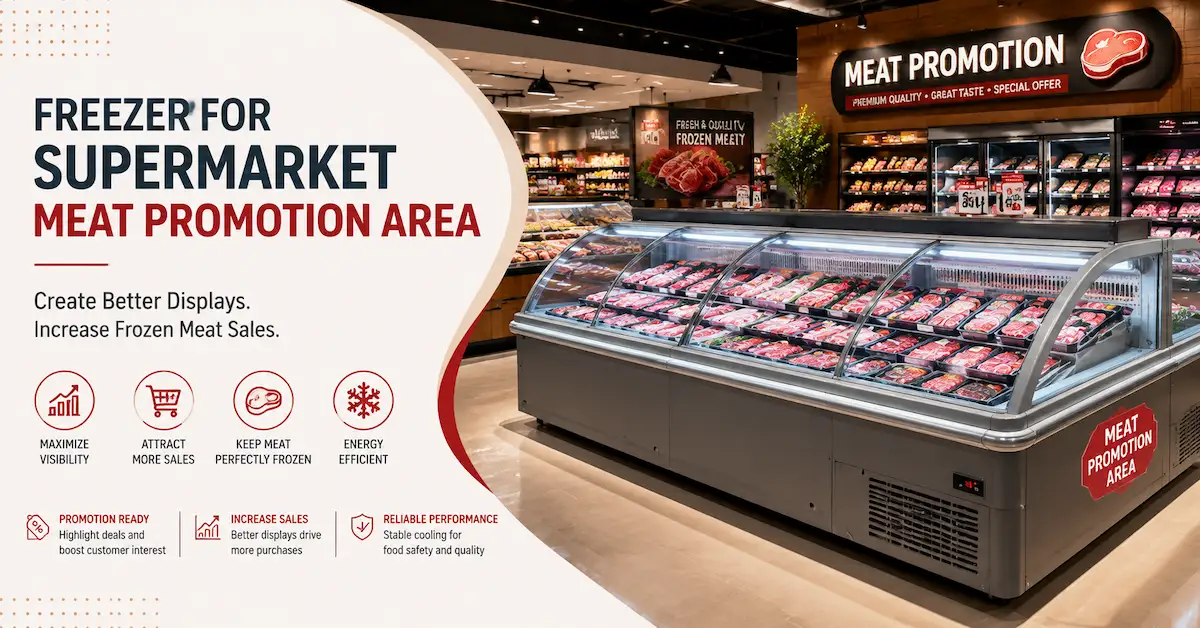
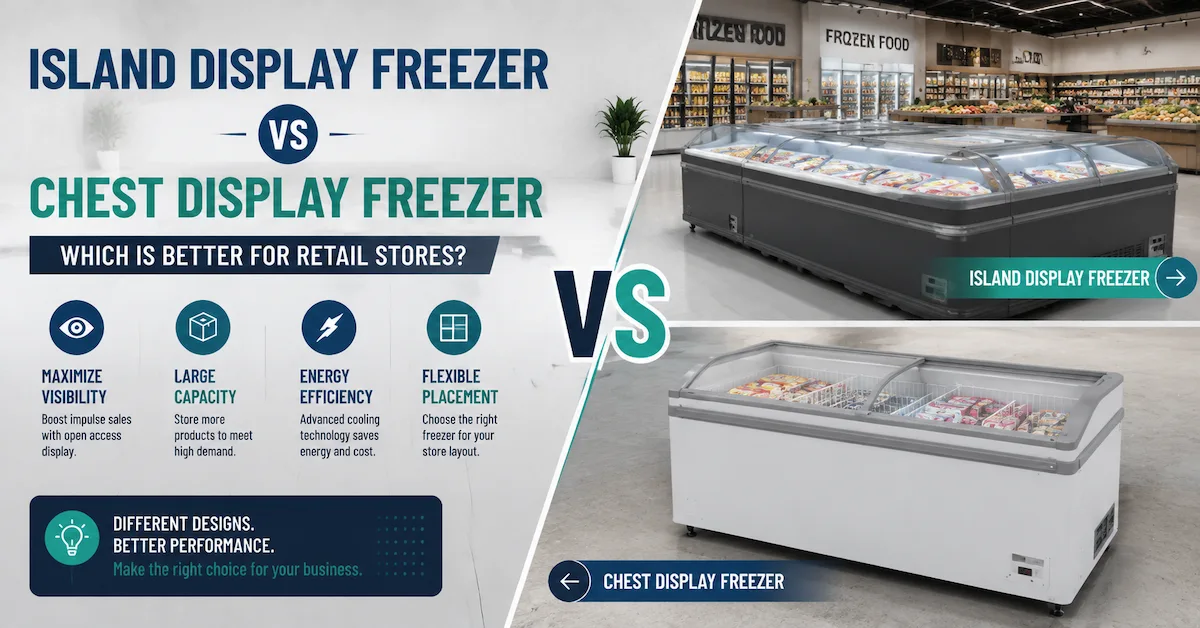
For supermarket chains, frozen food stores, specialty retailers, food brands, importers, and refrigeration distributors, choosing the right freezer manufacturer for frozen product retailers becomes increasingly important as the business expands across multiple locations.
A single retail store may only require several freezers. A growing chain, however, needs consistent equipment specifications, repeatable store layouts, predictable delivery schedules, reliable spare-parts support, and stable product quality across every order.
Retailers must therefore consider more than the initial freezer price. The manufacturer should be able to support a complete retail equipment program, from model selection and branding to production planning, inspection, packaging, delivery, and future expansion.
Snowsea provides commercial refrigeration solutions including upright display freezers, island freezers, chest freezers, sliding glass freezers, ice cream freezers, refrigerators, beverage coolers, and showcase cabinets. Snowsea also supports OEM/ODM customization, private label development, export packaging, quality inspection, and bulk production for frozen product retailers.
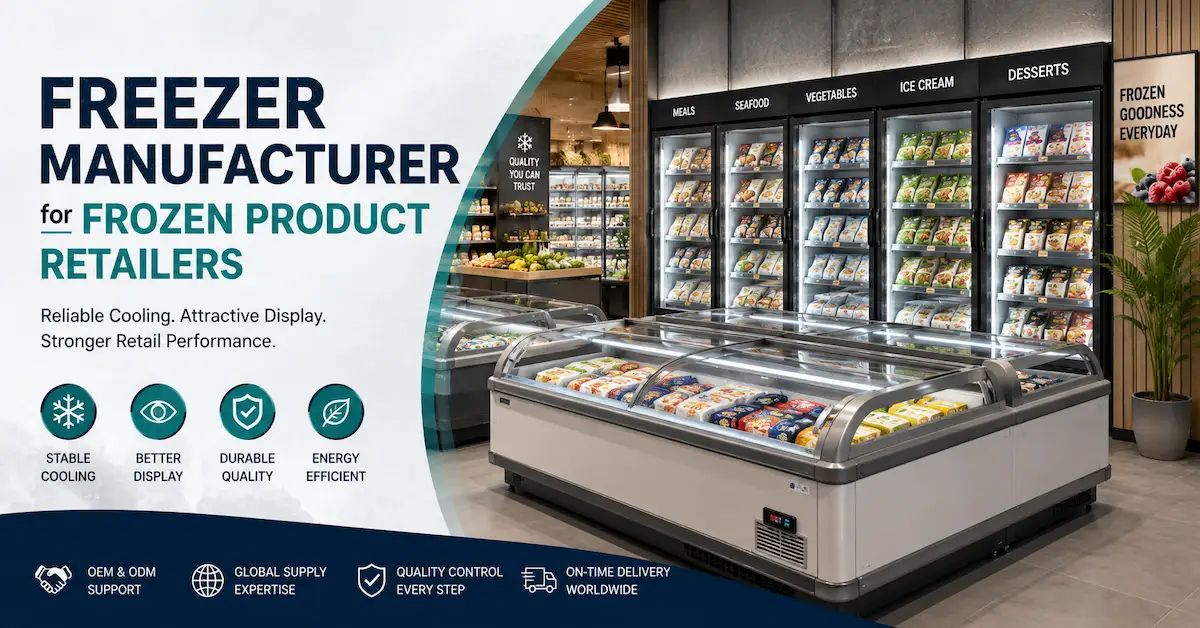
Why Multi-Store Frozen Retailers Need Standardized Freezer Programs
When every retail location purchases different freezer models, the business may face inconsistent store appearance, difficult maintenance, complicated spare-parts management, and unpredictable operating performance.
A standardized freezer program helps retailers maintain:
- Consistent cabinet appearance
- Similar temperature performance
- Common replacement components
- Repeatable store layouts
- Easier staff training
- More accurate energy planning
- Faster future store openings
- Stronger brand presentation
Standardization does not mean every store must use exactly the same equipment. Large supermarkets, compact grocery stores, and specialty frozen food shops may require different capacities and layouts.
The goal is to create a controlled product portfolio with several approved freezer models for different store formats.
What a Freezer Manufacturer for Frozen Product Retailers Should Provide
A capable freezer manufacturer for frozen product retailers should support both product supply and long-term retail planning.
Important capabilities include:
| Manufacturer Capability | Value for Retailers |
|---|---|
| Broad freezer range | Supports different store formats and product categories |
| Stable specifications | Maintains consistency across repeat orders |
| OEM and branding support | Creates a unified retail identity |
| Production planning | Supports store-opening and replacement schedules |
| Quality inspection | Reduces defects and operational disruption |
| Export packaging | Protects equipment during transportation |
| Technical communication | Helps retailers confirm suitable configurations |
| Repeat-order management | Simplifies future expansion |
Retailers should evaluate whether the manufacturer can support the complete lifecycle of the freezer program rather than only the first purchase.
Step 1: Define the Retail Formats That Need Freezer Equipment
Frozen product retailers may operate several store types.
Large Supermarkets
Large supermarkets usually need:
- Multi-door upright display freezers
- Island freezers
- Large frozen food sections
- High-capacity product displays
- Clear category separation
These stores prioritize product visibility, customer flow, capacity, and professional presentation.
Compact Grocery Stores
Smaller stores often require:
- Compact upright freezers
- Sliding glass freezers
- Space-efficient cabinets
- Easy self-service access
The equipment must maximize product capacity without blocking narrow aisles.
Frozen Food Specialty Stores
Specialty stores may need:
- Multiple upright display cabinets
- Island freezers for promotions
- Category-specific shelving
- Customized store branding
These retailers often carry a broader frozen product range and need strong visual organization.
Ice Cream and Dessert Retailers
These businesses may require:
- Sliding glass ice cream freezers
- Curved glass display cabinets
- Upright frozen dessert freezers
- Promotional brand graphics
Defining store formats first allows the manufacturer to recommend a structured freezer portfolio.
Step 2: Select Core Freezer Models for the Retail Program
A scalable retail program should focus on several core freezer models instead of purchasing too many similar products.
A practical portfolio may include:
Upright Glass Door Display Freezer
Best for:
- Packaged frozen meals
- Frozen vegetables
- Seafood products
- Frozen snacks
- Ready-to-cook foods
Main advantages:
- Strong product visibility
- Adjustable shelf organization
- Efficient use of vertical space
- Easy category separation
Island Freezer
Best for:
- High-volume supermarket areas
- Promotional frozen products
- Family-size frozen food
- Seafood and meat packages
Main advantages:
- Large display capacity
- Access from multiple sides
- Strong presence in open retail areas
Sliding Glass Freezer
Best for:
- Compact stores
- Ice cream
- Frozen desserts
- Self-service retail
Main advantages:
- Space-saving opening method
- Good product visibility
- Efficient temperature retention
Chest Freezer
Best for:
- Backroom stock
- Bulk frozen food
- Seafood and meat storage
- Price-sensitive retail projects
Main advantages:
- Large storage volume
- Strong insulation
- Simple structure
Retailers can review Snowsea’s product categories on the commercial refrigeration products page.
Step 3: Standardize Technical Specifications
Retailers should define approved technical standards before placing bulk or repeat orders.
Important specifications include:
- Operating temperature range
- Cabinet dimensions
- Internal capacity
- Compressor configuration
- Refrigerant requirements
- Defrost method
- Controller type
- Door or lid structure
- Voltage and frequency
- Plug type
- Shelf or basket quantity
- Lighting configuration
Standardized specifications make it easier to compare performance across stores and manage future replacements.
They also reduce the risk of receiving different configurations in separate production batches.
Step 4: Plan Product Display Around Frozen Categories
The freezer portfolio should reflect how customers shop.
Common frozen retail categories include:
- Frozen meals
- Seafood
- Meat
- Vegetables
- Pizza
- Desserts
- Ice cream
- Snacks
- Ready-to-cook foods
Upright cabinets are useful for vertical category organization. Island freezers are suitable for promotional products, family-size packs, and high-volume categories. Sliding glass freezers work well for ice cream and compact store formats.
Retailers should also consider:
- Product package dimensions
- Front-facing packaging visibility
- Shelf spacing
- Divider requirements
- Promotional signage
- Restocking frequency
- Customer viewing height
A freezer should support merchandising goals rather than simply provide cold storage.
Step 5: Develop Consistent Retail Branding
Freezer equipment is highly visible inside a store. Customized branding can help retailers create a consistent commercial identity across multiple locations.
OEM options may include:
- Cabinet colors
- Company logos
- Top lightboxes
- Side-panel graphics
- Product-category signs
- Model labels
- User manuals
- Packaging design
- Carton markings
Retailers working with food brands may also need dedicated promotional freezer designs for specific frozen product ranges.
Snowsea supports cabinet appearance, branding, labels, packaging, voltage configurations, and other requirements through its OEM and custom freezer solutions.
Step 6: Build a Store Rollout Schedule
Retail chains should coordinate freezer purchasing with store-opening, renovation, and replacement plans.
A rollout schedule should include:
| Project Stage | Planning Requirement |
|---|---|
| Store design | Confirm freezer type, quantity, and dimensions |
| Product approval | Review specifications and sample units |
| OEM confirmation | Approve logos, colors, labels, and packaging |
| Production | Reserve manufacturing capacity |
| Quality inspection | Test performance and appearance |
| Shipping | Confirm packaging, loading, and documents |
| Store delivery | Coordinate warehouse and installation timing |
| Replenishment | Plan future replacement or expansion orders |
Late equipment decisions can delay store openings and increase logistics costs.
Retailers should communicate forecast demand early so the manufacturer can prepare production capacity and materials.
Step 7: Control Quality Across Repeat Orders
A growing frozen retail chain needs consistent freezer quality across every batch.
Inspection standards should cover:
- Cabinet dimensions
- Exterior appearance
- Temperature performance
- Cooling recovery
- Electrical safety
- Glass condition
- Door sealing
- Lighting function
- Controller accuracy
- Shelf completeness
- Branding accuracy
- Packaging strength
The manufacturer should keep approved specifications and artwork records for future orders.
Retailers should also confirm whether components or configurations will change between production batches. Unapproved changes may complicate maintenance and spare-parts planning.
Step 8: Prepare Export Packaging for Multi-Unit Projects
Commercial freezer shipments may involve glass doors, compressors, controllers, lighting systems, shelves, baskets, and visible cabinet surfaces.
Export packaging should protect:
- Glass panels
- Cabinet corners
- Door handles
- Control systems
- Compressor areas
- Wheels and feet
- Shelves and accessories
- Branding surfaces
Common protection methods include:
- Protective film
- Foam padding
- Reinforced cartons
- Corner guards
- Internal fixing materials
- Wooden support
- Pallet loading
The manufacturer should also provide packing dimensions and loading quantities so retailers can estimate freight costs accurately.
Step 9: Plan Inventory and Replacement Equipment
Retail chains should decide which freezer models need immediate availability and which can be ordered by project.
Core Inventory Models
Suitable for stock:
- Standard upright freezers
- Popular chest freezers
- Compact retail models
- Common replacement units
Project-Based Models
Usually ordered when needed:
- Large island freezers
- Custom-branded cabinets
- Multi-door freezer systems
- Special voltage models
- Store-specific dimensions
A controlled inventory strategy reduces warehouse pressure while ensuring urgent replacement equipment is available.
Step 10: Evaluate Maintenance and Spare-Parts Support
Commercial freezers operate continuously, so long-term support should be considered during supplier selection.
Retailers should discuss:
- Replaceable controllers
- Door seals
- Handles
- Shelves
- Baskets
- Lighting components
- Fans
- Spare-parts identification
- Technical documentation
Using standardized models across stores can simplify maintenance because the same components may be used in multiple locations.
Clear product records and model-number systems also help maintenance teams identify correct replacement parts.
Frozen Retail Freezer Program Checklist
Before selecting a manufacturer, retailers should prepare:
| Information | Why It Matters |
|---|---|
| Number of stores | Supports quantity and rollout planning |
| Store formats | Determines suitable freezer types |
| Frozen product categories | Defines display and storage requirements |
| Approved specifications | Maintains consistency |
| Branding guidelines | Creates a unified retail image |
| Delivery schedule | Supports store openings |
| Quality standards | Reduces operational risk |
| Packaging requirements | Protects equipment in transit |
| Spare-parts needs | Supports long-term maintenance |
| Expansion forecast | Improves repeat-order planning |
Common Mistakes Retailers Should Avoid
Purchasing Different Models for Every Store
Too many equipment variations make maintenance, staff training, and replacement planning more difficult.
Choosing Freezers Only by Initial Price
A low purchase price may be offset by higher energy use, unstable cooling, poor display design, or frequent repairs.
Ignoring Merchandising Requirements
Retail freezers should help customers see, compare, and purchase frozen products.
Confirming Specifications Too Late
Dimensions, temperature settings, voltage, branding, and packaging should be finalized before production.
Failing to Plan Repeat Orders
Retailers should confirm whether the manufacturer can maintain the same models and specifications for future expansion.
Skipping Pre-Shipment Inspection
Inspection helps identify technical defects, branding errors, missing accessories, and packaging weaknesses before delivery.
Why Snowsea Supports Frozen Product Retail Programs
Snowsea supplies commercial refrigeration solutions for supermarkets, frozen food stores, food brands, distributors, convenience stores, and specialty retailers.
As a freezer manufacturer for frozen product retailers, Snowsea can support:
- Multi-store freezer portfolio planning
- Upright display freezer supply
- Island freezer solutions
- Chest freezer supply
- Sliding glass freezer options
- Ice cream freezer solutions
- OEM/ODM customization
- Private label development
- Quality inspection
- Export packaging
- Bulk production
- Repeat-order cooperation
Buyers can learn more about Snowsea’s manufacturing and international supply capabilities on the About Snowsea page.
FAQ
How many freezer models should a frozen retailer standardize?
The number depends on store formats and product categories. Many retailers benefit from several core models covering upright display, island, compact, and storage applications.
Can one freezer manufacturer support different store formats?
Yes. A manufacturer with a broad product range can recommend different capacities and cabinet types while maintaining consistent specifications and branding.
Can freezers be customized for a retail chain?
Yes. Cabinet colors, logos, graphics, labels, shelves, packaging, voltage, plugs, and other details can be customized.
How can retailers maintain consistent quality across repeat orders?
They should define approved specifications, inspection standards, branding files, components, and packaging requirements before production.
What should retailers ask before starting a multi-store freezer project?
They should ask about product range, production capacity, cooling performance, OEM options, quality control, packaging, lead time, spare parts, and repeat-order support.
Conclusion
Choosing the right freezer manufacturer for frozen product retailers helps frozen food stores, supermarkets, specialty retailers, and food brands build standardized, scalable, and reliable retail freezer programs.
A qualified manufacturer should provide stable cooling performance, suitable display solutions, consistent specifications, OEM customization, production planning, quality inspection, export packaging, and long-term supply support.
Snowsea provides upright display freezers, island freezers, chest freezers, sliding glass freezers, ice cream freezers, and customized commercial refrigeration equipment for global frozen product retailers.
Explore Snowsea’s commercial refrigeration products or review its OEM and custom freezer solutions to begin planning a multi-store freezer program.