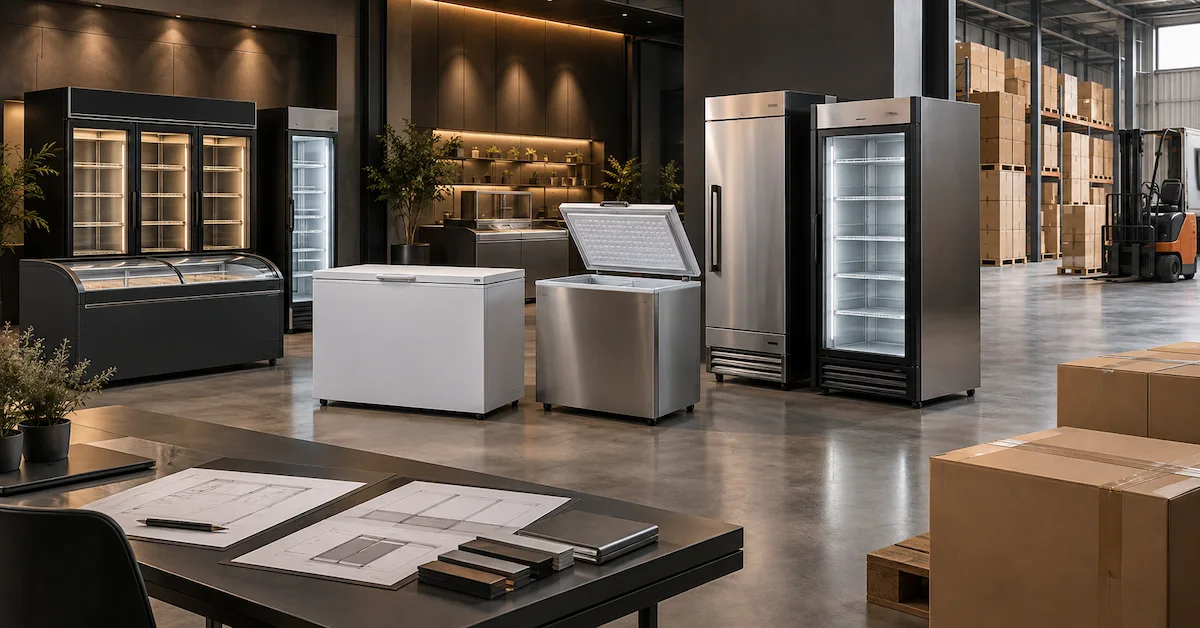
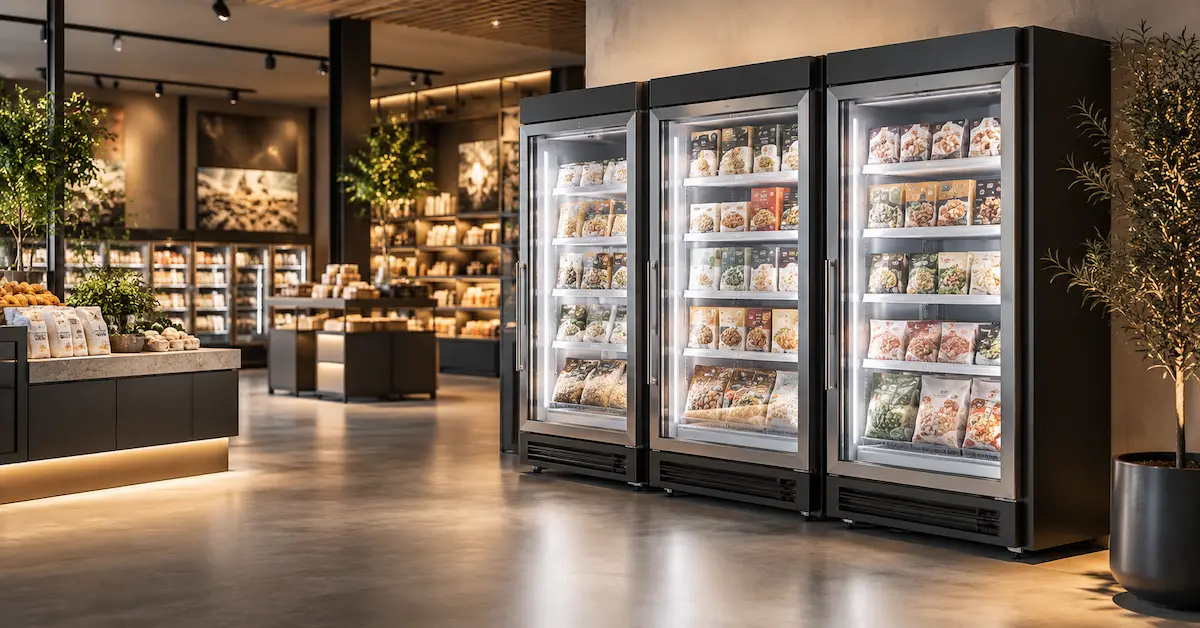
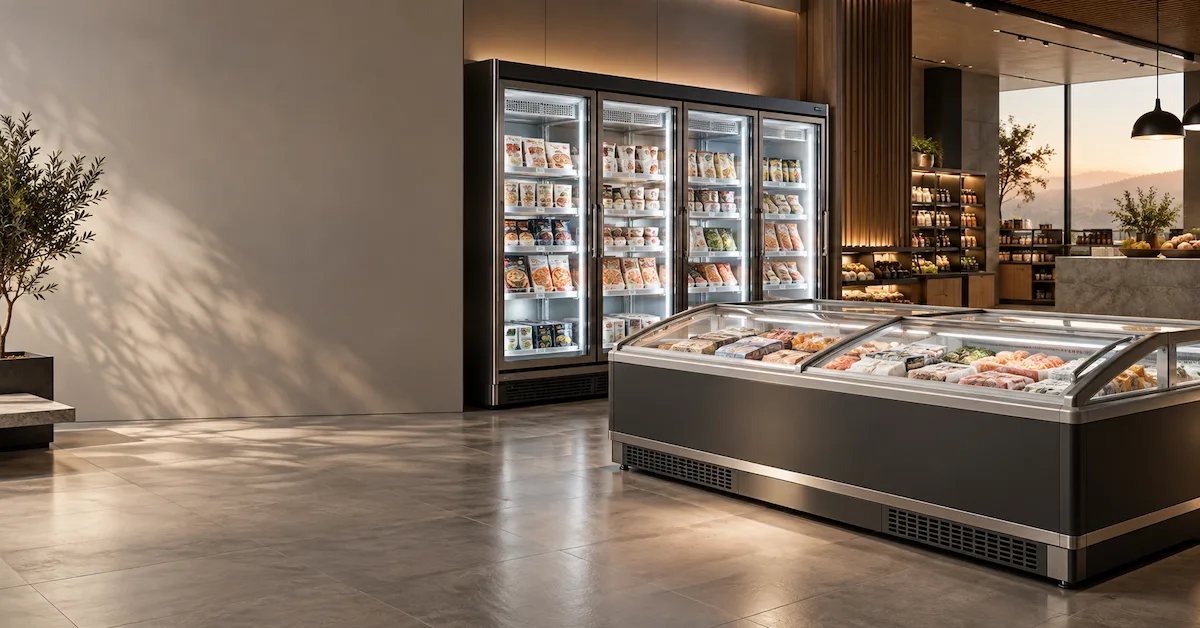
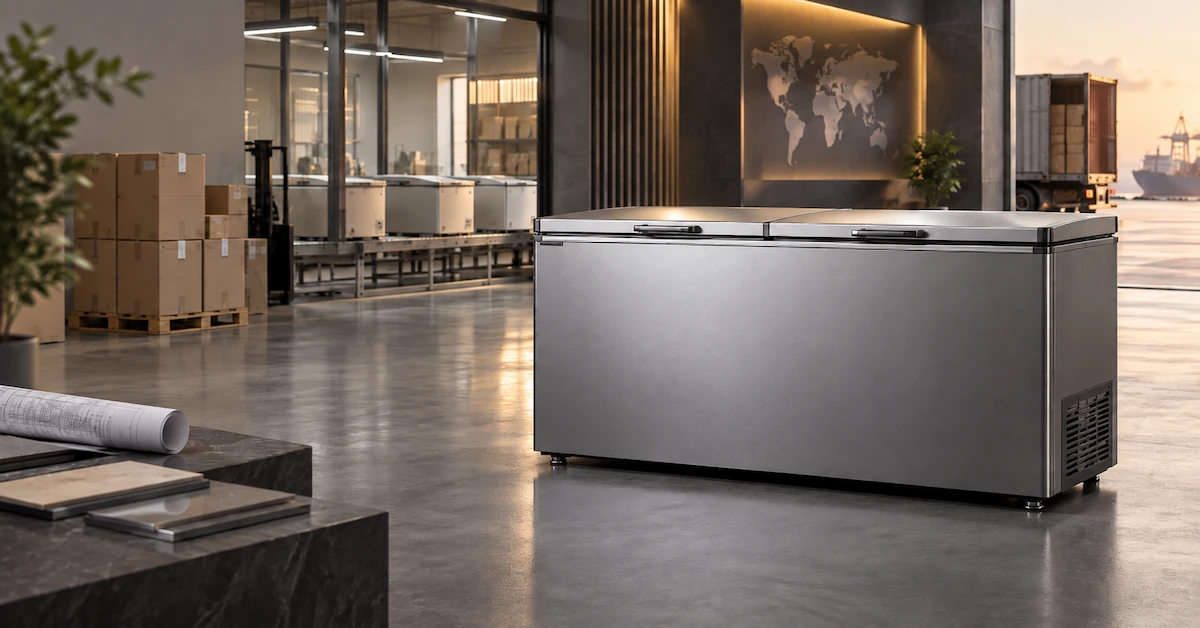
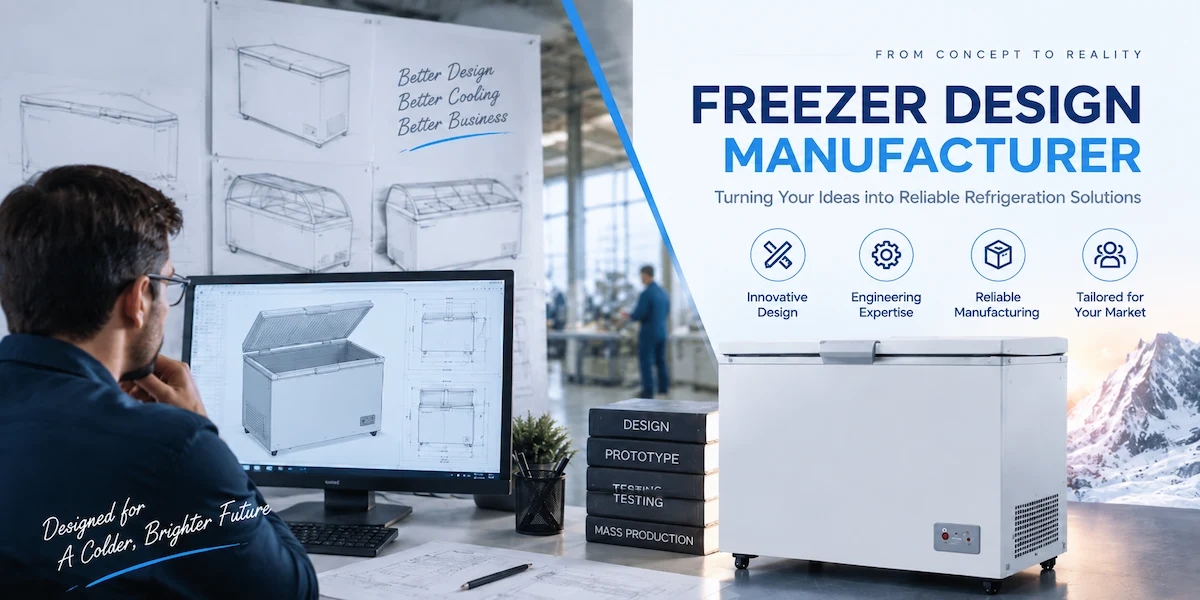
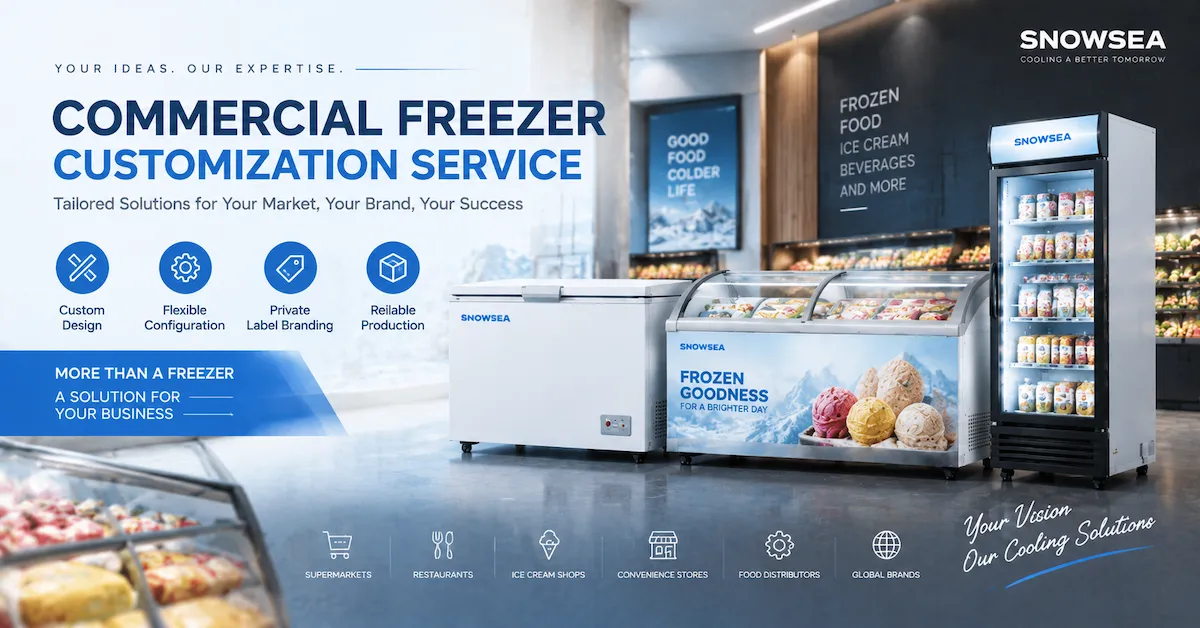
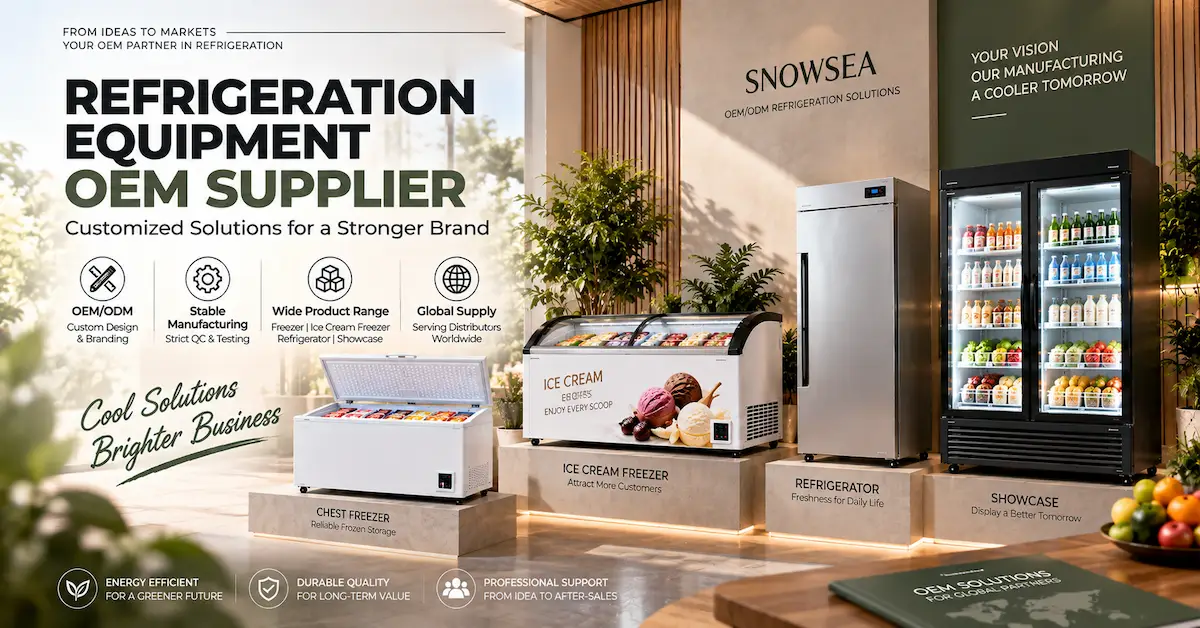
A refrigeration equipment OEM supplier should help a distributor build a coherent product line rather than simply place the same logo on unrelated cabinets. The challenge becomes greater when the range includes frozen storage, ice cream display, household or light-commercial refrigeration and chilled retail showcases, because each category serves a different customer, operating condition and service requirement. SNOWSEA organizes its refrigeration portfolio across Freezer, Ice Cream Freezer, Refrigerator and Showcase categories, while its OEM/ODM service supports customized projects for distributors, brands and project buyers.For an OEM buyer, the goal is to turn these categories into a controlled range that can be quoted, sampled, produced, shipped, serviced and reordered under one brand without losing model-level technical clarity.
When Does a Multi-Category OEM Refrigeration Program Make Sense?
A multi-category program is most useful for refrigeration distributors, appliance importers, private-label brands, supermarket-equipment suppliers and regional wholesalers that already serve several customer groups. One dealer may need chest freezers for restaurants, glass-top freezers for ice cream retailers, refrigerators for appliance channels and glass-door showcases for convenience stores. Buying all four categories under one branded program can simplify commercial presentation, but only if the buyer can manage model selection, documentation, inventory and after-sales support.
It is less useful when the buyer has not yet established demand for each category. Adding four product families immediately can create more cartons, manuals, spare parts, electrical versions and slow-moving inventory than the sales channel can support.For a new importer, it may be better to begin with two or three clearly differentiated product roles, gather real sales and service data, and expand only when another category solves a demonstrated customer requirement. An OEM program should reduce commercial fragmentation, not hide it behind a common logo.
Start With Customer Roles Before Selecting Products
Do not begin by asking the supplier to send its “best OEM models.” Define which customer problem each category will solve.
A foodservice distributor may need frozen reserve storage. An ice cream brand needs customer-facing frozen display. A convenience-store supplier may need chilled beverage presentation. A home-appliance dealer may need compact refrigerators for residential or light-duty applications. These are different buying missions, so the same technical specification cannot be applied across the entire range.
| Product role | Typical buyer | Main purchasing objective | SNOWSEA category |
|---|---|---|---|
| Frozen reserve storage | Restaurants, food retailers, distributors | Usable frozen capacity, access, defrost and loading | Freezer |
| Packaged ice cream display | Ice cream brands, supermarkets, convenience stores | Visibility,basket layout and frozen holding | Ice Cream Freezer |
| General refrigerator range | Appliance retailers, distributors | Cabinet size, refrigeration layout and channel positioning | Refrigerator |
| Chilled merchandising | Beverage brands, supermarkets, retail chains | Shelf layout, glass-door visibility and access | Showcase |
The first range-building question should therefore be: which customer would buy this category, and what requirement would remain unmet if we removed it?
Use Existing Platforms Before Requesting Deep Customization
OEM sourcing is usually more efficient when the buyer begins with an existing product platform and changes only what creates commercial or market value.Branding, labels, manuals, packaging, plug configuration and selected accessories may be relatively straightforward. Structural changes to cabinet dimensions, insulation, refrigeration configuration or controls require a deeper technical discussion and may move the project closer to ODM.
SNOWSEA’s OEM/ODM service provides a useful starting point for this distinction. Buyers should first compare available models across the four product categories, identify the closest existing platform and then list the gaps that still need to be solved. If a catalog cabinet already matches the application, redesigning it simply to appear “more customized” can add development time, testing requirements, MOQ and service complexity without creating equivalent market value.
Compare Representative Models Across the OEM Range
The following SNOWSEA models illustrate different product roles. Published capacities are catalog figures; final usable capacity, electrical version, standard and optional components, and suitability for the intended market should be confirmed in the project specification.
| Model | Published positioning | OEM range role | What should be locked before production |
|---|---|---|---|
| BD-500 Chest Freezer | 500L chest freezer with double-lid format | Larger frozen-storage SKU | Basket configuration, electrical version,branding and operating requirements |
| SD/SC-268PM Ice Cream Freezer | 268L flat sliding-glass ice cream freezer | Customer-facing frozen-display SKU | Glass/basket configuration, actual pack loading and artwork |
| BC-190 Refrigerator | 190L single-door refrigerator | Refrigerator-channel SKU | Internal configuration, electrical specification and approved documents |
| LC-208 Display Refrigerator | 208L single-door display refrigerator, published 0–10°C range | Compact chilled-display SKU | Shelf layout,controller version, lighting and operating requirements |
These products should not be ranked from low to high simply by capacity. A 208L display refrigerator and a 268L ice cream freezer solve fundamentally different retail tasks. The role of a refrigeration equipment OEM supplier is to keep those differences clear while making the brand presentation consistent.
Create One OEM Range Architecture Before Naming Models
A private-label program becomes difficult when every model receives a marketing name before the technical structure has been defined. Build the product hierarchy first.
A practical architecture can include:
Brand → Product Family → Capacity/Format → Electrical Version → Revision
For example, a freezer family could use one naming logic while the showcase family uses another, but each private-label model should remain linked to one manufacturer platform and one approved specification. If North America and another destination require different electrical configurations, those versions should be identifiable in the SKU system instead of being treated as the same product because the exterior looks identical.
This becomes especially important for spare parts, manuals and repeat orders. The private-label model is not merely a marketing label; it should function as a traceable commercial reference.
Build a Master Specification for Every OEM SKU
One company-wide OEM agreement is not enough to define four product families. Every SKU needs a controlled technical record.
| Specification area | Buyer requirement | Supplier confirmation |
|---|---|---|
| Private-label SKU | Brand model number | Manufacturer base model |
| Product category | Freezer, ice cream freezer, refrigerator or showcase | Correct platform |
| Application | Frozen storage, display,refrigeration or chilled merchandising | Intended use confirmation |
| Capacity/layout | Required stock or merchandise arrangement | Usable layout and restrictions |
| Cabinet | Dimensions, liner, doors/glass and accessories | Approved configuration |
| Refrigeration | Cooling method, refrigerant, defrost and controls | Model-specific system |
| Operating requirement | Temperature and intended environment | Test basis and applicable conditions |
| Electrical | Voltage,frequency and plug | Correct production version |
| Branding | Logo, cabinet graphics and model name | Approved artwork |
| Documents | Manual, labels and required languages | Approved revision |
| Packaging | Carton design,protection and shipping marks | Production packing standard |
| QC | Appearance and functional acceptance criteria | Inspection method |
| Service | Warranty and spare-parts plan | Model-specific support terms |
Unknown information should remain marked as open instead of being filled with assumptions simply to make the specification appear complete.
Standardize Branding Without Standardizing Technical Claims
One of the advantages of a multi-category OEM range is consistent brand identity. Logo placement, colors, model-name style, carton design, manuals and product photography can create one recognizable refrigeration family.
Technical claims should not be standardized in the same way. A chest freezer, ice cream display and chilled showcase may use different refrigeration structures, operating conditions and accessories.A statement that is accurate for one model should not automatically appear on all cartons and brochures because the graphic designer is using one common template.
Keep one brand guideline and separate technical specification sheets. This allows the equipment to look like one range without pretending every model performs the same function.
Approve Actual Product Loading, Not Just Nominal Capacity
For freezers and display equipment, capacity should be connected to real products. A distributor selling the BD-500 to frozen-food customers should examine how typical cartons load and how staff access lower stock. An ice cream brand considering SD/SC-268PM should arrange actual packages in the baskets and evaluate visible SKUs, customer access and replenishment.
For the LC-208, shelf height and product dimensions may matter more than the headline liter figure. A beverage distributor should check whether the intended bottles or cans can be arranged efficiently while remaining visible.
This is especially important in OEM projects because branded catalogs tend to simplify products into model, liters and selling points. The sample stage is where the buyer should confirm whether those catalog statements translate into a useful customer application.
Separate Product Approval From Brand Approval
A private-label sample can fail in two completely different ways.
Product approval covers the cabinet, dimensions, cooling system, controls, accessories, electrical version, loading arrangement and applicable performance requirements.
Brand approval covers logo placement, color, labels, private-label model name, manuals, carton artwork and visual finish.
A cabinet can perform correctly while carrying the wrong label. It can also look perfect while using an incorrect controller or electrical version. Therefore, do not close the sample process with one sentence saying “sample approved.” Record product approval and brand approval separately and identify unresolved issues before releasing mass production.
Define Testing for Each Product Family
A refrigeration equipment OEM supplier should not apply one vague statement such as “all products are strictly tested” to a multi-category range. The buyer should understand which tests are relevant to each product and what acceptance criteria apply.
SNOWSEA’s OEM/ODM manufacturing process includes material processing, cabinet assembly, insulation, refrigeration-system installation, main assembly, performance and temperature testing, final inspection and packing. Use that process to ask model-specific questions.
For a freezer, discuss the agreed frozen-storage test conditions. For an ice cream display, consider the load and opening routine relevant to retail. For a showcase, confirm the chilled operating requirement and the exact quoted cooling configuration. For refrigerators, use the applicable product specification rather than copying freezer-test language.
The test record should identify the product version being evaluated. If an engineering change occurs after sample approval, confirm whether the affected test needs to be repeated.
Control Components and Approved Alternatives
A multi-category OEM program can contain many controllers, seals, baskets, shelves, glass assemblies and refrigeration components. Buyers should not expect every component to remain available forever, but substitutions should follow an agreed process.
For important components, define the approved version and, where appropriate, approved alternatives. Any other proposed change should be disclosed before production. The supplier should explain whether it affects specification documents, sample approval, performance verification or compliance-related documentation.
This is particularly valuable for repeat orders. Without change control, the private-label model number can stay the same while the underlying product changes, creating confusion for distributors and service technicians.
Review Compliance Model by Model and Market by Market
A company-level certification statement is not enough for a multi-category private-label program. Ask which documents apply to each model, electrical version and destination market.
Do not assume that documentation for a freezer covers a refrigerator or showcase. Do not apply certification or efficiency graphics from one cabinet to another because the private-label artwork uses one shared template. If an OEM change affects a controlled component, model identification or other relevant detail, confirm whether document scope needs another review.
The safest approach is to maintain a document register for the OEM range. Connect every required document to the exact product version it supports.
Use Factory Process Control to Keep Four Categories Consistent
SNOWSEA’s OEM/ODM process provides the manufacturing framework; the buyer’s job is to connect that process to its private-label versions. Ask how the factory identifies the correct model, branding, electrical configuration and accessories during assembly and packing.
For example, the factory should have a method for distinguishing a standard SNOWSEA model from a private-label version, and one electrical-market version from another. Different cartons and manuals should reach the correct packing line. Quality staff should know which configuration is being inspected.
The strongest indicator of OEM capability is not the number of customization options in a sales presentation. It is the ability to reproduce the approved version consistently.
Plan MOQ by SKU Family Instead of One Total Quantity
MOQ is one of the main commercial risks in a multi-category program. A buyer may have a large total order but relatively small demand for one refrigerator or showcase version.
Clarify whether MOQ applies by base model, color, electrical version, artwork, packaging or custom component. Then compare the factory requirement with realistic market demand.
For new distributors, divide the range into:
Core SKUs: products supported by stronger recurring demand and regular inventory.
Test SKUs: models introduced in smaller volumes to validate a customer segment.
Project SKUs: configurations purchased when a defined customer project requires them rather than stocked continuously.
This structure is more practical than giving every category equal inventory simply because all products carry the same brand.
Build Lead Time Around Sample and Artwork Approval
A multi-category OEM project can have several approval tracks running at once. One freezer sample may be approved while showcase artwork is still being revised. The production plan should therefore identify milestones by SKU rather than providing one headline delivery date for the entire range.
Useful milestones include specification confirmation, artwork approval, sample production, sample correction, design freeze, material preparation, mass production, inspection, packing and shipment readiness.
Ask which unfinished item can delay each model. If one customized SKU is late, determine whether the remaining products can ship separately and whether doing so is commercially sensible.
Compare OEM Cost as a Product-Line Investment
Unit price is only one part of the private-label program.
| Cost area | What buyers should separate |
|---|---|
| Base equipment | Recurring model price |
| Options | Model-specific accessories |
| Branding | Logo,labels and cabinet graphics |
| Packaging | Standard or private-label cartons |
| Samples | Initial sample and revisions |
| Development | Engineering work where required |
| Testing | Standard and additional project tests |
| Documentation | Market/project-specific requirements |
| Spare parts | Initial service inventory |
| Logistics | Freight and destination responsibilities |
| Inventory | Working capital tied to multiple SKUs |
| Service | Local warranty and technician support |
The lowest product-line quotation can become expensive when it creates too many slow-moving models, unique parts or separate minimum orders. Assess the range as a complete distribution business rather than a collection of factory prices.
Reduce Spare-Parts Complexity Before Expanding the Range
Each category can add a new service challenge. Before adding another OEM model, ask which replacement parts are unique and which may be shared with existing products.
SNOWSEA’s company information describes spare-parts availability, technical documentation and remote support. For a private-label project, confirm the actual model-specific arrangement and identify which parts the distributor should hold locally.
Maintain a cross-reference:
Private-label model → SNOWSEA/base model → production revision → relevant spare parts
This helps the service team avoid ordering a visually similar but technically incompatible component.
Treat Packaging as Both Branding and Logistics
Private-label cartons communicate the brand, but they also determine how refrigeration equipment moves through export logistics and local warehouses. Approve model name, brand marks, handling symbols, product identification and document placement together with physical protection.
For glass products, discuss protection for the selected transport route. For a mixed-category shipment, ensure warehouse teams can distinguish a chest freezer from an ice cream display or showcase without opening every carton.
If custom packaging changes dimensions, request the final packed size before using container-loading estimates. A loading quantity based on standard packaging may no longer apply.
Create a Repeat-Order Rule From the First Purchase
The first OEM shipment should establish the control system for later orders.
Give every approved product a revision. On the next purchase order, reference that revision and require proposed deviations to be listed separately.
A practical instruction is:
“Manufacture and quote according to the approved OEM specification revision. Identify any proposed component, artwork, packaging or technical deviation before production.”
This protects the buyer from silent changes and gives the supplier a formal route for necessary substitutions.
What Should You Send a Refrigeration Equipment OEM Supplier?
A useful OEM inquiry should include the target market, sales channel, proposed product categories, intended customer applications, quantities by model, voltage and frequency, branding requirements, carton and manual requirements, required documentation, sample expectations, target launch schedule and estimated annual demand where available.
If the product line is still being planned, send customer roles instead of guessing model numbers. For example:
“We need one medium frozen-storage freezer, one ice cream display model, one compact refrigerator and one beverage showcase for a private-label distributor range.”
Through the SNOWSEA contact page, request a model-by-model proposal that separates the recommended base product, available OEM work, items requiring engineering review, MOQ, sample plan, production timing and service requirements. This gives purchasing a useful product-line proposal instead of four unrelated price lists.
Frequently Asked Questions
1. What does a refrigeration equipment OEM supplier do?
A refrigeration equipment OEM supplier manufactures existing refrigeration platforms according to an agreed buyer specification, often including private-label branding, labels, packaging, electrical configurations and selected options. The exact customization scope depends on the model and project.
2. What is the difference between OEM refrigeration equipment and ODM?
OEM commonly begins with an existing product platform and an agreed buyer-specific version. ODM involves deeper manufacturer participation in product development or structural changes. The boundary varies by project, so buyers should define responsibilities clearly before development begins.
3. Can one OEM supplier provide several refrigeration product categories?
SNOWSEA currently organizes products across Freezer, Ice Cream Freezer, Refrigerator and Showcase categories. A buyer can discuss a multi-category program, but each category still needs model-specific specifications, samples and commercial terms.
4. Should every category use the same branding design?
The range should share consistent brand rules, but artwork may need to adapt to different cabinet structures. Technical labels and claims should always remain model-specific.
5.What should I check on an OEM refrigeration sample?
Check the technical configuration, electrical version, controls, accessories, product loading and relevant performance requirements separately from logo, cabinet artwork, labels, manuals and packaging.
6. What affects MOQ for a multi-category OEM order?
MOQ may depend on model, electrical configuration, branding, color, carton artwork and custom components. Ask for the minimum of each actual SKU rather than relying on one total-order MOQ.
7. Can refrigeration system components be customized?
Technical changes can be evaluated, but they should be treated differently from cosmetic branding. Cabinet, insulation, refrigeration or control changes may require engineering review, another sample or additional verification.
8. How should certifications be handled for private-label refrigeration equipment?
Review documentation by model, configuration and destination market. Do not assume a company-level certificate or another product’s report automatically covers the private-label version.
9. How can distributors reduce repeat-order risk?
Use controlled product revisions, approved samples, model-specific documents and a written change-control process. Reference the approved revision on every repeat order.
10. How can I request an OEM refrigeration proposal from SNOWSEA?
Provide your target market, desired product categories, application, quantity, electrical requirements, branding and packaging needs through SNOWSEA Contact Us. Ask for a model-by-model OEM proposal rather than a generic product price list.
Conclusion
Choosing a refrigeration equipment OEM supplier is ultimately a product-line and supply-chain decision, not simply a branding exercise.Distributors and private-label companies should first define the customer role of each freezer, ice cream display, refrigerator or showcase, then link every SKU to a controlled specification, approved sample, electrical version, artwork, packaging, QC requirement and spare-parts plan. A focused multi-category range can strengthen channel coverage, but uncontrolled customization can quickly create excess SKUs, service complexity and repeat-order risk. SNOWSEA provides Freezer, Ice Cream Freezer, Refrigerator and Showcase platforms together with OEM/ODM support for B2B buyers. If you are planning a private-label refrigeration range, send SNOWSEA your target customers, product categories, estimated quantities and branding requirements and request a model-by-model proposal covering the recommended base products, customization scope, sample requirements, MOQ, production planning and repeat-order controls.