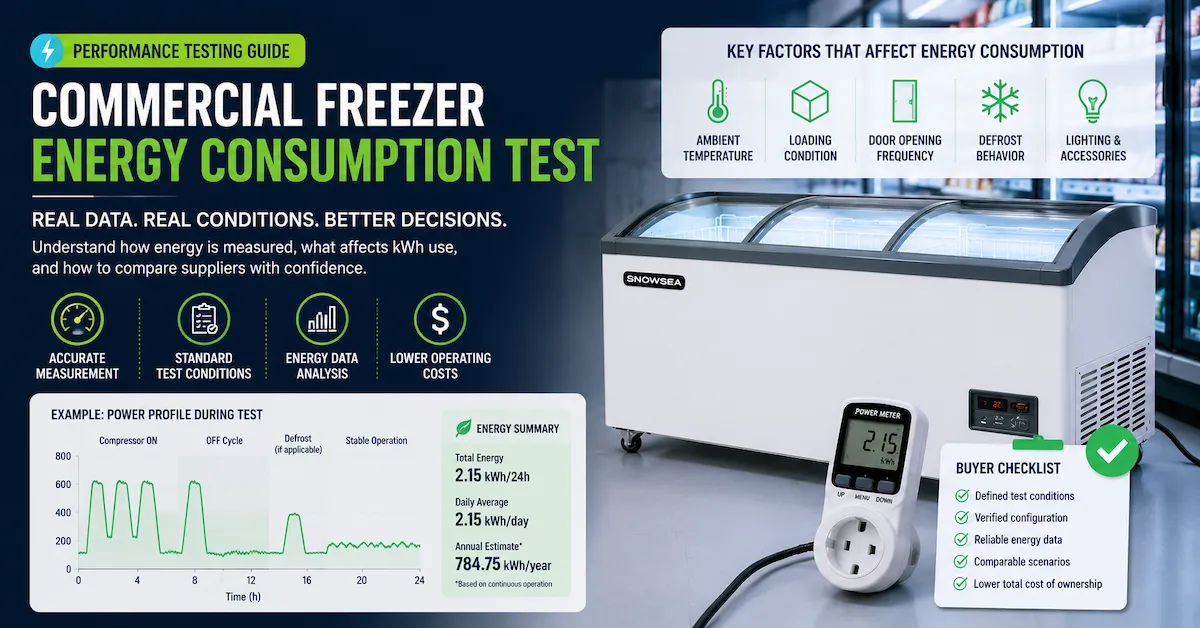
Commercial freezer energy efficiency is not simply a question of finding the freezer with the lowest advertised wattage or daily electricity figure. A commercial freezer first has to maintain the required storage condition for the intended products and operating environment. Only after that requirement is met does energy consumption become a meaningful comparison. For distributors, supermarket groups, restaurant-equipment suppliers and private-label brands, the useful question is therefore: how much electrical energy does a defined freezer use while performing the same refrigeration job under comparable conditions? SNOWSEA’s existing commercial freezer energy consumption test guide makes the same distinction, emphasizing that a kWh figure has limited value unless the tested configuration, temperature, ambient condition, loading, door operation and test duration are known.
What Does Commercial Freezer Energy Efficiency Mean for a B2B Buyer?
Energy efficiency should describe the relationship between the refrigeration task being performed and the electricity required to perform it. Two freezers can consume different amounts of electricity while both being appropriately designed because one may be larger, operate at a lower target temperature, run in a hotter environment or provide a customer-facing display function.
This is why procurement teams should avoid a comparison such as:
Freezer A uses fewer kWh, therefore Freezer A is more efficient.
A more useful comparison is:
Similar application + similar cabinet size + similar target temperature + similar ambient condition + similar loading + similar operating routine + measured energy consumption.
SNOWSEA’s current energy-testing content specifically warns that display freezers and closed storage freezers should not be compared solely by the final kWh number because their merchandising, lighting, access and storage functions can differ.
For B2B sourcing, energy efficiency should therefore be considered together with temperature performance, usable capacity, application, purchase price, maintenance and production consistency.
Rated Power Is Not the Same as Daily Energy Consumption
One of the most common purchasing errors is treating the freezer’s rated power or compressor wattage as its daily electricity consumption.
Power and energy describe different things.
Power is the rate of electrical use at a particular moment.
Energy consumption is the amount of electricity accumulated over a period of time, normally expressed in kWh.
A commercial freezer may cycle between different operating states. The compressor does not necessarily run continuously, and other electrical loads may include fans, controllers, lighting and defrost functions.
That means a freezer with a higher instantaneous power draw can theoretically consume less total energy over a defined period if its refrigeration system reaches and maintains the required condition with a different operating cycle. The opposite can also occur.
SNOWSEA’s commercial freezer power consumption guide similarly advises buyers to evaluate electricity use in the context of the complete system and long-term operating cost rather than compressor wattage alone.
Which Test Conditions Must Match Before You Compare kWh?
Before ranking commercial freezer energy efficiency, require each supplier to explain the test conditions behind its number.
| Test Information | Why the Buyer Needs It |
|---|---|
| Exact model | Identifies the product that generated the energy data |
| Cabinet dimensions | Larger cabinets normally have a different thermal load |
| Product configuration | Confirms the tested doors, glass,controls and accessories |
| Target temperature | Lower temperatures can increase refrigeration demand |
| Ambient temperature | Warmer surroundings increase heat entering the cabinet |
| Load condition | Empty and loaded cabinets can behave differently |
| Product arrangement | Influences thermal mass and airflow |
| Door/lid operation | Frequent access introduces heat |
| Defrost behavior | Can change the electrical profile where applicable |
| Lighting | Adds electrical load in display equipment |
| Test duration | Short measurements may not represent stable operation |
| Electrical version | Confirms the tested production configuration |
| Stable operation | Shows whether the test covered normal cycling |
SNOWSEA’s energy test article recommends reviewing the setup before looking at the final kWh figure and specifically lists model, dimensions, target temperature, ambient condition, loading, door operation, test period and electrical configuration among the information buyers should verify.
A supplier that presents a precise daily consumption value without describing the conditions has given you a marketing number, not yet a comparable procurement metric.
Ambient Temperature Can Change Both Energy Use and Cooling Performance
A commercial freezer continuously receives heat from the surrounding environment. As ambient temperature increases, the refrigeration system generally has more heat to remove.
This means a freezer operating in an air-conditioned supermarket and the same model operating near a commercial kitchen may not consume the same amount of electricity.
SNOWSEA’s commercial freezer ambient temperature guide explains that ambient temperature can influence compressor operation, cooling efficiency, energy consumption and temperature stability. Its separate tropical climate freezer design guide also recommends comparing energy use together with target temperature, loading and operating conditions rather than assuming that a higher electricity figure automatically indicates poor design.
For importers selling into hot-climate markets, this point is particularly important. Request data that represents the expected environment rather than selecting the smallest kWh number from a test carried out under substantially easier conditions.
Temperature Requirement Must Come Before the Energy Target
A freezer that consumes very little electricity but cannot maintain the required frozen-food condition is not efficient for the application.
Define the storage requirement first.
For an OEM project, that can include target operating temperature, permitted range, ambient conditions, stored products, loading quantity, recovery after replenishment and relevant defrost behavior.
SNOWSEA’s OEM freezer temperature-range guide explains that an OEM temperature requirement can affect refrigeration components, loading, recovery and defrost strategy rather than being only a thermostat setting.
Therefore:
Performance requirement → appropriate freezer design → energy test → operating-cost comparison
is a safer purchasing sequence than:
Lowest energy number → purchase → check whether it performs afterward.
How Cabinet Insulation Affects Energy Efficiency
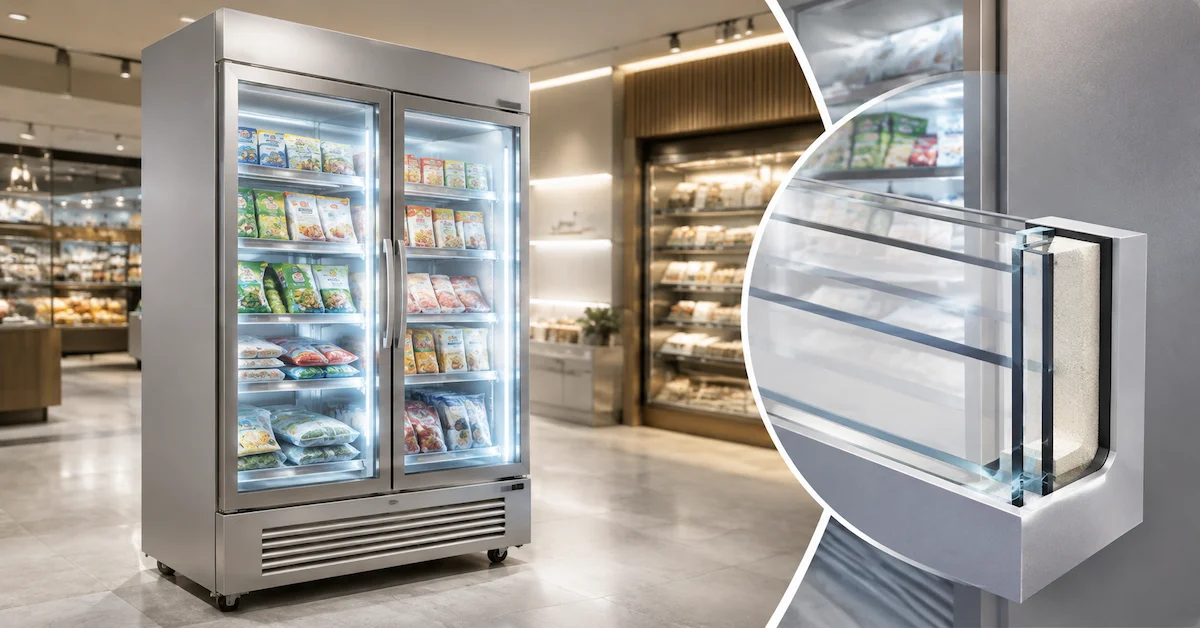
Heat that enters through the freezer cabinet must eventually be removed by the refrigeration system. Cabinet insulation is therefore one part of the energy-efficiency equation.
Relevant design areas can include insulation construction, panel geometry, thermal bridges and the relationship between cabinet size and usable storage volume.
However, procurement teams should avoid turning insulation into the simplistic rule that “thicker is always more efficient.” Increasing insulation can change the external dimensions or reduce usable internal capacity if the cabinet footprint stays fixed.
A more useful B2B comparison asks:
- What is the approved cabinet construction?
- What usable capacity does that construction provide?
- Under what conditions was the finished freezer tested?
- Does the bulk-production cabinet match the tested sample?
SNOWSEA’s energy-test guidance similarly treats insulation as one part of complete thermal performance rather than an isolated guarantee of a particular energy-saving percentage.
Door and Gasket Sealing Affect the Thermal Load
Every unnecessary path for warm air to enter the freezer creates refrigeration work.
For solid-lid chest freezers, buyers can inspect lid alignment, gasket contact and closing consistency. For sliding-glass display freezers, frame construction, glass movement and sealing require different inspection criteria.
During sample approval, look for:
- Consistent gasket contact
- Lid or door alignment
- No obvious gaps
- Smooth closing movement
- Correct installation of hinges or sliding components
- No deformation around the sealing surface
These are workmanship issues, but they can also influence thermal performance.
Energy efficiency should therefore be linked to manufacturing consistency. A perfectly tested engineering sample has limited procurement value if bulk units have inconsistent sealing.
Compressor Efficiency Is Only One Part of the Refrigeration System
Commercial buyers often ask first which compressor brand or wattage a freezer uses. The compressor is important, but energy performance belongs to the complete system.
The operating result can depend on the interaction between:
- Compressor
- Condenser
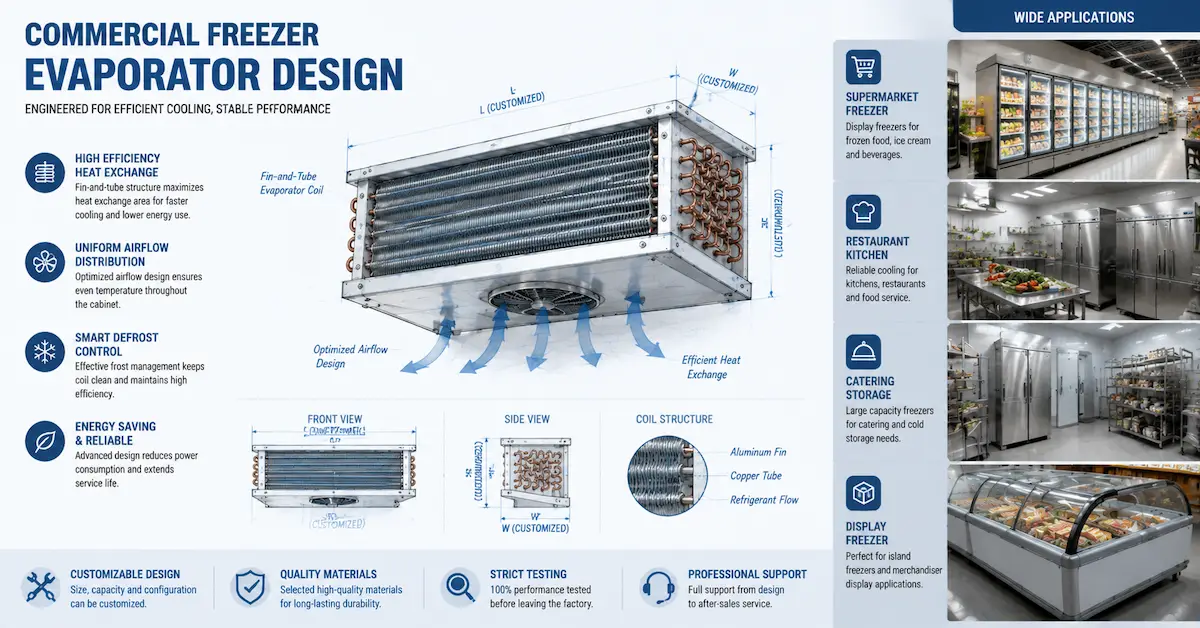
- Evaporator
- Refrigerant circuit
- Cabinet insulation
- Controls
- Sensors
- Fans where applicable
- Door or lid sealing
- Temperature settings
- Defrost strategy
- Ambient environment
SNOWSEA’s energy-test guidance explicitly notes that compressor wattage alone cannot describe complete freezer energy consumption because the rest of the refrigeration and cabinet design influences how long and how frequently the compressor operates.
When comparing suppliers, ask for performance of the actual freezer configuration rather than using one component specification as a proxy for the entire product.
How No-Frost and Defrost Systems Affect the Comparison
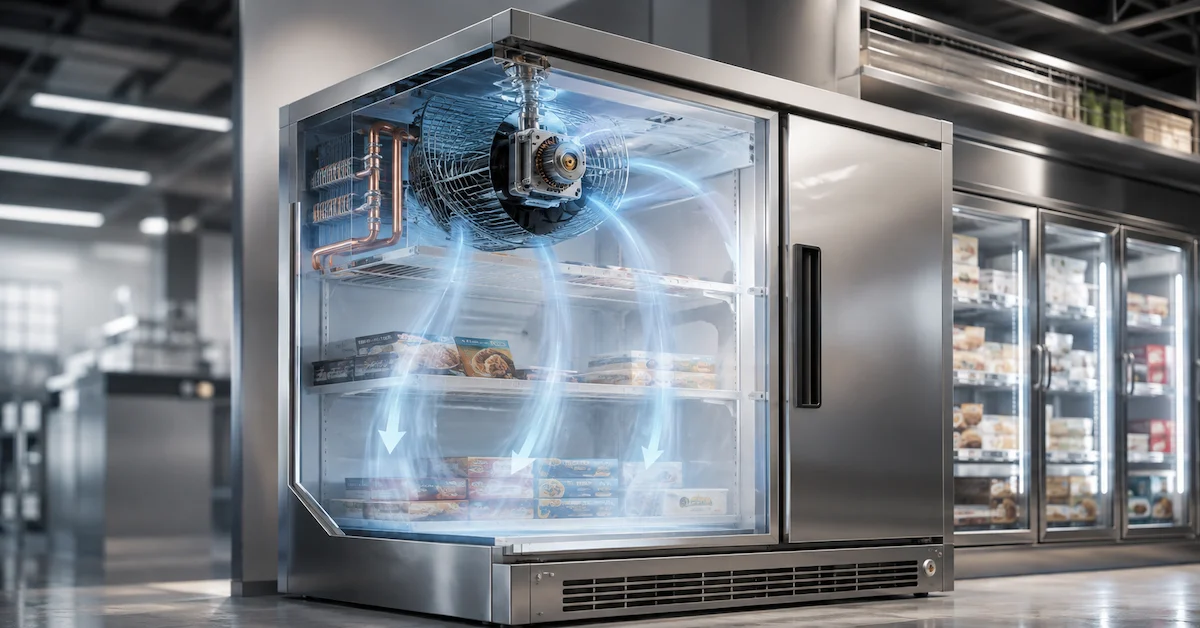
No-frost or automatically managed defrost systems can change the operating profile because fans and defrost events may become part of the electrical load.
SNOWSEA’s BD/BC-227WA is positioned as a 227L air-cooled no-frost chest freezer with electronic temperature control. By contrast, other chest-freezer platforms can use different cooling and defrost approaches.
The correct conclusion is not that one approach is always more energy efficient.
Instead, compare:
relevant application + maintenance requirement + temperature performance + complete measured energy consumption.
SNOWSEA’s energy-testing article specifically cautions against declaring one defrost approach universally more energy efficient without evaluating the total refrigeration design and operating conditions.
For distributors, maintenance convenience can itself have commercial value even when the energy comparison is not the deciding factor.
Display Freezer Energy Efficiency Must Include the Display Function
A glass-top or glass-door freezer has a commercial role beyond storage. Buyers may require visibility, customer access, lighting and product merchandising.
Those functions can influence energy consumption.
For example, a transparent structure can create different thermal characteristics from a solid insulated lid. Lighting can add electrical load. Frequent customer opening can introduce heat.
Therefore, do not compare a customer-facing ice cream display directly with a closed reserve-storage freezer and conclude that the lower-consuming cabinet is “better.”
SNOWSEA’s ice cream freezer range and commercial freezer range serve different purchasing tasks.
A fair energy-efficiency comparison should remain within products performing comparable commercial functions.
Compare SNOWSEA Platforms by Role Before Comparing Energy
SNOWSEA currently offers several freezer structures that buyers can use as different evaluation starting points.
| Model | Published Starting Point | Typical Comparison Role | Energy Question to Ask |
|---|---|---|---|
| BD-500 chest freezer | 500L double-lid chest freezer,R290 listed | Larger frozen-stock storage | What daily consumption is measured under the agreed load and environment? |
| BD/BC-227WA no-frost freezer | 227L air-cooled no-frost platform | Buyer prioritizing defrost convenience | How are fan and defrost operation represented in the energy test? |
| SD/SC-268PM ice cream freezer | 268L flat sliding-glass display freezer | Packaged ice cream merchandising | Does the energy test represent the glass/display operating condition? |
The BD-500 page currently markets an efficient/low-power benefit, but B2B buyers should still request the test method and actual order-specific evidence before translating that wording into a numerical savings claim.
This principle protects both buyer and manufacturer: published benefits remain useful product positioning, while commercial comparisons rely on measurable evidence.
How to Turn Daily kWh Into Annual Operating Cost
Energy data becomes much more useful when procurement converts it into an operating-cost estimate.
The basic formula is:
Estimated annual electricity cost = measured kWh/day × operating days × local electricity rate
For example, assume two technically suitable freezers are tested on an equivalent basis:
- Model A: 2.3 kWh/day
- Model B: 2.0 kWh/day
- Difference: 0.3 kWh/day
- Fleet: 100 freezers
- Electricity cost: $0.16/kWh
- Operation: 365 days
The illustrative annual difference would be:
0.3 × 365 × 100 × $0.16 = $1,752
This is an example only, not SNOWSEA product data and not a savings promise.
Actual field cost can change because of ambient conditions, loading, door openings, maintenance, temperature settings and installation. SNOWSEA’s energy-testing guidance likewise treats annual operating-cost calculations as estimates rather than guaranteed field results.
For a distributor supplying several hundred units, however, even a modest verified per-unit energy difference can become commercially significant.
Energy Efficiency Belongs in Total Cost of Ownership
Purchase price is paid once. Electricity is paid repeatedly.
But energy is not the only long-term expense either.
A realistic B2B comparison can include:
| Cost Factor | What the Buyer Should Compare |
|---|---|
| Purchase price | Initial equipment cost |
| Energy consumption | Comparable measured kWh |
| Electricity rate | Local operating-cost assumption |
| Maintenance | Cleaning,defrost and service requirements |
| Spare parts | Availability and replacement costs |
| Installation | Site and ventilation requirements |
| Warranty | Scope and buyer responsibilities |
| Expected operating period | Internal planning assumption |
| Production consistency | Whether bulk units match tested configuration |
SNOWSEA’s power-consumption guide similarly places energy efficiency within total cost of ownership, alongside purchase cost, maintenance and operating environment.
A cheap freezer is not automatically expensive to operate, and an expensive freezer is not automatically efficient. Evidence has to establish the difference.
Installation Can Reduce the Value of a Good Energy-Efficient Design
A freezer can perform well in controlled testing and less efficiently after poor installation.
Installation factors can include:
- Inadequate ventilation around heat-rejection areas
- Installation near strong heat sources
- High surrounding ambient temperatures
- Damaged or poorly closing gaskets
- Incorrect temperature settings
- Excessive loading that blocks required airflow
- Frequent unnecessary opening
- Poor maintenance
For hot or demanding environments, review SNOWSEA’s commercial freezer ambient temperature guide before approving equipment.
For distributors, the installation manual and dealer training can therefore influence real-world energy performance almost as much as the factory specification.
Maintenance Should Be Included in the Energy-Efficiency Plan
Commercial freezer energy efficiency can deteriorate when the equipment cannot reject heat properly or when sealing and airflow conditions change.
A maintenance program can include checking:
- Condenser cleanliness
- Door or lid gaskets
- Frost accumulation where relevant
- Fan operation where applicable
- Controller settings
- Installation ventilation
- Cabinet loading practices
Do not turn maintenance into a generic promise that cleaning will reduce electricity by a particular percentage unless you have supporting evidence.
The purchasing takeaway is simpler: compare equipment using controlled energy data, then protect that performance through correct installation and maintenance.
How Should Buyers Compare Supplier Energy Claims?
Use one common questionnaire.
| Evaluation Area | Question to Ask |
|---|---|
| Tested model | Which exact freezer generated this figure? |
| Configuration | Does it match the quotation? |
| Cabinet size | What dimensions and capacity were tested? |
| Temperature | What operating target was maintained? |
| Ambient | Under what surrounding temperature was it tested? |
| Loading | Empty,loaded or simulated load? |
| Door/lid operation | Was opening included? |
| Defrost | How was it handled? |
| Lighting | Was lighting operating where applicable? |
| Test duration | How long was electricity recorded? |
| Energy result | What measured kWh was obtained? |
| Production | Will bulk units match the tested sample? |
A supplier that can answer these questions clearly is giving purchasing teams more useful information than a supplier whose specification only says “energy saving.”
OEM Energy Targets Should Be Defined Before Sample Development
Private-label buyers may have an existing benchmark from another freezer or an internal energy target.
That benchmark can be useful during OEM development—but it should be accompanied by its operating conditions.
SNOWSEA’s energy-testing content says buyers can provide energy targets, benchmark products or customer test methods for engineering evaluation. Potential areas for review include cabinet dimensions, insulation, refrigeration-system matching, airflow, door configuration, controller settings, lighting and intended operating conditions.
Use SNOWSEA’s OEM/ODM service to submit the requirement.
A strong OEM brief might state:
Target energy consumption must be evaluated under our specified ambient, cabinet temperature, product load, door condition and test duration.
That is much more useful than:
Please make this freezer low energy.
Energy Data Must Follow the Production Revision
An energy result belongs to the product configuration that produced it.
If the sample is later changed by modifying the compressor, controller, cabinet dimensions, insulation, fan, glass, lighting or refrigeration configuration, the buyer should ask whether the previous result still represents the production version.
This is especially important in private-label programs.
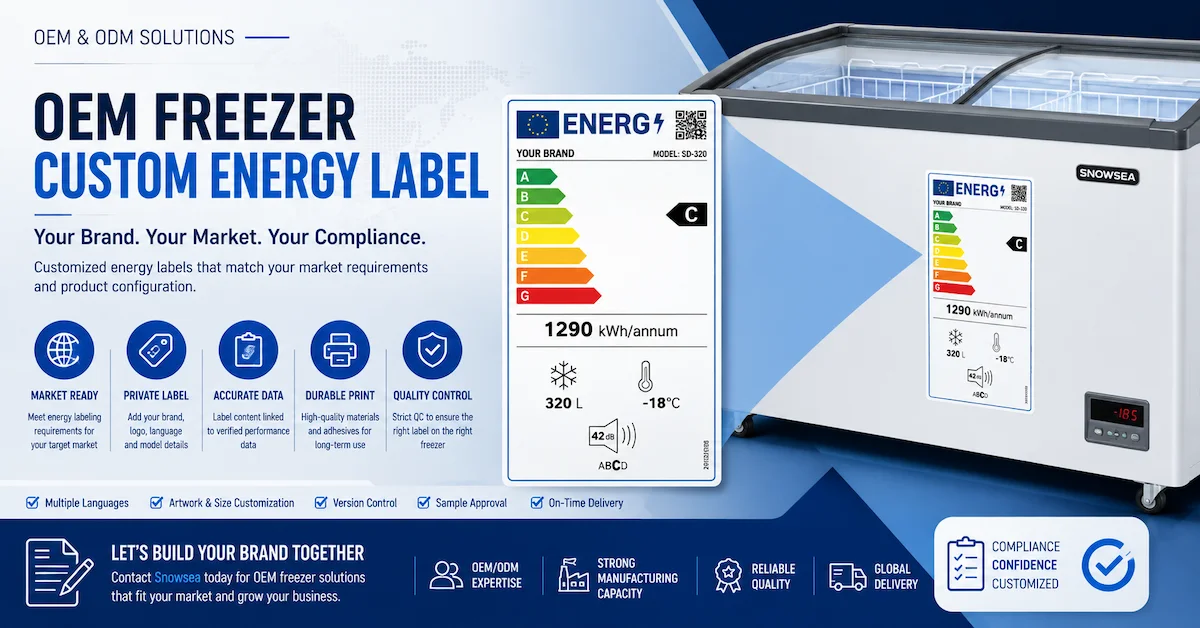
A factory can correctly print an energy figure on a label while the underlying product has changed unless specification and test-data control are connected.
SNOWSEA’s energy-testing guidance explicitly recommends linking approved energy information to the production configuration and reviewing the test when relevant components change.
For repeat orders, reference a controlled product revision rather than relying only on the commercial model name.
Should Energy Efficiency Be a Pass/Fail Purchasing Requirement?
Sometimes yes, but the target must be defined correctly.
A large retail chain may have an internal maximum daily consumption target for equipment operating under a specified test method. In that case, energy can become a formal acceptance requirement.
A distributor entering several markets may instead use energy data as a comparison metric while balancing purchase price, features and local electricity rates.
Before writing the requirement, decide:
Is energy a mandatory threshold, a weighted comparison criterion or simply supporting information?
This distinction helps avoid rejecting suitable equipment because one metric has been taken out of context.
How Does Energy Efficiency Affect Wholesale and Project Purchasing?
Energy becomes increasingly important as the number of installed units increases.
A difference that looks small for one freezer may become significant across:
- Supermarket chains
- Restaurant networks
- Ice cream brand deployments
- Distributor fleets
- Multi-store retail projects
- Private-label product ranges
Project buyers should therefore request comparable data early enough to influence model selection.
Do not wait until a 500-unit purchase is already approved to ask what the daily electricity consumption means.
The supplier quotation can include the base model, test conditions and available energy evidence so procurement can calculate its own operating assumptions.
What Should You Send SNOWSEA for an Energy-Efficiency Evaluation?
For a technically useful evaluation,provide:
- Freezer type
- Reference model if available
- Intended application
- Required capacity
- Cabinet dimension limits
- Target storage temperature
- Expected ambient temperature
- Product being stored
- Typical loading arrangement
- Door or lid configuration
- Expected opening pattern
- Existing daily-energy benchmark if available
- Customer test method if available
- Electrical configuration
- Required sample/testing plan
- Initial order quantity
- Estimated annual volume
- Project schedule
SNOWSEA’s energy-testing content requests essentially this type of operating information because energy comparisons become more meaningful when the application is clearly defined.
Submit the project through SNOWSEA Contact Us and ask for a model-specific technical discussion rather than a generic “energy-saving freezer” quotation.
Frequently Asked Questions
1. What is commercial freezer energy efficiency?
Commercial freezer energy efficiency describes how efficiently a freezer performs its required refrigeration task relative to electrical energy consumption. Buyers should compare products performing similar functions under comparable conditions.
2. Is rated power the same as freezer energy consumption?
No. Rated power describes electrical power at a particular operating condition, while energy consumption measures electricity used over time. Compressor and other loads also cycle during normal operation.
3.How many kWh should an efficient commercial freezer use per day?
There is no useful universal number. Cabinet size, temperature, ambient environment, load, door type, refrigeration design, defrost and test method can all affect the result.
4. Does ambient temperature affect commercial freezer energy efficiency?
Yes. Higher surrounding temperatures generally increase the refrigeration load. Use SNOWSEA’s ambient-temperature guide when evaluating equipment for demanding environments.
5. Does freezer insulation affect electricity use?
Insulation influences heat entering the cabinet and therefore affects refrigeration demand. However, insulation should be evaluated as part of the complete cabinet design rather than judged only by thickness.
6.Are no-frost commercial freezers always more energy efficient?
No universal conclusion should be made. No-frost systems can include fans and defrost operation, while manual-defrost cabinets use a different operating approach. Compare equivalent products using measured data under similar conditions.
7. Are glass-door or glass-top freezers less energy efficient?
Their design and commercial function differ from solid-lid storage freezers. Compare glass-display products with other products providing a similar merchandising function rather than judging them only against closed storage cabinets.
8. How do I calculate annual freezer electricity cost?
Use measured daily kWh × operating days × your local electricity price. Treat the result as an estimate because field conditions, opening frequency, loading and maintenance can alter actual consumption.
9. Can SNOWSEA evaluate a custom OEM energy target?
SNOWSEA states that buyers can provide energy targets, benchmark freezer data or customer test methods for engineering evaluation. Feasibility depends on the selected platform, configuration and operating requirements.Use the SNOWSEA OEM/ODM service for project evaluation.
10. What should I request before believing an energy-efficiency claim?
Request the exact tested model, configuration, dimensions, temperature target, ambient condition, loading, door operation, defrost treatment, test duration, electrical version and measured energy result. Confirm that mass production will match the tested configuration.
Conclusion
Commercial freezer energy efficiency should help B2B buyers understand long-term operating cost without sacrificing the refrigeration performance the application actually requires. Compare measured kWh only after confirming cabinet size, target temperature, ambient environment, loading, door operation, defrost and test duration; then review insulation, sealing, refrigeration-system matching, controls and production consistency to understand why the freezer uses that energy.Purchase price remains important, but a verified daily-energy difference can become commercially significant across dozens or hundreds of units operating year after year. SNOWSEA provides commercial freezer platforms and OEM/ODM engineering support for B2B projects. If you are comparing freezer operating costs or developing a private-label model around an energy target, send SNOWSEA your application, cabinet requirements, operating conditions, benchmark data and expected quantity and request a configuration-specific energy and performance evaluation before approving the bulk order.