What Is Commercial Freezer Glass Door Thickness?
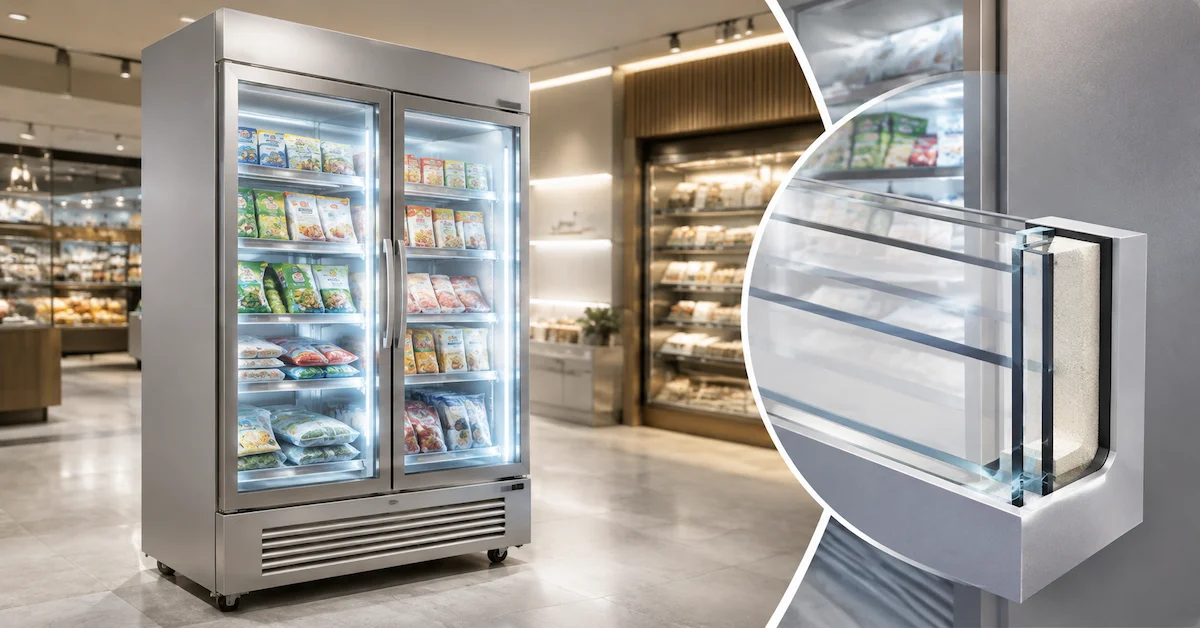
Commercial Freezer Glass Door Thickness refers to the thickness and structural design of the insulated glass system used in commercial freezer doors.
Unlike ordinary glass doors, commercial freezer doors are designed to provide both:
- Product visibility
- Thermal insulation
Modern commercial freezer doors commonly use:
- Double-layer insulated glass
- Triple-layer insulated glass
- Low-E coated glass
- Tempered safety glass
The glass door structure directly affects:
- Heat transfer control
- Energy consumption
- Condensation prevention
- Customer viewing experience
Snowsea provides commercial refrigeration products designed for supermarkets, restaurants, catering businesses, and global B2B refrigeration projects.
Why Does Glass Door Thickness Matter for Commercial Freezers?
The glass door is one of the main areas where heat can enter a freezer cabinet.
A properly designed glass door helps improve:
- Refrigeration efficiency
- Temperature stability
- Product display quality
Thermal Insulation Performance
A thicker and better-designed insulated glass structure helps reduce heat transfer between:
- External environment
- Freezer interior
Benefits include:
- Better cold retention
- Reduced cooling loss
- Improved refrigeration performance
Energy Efficiency
Glass door insulation directly affects freezer energy consumption.
Better glass structures can help:
- Reduce compressor running time
- Lower electricity usage
- Improve operating efficiency
For energy-related solutions, see Snowsea's Energy Efficiency Solutions.
Condensation Prevention
Commercial freezers often operate in environments with humidity and temperature differences.
High-quality glass door designs help reduce:
- Fogging
- Water droplets
- Poor product visibility
This improves:
- Customer experience
- Product presentation
- Daily operation efficiency
Common Commercial Freezer Glass Door Structures
Different glass structures provide different insulation levels.
| Glass Structure | Features | Application |
|---|---|---|
| Single Glass | Basic visibility, limited insulation | Low-demand applications |
| Double Glass | Balanced insulation and cost | Standard commercial freezers |
| Triple Glass | Higher insulation performance | Energy-efficient applications |
| Low-E Glass | Reduces heat radiation | Premium refrigeration systems |
Double Glass vs Triple Glass Freezer Doors
Choosing between double and triple glass depends on application requirements.
| Factor | Double Glass | Triple Glass |
|---|---|---|
| Insulation Performance | Good | Excellent |
| Energy Efficiency | High | Higher |
| Weight | Lower | Higher |
| Cost | More affordable | Higher investment |
| Application | General commercial use | High-efficiency projects |
Triple glass doors generally provide better insulation, but the final choice depends on:
- Climate conditions
- Operating hours
- Energy targets
- Budget requirements
How Glass Door Thickness Affects Freezer Efficiency
Heat Transfer Control
The glass door acts as a thermal barrier.
A better insulated glass structure helps reduce:
- Heat entering the cabinet
- Cooling loss
- Compressor workload
Temperature Stability
Improved glass insulation helps maintain stable internal temperatures.
Benefits include:
- Less temperature fluctuation
- Faster temperature recovery
- Better product protection
For temperature requirements, see Snowsea's commercial freezer temperature range guide.
Compressor Operation
When less heat enters the freezer:
- The compressor operates less frequently
- Energy consumption decreases
- System lifespan can improve
For compressor performance, see Snowsea's commercial freezer compressor sizing guide.
Factors Affecting Commercial Freezer Glass Door Selection
Glass door thickness should not be selected only by size.
Several factors should be considered.
Climate Conditions
Different environments create different thermal challenges.
For example:
- Tropical regions require stronger insulation
- High-humidity areas require better anti-condensation performance
For climate considerations, see Snowsea's commercial freezer ambient temperature guide.
Freezer Application
Different businesses have different requirements.
Supermarket Freezers
Important factors:
- Product visibility
- Frequent door opening
- Energy efficiency
Glass doors should balance:
- Display performance
- Insulation performance
Restaurant Freezers
Restaurants usually focus on:
- Durability
- Easy operation
- Reliable temperature control
Catering Storage Freezers
Catering businesses often require:
- Strong insulation
- Long operating periods
- Stable freezing performance
For catering applications, see Snowsea's commercial freezer supplier for caterers guide.
Glass Door Materials and Technologies
Low-E Glass
Low-E (Low Emissivity) glass helps reduce heat radiation.
Benefits include:
- Improved insulation
- Better energy efficiency
- Reduced heat transfer
Tempered Glass
Tempered glass provides:
- Higher safety
- Better impact resistance
- Improved durability
Anti-Fog Technology
Anti-fog systems help maintain clear visibility.
Benefits include:
- Better product display
- Easier product identification
- Improved customer experience
Glass Door Thickness and Product Display
Commercial freezers are not only storage equipment but also display solutions.
A well-designed glass door provides:
- Clear product visibility
- Better merchandising
- Improved customer interaction
This is especially important for:
- Supermarkets
- Convenience stores
- Retail frozen food displays
Glass Door Maintenance Requirements
Regular maintenance helps maintain insulation performance.
Important tasks include:
- Cleaning glass surfaces
- Checking door seals
- Inspecting heating systems
- Checking condensation performance
Poor door sealing may cause:
- Increased heat leakage
- Higher energy consumption
- Reduced cooling efficiency
How Manufacturers Test Commercial Freezer Glass Doors
Professional manufacturers perform multiple tests.
Thermal Insulation Testing
Evaluates:
- Heat transfer performance
- Insulation efficiency
Condensation Testing
Checks:
- Anti-fog capability
- Humidity resistance
Strength Testing
Verifies:
- Glass safety
- Impact resistance
Energy Efficiency Testing
Measures:
- Cooling loss
- Power consumption
For overall product evaluation, see Snowsea's commercial freezer quality testing guide.
Common Mistakes When Choosing Glass Door Thickness
Choosing Only Based on Price
Lower-cost glass systems may increase long-term operating costs.
Ignoring Climate Conditions
A suitable glass structure depends on the installation environment.
Selecting Poor Insulation Glass
Low-quality glass may result in:
- Higher heat transfer
- More condensation
- Higher energy usage
Ignoring Door Seal Quality
Glass performance also depends on:
- Door gasket quality
- Frame design
- Closing mechanism
How to Choose the Right Commercial Freezer Glass Door
A practical selection process includes:
Step 1: Define Application Requirements
Consider:
- Freezer type
- Operating environment
- Display requirements
Step 2: Compare Glass Structures
Evaluate:
- Double glass
- Triple glass
- Low-E options
Step 3: Check Energy Performance
Review:
- Insulation capability
- Condensation control
- Operating efficiency
Step 4: Verify Supplier Capability
Check:
- Manufacturing experience
- Testing standards
- Customization ability
What Information Should You Send a Freezer Supplier?
To receive suitable recommendations, buyers should provide:
- Freezer application
- Installation environment
- Climate conditions
- Required temperature
- Door style preference
- Energy efficiency goals
- Quantity requirements
- Certification needs
- Customization requirements
- Project timeline
FAQ
What is commercial freezer glass door thickness?
Commercial freezer glass door thickness refers to the thickness and structure of insulated glass used in freezer doors to improve insulation and visibility.
Is thicker glass always better for commercial freezers?
Not always. Performance depends on glass layers, Low-E coating, sealing quality, and overall door design.
What is the difference between double and triple glass freezer doors?
Triple glass doors usually provide better insulation, while double glass doors offer a balance between performance and cost.
How does glass thickness affect energy consumption?
Better insulated glass reduces heat transfer and helps lower compressor workload.
Why do commercial freezer doors use insulated glass?
Insulated glass helps maintain low temperatures while allowing customers to view products.
What is Low-E glass used for in freezer doors?
Low-E glass reduces heat radiation and improves insulation performance.
How can freezer doors prevent condensation?
Anti-condensation systems, insulated glass structures, and proper sealing help reduce fogging.
Do glass doors affect product display?
Yes. Clear and insulated glass improves product visibility and customer experience.
How are freezer glass doors tested?
Manufacturers test insulation, condensation resistance, strength, and energy performance.
Can Snowsea customize commercial freezer glass doors?
Yes. Snowsea provides customized refrigeration solutions based on application requirements.
Conclusion
Commercial Freezer Glass Door Thickness is an important factor affecting insulation performance, energy efficiency, condensation control, and product presentation.
Choosing the right glass door structure requires considering:
- Glass layers
- Climate conditions
- Application requirements
- Energy efficiency targets
- Door sealing quality
For supermarkets, restaurants, catering businesses, and global refrigeration buyers, a properly designed glass door helps achieve better product visibility while maintaining reliable cooling performance.
Snowsea supports global B2B customers with commercial refrigeration products and OEM/ODM solutions. Explore Snowsea's commercial refrigeration products, review its OEM/ODM solutions, or contact Snowsea with your glass door requirements, application details, and project goals.